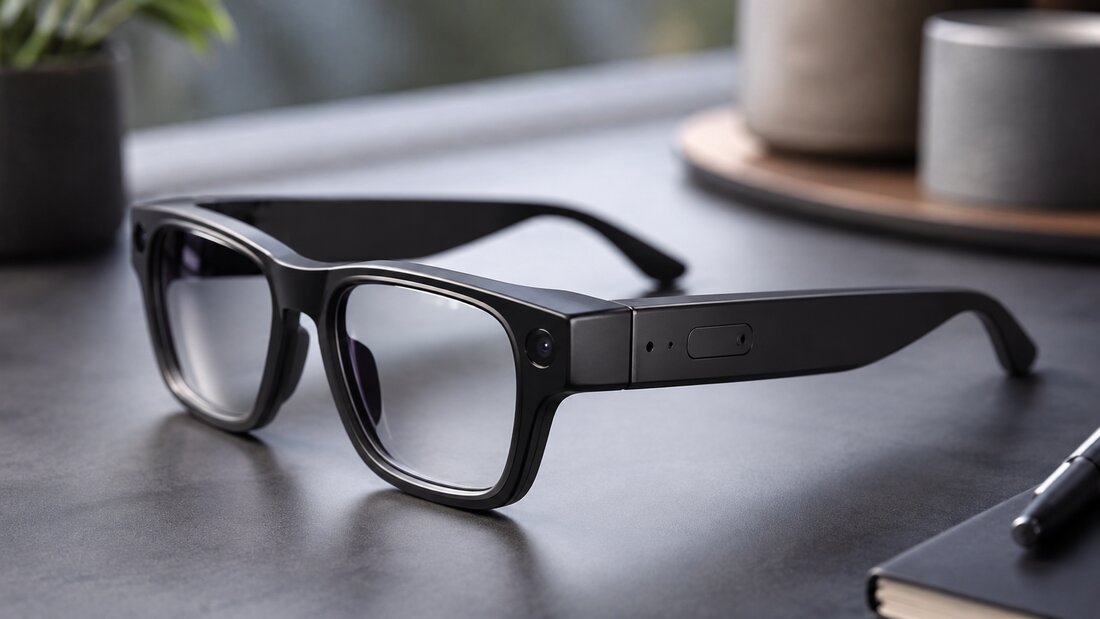
AI glasses sourcing trends are usually described in terms of consumer excitement: new launches, new assistants, new form factors. For importers, brands and procurement teams, the useful question is narrower. Which sourcing shifts actually change what you must verify before you sign a purchase order, and which are marketing noise?
This guide treats AI glasses sourcing trends as procurement signals, not product hype. It focuses on three axes a buyer can test directly during supplier evaluation: form-factor demand, customization depth and compliance readiness. Each axis is tied to concrete questions you can put in an RFQ, a sample review or a contract negotiation.
One structural point comes first, because it determines everything else. AI glasses are not one product class. Audio-only AI glasses, camera AI glasses and AR display glasses have materially different bills of materials, software architectures, optical risks, MOQ profiles and development cycles. A supplier that answers your questions without first asking which family you are buying is answering a different question than the one you asked.
Trend axis 1: form-factor demand is splitting, not converging
The most consequential sourcing trend is the divergence of demand across three architectures. Buyers are no longer asking for “AI glasses” generically; they are specifying audio-first glasses for calling and voice assistant use, camera glasses for capture and translation-adjacent applications, or AR display glasses for information overlay.
Manufacturer-side, this changes the sourcing conversation in practical ways:
- Audio-only AI glasses typically carry the lowest technical complexity, the lowest relative BOM cost and the lowest MOQ threshold. They are the natural entry point for private label programs and market tests.
- Camera AI glasses sit in the middle. They add imaging, higher power demand, more complex firmware and app integration, and privacy considerations that affect market acceptance.
- AR display glasses carry the highest optical-module complexity, the highest MOQ, the longest development cycle and real optical-yield risk during pilot production.
The sourcing implication is that a single supplier scorecard cannot be applied uniformly. A factory that is strong in audio assembly may not be the right partner for waveguide calibration. When you shortlist AI glasses manufacturers, ask which architecture each candidate actually builds today, and ask for the engineering workflow behind it, not just a catalog photo.
A second form-factor signal is prescription-lens adaptation. Buyers targeting optical retail channels increasingly need to know whether a frame supports prescription-lens clips or adaptation accessories on selected models. This is a model-specific question, and the answer should come from the specification sheet, not from a sales conversation.
Trend axis 2: customization depth is becoming the real differentiator
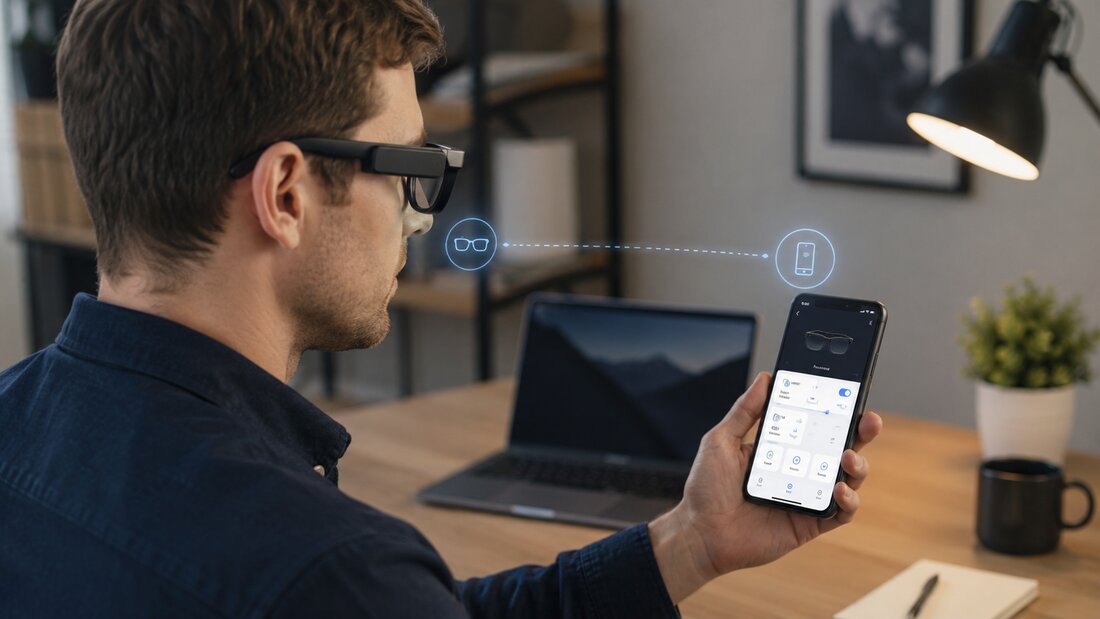
The second sourcing trend is a shift in what buyers mean by “custom.” Logo and packaging changes are now table stakes. The differentiating question is how deep the customization goes into firmware, app integration and data access.
In practice, AI glasses OEM and ODM projects fall into recognizable levels:
| Customization level | Typical scope | What the buyer must confirm |
|---|---|---|
| White-label branding | Logo, splash screen, color theme, app name on an existing SKU | Which model, what branding assets, and whether firmware changes are included |
| UI and language customization | UI elements, language packages, function-module order | Whether the platform supports the requested language and UI changes |
| Advanced app integration | Enterprise language packs, industry-specific assistant, customer backend or cloud integration | SDK availability, API depth and who owns the integration work |
| Customer-owned application | Customer-developed app using camera, audio or sensor APIs | Whether camera API, sensor-fusion access and OTA rights are contractually available |
| Deep ODM / joint development | Structure, mainboard, firmware and algorithm customization | NRE scope, engineering timeline, source-code and OTA authority in the agreement |
Two failure modes recur here. The first is assuming that a white-label platform provides open SDK access. It often does not; SDK depth, camera API availability and firmware-update rights vary by platform and must be confirmed supplier by supplier. The second is treating firmware ownership, OTA authority and cloud-data ownership as implicit. These are contract terms, not product features, and they should be defined in the signed ODM agreement.
For buyers, the practical trend is this: the sourcing decision is increasingly a software-governance decision. If your product roadmap depends on adding AI features after launch, ask early which platform gives you the integration path to do so, and get the answer in writing.
Trend axis 3: compliance readiness is moving earlier in the process
The third sourcing trend is timing. Compliance used to be a late-stage checklist item before shipment. It is now increasingly a supplier-selection criterion, because camera-enabled AI glasses raise privacy and data-handling questions alongside traditional radio and electrical requirements.
Buyers should keep the distinction between company capability and model certification clear. A factory may support applicable CE, FCC and RoHS certification or compliance applications as a service, while the certification status of any specific model still depends on the exact configuration, target market, laboratory and applicable authority. Approval is not guaranteed by the factory’s support capability.
Beyond the basic three, other requirements may apply depending on architecture and market. Bluetooth qualification, photobiological safety evaluation for optical-source products, China-market requirements where legally applicable, and privacy or data-protection considerations for camera-enabled devices are all project- and market-dependent. None of these should be assumed; each should be confirmed with the applicable laboratory, authority or qualified advisor.
The sourcing action is straightforward: ask for the certification and compliance documentation that applies to the exact model and configuration you are buying, and confirm who holds the certificate. Do not accept a company-level certificate as evidence of model-level status.
A supplier evaluation scorecard for AI glasses
Trends only matter if they change your evaluation. The scorecard below converts the three axes into questions you can ask during RFQ and sample review. Score each candidate against your own project priorities rather than a universal standard.
| Evaluation area | What to ask | Evidence to request |
|---|---|---|
| Form-factor roadmap fit | Which of audio, camera and AR display architectures do you build today? Which is your strongest? | Model list with architecture classification; engineering workflow description |
| Optical and audio QC | How do you test microphone-array performance and, for camera or AR models, image and optical quality? | QC process description (IQC, IPQC, FQC, OQC) and the specific tests applied at FQC |
| Firmware and OTA scope | What firmware customization is possible on this platform? Who controls OTA updates? | Written scope statement; contract clause on OTA authority |
| App and SDK integration | Is an SDK available? Which APIs (camera, sensor, OTA) are exposed? | SDK documentation sample; API list; integration responsibility matrix |
| Compliance documentation | Which certifications apply to this exact model and market? Who is the certificate holder? | Model-specific certificate documentation; testing support scope |
| Sample and pilot discipline | What is the sample sequence, and what is validated at pilot stage? | Sample process steps; pilot yield validation approach |
| Commercial terms | What is the MOQ and lead time for this configuration? | Quotation referencing the selected model and scope |
Use the scorecard comparatively. A supplier that scores well on audio QC but cannot describe optical calibration is not a weak supplier overall; it is simply not the right partner for an AR project. Matching the scorecard to the architecture is the point.
How to separate sourcing claims from verifiable evidence
Most sourcing risk in AI glasses comes from plausible but unverified statements. The following practices reduce that risk without requiring deep engineering knowledge.
- Ask for a sample testing protocol, not a sample opinion. Request the specific tests performed on the sample you receive: audio noise reduction, AI response latency, Bluetooth stability, image quality where applicable, and wearing comfort. Then test the sample against that protocol yourself.
- Scope certifications to the exact model. Ask which certifications apply to the model and configuration in your quotation, and request the corresponding documentation. Treat any answer that references only the factory’s general capability as incomplete.
- Confirm IP, tooling and firmware ownership in the agreement. Ownership of tooling, firmware, source code and exclusivity should be defined in the signed project agreement, not agreed verbally during sampling.
- Verify reference components against the BOM. Chipset and sensor references discussed during evaluation are architecture options until the model-specific BOM and specification sheet confirm them.
- Treat performance figures as reference values. Battery endurance, translation accuracy and water resistance depend on configuration and use conditions; ask for model-specific test data rather than accepting headline numbers.
This is also where the difference between white-label and deep ODM becomes commercially visible. White-label routes typically offer faster timelines and lower MOQ, with more limited SDK access and firmware-upgrade rights. Deep ODM routes offer more integration depth at the cost of higher NRE, longer engineering time and higher MOQ. Neither is better in the abstract; the right choice depends on how much of the product experience you intend to control.
Buyer checklist: mapping sourcing trends to procurement actions

The checklist below turns the three trend axes into actions you can sequence before quotation, before sample approval and before mass production.
Before RFQ
- Define the product family: audio-only, camera AI or AR display.
- Define the destination market and the compliance questions that follow from it.
- Decide the customization level you need: branding, UI, app integration or deep ODM.
- Decide whether prescription-lens adaptation is required.
During supplier evaluation
- Ask each candidate which architectures they build and request the engineering workflow.
- Request the QC process and the specific final-inspection tests applied to AI glasses.
- Ask for SDK and API documentation samples if software integration matters to your roadmap.
- Ask which certifications apply to the exact model and who holds them.
Before sample approval
- Confirm the sample sequence and what each round is intended to validate.
- Test the sample against the agreed protocol, including audio, latency and comfort.
- Confirm firmware, OTA and data-ownership terms in writing.
Before mass production
- Approve pilot results, including yield validation for camera and AR models.
- Confirm the final specification against the BOM.
- Confirm MOQ, lead time and inspection specification for the accepted order.
Pineeon Manufacturer-Side Recommendation
From the manufacturing side, the most common cause of a difficult AI glasses project is not a technical failure. It is a mismatch between what the buyer assumed and what the selected platform actually supports. Buyers who define the product family, customization level and target market before requesting a quotation tend to reach a stable specification faster and avoid rework during sampling.
Pineeon is a private label Smart Wearable, Computer Peripheral and AI Hardware OEM/ODM manufacturer based in Shenzhen, China, operating since 2000 and ISO 9001:2015-certified, serving brands and buyers in 40+ countries. For AI glasses projects, we evaluate the customer’s requirements before recommending a project approach, because OEM and ODM options depend on the level of hardware, firmware, software, tooling, branding and packaging customization involved.
Certification documentation, testing and compliance-support capabilities vary by supplier and project. Confirm the exact scope, responsible parties and available records in writing before relying on them.
Our recommendation to procurement teams is to treat the first supplier conversation as a scoping exercise rather than a price request. Bring the product family, the market, the customization level and the software roadmap. The quotation that follows will be more comparable across suppliers, and the specification you approve will be closer to what you actually intend to sell. You can review our AI glasses OEM/ODM programs on the AI glasses product page.
What to confirm before you commit
AI glasses sourcing trends ultimately point to one conclusion: the buyer’s job is shifting from comparing catalogs to verifying capability. Form-factor demand is splitting, customization is moving deeper into firmware and software, and compliance is arriving earlier in the process. Each shift rewards buyers who ask specific questions and request specific evidence.
Before committing to an AI glasses supplier, confirm four things in writing: the architecture and model you are buying, the customization scope including SDK and OTA rights, the compliance documentation applicable to that exact model and market, and the commercial terms for the accepted order. Everything else, including trend commentary, is secondary to those four.