Most AI glasses sourcing failures do not happen because a buyer picked the wrong factory. They happen because the buyer used a scorecard built for conventional consumer electronics. AI glasses combine optical modules, camera subsystems, microphone arrays, firmware, mobile apps, cloud AI, and privacy obligations in one wearable form factor. A supplier that scores well on unit price and injection molding can still fail on SDK depth, OTA authority, or optical yield. This guide explains how to build and run an AI glasses supplier scorecard system that reflects those realities.
Why a Generic Supplier Scorecard Fails for AI Glasses
A standard supplier scorecard typically weights price, quality, delivery, and responsiveness. Those categories still matter, but they do not capture the architecture-specific risks that determine whether an AI glasses program ships. The first decision is not which supplier to choose. It is which product family you are sourcing.
A manufacturer-side AI glasses framework separates three families before any commercial discussion:
- Audio AI glasses — open-ear audio, microphone array, Bluetooth calling, voice assistant wake-up. Lowest technical complexity, lowest BOM cost, lowest MOQ.
- Camera AI glasses — camera plus microphone array plus AI processing. Higher BOM, higher power draw, more complex firmware and app integration, and camera privacy considerations.
- AR display glasses — waveguide and/or MicroLED optical architecture. Highest technical threshold, highest MOQ, longest development cycle, and optical yield risk.
If your scorecard does not force this classification first, you will compare an audio-only white-label quote against an AR waveguide development quote and draw the wrong conclusion. The scorecard must be weighted differently for each family.
Core Scorecard Categories and Weighting by Product Family
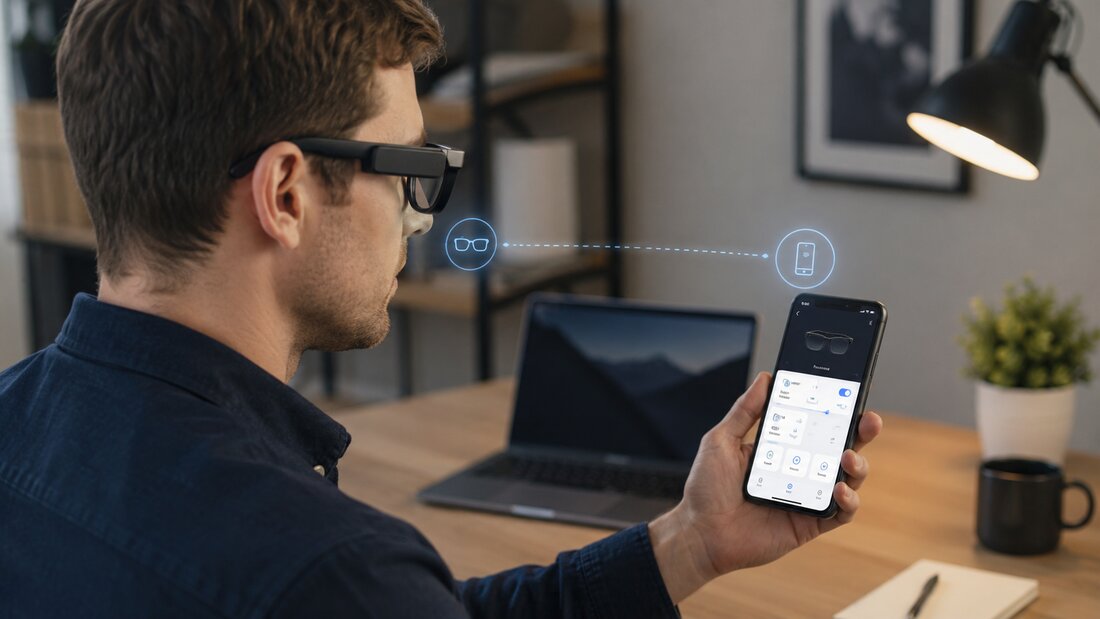
A workable AI glasses supplier scorecard uses weighted categories. The weights below are starting points for a buyer-side evaluation, not fixed rules. Adjust them to your program stage and risk tolerance.
| Category | Audio AI | Camera AI | AR Display | What it measures |
|---|---|---|---|---|
| Hardware & optical module quality | 10% | 15% | 25% | Frame, lens, camera module, waveguide, assembly precision |
| Audio subsystem reliability | 20% | 15% | 10% | Microphone array, noise reduction, speaker clarity, Bluetooth stability |
| Camera & imaging (if applicable) | 0% | 15% | 10% | Image quality, low-light behavior, video encoding |
| Firmware & OTA capability | 15% | 20% | 20% | Update rights, version control, bug-fix responsiveness |
| App / SDK / API integration | 15% | 15% | 15% | SDK depth, camera API, sensor fusion, cloud integration |
| Battery & thermal performance | 15% | 10% | 10% | Endurance under real workloads, charging case behavior, heat management |
| Compliance & privacy readiness | 10% | 10% | 10% | CE/FCC/RoHS support, Bluetooth qualification, camera privacy, data handling |
For pilot runs, increase the weight on firmware, SDK, and compliance readiness. For mass production, increase the weight on process control, incoming quality, and delivery consistency. Re-weighting is not optional — it is how you avoid approving a supplier on sample performance and then discovering production gaps.
Buyer Verification Procedure for Each Category
Scoring without verification produces a confident but unreliable result. For each category, request evidence and test it yourself where possible.
Hardware and optical module quality
- Request the model-specific BOM and confirm which components are fixed versus reference options.
- Ask for incoming quality control (IQC) records for main SoC, camera module, optical lens, waveguide, battery, and frame material.
- Inspect frame assembly, hinge durability, and lens alignment on physical samples.
- For AR display, ask how optical yield is measured and what calibration steps occur during assembly.
Audio subsystem reliability
- Test noise-reduced calling in a noisy environment, not a quiet meeting room.
- Check microphone array behavior at different head positions and wind conditions.
- Verify Bluetooth stability during walking, pocket carry, and phone-to-glasses switching.
Camera and imaging
- Request sample photos and video under indoor, outdoor, and low-light conditions.
- Confirm whether low-light enhancement is supported on the specific model.
- Ask how camera privacy is handled — indicator LED, hardware shutter, or firmware-level controls.
Firmware and OTA capability
- Ask who owns the firmware, who controls OTA authority, and what happens if the supplier relationship ends.
- Request a firmware version history and a sample bug-fix timeline.
- Confirm whether firmware source-code access is available and under what contractual conditions.
App, SDK, and API integration
- Request SDK documentation and confirm camera API, sensor fusion interface, and OTA interface availability.
- Clarify whether the app is white-label, UI-customized, or fully customer-developed.
- For cloud AI or translation, confirm which backend services are used and who owns the data.
Battery and thermal performance
- Test active use scenarios that match your target use case, not just standby time.
- Measure surface temperature during camera recording, AI inference, and charging.
- Confirm charging case behavior and how many cycles it supports.
Compliance and privacy readiness
- Request model-specific certification documents, not company-level certificates.
- Confirm CE, FCC, and RoHS support scope for the exact model and target market.
- For camera-enabled glasses, ask how privacy and data-processing requirements are addressed for your destination market.
Scoring Rubric, Pass/Fail Thresholds, and Risk Flags
A scorecard is only useful if it produces a decision. Use a 1–5 scale per category, multiply by weight, and sum to a total score. Suggested thresholds:
- 4.0–5.0: Approved for pilot or mass production, subject to contract terms.
- 3.0–3.9: Conditional approval — require corrective actions before pilot.
- Below 3.0: Do not proceed without re-evaluation.
In addition to numeric scoring, apply risk flags. A single red flag should trigger a hold regardless of total score.
| Risk Flag | Why It Matters | Required Action |
|---|---|---|
| Unclear firmware ownership | You may lose the ability to update or fix the product | Define ownership and OTA authority in the contract before tooling |
| Missing model-specific compliance documents | Company-level CE/FCC/RoHS support does not equal model certification | Request certificate scope, holder, and target-market confirmation |
| Inconsistent sample quality | Suggests process control gaps that will scale into production | Request additional samples from the same production line |
| No camera API or SDK documentation | Blocks custom app development and AI feature integration | Confirm platform-specific SDK access before project approval |
| Optical yield not measured | AR display projects can fail economically even when samples look good | Require a pilot yield report before mass production |
Using the Scorecard Across Sample, Pilot, and Mass Production
The scorecard should not be a one-time gate. It should be re-run at each stage with different emphasis.
Sample stage
Focus on whether the supplier can deliver a working sample that matches your functional requirements. Verify audio, camera, AI response, wearing comfort, and basic app connectivity. Do not over-index on price at this stage — sample cost is a small fraction of total program risk.
Pilot stage
Focus on process control, yield, and consistency. Request pilot production data, including final quality control (FQC) results for image quality, audio noise reduction, AI response latency, Bluetooth stability, and wearing comfort. For AR display, optical yield is the critical metric.
Mass production stage
Focus on outgoing quality control (OQC), AQL sampling, delivery performance, and change management. Re-score when any of the following triggers occur:
- Component substitution or BOM change
- Firmware version change affecting core functions
- New target market or certification requirement
- Repeated quality escapes or field failures
- Delivery delays exceeding agreed tolerances
Build a simple improvement loop: score, identify the lowest-weighted category, agree on a corrective action, set a review date, and re-score. This turns the scorecard into a management tool rather than a procurement formality.
Common Scorecard Mistakes in AI Glasses Sourcing

- Over-weighting price. A low unit price often reflects a narrower SDK, weaker firmware support, or lower optical yield — costs that appear later.
- Ignoring software integration. If your product depends on a custom app, cloud AI, or translation engine, SDK and API depth should carry significant weight.
- Treating company-level certification support as model-specific certification. A factory may support CE, FCC, and RoHS applications, but each model and market still requires its own verification.
- Assuming open SDK access. White-label products often provide limited SDK access, while deeper ODM projects may support more extensive integration. Confirm before committing.
- Mixing product families. Audio-only, camera AI, and AR display glasses have different MOQ, lead time, and development risk. Score them separately.
- Not defining data and IP ownership. Firmware ownership, OTA authority, and cloud data rights must be contractually defined, not assumed.
Pineeon Manufacturer-Side Recommendation
From a manufacturer’s perspective, the most useful scorecard is one that forces clarity before quotation. A manufacturer-side evaluation typically starts by clarifying customer requirements before recommending a project approach, and the product family decision — audio AI, camera AI, or AR display — should come first because it drives chipset, battery, software, certification, MOQ, and lead time.
We recommend that buyers separate three questions in their scorecard:
- What is verified? Model-specific BOM, sample test results, and certificate documents.
- What is a reference range? MOQ, sample lead time, and mass production lead time are reference values subject to the selected model and project scope.
- What must be contractually defined? Firmware ownership, OTA authority, SDK access, data rights, and certification ownership.
Certification documentation, testing and compliance-support capabilities vary by supplier and project. Confirm the exact scope, responsible parties and available records in writing before relying on them.
For buyers building a supplier scorecard, the practical next step is to define your product family, request model-specific evidence, and score suppliers against the categories that match your architecture. You can review our AI glasses OEM/ODM capabilities and start a project discussion on the AI Glasses product page.
Frequently Asked Questions
What is the most important category in an AI glasses supplier scorecard?
It depends on the product family. For audio AI glasses, audio subsystem reliability and firmware support are typically most important. For camera AI glasses, camera quality, firmware, and SDK depth carry more weight. For AR display glasses, optical module quality and yield are the dominant factors.
How do I verify a supplier’s firmware and OTA capability?
Ask who owns the firmware, who controls OTA authority, and what happens if the relationship ends. Request a firmware version history and a sample bug-fix timeline. Confirm whether source-code access is available and under what contractual conditions.
Can I use company-level CE, FCC, or RoHS support as proof of model certification?
No. Company-level support for applicable CE, FCC, and RoHS certification or compliance applications is a capability, not a model certificate. Each model and target market requires its own verification, and final approval depends on the specific product, configuration, laboratory, and authority.
How often should I re-score an AI glasses supplier?
Re-score at sample, pilot, and mass production stages. Also re-score when there is a BOM change, firmware change, new target market, repeated quality issue, or delivery delay. A quarterly review is a reasonable baseline for active programs.
What should I do if a supplier scores well but has a red flag?
Treat the red flag as a hold. Resolve it contractually or technically before proceeding. A high total score does not offset an unresolved firmware ownership, compliance, or SDK access issue.
Next Step
Build your scorecard around your product family, not around a generic template. Define what you will verify, what you will treat as a reference range, and what you will put in the contract. If you are evaluating AI glasses OEM/ODM partners, start with a requirements discussion and request model-specific evidence before comparing quotations.