7 Things to Know About AI Glasses Product Roadmapping
Published October 23, 2026 · Pineeon Insights
Most AI glasses projects that run late do not fail at the factory. They fail at the roadmap stage, when a brand commits to a feature list before the hardware architecture, firmware scope and certification path are locked. The result is a quotation that changes repeatedly, a sample that cannot be certified as configured, and an app that cannot access the camera because the SDK was never part of the deal.
This guide treats AI glasses product roadmapping as a sequencing and dependency problem rather than a wishlist. It is written from the manufacturer side of OEM/ODM projects, for importers, brand owners and procurement teams who need to know what to lock, in what order, and what to ask a supplier at each stage.
1. Architecture Comes Before Any Feature List
The single most consequential roadmap decision is which product family you are building. In current OEM/ODM practice, AI glasses are usually separated into three architectures with materially different cost, power, software and certification profiles:
- Audio AI glasses — open-ear speakers, microphone array, voice assistant wake-up, Bluetooth calling and music. No camera, no display. Lowest technical complexity, lowest BOM, lowest MOQ tier and the most mature Bluetooth audio architecture.
- Camera AI glasses — camera plus microphone array plus AI processing. Photo and video capture, scene recognition, translation-related applications. Higher BOM, higher power draw, more complex firmware and app integration, and additional privacy and market-compliance considerations.
- AR display glasses — waveguide and/or MicroLED optical modules for visual overlay. Highest technical threshold, highest MOQ tier, longest development cycle and additional optical-yield risk.
Why this matters for roadmapping: a feature such as real-time translation behaves very differently across these three families. On audio-only glasses it is a voice-in, voice-out service. On camera glasses it may involve visual context and image capture. On AR display glasses it adds an optical output path and a display power budget. If the architecture is not fixed first, every downstream estimate — chipset, battery, firmware, certification, tooling — is provisional.
Buyer action: write one sentence defining the product family and the primary use case before requesting any quotation. Ask the supplier to confirm in writing which family their quoted platform belongs to.
2. Chipset Selection Is a Roadmap Decision, Not a BOM Line
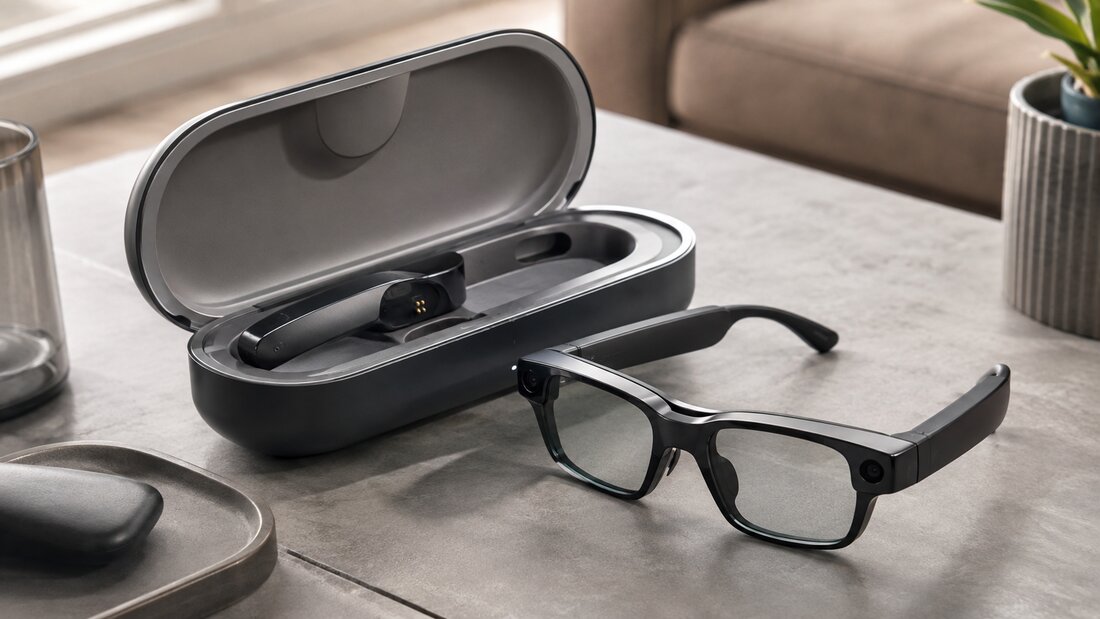
Chipset choice constrains what you can add later. In AI glasses, the common reference architectures fall into three patterns:
- Single AI SoC — one processor handles audio, camera and AI workloads. Simpler design, but power management becomes the binding constraint.
- AI SoC plus low-power audio coprocessor — the coprocessor handles Bluetooth audio and sensor-hub tasks while the higher-power SoC wakes for camera or AI inference. This dual-chip pattern is a common way to protect battery endurance on camera-enabled glasses, but it adds firmware complexity and inter-processor wake-up tuning.
- Camera-oriented ISP platform — cost-oriented architectures built around imaging and video encoding, often with different SDK openness than the AR-oriented platforms.
Reference platforms in the market include Qualcomm’s Snapdragon AR1 family for AI/AR-oriented designs, domestic ISP solutions for cost-oriented camera glasses, and low-power Bluetooth audio SoCs from vendors such as Bestechnic for the audio path. These are reference architecture options, not confirmed production components for any specific model. The production BOM must be confirmed against the model-specific specification sheet.
The roadmap implication: if you plan to add on-device AI features, higher-resolution capture or a display in a later phase, choose a platform family that can support that trajectory. Retrofitting a more capable SoC later usually means a new mainboard, new firmware, new thermal validation and a new certification cycle — effectively a new project.
3. Firmware, App and SDK Scope Must Be Defined Before Quotation
AI glasses are a three-part product: hardware, firmware and a companion application. Roadmaps frequently under-specify the last two, and that is where budget overruns concentrate.
App customization in OEM/ODM projects typically sits on a ladder:
- Basic white-label — logo replacement, splash screen, color theme, application name.
- Mid-level UI — UI element customization, language packages, function-module ordering.
- Advanced — enterprise-specific translation language packages, industry-specific AI assistant behavior, customer backend or cloud-platform integration.
- Customer-owned app — the buyer develops the application and integrates camera, audio and sensor data through SDK/API interfaces.
Each level has a different dependency. The customer-owned route only works if the platform actually exposes the camera API, sensor-fusion interface and OTA interface you need. White-label routes commonly provide restricted SDK access, limited documentation and limited firmware-update rights; deeper ODM routes may support more complete SDK access and joint engineering, subject to platform and contract.
Roadmap rule: do not approve a project plan that lists “custom app” as a line item without specifying who owns the firmware, who holds OTA authority, what API depth is contractually promised, and who owns cloud-AI data. These are contract terms, not engineering defaults.
4. Use Phase Gates, Not a Single Sample Approval
A workable AI glasses roadmap uses gates. Each gate has a buyer decision, not just a supplier deliverable. The structure below reflects typical industry practice; exact steps and durations depend on the selected platform and project scope.
| Gate | What is locked | Buyer decision |
|---|---|---|
| Concept | Product family, primary use case, target markets, frame material direction, prescription-lens requirement | Approve architecture and market scope |
| Spec freeze | Function list, chipset family, camera/audio configuration, battery target, app customization level, certification markets | Freeze the spec in writing before quotation is treated as final |
| Engineering sample | Structure and ID, image quality where applicable, audio noise reduction, AI response latency, wearing comfort | Test against your own acceptance criteria, not a demo |
| Pilot validation | Yield, stability, optical calibration on AR projects | Approve pilot results before mass-production commitment |
| Certification planning | Applicable standards, test scope, documentation package, certificate holder | Confirm scope with the laboratory and authority path |
| Mass production | Final specification, packaging, accessories, inspection plan | Sign off final spec and AQL before the run |
Sample lead times in current OEM/ODM practice illustrate why the gates matter. Existing audio or camera models with simple logo or packaging changes may move relatively quickly; firmware or UI adjustments on an existing platform take longer; ODM structure or mainboard customization for audio or camera models takes longer still; and AR waveguide projects including optical adjustment are the longest of the four. Exact durations are project-dependent and are not commitments — hardware complexity, optical development, firmware, app integration and material availability all move them. Ask your supplier to confirm the sample schedule in writing against your frozen specification rather than relying on a generic estimate.
5. Certification Planning Belongs in the Roadmap, Not at the End
Certification is a scope question before it is a testing question. CE, FCC and RoHS are the common baseline references for European and US market entry, but the applicable scope depends on the specific model, configuration, radio technology, battery design, intended use and target market. Bluetooth qualification, photobiological safety evaluation for optical sources, China-market requirements and privacy-related obligations for camera-enabled devices may also apply depending on the product and destination.
Two roadmap errors are common:
- Treating factory capability as model certification. A manufacturer supporting applicable CE, FCC and RoHS applications does not mean every model already holds those certificates. Certificate status must be verified per model, per configuration and per market.
- Certifying a configuration you will not ship. If the production unit adds a different camera module, battery or radio configuration than the tested sample, the certificate may not cover it. Lock the shipping configuration before the test plan is written.
Whether a given supplier can support certification or compliance applications, and what documentation or testing support it can provide, must be confirmed for the specific project with the applicable authority, qualified laboratory or regulatory advisor. Final certification scope, required documents, testing scope and approval depend on the specific product model, configuration, target market, laboratory and applicable authority — and approval is not guaranteed. For high-risk regulatory questions, confirm current requirements with the applicable authority, qualified laboratory or regulatory advisor.
Buyer action: build a certification document checklist into the roadmap at spec freeze, and assign an owner for the certificate-holder arrangement in the contract.
6. Roadmap Risks Specific to AI Glasses

AI glasses carry risks that general wearable roadmaps do not capture well:
- Always-on audio and camera privacy design. Camera-enabled glasses need recording indicators, data-handling decisions and destination-market privacy review. These are design inputs, not launch-week fixes.
- Battery and thermal trade-offs. Endurance depends on processor architecture, camera use, AI inference, display use, audio workload, network connectivity, firmware optimization and battery capacity. Adding a feature late usually means re-tuning power scheduling, especially on dual-chip designs.
- Connectivity assumptions. Basic audio and calling may work offline, but cloud AI assistants and online translation generally require network connectivity. Do not market cloud-dependent functions as fully offline.
- Water-resistance ceiling. Camera openings, microphone-array openings and optical modules generally lower the practical water-resistance level compared with many smart rings and watches. Splash resistance is a mainstream reference; it is not immersion protection.
- Multi-language and voice-assistant scope. Language packages, wake-word behavior and assistant backends are firmware and cloud decisions that constrain later market expansion.
Each of these should appear in the roadmap as a named workstream with an owner, not as an implicit assumption.
7. Roadmap Red Flags and a Lightweight Template
Watch for these supplier behaviors during roadmap discussions:
- Quoting a firm price before the specification is frozen.
- Promising fixed certification timelines or guaranteed approval.
- Leaving firmware ownership, OTA authority, SDK depth or cloud-data ownership undefined in the agreement.
- Presenting reference BOM components as confirmed production components without a model-specific specification sheet.
- Describing a white-label platform as if it had the SDK access of a deep ODM project.
- Quoting a single architecture for a use case that clearly spans audio, camera and display requirements.
A lightweight roadmap template you can adapt:
- Product family and use case — one paragraph, one architecture.
- Target markets and certification scope — per market, per configuration.
- Function list with priority tiers — must-have at launch, planned for later firmware, out of scope.
- Platform and chipset family — with the reason for the choice and the upgrade path.
- App and SDK scope — customization level, API requirements, ownership terms.
- Sample and pilot gates — acceptance criteria per gate.
- Commercial assumptions — MOQ tier, packaging, accessories, inspection plan.
- Open risks — privacy, power, optical yield, supply chain.
Update or restart? Update the existing roadmap when the architecture, platform family and certification scope remain valid and the change is confined to firmware, app or packaging. Restart when the product family changes, the platform must change to support a new capability, or the target-market certification scope shifts materially — those changes cascade into new tooling, new validation and a new certification cycle.
Pineeon Manufacturer-Side Recommendation
From the factory side, the projects that move cleanly share three habits. First, they freeze the specification before treating a quotation as final, so the BOM, firmware scope and certification plan are estimated against the same product. Second, they separate the three AI glasses families early — audio-only, camera AI and AR display — because MOQ, power, software and optical risk differ enough that mixing them in one roadmap creates false comparisons. Third, they put software and certification ownership into the contract at the same time as the hardware terms, rather than discovering the gap during pilot validation.
Pineeon is a B2B private label Smart Wearable, Computer Peripheral and AI Hardware OEM/ODM manufacturer based in Shenzhen, China, operating since 2000 and ISO 9001:2015-certified, serving brands and buyers in 40+ countries. We evaluate customer requirements before recommending a project approach, and OEM/ODM options depend on the level of hardware, firmware, software, tooling, branding and packaging customization. Final project scope should be confirmed before quotation and development.
For buyers structuring an AI glasses program, the practical next step is to bring a frozen-enough specification and target-market list to the first technical discussion. You can review the platform families and customization routes on our AI glasses OEM/ODM product page, then request a project evaluation against your roadmap gates.
Final specifications, MOQ, pricing, lead time, certification scope, customization capability, software capability, data access and commercial terms are subject to the selected product model, project requirements, technical evaluation and official Pineeon quotation.
Editorial note: This article provides general B2B sourcing and manufacturing information. Legal, regulatory, certification, intellectual-property and market-entry requirements vary by jurisdiction and project. Obtain qualified professional advice and verify the requirements that apply to your product and target market.