Everything You Need to Know About AI Glasses Manufacturing Cost Breakdown
Published November 14, 2026 · Pineeon Insights
Most AI glasses quotes fail not because the factory is expensive, but because the buyer and the factory are pricing different projects. One side is comparing a private-label audio model with a logo change; the other has quoted a camera-enabled ODM build with new tooling, firmware integration and certification support. The unit prices look comparable on paper and are not comparable in reality.
This breakdown explains how AI glasses manufacturing cost is actually structured, which design decisions move the number, and how procurement teams can verify a quote before committing. It is written from the manufacturer side, where cost is built up from tooling, BOM, engineering, compliance, assembly and quality control — not from a single price list.
One rule applies throughout: no credible factory can quote a meaningful AI glasses price without knowing the product family, target market, customization depth and expected volume. Any figure that ignores those inputs should be treated as a placeholder.
Start with the product family, not the price
AI glasses are not one product class. Pineeon’s internal product framework separates them into three families, and the cost structure of each is materially different:
- Audio AI glasses — open-ear speakers, microphone array, Bluetooth calling and voice assistant wake-up. No camera, no display. Lowest technical complexity, lowest BOM, and the lowest MOQ tier of the three families.
- Camera AI glasses — camera module, microphone array and AI processing for photo, video, AI interaction and translation-related applications. Higher BOM, higher power consumption, more complex firmware and app integration, plus camera privacy considerations.
- AR display glasses — waveguide and/or MicroLED optical modules for visual overlay. Highest technical threshold, highest MOQ tier, longest development cycle and additional optical-yield risk.
This classification should happen before any quotation discussion. A buyer who asks for “AI glasses pricing” without specifying the family will receive either a generic range or a quote for the wrong architecture. Both waste time.
For reference, Pineeon’s internal MOQ framework follows the same logic: selected white-label stock models may start from a low-volume tier, standard OEM projects sit at a higher tier, ODM joint development higher still, and full-custom AR waveguide projects at the highest tier. These are reference ranges, not contractual commitments; final MOQ depends on the selected platform and customization scope and must be confirmed in the official quotation.
The eight cost buckets in an AI glasses quote
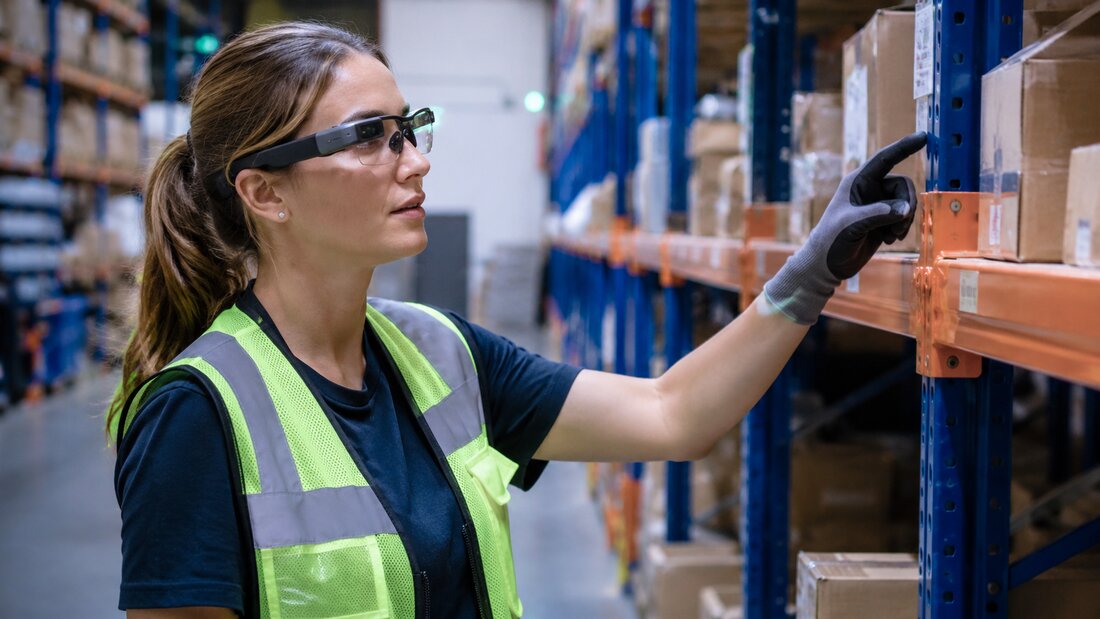
A well-structured quote separates cost buckets that behave differently. When a factory returns one blended unit price, the buyer cannot tell which costs are one-time, which scale with volume, and which are outside the factory’s control.
1. Tooling and molds
Tooling covers frame molds, structural parts, and — for AR projects — optical module fixtures and calibration jigs. Tooling is a one-time cost amortized across the order. It is also the most common source of misunderstanding: buyers often assume the unit price includes tooling when it does not, or assume tooling is free when it has been quietly amortized into a higher unit price.
Two questions resolve this: Is tooling quoted separately or amortized? And who owns the tooling after the project ends? Tooling ownership must be defined in the signed agreement, not assumed.
2. BOM (bill of materials)
The BOM is usually the largest cost bucket and the one most sensitive to design choices. Its main drivers:
- Chipset tier. An audio coprocessor alone supports a low-power audio architecture. A camera or AR product typically adds a higher-performance AI SoC, and some designs use a dual-chip architecture (AI SoC plus low-power audio coprocessor) to balance performance and battery. Each added processor raises BOM and engineering effort.
- Camera module. Camera-enabled models add sensor, lens, ISP requirements and mechanical openings that affect frame design and water-resistance ceiling.
- Optical waveguide/display. For AR, the optical module is typically the single most expensive and highest-risk BOM line, with yield and calibration implications beyond the component price itself.
- Battery. Capacity, charging case inclusion and power architecture all affect cost. Camera and AR products draw more power and generally need more battery engineering, not just a larger cell.
- Microphone array and speakers. Array count and audio processing requirements scale with call quality and noise-reduction targets.
- Frame material. Acetate, titanium alloy and TR90 differ in material cost, machining difficulty and tooling requirements.
Pineeon’s internal knowledge base references several chipset and sensor families as architecture options — including Qualcomm Snapdragon AR1-family platforms, Bestechnic audio coprocessors, domestic ISP solutions and Sony camera sensors. These are reference options only, not confirmed production components for any specific model. The BOM must be confirmed model by model against the specification sheet.
3. Firmware and software development (NRE)
This is the bucket buyers most often underestimate. It includes firmware adaptation, UI changes, app customization, SDK/API integration, AI model or translation engine integration, and OTA setup where contractually agreed.
Customization depth maps roughly to cost:
- Basic white-label: logo, splash screen, color theme, app name.
- Mid-level UI: UI elements, language packages, function module order.
- Advanced: enterprise language packages, industry-specific AI assistant, customer backend or cloud integration.
- Full custom: customer-developed app using camera, audio or sensor APIs through an SDK.
SDK depth, camera API availability and OTA authority depend on the selected platform and must be confirmed before project approval. White-label routes typically offer more limited SDK access than deeper ODM routes.
4. Sample and prototyping
Sample cost covers engineering time, small-batch materials and, for AR, optical adjustment. Sample fees may be credited after a qualifying bulk order according to the commercial agreement, but this should be stated in writing rather than assumed.
Sample lead time is a useful proxy for engineering complexity: existing audio or camera models with simple branding changes are the fastest route; firmware adjustments take longer; ODM structure or mainboard customization longer still; and AR waveguide samples are the longest. Exact sample timelines depend on hardware complexity, optical development, firmware and app integration, and material availability, and should be confirmed per project.
5. Certification and compliance support
Certification is a real budget line, not a formality. CE, FCC and RoHS are the basic reference items for many export markets; Bluetooth qualification, optical safety evaluation for AR display projects, China-market requirements and privacy-related review for camera-enabled products may also apply depending on architecture and destination.
Certification scope, required documents, testing scope, cost and approval depend on the specific product model, configuration, target market, laboratory and applicable authority, and should be confirmed with the applicable authority, qualified laboratory or regulatory advisor. No factory should guarantee final certification or regulatory approval.
Buyers should confirm which certification costs are included in the quote, which are billed at actual cost, and who holds the certificate.
6. Packaging and branding
Standard packaging with a custom sticker and localized manual is the low-cost route. Fully custom packaging design, branded accessories and premium cases add cost and usually add lead time. Accessories may include a charging case where applicable, cable, lens-cleaning cloth, spare nose pads and quick-start guide — exact scope depends on the selected model.
7. Assembly and quality control
Assembly cost reflects labor time and test time. AI glasses QC typically follows IQC → IPQC → FQC → OQC, with AI-glasses-specific checks such as camera image quality, audio noise reduction, AI response latency, Bluetooth stability and wearing comfort. AR products add optical-module bonding and calibration as key control points, where optical yield directly affects effective unit cost.
OQC sampling commonly references AQL 1.5 or AQL 2.5, but the exact AQL and reliability tests should be confirmed in the project inspection specification.
8. Logistics and export
Air freight, sea freight, delivery to a customer warehouse or direct shipment to FBA are all commercially arrangeable, but freight cost varies with battery shipping rules, packaging volume and destination. This line should be quoted separately so it can be compared across suppliers.
How design decisions shift the cost
Cost is largely designed in before the quote exists. The table below summarizes the direction of the effect — not specific prices, which must come from a project quotation.
| Design decision | Cost effect | Manufacturer-side reasoning |
|---|---|---|
| Audio-only vs camera | Camera raises BOM, firmware and QC cost | Adds sensor, lens, ISP requirements, privacy review and image-quality testing |
| Camera vs AR display | AR raises cost most sharply | Optical modules, calibration, optical yield risk and longer development |
| Frame material upgrade | Moderate increase | Material price plus machining difficulty and tooling changes |
| Larger battery / charging case | Moderate increase | Cell cost, space constraints inside the temple, charging architecture |
| Higher-tier AI SoC | Significant increase | Silicon cost, thermal design, power scheduling, firmware complexity |
| Deeper app/SDK integration | NRE increase, unit price largely unchanged | Engineering hours are one-time; hardware BOM stays similar |
| Custom packaging | Modest increase plus lead time | Design, tooling for inserts, print minimums |
| Higher volume | Lower unit cost | Tooling amortization and material purchasing scale |
The practical implication: if a quote is too high, the fastest lever is usually architecture or feature scope, not pressuring the factory on labor. If a quote is suspiciously low, check whether tooling, NRE, certification and freight were excluded.
Buyer checklist: verifying an AI glasses cost quote
Use this checklist before comparing two OEM or ODM proposals. A quote that cannot answer these items is not yet comparable.
- Itemized BOM: Is the BOM broken down by major component, or is it a single blended figure?
- Tooling separated: Is tooling quoted as one-time NRE, amortized, or excluded? Who owns it?
- NRE separated from unit price: Are firmware, app and SDK integration costs listed separately from per-unit manufacturing?
- Certification scope: Which markets and which certificates are included? Which are billed at actual cost? Who is the certificate holder?
- MOQ basis: Is the MOQ tied to the selected platform, and how does unit price change at higher volumes?
- Sample terms: Is the sample fee credited against a bulk order, and under what conditions?
- QC plan: What AQL is used, and which reliability tests are included versus optional?
- Packaging and accessories: What is standard, what is custom, and what is excluded?
- Logistics: Is freight quoted separately, and are battery shipping requirements addressed?
- Software rights: Are SDK access, OTA authority, firmware ownership and cloud data ownership defined in the contract?
What a factory needs to produce a meaningful quote
Procurement teams often send a short inquiry and receive a wide range in return. The range is wide because the input was thin. A usable RFQ for AI glasses should include:
- Target market and certification markets — this determines compliance scope and cost.
- Product family — audio AI, camera AI or AR display.
- Required functions — translation, camera, navigation, AI assistant, calling, music.
- Frame material and ID requirements — including prescription-lens adaptation if relevant.
- Customization depth — logo only, packaging, UI, firmware, app, SDK integration.
- Packaging and accessory expectations.
- Expected volume and launch timeline — including whether the first order is a market test or a full launch.
- Software ownership expectations — SDK access, OTA, data handling.
With these inputs, a factory can quote the right architecture and flag the cost drivers early. Without them, the quote is a guess dressed as a price.
Common cost misunderstandings
- Assuming unit price includes tooling. It usually does not, unless explicitly amortized.
- Ignoring certification and testing budget. Compliance is a project cost with its own timeline.
- Underestimating firmware and app integration. Software NRE can rival hardware NRE on camera and AR projects.
- Treating MOQ as fixed. MOQ is project-dependent and tied to platform, tooling and customization depth.
- Comparing quotes across different architectures. An audio quote and a camera quote are not substitutes.
- Assuming every model has open SDK or camera API access. This is platform- and contract-specific.
- Assuming cloud AI functions work offline. Cloud-dependent translation and assistants generally require connectivity.
Pineeon Manufacturer-Side Recommendation
Before requesting AI glasses quotes, define the product family and the customization depth in writing, then ask each supplier to quote in the same structure: tooling, BOM, NRE, certification support, packaging, assembly and QC, and logistics as separate lines. This single step makes proposals comparable and exposes hidden exclusions early.
For buyers who want to move quickly, the practical sequence is: start with an existing platform for a market test, confirm the sample against real use conditions, then invest in deeper customization only after the product-market fit is clear. Deeper ODM work — new structure, mainboard changes, custom firmware or AR optics — carries higher NRE and longer timelines, and should be scoped with a written specification before quotation.
Certification documentation, testing and compliance-support capabilities vary by supplier and project. Confirm the exact scope, responsible parties and available records in writing before relying on them.
To review the platform options and start a structured cost discussion, see our AI glasses OEM/ODM manufacturing page.