AI Glasses Certification Requirements: What Distributors Should Know
Published November 12, 2026 · Pineeon Insights
If you are importing AI glasses for resale, the certification question is rarely “does this product have CE?” It is “which documents exist for this exact model and configuration, in this target market, and who is allowed to rely on them?” AI glasses combine a radio transmitter, a lithium battery, a camera, microphones and — in some models — an optical display. Each of those elements can pull the product into a different set of requirements, and the requirements change when the configuration changes.
This guide is written from the manufacturer side of the table. It explains how certification scope is actually determined for AI glasses, what a distributor should request before committing to a bulk order, and where supplier claims most often fail to hold up under scrutiny. It does not list certification numbers, costs or timelines, because those are model-, laboratory- and market-specific and must be verified for your project.
Why AI Glasses Certification Is a Matrix, Not a Checklist
A distributor who asks for “the CE certificate” for AI glasses is asking for something that may not exist as a single document. Certification scope follows the product’s technical characteristics and the destination market’s rules. For AI glasses, at least four dimensions drive that scope:
- Radio. Bluetooth and Wi-Fi modules bring radio equipment requirements in many markets. The radio module, antenna design and transmit power matter, and a module change can invalidate earlier test evidence.
- Battery. Lithium cells and packs bring transport and safety documentation requirements that are separate from product compliance marking.
- Camera and microphones. Camera-enabled AI glasses may trigger privacy, recording-notice and data-processing obligations that are not traditional hardware certifications but are still market-entry conditions.
- Display and optics. AR display models may require photobiological safety evaluation of the optical source, depending on the product and market.
The practical consequence: certification evidence is configuration-specific. An audio-only AI glasses model and a camera AI glasses model from the same supplier are different products for compliance purposes. A distributor should never accept a certificate for “AI glasses” as a category — only for a defined model and configuration.
The Core Programs Distributors Will Encounter
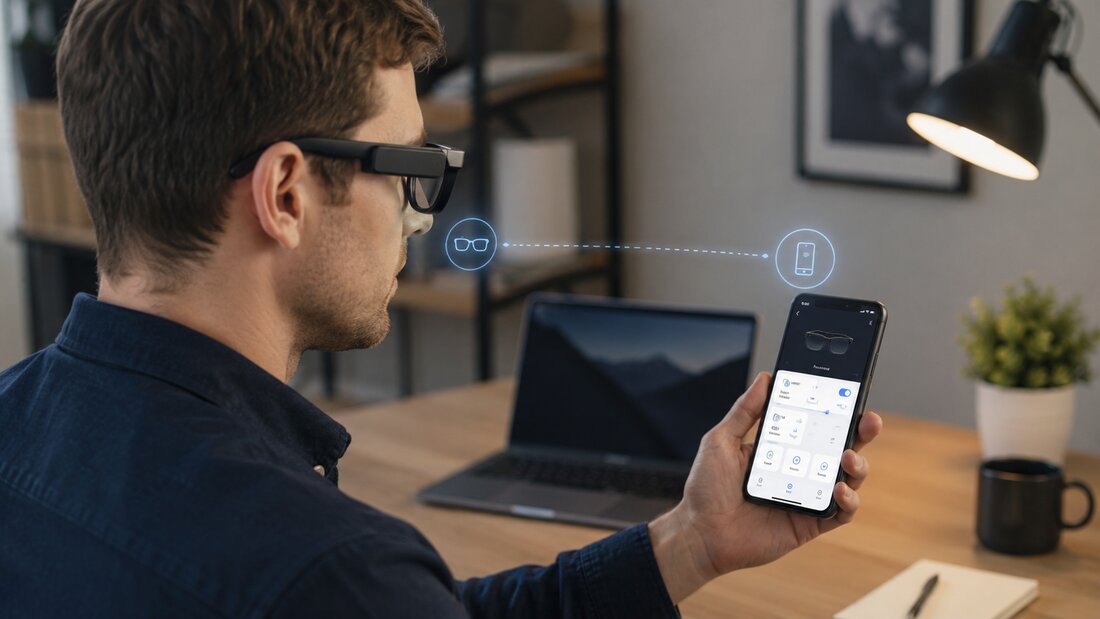
The table below summarizes the programs most commonly discussed for AI glasses. It is a general orientation, not a legal determination for your market.
| Typical scope | What the distributor should confirm | |
|---|---|---|
| Certification documentation, testing and compliance-support capabilities vary by supplier and project. Confirm the exact scope, responsible parties and available records in writing before relying on them. | European market access for applicable product directives/regulations | Which directives apply to this configuration; the declaration of conformity; the technical file scope; the responsible economic operator in the EU |
| Certification documentation, testing and compliance-support capabilities vary by supplier and project. Confirm the exact scope, responsible parties and available records in writing before relying on them. | United States radio-frequency equipment requirements | Whether the device is authorized under the correct procedure; the grantee and model identifier; whether the radio module matches the quoted BOM |
| Certification documentation, testing and compliance-support capabilities vary by supplier and project. Confirm the exact scope, responsible parties and available records in writing before relying on them. | Restricted hazardous substances in electrical and electronic equipment | Whether compliance is declared for the finished product, and whether the declaration covers the actual materials and suppliers used |
| Bluetooth qualification (BQB) | Bluetooth-related qualification where applicable | Whether the Bluetooth implementation is covered and by whom |
| Battery transport documentation | Lithium battery transport requirements (for example, UN38.3-type test documentation) | Whether current test documentation exists for the exact cell/pack, and whether shipping documentation matches |
| Optical safety (for example, IEC 62471-type evaluation) | Photobiological safety of optical sources, where applicable to display models | Whether the display/optical source has been evaluated for the specific model |
Two cautions. First, “CE marked ai glasses” is a claim about a marking, not proof that the correct conformity assessment was performed for that configuration. Second, “RoHS compliant ai glasses” should be supported by a declaration that names the product, not a generic statement on a website.
ISO 9001 Is Not Product Certification
This is one of the most common misunderstandings in distributor due diligence. An ISO 9001:2015 certificate tells you that a manufacturer operates a quality management system that has been audited. It says nothing about whether a specific AI glasses model meets CE, FCC or RoHS requirements.
Both types of evidence are useful, but they answer different questions:
- ISO 9001:2015 — company-level: does the factory plan, control and improve its processes?
- CE / FCC / RoHS documentation — product-level: does this model and configuration meet the applicable requirements for this market?
A supplier that presents an ISO certificate in response to a product compliance question has not answered the question. Ask again, specifically, for the product-level documents for the quoted model.
How to Verify Supplier Certification Claims Before a Bulk Order
Verification is a document-matching exercise. The goal is to confirm that the evidence you receive describes the product you are about to buy. A workable procedure:
- Request the declaration of conformity (or equivalent) by model. Check that the model designation matches the quotation, the sample and the packaging artwork.
- Request the relevant test reports. Confirm the report identifies the same model, the same radio module, the same battery pack and the same camera/display configuration.
- Ask for the technical file scope. Who holds it, what it covers, and can it be made available to the authority or your economic operator if requested?
- Cross-check the certificate holder. Is the certificate held by the factory, by a trading company, or by another brand? A certificate held by a third party may not authorize you to place the product on the market under your own brand.
- Confirm the configuration freeze. Ask in writing that the certified configuration is the configuration that will be produced. Any component substitution — radio module, battery, camera sensor — should trigger a re-check.
- Check labeling and language requirements. Marking location, importer identification, language of instructions and packaging statements vary by market.
- Confirm battery transport documentation. Verify that current lithium battery test documentation exists for the exact pack and that shipping paperwork will match.
If any of these items cannot be produced for the quoted model, treat the certification claim as unverified until it is.
Pre-Order Due-Diligence Checklist
Use this checklist as a gate before releasing a purchase order. It is deliberately written for distributors and importers, not for engineers.
- ☐ Product family defined: audio-only, camera AI or AR display.
- ☐ Target markets listed, with the applicable radio, battery, EMC and substance requirements identified per market.
- ☐ Declaration of conformity (or equivalent) received and matched to the quoted model number.
- ☐ Test reports received; model, radio module, battery and camera/display configuration match the quotation.
- ☐ Certificate holder identified; confirm you are authorized to place the product on the market under your brand.
- ☐ Technical file location and custodian confirmed in writing.
- ☐ Lithium battery transport documentation confirmed for the exact cell/pack.
- ☐ Labeling, importer identification and instruction-language requirements confirmed for each market.
- ☐ Privacy and camera-recording obligations reviewed for camera-enabled models.
- ☐ Change-control clause agreed: any BOM change requires re-confirmation of compliance evidence.
- ☐ Written confirmation of which party holds which certificate, and what happens at contract end.
Where Certification Claims Most Often Break Down

From the manufacturer side, the failures are predictable. They usually involve one of the following:
- Certificate-to-model mismatch. The certificate exists, but for a different model, a different radio module or an earlier hardware revision.
- Holder mismatch. The certificate is held by the factory or another brand, and the distributor assumes it transfers automatically. It does not; the commercial and regulatory arrangements must be defined.
- Configuration drift. A component is substituted during production to manage supply, and no one re-checks whether the test evidence still applies.
- Scope confusion. A company-level ISO certificate is presented as product compliance evidence.
- Market assumptions. A product is assumed to be acceptable in a market because it was accepted in another one.
- Privacy blind spot. Camera-enabled AI glasses are sold without reviewing recording-notice, data-processing and privacy obligations in the destination market.
Each of these is cheaper to resolve before the purchase order than after the goods arrive.
High-Risk Areas That Need Specialist Confirmation
Some topics should not be resolved by a supplier’s assurance alone. For AI glasses, the recurring high-risk areas are:
- Health and medical claims. If marketing implies a medical or diagnostic function, the product may fall under a different regulatory regime. Confirm with the applicable authority or a qualified regulatory advisor before making such claims.
- Data privacy. Camera and microphone data, cloud AI processing and companion apps can create obligations under privacy laws in the destination market. These are not hardware certifications, but they are market-entry conditions.
- Camera use and recording notices. Some markets impose specific requirements on recording-capable wearable devices.
- Optical safety for display models. AR display products may require separate evaluation of the optical source.
For all of these, the correct action is to confirm current requirements with the applicable authority, a qualified laboratory or a regulatory advisor — not to rely on a generic statement from the supply chain.
Pineeon Manufacturer-Side Recommendation
Pineeon is an ISO 9001:2015-certified private label Smart Wearable, Computer Peripheral & AI Hardware OEM/ODM manufacturer based in Shenzhen, China, serving brands and buyers in 40+ countries since 2000. In our experience, distributors get better outcomes when they treat certification as a project deliverable rather than a document request at the end of the order.
Concretely, we recommend the following sequence:
- Define the product family first. Audio-only, camera AI and AR display AI glasses have materially different certification scope. Deciding this before the quotation prevents later re-testing.
- Name the target markets before sampling. Market list drives radio, battery, labeling and language requirements.
- Freeze the configuration before testing. Radio module, battery pack, camera sensor and display source should be locked, with a written change-control rule.
- Agree who holds what. Certificate holder, technical file custodian and authorization to place the product on the market under your brand should be defined in the contract, not assumed.
- Plan the paperwork in parallel with development. Certification and compliance applications should be scheduled alongside engineering milestones, not after them, and the actual sequence depends on the laboratory and authority involved.
Certification documentation, testing and compliance-support capabilities vary by supplier and project. Confirm the exact scope, responsible parties and available records in writing before relying on them.
What to Confirm Before You Commit
Certification is one part of a distributor’s risk picture, but it is the part that is hardest to fix after import. The practical rule is simple: match the document to the model, match the model to the configuration, and match the configuration to the market. If any link in that chain is missing, the claim is not yet verified.
For a custom ai glasses program, build the certification conversation into the sample and pilot stages. It is far easier to adjust a radio module or battery choice during engineering than to re-certify a finished product after the first container has shipped.
Editorial note: This article provides general B2B sourcing and manufacturing information. Legal, regulatory, certification, intellectual-property and market-entry requirements vary by jurisdiction and project. Obtain qualified professional advice and verify the requirements that apply to your product and target market.
Related Pineeon Resources
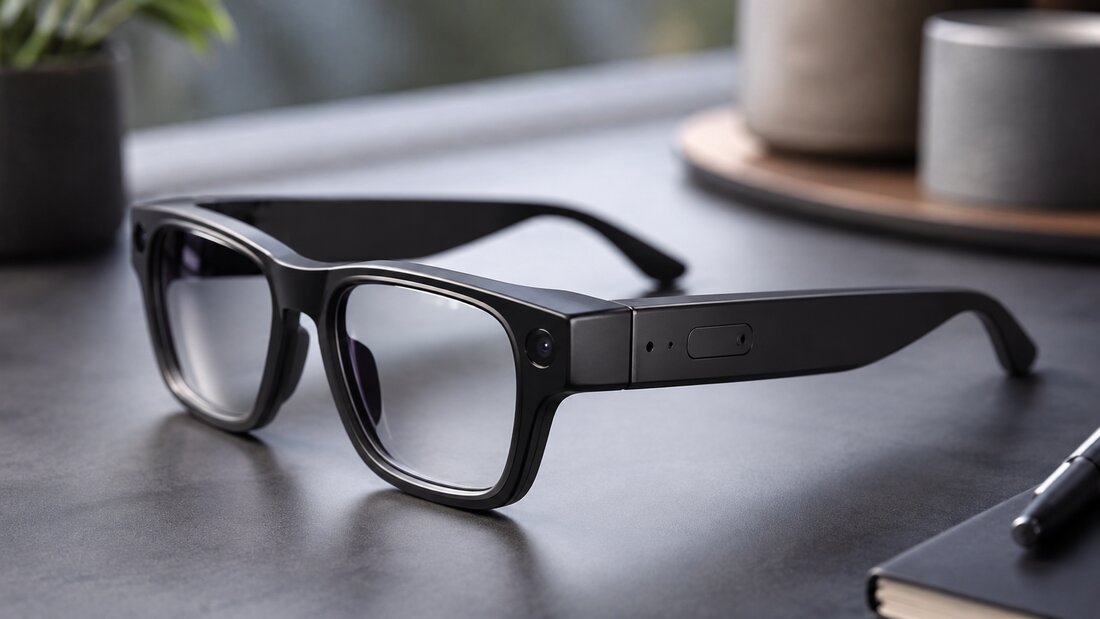
For product specifications, available configurations and OEM/ODM project information, see the AI Glasses product page.