Wholesalers buying AI translators rarely lose money on the translation engine itself. They lose it on the parts around it: a microphone array that cannot be second-sourced, a battery whose transport documents arrive late, a display module that goes end-of-life two quarters into a program, or a supplier who swaps a component without telling anyone. Component sourcing is where a wholesale program is either protected or exposed.
This guide is written from the manufacturer side of that problem. It explains how an AI translator breaks down into component groups, which groups carry the most sourcing risk, what a buyer should demand in writing before a bulk order, and how to structure contracts so that component substitution is a controlled decision rather than a surprise. It applies to translation pens, pocket translators and translator earbuds, though the risk profile differs by form factor.
One framing rule up front: component choices are project-dependent. A platform that supports meaningful offline translation needs more local compute, memory and storage than a cloud-first device. That single architectural decision cascades into cost, battery, thermal design and supply risk. Buyers who treat the BOM as a fixed list rather than a set of trade-offs usually discover the trade-offs later, at a worse moment.
Why component sourcing, not the translation engine, is the wholesaler’s real risk
Translation quality is visible in a demo. Component risk is invisible until it is expensive. A wholesaler placing a bulk AI translator order is effectively underwriting four things at once: the bill of materials (BOM), the supplier’s change-control discipline, the component lifecycle, and the documentation trail that customs and regulators will ask for.
Three manufacturer-side realities drive this:
- Consumer-electronics components are shared across many product categories. Audio SoCs, memory, batteries and displays are also consumed by earbuds, wearables and tablets. When allocation tightens in those categories, translator programs compete for the same parts.
- Translation performance is acoustically fragile. Speech recognition depends on microphone placement and acoustic sealing. A “pin-compatible” substitute microphone can pass incoming inspection and still degrade recognition in the field.
- Software and hardware are coupled. Changing the audio SoC or the application processor can invalidate firmware, language packages and acoustic tuning. Component substitution is therefore a software event as much as a hardware one.
For a wholesale buyer, the practical consequence is that supplier evaluation must go beyond price and sample quality. The questions that matter are about BOM control, approved-vendor lists, change notification and lifecycle planning. Those are the topics a generic supplier questionnaire tends to skip.
The AI translator BOM by component group, and what each group means for sourcing
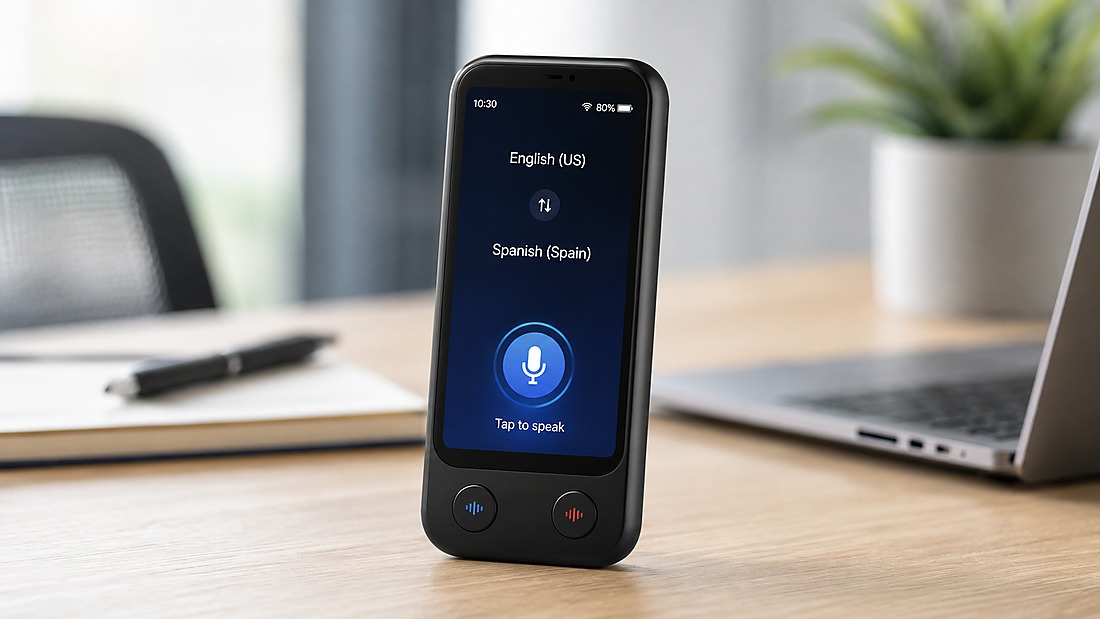
An AI translator is not a single technology. It is a stack of component groups, each with a different sourcing behavior. The table below is a buyer’s orientation tool, not a specification sheet. Exact parts must be confirmed against the selected model’s BOM and specification.
| Component group | Typical role | Primary sourcing risk | What the buyer should verify |
|---|---|---|---|
| Application processor / SoC or compute module | Runs UI, audio pipeline, connectivity; local AI where supported | Single-source, long lead time, EOL | Exact part number, lifecycle statement, second-source or last-time-buy plan |
| Audio SoC / Bluetooth audio platform | Capture, transmission, playback; DSP for earbuds | Firmware lock-in, acoustic retuning on change | Platform family, firmware ownership, substitution approval clause |
| Microphone array and audio front-end | Speech capture, noise reduction | Acoustic sealing, consistency, counterfeit risk | Approved vendor list, incoming acoustic test, sealing process control |
| Speaker / receiver | Playback, speaker mode | Consistency, volume-dependent battery drain | Part approval, lot consistency checks |
| Display and touch module | UI on pens and pocket translators | EOL, touch-controller pairing | Module lifecycle, touch firmware version control |
| Battery and charging | Runtime, charging case where applicable | Transport documentation, cell sourcing, safety | Cell supplier, transport-documentation availability, charging IC approval |
| Wireless module (Wi-Fi/Bluetooth) | Connectivity, cloud access | Radio certification scope | Module certification status, antenna design control |
| Memory and storage | Offline language packages, firmware, logs | Price volatility, allocation | Capacity headroom, supplier and grade, second source |
| Enclosure and mechanicals | Housing, buttons, sealing, tooling | Tooling ownership, cosmetic yield | Tooling ownership in contract, cosmetic AQL |
Two rows deserve emphasis. First, the compute and audio silicon: these determine whether offline translation is feasible at all, and they are the parts most likely to be single-sourced. Second, the microphone front-end: it is the component group where a technically compliant substitution can still damage the product’s core function. A wholesaler who understands only these two rows is already ahead of most buyers.
For context on how these choices map to product forms, see Pineeon’s overview of AI translator OEM/ODM manufacturing, which distinguishes translation pens, pocket translators and translator earbuds as separate architectures.
How component choices cascade into translation performance and cost
Buyers often ask for “offline translation” as a checkbox. On the manufacturer side, that checkbox is a BOM decision with several consequences.
Cloud-first architecture. Audio is captured on the device and processed through an app or cloud service using an ASR–NMT–TTS chain. Hardware cost is lower, language expansion is easier, and model updates happen server-side. The trade-offs are connectivity dependence, recurring cloud-service cost, and data-flow questions that must be settled contractually.
Offline or local-AI architecture. Selected higher-end platforms run language models on-device. This requires more local compute, more memory and storage, and more thermal and battery headroom. It also complicates language-package management and firmware updates. The sourcing consequence is that the compute and memory rows in the BOM become both more expensive and more supply-sensitive.
Latency and accuracy follow the same logic. A device that depends on a network round trip behaves differently from one that processes locally. Neither is universally better; they serve different use cases and price points. What matters for sourcing is that the buyer defines the requirement before the BOM is frozen, because retrofitting offline capability into a cloud-first design is usually a platform change, not a firmware tweak.
Battery is the other cascade point. Screen size, microphone activity, speaker volume, local AI processing and wireless activity all draw from the same cell. A wholesaler who specifies a runtime target without specifying the usage profile is inviting a late-stage battery capacity change, which in turn triggers enclosure, charging and transport-documentation work. Treat runtime as model-specific reference information until it is verified by testing on the exact configuration.
A buyer’s component verification checklist before a bulk order
This checklist is designed to be sent to a candidate AI translator supplier before quotation, and again before mass production. It is deliberately written in buyer language so that answers can be compared across suppliers.
- BOM transparency. Can the supplier provide a BOM at the component-group level, with exact part numbers for the compute module, audio SoC, microphone, battery cell, display module and wireless module? If not, why not?
- Approved vendor lists. For each critical component, which manufacturers are approved, and is there more than one?
- Second-source availability. Which components have a qualified second source, and which are single-sourced? For single-sourced parts, what is the last-time-buy or bridge-stock plan?
- Lifecycle and EOL risk. What is the supplier’s process for monitoring end-of-life notices, and how much notice will the buyer receive?
- Counterfeit and grey-market controls. How are components procured? Are purchases made through authorized distribution, and can traceability be demonstrated on request?
- Incoming inspection. What does IQC actually test for the critical parts, and are acoustic or functional tests included, not just visual checks?
- Change notification. Is there a written PCN (product change notification) process? What is the notice period, and does substitution require buyer approval?
- Version control. How are hardware revisions and firmware versions tracked, and how does the buyer know which version a shipment contains?
- Documentation support. Can the supplier provide material declarations and radio/battery documentation relevant to the target market, subject to the specific model and configuration?
A supplier that answers all nine clearly is not necessarily the cheapest. It is, however, the one whose BOM will not change underneath a wholesale program without warning.
Supply-risk management for wholesalers: single-source, allocation and buffer planning
Component shortages do not announce themselves evenly. They arrive as extended lead times on one or two parts, and they translate into MOQ changes, delivery slippage and, occasionally, quiet substitutions. Wholesalers can manage this with a few structural habits.
Map single points of failure. Ask the supplier to mark every single-sourced component in the BOM. The list is usually shorter than buyers fear and more consequential than they expect.
Separate MOQ from component allocation. A supplier may be able to build a given batch size but not a larger one if a critical part is allocated. Confirm which MOQ tier is actually supported by current component availability, and treat any MOQ figure as a reference until confirmed in an official quotation.
Plan buffer inventory around lead-time volatility, not average lead time. If a part’s lead time has historically ranged widely, the buffer should reflect the upper end for the components that gate final assembly.
Agree substitution rules in advance. Define which component groups may be substituted with notice, which require written approval, and which are frozen for the life of the program. Audio front-end and compute modules usually belong in the frozen or approval-required category.
Stagger certification-linked changes. A component change that affects radio or battery configuration can reopen compliance work. Sequencing those changes away from peak shipping windows protects delivery schedules.
None of this eliminates shortage risk. It converts an unpredictable risk into a managed one, which is what a wholesale program needs.
Compliance-linked component considerations
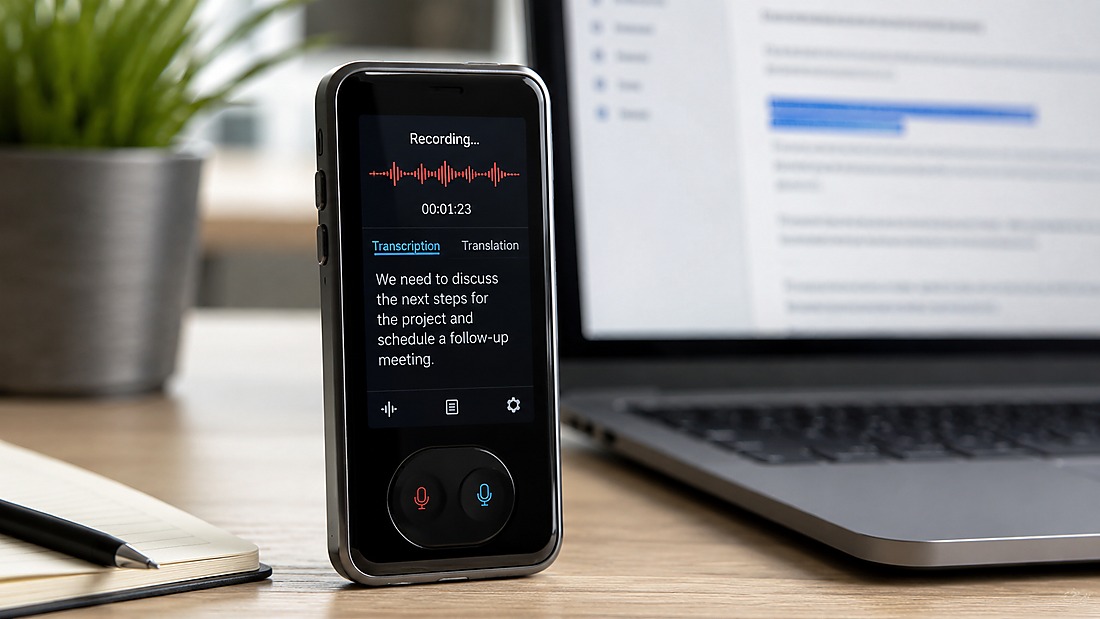
Compliance is often treated as a paperwork task at the end of a project. In practice it is a component-selection constraint. The following points are general considerations and are project- and market-dependent; buyers should confirm current requirements with the applicable laboratory, authority or qualified advisor.
- Radio modules. Wi-Fi and Bluetooth module choice affects the scope of radio testing and the documentation package. Using a pre-certified module can simplify the path, but the final product configuration still determines what is required.
- Batteries. Lithium cells require transport-related documentation, and the availability of that documentation depends on the cell supplier and configuration. Buyers shipping by air should confirm documentation availability early, not at booking.
- Material declarations. RoHS-type declarations depend on component-level material data from suppliers. A supplier that cannot obtain declarations for a substituted part creates a compliance gap.
- Market-specific schemes. CE and FCC are common reference points, but other markets may require additional schemes, and devices with independent cellular modules face a materially different path from Wi-Fi/Bluetooth-only designs.
Whether a given supplier can support CE, FCC or RoHS certification or compliance applications, and what documentation or testing support it can provide, must be confirmed for the specific project with the applicable laboratory, authority or qualified advisor. Final certification scope, required documents, testing scope and approval depend on the specific product model, configuration, target market, laboratory and applicable authority, and approval is not guaranteed.
How to interrogate a factory’s BOM control and change-notification process
Most supplier audits focus on the production line. For component sourcing, the more revealing questions concern document control and engineering change management. A practical sequence:
- Ask for the change-control procedure, not a summary of it. Look for how changes are initiated, who approves them, how customers are notified, and how the effective date is recorded.
- Ask for a recent example. A supplier with a working process can describe a past component change, the notice given and the customer response. A supplier without one will describe the process in the abstract.
- Check version traceability. Ask how a finished unit can be traced to a hardware revision and firmware version. If the answer is “by production date,” probe further.
- Review incoming inspection records for critical parts. Confirm that acoustic and functional tests exist for microphones and audio components, not only dimensional checks.
- Confirm who owns the BOM. In ODM projects, the factory typically controls the BOM; in deeper OEM projects, the buyer may co-own it. Ownership determines who can approve substitutions.
- Ask about firmware and language-package versioning. For AI translators, software version control is part of component control, because a new audio component may require new tuning.
An ISO 9001:2015-certified quality management system, such as the one Pineeon operates, provides a framework for these controls, but the buyer should still verify the specific procedures rather than relying on the certificate alone.
Negotiation levers tied to component cost structure
Component-level knowledge gives wholesalers negotiation leverage that price-only discussions do not. The levers are not about squeezing unit price; they are about aligning cost with risk.
- Memory and storage. If offline language packages are not required, capacity can be right-sized. If they are, capacity headroom is a genuine cost driver and should be priced transparently.
- Battery. Runtime targets should be tied to a defined usage profile. Over-specifying battery capacity adds cost and transport complexity; under-specifying it invites field complaints.
- Audio front-end. Microphone and audio SoC choices drive both cost and recognition quality. Buyers can ask for a cost breakdown across audio component tiers and test the trade-off in samples rather than accepting a single configuration.
- Substitution approval clauses. A contract clause requiring written approval for changes to defined critical components is often worth more than a small unit-price concession, because it protects the program’s reputation.
- Buffer and allocation terms. For single-sourced parts, negotiate bridge-stock or last-time-buy commitments rather than accepting open-ended lead times.
These levers work best when the buyer has defined the product architecture first. A wholesaler who knows whether the program is cloud-first or offline-capable can negotiate the BOM that actually serves the market, rather than the BOM the supplier prefers to build.
Pineeon Manufacturer-Side Recommendation
From the manufacturing side, the most common avoidable failure in AI translator component sourcing is a buyer who freezes price before freezing architecture. The sequence that works is the reverse: define the product form and offline requirement, review the component-group BOM, agree substitution rules, then negotiate commercial terms against a known configuration.
Pineeon is a B2B private label Smart Wearable, Computer Peripheral and AI Hardware OEM/ODM manufacturer based in Shenzhen, China, operating since 2000 and ISO 9001:2015-certified, serving brands and buyers in more than 40 countries. For AI translator projects, we evaluate the customer’s requirements before recommending a project approach, because OEM and ODM options depend on the level of hardware, firmware, software, tooling, branding and packaging customization. Final project scope should be confirmed before quotation and development.
Certification documentation, testing and compliance-support capabilities vary by supplier and project. Confirm the exact scope, responsible parties and available records in writing before relying on them.
Related Pineeon Resources
FAQ
Which component group should a wholesaler scrutinize first?
The compute module and the microphone front-end. The compute module determines whether offline translation is feasible and is often single-sourced; the microphone front-end is where a compliant substitution can still degrade speech recognition. Both deserve explicit approval clauses.
Is a second source always better than a single source?
Not automatically. A second source reduces allocation risk but can introduce acoustic or firmware variation. The practical approach is to qualify a second source for non-critical parts and to hold bridge stock or last-time-buy commitments for critical single-sourced parts.
How does offline translation change the BOM?
It generally increases local compute, memory and storage requirements, which raises cost and makes those components more supply-sensitive. It also complicates language-package management. The exact impact depends on the selected platform and the number of offline languages required.
Can a supplier substitute a component without telling the buyer?
It can happen if the contract does not prohibit it. Buyers should require a written change-notification process and written approval for substitutions in defined critical component groups. This is a contract term, not a courtesy.
Does a factory’s CE, FCC or RoHS support mean the product is certified?
No. Factory-level support for applicable certification or compliance applications is a capability, not a model-specific certificate. Buyers should verify the certification status and certificate holder for the exact model and configuration, and confirm requirements with the applicable laboratory or authority.
What documentation should accompany a battery-containing translator shipment?
Transport-related documentation for lithium cells depends on the cell supplier and configuration, and requirements vary by mode of transport and market. Buyers should confirm availability early and verify current requirements with the applicable authority or a qualified advisor.