For boutique brands and startups, launching an AI translator product can be a smart move—but only if you partner with a factory that can deliver consistent quality, reliable software, and the right certifications. A factory audit is your best defense against costly surprises like poor speech recognition, battery issues, or compliance failures. This guide walks you through what to check, what to ask, and how to interpret what you find.
Why Factory Audits Matter for AI Translators
AI translators are more complex than typical consumer electronics. They combine hardware (microphones, speakers, batteries, screens) with software (speech recognition, machine translation, text-to-speech) and often cloud services. A factory that excels at simple Bluetooth speakers may not have the acoustic engineering or software integration skills needed for a reliable translator. Audits help you verify that the manufacturer can actually deliver on its promises—before you commit to a large order.
Key risks that an audit can uncover include:
- Inconsistent microphone alignment leading to poor speech recognition.
- Weak acoustic sealing that lets ambient noise degrade translation quality.
- Inadequate testing of offline language packages or translation latency.
- Lack of certification support for your target markets.
- Unclear data handling for voice and translation data.
Understanding AI Translator Product Architectures
A structured ai translator factory audit should compare engineering capability, quality control and project fit rather than price alone.
A structured ai translator factory audit should compare engineering capability, quality control and project fit rather than price alone.
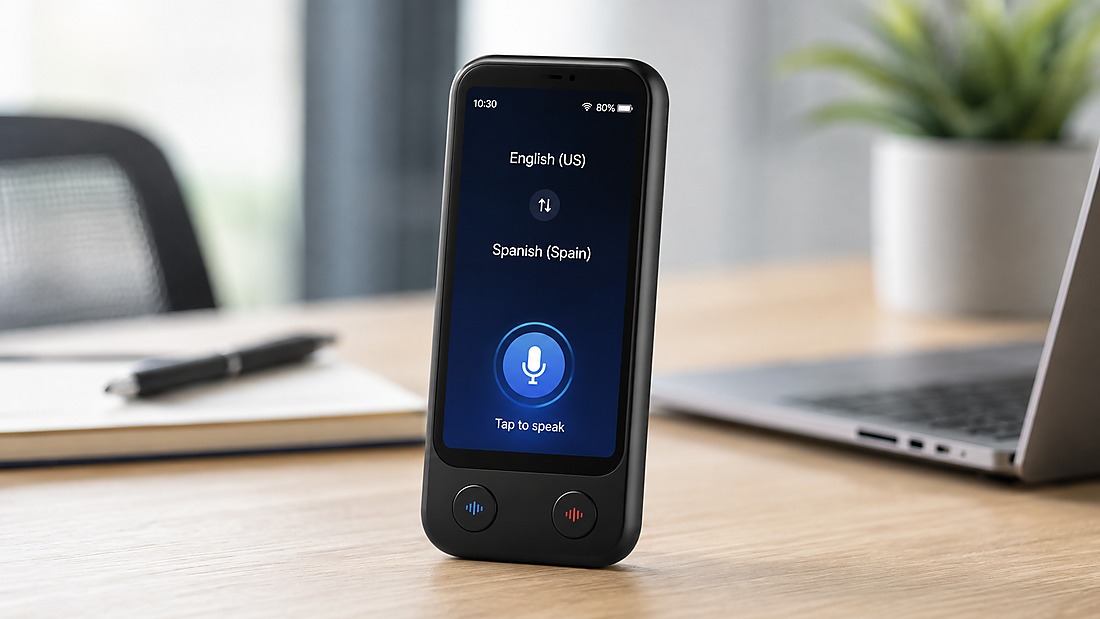
Before auditing, you need to understand the three main product forms, as each has different audit priorities:
- Translation pens – handheld devices with OCR scanning and photo translation. Focus on camera module quality, OCR accuracy, and offline dictionary performance.
- Pocket translators – standalone touchscreen devices for voice translation. Focus on microphone array, speaker quality, battery life, and software UI.
- Translator earbuds – TWS-style earbuds that rely on an app for translation. Focus on acoustic design, Bluetooth stability, and app integration.
Your audit checklist should be tailored to the form factor you plan to source.
Step-by-Step Factory Audit Framework
1. Pre-Audit Preparation
Before visiting or conducting a virtual audit, gather these documents:
- Product specification sheet (if available)
- Target market list (for certification requirements)
- Your quality requirements (e.g., AQL levels, testing criteria)
- List of critical components (SoC, microphone, battery)
Also, define your audit scope: Are you checking overall factory capability, or focusing on a specific product line?
2. Production Capacity and Scalability
Ask about:
- Monthly production capacity for AI translators (be cautious if they quote exact numbers without evidence)
- Number of production lines dedicated to AI translator products
- Experience with similar products (ask for case studies, but verify independently)
- Lead times for samples and mass production
For boutique brands, you may not need huge capacity, but you need assurance that the factory can handle your order sizes without compromising quality.
3. Quality Control Processes
A robust QC system is non-negotiable. Look for:
- IQC (Incoming Quality Control) – How do they inspect incoming components like microphones, batteries, and SoCs?
- IPQC (In-Process Quality Control) – Are there checkpoints during assembly, especially for acoustic sealing and microphone alignment?
- FQC (Final Quality Control) – Do they test speech recognition, translation latency, offline languages, and Bluetooth stability on every unit?
- OQC (Outgoing Quality Control) – What AQL sampling plan do they use? What reliability tests (drop, button life) are performed?
Ask for specific test procedures and pass/fail criteria. For example, how do they test translation accuracy? Do they use standardized audio samples?
4. Testing Capabilities
AI translators require specialized testing. Verify that the factory has:
- Acoustic testing equipment (e.g., anechoic chamber or at least a quiet room)
- Software testing tools for ASR, NMT, and TTS performance
- Battery testing equipment
- Environmental testing (temperature, humidity) if needed
Ask to see test reports from recent projects (redact confidential data).
5. Certification and Compliance Support
Certifications are critical for market access. For AI translators, typical certifications include:
- CE for Europe
- FCC for the US
- RoHS for restricted substances
- Additional ones like UKCA, TELEC (Japan), or CCC (China) depending on your market
During the audit, ask:
- Does the factory have experience with these certifications for similar products?
- Can they provide technical documentation and testing support?
- Who holds the certificate—the factory or the buyer?
Remember, factory support does not guarantee certification approval; it depends on the specific product and market.
6. Software and Cloud Integration Expertise
AI translators rely heavily on software. Evaluate the factory’s capabilities in:
- Firmware customization (button mapping, UI tweaks)
- Integration with translation engines (ASR, NMT, TTS providers)
- App development or white-labeling
- Offline language package management
Ask about their experience with different translation engines and whether they can support customer-owned API accounts.
7. Data Privacy and Security
Voice data is sensitive. Ask about:
- How voice data is handled during testing and production
- Whether data is stored locally or in the cloud
- If customers can use their own cloud accounts
- Data retention policies
Ensure that your contract clearly defines data ownership and processing.
Red Flags to Watch For
- Vague answers about testing – If they can’t describe their QC process in detail, that’s a red flag.
- No dedicated acoustic testing – For translator earbuds, this is critical.
- Overpromising on certifications – If they guarantee certification approval, be skeptical.
- Lack of software expertise – If they only do hardware and outsource software, integration risks increase.
- Unwillingness to share test reports – Transparency is key.
Conducting Remote Audits
For B2B buyers, a useful ai translator factory audit also checks documentation, communication and scalability before supplier approval.
If you can’t visit in person, conduct a virtual audit via video call. Request:
- Live walkthrough of the production line
- Demonstration of QC testing procedures
- Access to test reports and quality data
- Interviews with QC and engineering teams
Also, ask for customer references (with permission) and follow up with them.
Pineeon Manufacturer-Side Recommendation
As an ISO 9001:2015-certified manufacturer based in Shenzhen, China, with over 20 years of experience, we recommend that boutique brands focus on three things during an audit:
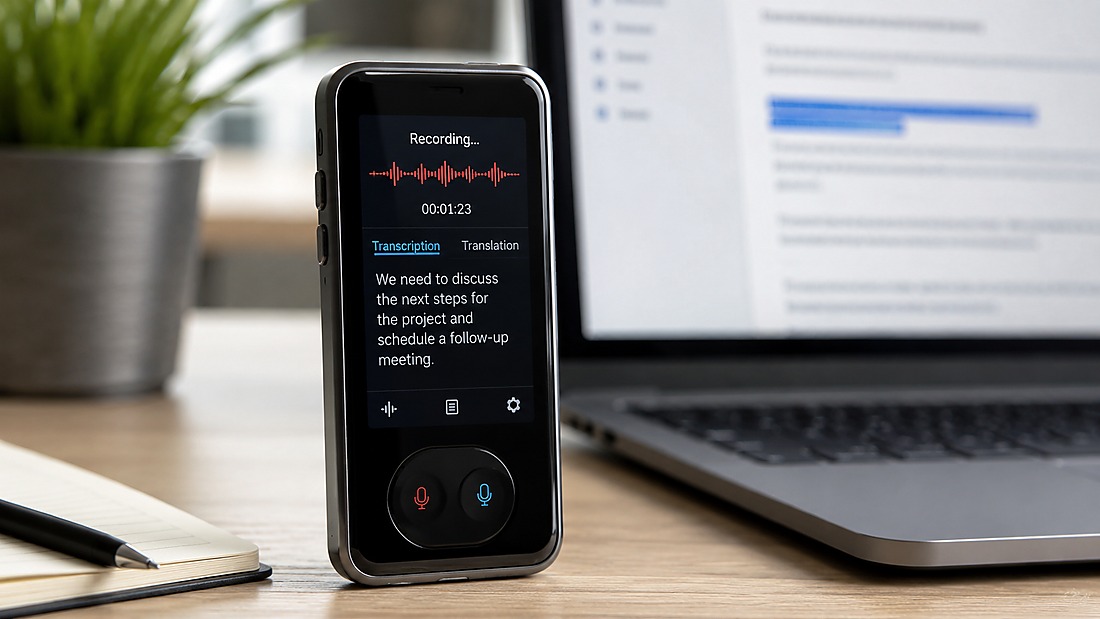
- Acoustic and software testing – Ensure the factory can demonstrate how they test speech recognition and translation latency. Ask for specific test protocols.
- Certification support – Verify their experience with CE, FCC, and RoHS for AI translators. They should be able to provide technical documentation and testing support.
- Data handling – Clarify data ownership and privacy early. You don’t want your customers’ voice data stored on a factory server without your control.
Certification documentation, testing and compliance-support capabilities vary by supplier and project. Confirm the exact scope, responsible parties and available records in writing before relying on them.
Checklist for Your AI Translator Factory Audit
| Area | Key Questions | Acceptable Evidence |
|---|---|---|
| Production Capacity | What is your monthly output for AI translators? How many lines are dedicated? | Production records, line photos |
| Quality Control | Describe your IQC, IPQC, FQC, and OQC processes. What tests are performed on every unit? | QC flowcharts, test reports |
| Acoustic Testing | How do you test microphone performance and acoustic sealing? | Test equipment, sample test results |
| Software Integration | Can you customize firmware? Do you support multiple translation engines? | Software demo, API documentation |
| Certification Support | Have you obtained CE/FCC/RoHS for similar products? Can you provide technical documentation? | Certificates (redacted), support process |
| Data Privacy | How is voice data handled? Can customers use their own cloud accounts? | Data flow diagram, contract clauses |
Common Pitfalls and How to Avoid Them
The goal of a ai translator factory audit is to identify verifiable differences between suppliers and convert them into RFQ questions and acceptance criteria.
- Overemphasizing hardware specs – Translation accuracy depends more on software and acoustic design than on chip specs.
- Ignoring offline language needs – If your target users travel internationally, offline translation is crucial. Verify the factory can support offline language packages.
- Not testing with real-world accents – Ask for test samples and try them with different accents and noisy environments.
- Skipping contract details – Ensure your contract covers IP ownership, data rights, and certification responsibilities.
Editorial note: This article provides general B2B sourcing and manufacturing information. Legal, regulatory, certification, intellectual-property and market-entry requirements vary by jurisdiction and project. Obtain qualified professional advice and verify the requirements that apply to your product and target market.
Conclusion
Auditing an AI translator factory is a critical step for boutique brands. By focusing on quality control, testing capabilities, certification support, and software expertise, you can find a partner that will help you succeed. Use this guide as a starting point, and always verify claims with concrete evidence.
Certification documentation, testing and compliance-support capabilities vary by supplier and project. Confirm the exact scope, responsible parties and available records in writing before relying on them.
For product specifications, available configurations and OEM/ODM project information, see the AI Translator product page.
Buyer Verification Questions Before Certification Planning
Before relying on any certification statement, ask for the exact product model, target market, applicable standard, document owner, and issuing or testing organization. Confirm whether branding, enclosure, antenna, firmware, sensor, battery, packaging, or other project changes could affect the evidence.
For procurement records, keep the supplier quotation, agreed compliance scope, available certificates, test reports, declarations, technical files, and written explanations together with the product specification. When a requirement is unclear, verify it with the applicable authority, qualified laboratory, or specialist for the target market.
Buyer Verification Questions Before Certification Planning
Before relying on any certification statement, ask for the exact product model, target market, applicable standard, document owner, and issuing or testing organization. Confirm whether branding, enclosure, antenna, firmware, sensor, battery, packaging, or other project changes could affect the evidence.
For procurement records, keep the supplier quotation, agreed compliance scope, available certificates, test reports, declarations, technical files, and written explanations together with the product specification. When a requirement is unclear, verify it with the applicable authority, qualified laboratory, or specialist for the target market.