12 Things to Know About Smart Watch Manufacturing Cost Breakdown
Published November 20, 2026 · Pineeon Insights
When a smart watch quotation arrives, the unit price is the least useful number on the page. Two suppliers can quote the same headline figure while carrying completely different assumptions about tooling, certification, packaging, firmware scope and MOQ. For importers, brands and procurement teams, the real task is not finding the lowest number — it is understanding what the number contains, what it excludes, and which parts of it you can influence.
This guide breaks the smart watch manufacturing cost breakdown into the cost buckets a factory actually works with, explains how architecture and specification choices cascade into cost, and gives you a framework to normalize quotes before you commit. It is written from the manufacturer side: what we evaluate before quoting, and what buyers should confirm before signing.
1. The seven cost buckets behind every smart watch quote
A smart watch unit cost is rarely a single figure. It is the sum of several buckets, each with a different owner and a different negotiation logic.
- BOM and components. Main controller or application processor, display, touch panel, battery, sensors, memory, connectivity modules, passives, PCB, enclosure and strap. This is usually the largest bucket and the most sensitive to architecture choice.
- Tooling and molds. Required when the enclosure, strap or mechanical structure is new. Often quoted separately as a one-time cost.
- Assembly and labor. SMT, sub-assembly, final assembly, testing and packing. Driven by product complexity and test time more than by headcount alone.
- Firmware and app development. Ranges from white-label branding to UI changes, protocol work, SDK integration and customer-owned cloud platforms.
- Packaging and branding. Standard color box with a sticker versus fully custom printed packaging, manuals, accessories and retail-ready presentation.
- Testing and certification support. Compliance work for the target market, plus internal reliability testing defined in the inspection plan.
- Logistics and duties. Incoterms, freight mode, destination duties and any warehousing or FBA preparation.
The practical point: some buckets are negotiable per unit (component alternatives, packaging scope), some are one-time (tooling, NRE), and some are outside the factory’s control (freight, duties). A quote that mixes them without labeling makes comparison impossible.
2. Architecture is the first cost decision, not the last
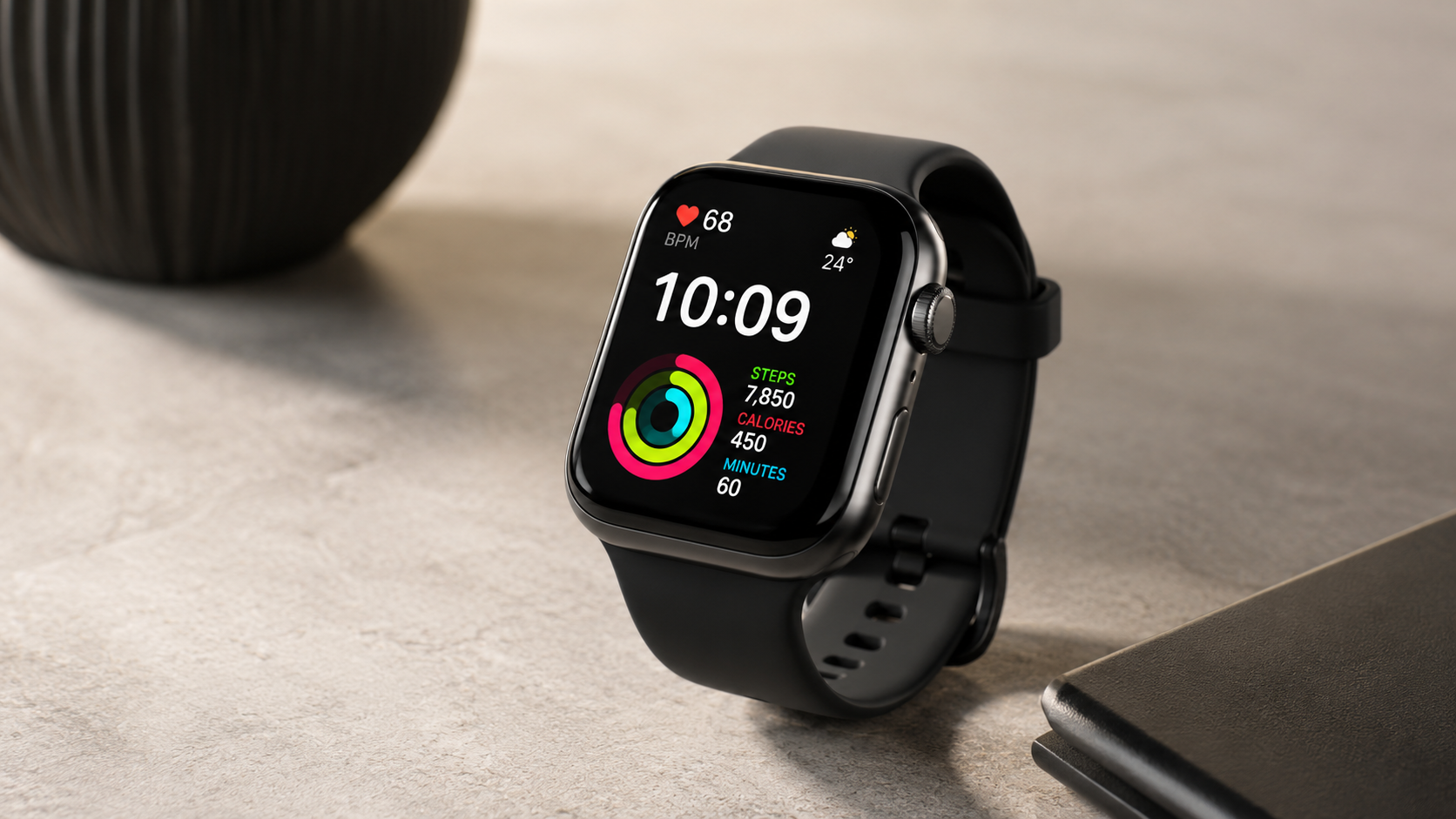
Before chipset, display or sensor selection, the buyer must choose the product architecture. Pineeon smart watches fall into two substantially different families, and the cost consequences are structural.
MCU Bluetooth smart watches use an RTOS-class microcontroller. They are positioned for lower BOM cost, lower power consumption and longer battery life, with Bluetooth connectivity and fitness, wellness and sports use cases. Certification is generally simpler because there is no cellular radio.
Android/4G smart watches use an application processor and support independent connectivity, richer applications, GPS and cellular communication. They carry higher BOM cost, higher power consumption, more complex software integration and additional cellular and market certification requirements.
This is the single largest cost fork in the project. A buyer who specifies 4G, GPS and an independent app ecosystem, then compares the quote against a Bluetooth fitness watch, is comparing two different products. Decide the architecture from the use case first: a sports and wellness band does not need an application processor, and a children’s GPS watch with SOS calling cannot be built on a Bluetooth-only platform.
3. How specification choices cascade into BOM cost
Within either architecture, specification decisions move the BOM in predictable directions. The table below is a qualitative trade-off guide, not a price list — actual cost depends on the selected model, component availability and current quotation.
| Specification decision | Typical cost direction | Manufacturer-side reasoning |
|---|---|---|
| MCU Bluetooth vs Android/4G | Lower vs substantially higher | Application processor, memory, cellular module and RF complexity all increase |
| LCD vs AMOLED display | Lower vs higher | Panel cost, driver complexity and power budget change together |
| Sensor set (PPG, SpO2, ECG, barometer, NFC) | Incremental per sensor | Each sensor adds component cost, PCB area, calibration and firmware work |
| Battery capacity and endurance target | Higher with capacity and power demand | Bigger cell plus more efficient design; 4G and GPS reduce endurance materially |
| Water resistance target (IP67, IP68, 5ATM) | Higher with rating | Sealing design, gaskets, speaker/mic/SIM openings and pressure testing all add cost |
| New enclosure tooling | One-time, significant | Mold design, fabrication and trial shots are separate from unit price |
| Custom app or cloud platform | NRE, not per unit | Development effort is fixed regardless of order quantity |
Two failure modes are common here. First, buyers set a water-resistance target late, after the enclosure is designed, forcing a redesign or a downgrade. Second, buyers add sensors without confirming that the firmware and app can expose the data they expect. Both convert a component decision into an engineering cost.
4. Tooling, NRE and per-unit cost must be separated
One of the most frequent sources of quote confusion is the treatment of one-time costs. Ask every supplier to state explicitly:
- Whether tooling is quoted as a one-time charge, amortized into the unit price, or both.
- Who owns the molds after the project ends, and under what conditions they can be transferred.
- Which development work is NRE (non-recurring engineering) and which is included in the unit price.
- Whether sample fees are credited or refunded against a qualifying bulk order, and under what terms.
An amortized tooling cost can make a unit price look attractive at high volume and punitive at low volume. A one-time tooling charge makes the unit price cleaner but raises the upfront commitment. Neither is wrong — but the buyer must know which model is being used before comparing suppliers. Tooling and IP ownership should always be defined in the signed project agreement, not assumed from a quotation email.
5. Volume and MOQ economics: why the same watch has different prices
Per-unit cost behaves differently across sample, pilot and mass-production tiers. At sample level, the buyer is paying for engineering time and setup, not production efficiency. At pilot level, the factory validates yield, functional consistency and production stability — costs that are partly absorbed and partly reflected in pilot pricing. At mass production, component purchasing scale, line efficiency and test optimization begin to matter.
MOQ is therefore a cost variable, not just a commercial rule. Pineeon’s current internal reference ranges illustrate the pattern: existing MCU Bluetooth platforms with logo and packaging customization are referenced from approximately 1,000 pieces upward; standard ODM projects are referenced from approximately 3,000 pieces, with some projects supporting a lower reference range; and full-custom Android/4G projects involving new tooling, new architecture and application development carry a substantially higher reference MOQ for an initial mass-production order. These are reference values only — final MOQ depends on the selected model, customization scope and official quotation.
The manufacturer-side logic is straightforward: a new mold, a new PCBA architecture, a custom firmware stack or a cellular certification program has to be recovered across the order. Below a certain volume, the one-time cost dominates the unit price and the project stops making sense for both sides.
6. Firmware, app and SDK scope: the invisible cost line

Software scope is where quotes diverge most and where buyers most often underestimate cost. App customization typically falls into four levels:
- Basic white-label: logo, splash screen, color theme and application name.
- Mid-level: UI layout adjustment, function enable/disable settings and language packages.
- Advanced: enterprise health management, family location, community features or customer backend integration.
- Full custom: customer-developed app and cloud platform, integrated with the hardware through SDK and/or API.
Each level implies a different engineering effort and a different contractual conversation. SDK availability, raw sensor data access, cloud API openness and source-code ownership are platform- and contract-specific — they should not be assumed for every model. For 4G/GPS watches, protocol customization (location-reporting frequency, SOS trigger logic, guardian app interaction) is a separate workstream from the mobile app itself.
The cost lesson: define software scope before requesting a quotation. A quote built on “basic branding” and later expanded to “backend integration” will be renegotiated, and the schedule will move with it.
7. Packaging, branding and accessory scope
Packaging is a small per-unit line that becomes expensive when handled late. Standard factory packaging with a custom sticker and localized manual is the lowest-cost route. Custom printed color boxes, branded accessories, retail-ready inserts and market-specific documentation add both unit cost and tooling or plate-making cost. For children’s and elderly safety watches, guardian app instruction cards and SIM installation guides are part of the packaging scope and should be quoted explicitly.
Confirm the accessory list in the order specification: charging cable or dock, quick start guide, quality certificate where applicable, and spare strap on selected models. Accessories omitted from the quote become change orders later.
8. Certification and testing: scope, not just cost
Certification is one of the most frequently mis-scoped cost lines. Whether certification support is available, and what it covers, depends on the specific product model, configuration, target market, laboratory and applicable authority — and approval is not guaranteed. Buyers should confirm with the applicable authority, qualified laboratory or regulatory advisor which requirements apply to their product and market.
For MCU Bluetooth watches, the compliance path is generally simpler. For Android/4G watches, cellular-device and market-specific telecom requirements may apply depending on the destination market and network configuration, and these require separate evaluation. Buyers should confirm in writing which certifications are included in the quote, which are the buyer’s responsibility, and which are merely “supported.” A quote that lists certification as a bullet point without defining scope is not a certification quote.
Internal reliability testing is a separate question. The inspection plan should define which tests are performed — battery aging, water-resistance pressure testing, drop testing, UV life testing, AQL sampling — rather than assuming every optional test is performed on every order.
9. Quote normalization: a buyer’s comparison framework
To compare suppliers fairly, normalize every quote against the same assumptions. Use this checklist before awarding any project.
| Comparison item | What to confirm in writing |
|---|---|
| Architecture and chipset family | MCU Bluetooth or Android/4G; reference platform confirmed against the BOM |
| Specification sheet | Display, sensors, battery, water resistance and connectivity listed identically across quotes |
| BOM-level breakdown | Major components itemized; reference parts distinguished from confirmed production parts |
| Tooling treatment | One-time vs amortized; mold ownership and transfer conditions |
| NRE scope | Firmware, app, SDK, cloud and protocol work listed separately from unit price |
| MOQ assumption | Volume tier the unit price is based on; price at sample, pilot and mass-production tiers |
| Incoterms | EXW, FOB, CIF or DDP; who pays freight, insurance and duties |
| Packaging scope | Box type, manual languages, accessories and retail presentation |
| Certification responsibility | Which certificates are quoted, which are supported, which are buyer-owned |
| Quality plan | IQC/IPQC/FQC/OQC scope, AQL criteria and reliability tests included |
| Lead time basis | Sample and mass-production ranges, with seasonality and component-supply caveats |
A quote that cannot answer these items is not comparable — it is a placeholder. The cheapest normalized quote is the one with the fewest open assumptions, not the lowest headline number.
10. Common cost traps and how they surface
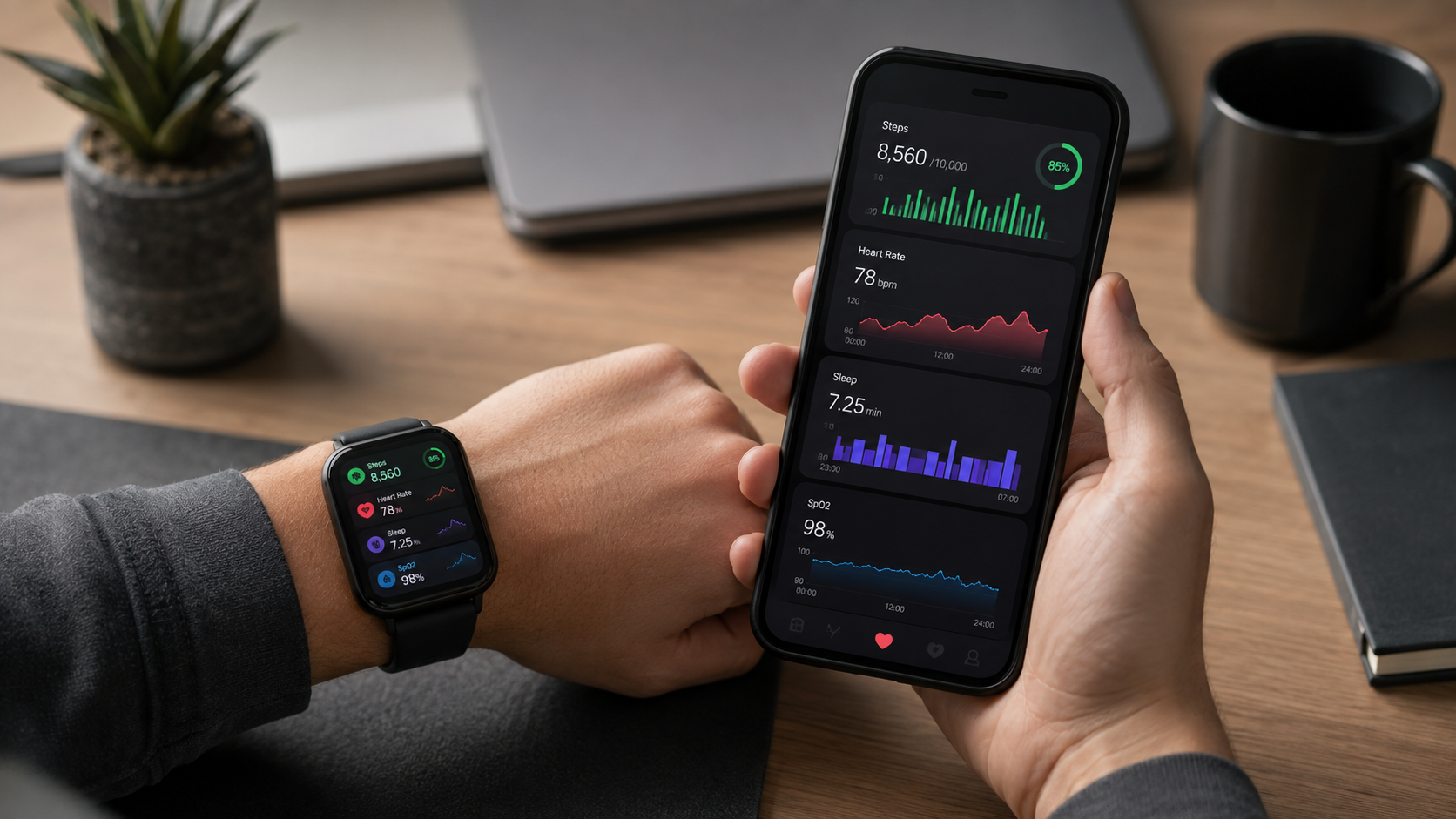
- Hidden tooling amortization. Unit price includes mold recovery but the buyer is not told. Surfaces when volume drops and the price does not.
- Under-specified water resistance or battery targets. Set after design freeze, triggering redesign, rework or a downgrade in the rating.
- Certification assumed but not quoted. The buyer discovers the gap at customs or at retail listing review.
- Packaging and branding added late. Plate-making, print minimums and manual translation become change orders.
- Software scope creep. “One more screen” in the app becomes a firmware change and a schedule slip.
- Reference components treated as production components. A chipset mentioned in a proposal is not a confirmed BOM line until the specification sheet says so.
Each trap has the same root cause: an assumption that was never written into the quotation or the project specification.
11. What a manufacturer evaluates before quoting
At Pineeon, a smart watch quotation is built after requirement confirmation, not before. The evaluation typically covers: product architecture (MCU Bluetooth or Android/4G), target market because market selection affects certification planning, square or round design, display and case requirements, sensor combination, application requirements, and connectivity including Bluetooth, Wi-Fi, 4G and GPS where applicable. If new tooling is required, tooling cost and tooling lead time are quoted separately. Sample fees and their credit or refund conditions are confirmed at the same stage.
This is why two buyers can receive different prices for what looks like the same watch: the underlying requirements, volumes and scopes are different. Pineeon is based in Shenzhen, China, has operated since 2000, is ISO 9001:2015-certified and serves brands and buyers in more than 40 countries. Those facts describe the quality system and operating context — they do not replace a project-specific quotation.
12. Structuring your budget before you request quotes
A practical budget structure separates the project into four lines rather than one:
- One-time engineering: tooling, NRE, firmware and app development, certification application support.
- Per-unit production: BOM, assembly, testing, packaging and accessories at the target volume tier.
- Compliance and market entry: certification scope, documentation and any market-specific telecom evaluation.
- Logistics and contingency: freight, duties, and a reserve for specification changes after sample approval.
Buyers who budget only the unit price tend to discover lines 1 and 3 after commitment. Buyers who separate them can compare suppliers on total project cost and negotiate each line on its own logic.
Pineeon Manufacturer-Side Recommendation
Before you request a smart watch quotation, write a one-page requirement sheet: architecture, target market, display and case, sensor set, connectivity, water-resistance target, app scope, packaging scope, certification responsibility and target volume tier. Send the same sheet to every supplier. Then ask each supplier to return the quote in the same structure — one-time costs, per-unit costs, compliance scope and logistics — and to state which BOM components are confirmed versus reference.
This single step removes most of the ambiguity in a smart watch manufacturing cost breakdown. It also protects the project later: when a specification changes, you can see immediately whether it touches a one-time cost, a per-unit cost or a compliance line. If you are evaluating private label or OEM/ODM smart watch programs, review the Pineeon smart watch product range and share your requirement sheet with our team so the quotation is built on confirmed scope rather than assumptions.
Final specifications, MOQ, pricing, lead time, certification scope and customization capability are subject to the selected product model, project requirements, technical evaluation and official Pineeon quotation.