Most buyers who ask for an “OEM smart watch” and most buyers who ask for an “ODM smart watch” are describing the same commercial goal: a wearable sold under their brand. The difference is not the label on the purchase order. It is who owns the design work, how much of the hardware and software is fixed before the project starts, and which party carries the engineering and certification burden.
That distinction has direct commercial consequences. It changes the minimum order quantity you can realistically place, the sample timeline, the amount of firmware and app work that must be scoped and paid for, and the certification path your product will need in each destination market. This guide explains how OEM, ODM and private label actually differ in smart watches, what each model lets you customize, and what to confirm before you accept a quotation.
OEM vs ODM vs Private Label: Precise Definitions in the Smart Watch Context
In consumer electronics, these three terms are used loosely and sometimes interchangeably by suppliers. For procurement purposes, define them by scope of change, not by marketing language.
Private label smart watch. You take an existing, fully developed product platform and apply your brand. Typical scope is logo on the case or strap, packaging, manual language, and sometimes a splash screen or app name. The hardware, firmware architecture and sensor stack stay as they are. This is the fastest and lowest-risk route, and it is the right starting point for many distributors and retail brands testing a category.
OEM smart watch. You bring the product definition — or a substantial part of it — and the manufacturer builds to it. In practice, most smart watch OEM projects are not clean-sheet designs. They are existing platforms modified to your specification: a different housing or ID, a changed sensor combination, adjusted firmware behavior, a customized application layer, or your own app and cloud integrated through an SDK or API. The manufacturer supplies engineering and production capacity; you supply requirements and, often, the brand and channel.
ODM smart watch. The manufacturer owns the core design and offers it for customization. You select from a platform, then specify the level of change: appearance, mainboard configuration, firmware functions, application features, packaging. ODM is a common model in Shenzhen smart watch manufacturing because it spreads development cost across multiple buyers and shortens time to market.
The practical boundary between OEM and ODM is therefore not a legal category. It is a question of how much of the design is pre-existing and who is responsible for the engineering change. A buyer should ask a supplier to state, in writing, which elements are standard platform and which are project-specific development.
What Is Actually Customizable in Each Model

Buyers frequently assume that an OEM project means full control of hardware and software. That is rarely true at accessible order volumes. The table below maps the realistic customization surface for each route. Treat it as a framework for discussion, not a fixed menu — exact scope depends on the selected platform and project.
| Customization layer | Private label | OEM (platform-based) | ODM (platform customization) |
|---|---|---|---|
| Logo, color, strap, packaging | Standard | Standard | Standard |
| Housing / industrial design | Usually fixed | Possible, often with new tooling | Possible within platform limits |
| PCBA / chipset architecture | Fixed | Project-dependent | Project-dependent |
| Sensor combination | Fixed | Possible if the platform supports it | Possible if the platform supports it |
| Firmware functions and thresholds | Fixed | Adjustable within platform | Adjustable; deeper changes by agreement |
| Mobile app branding and UI | Basic white label | Mid to advanced | Mid to advanced |
| Customer-owned app / cloud | Rare | Possible via SDK/API | Possible via SDK/API |
| Tooling ownership | Not applicable | Defined by contract | Defined by contract |
Two points are worth emphasizing because they cause the most disputes later. First, SDK availability, raw sensor data access, firmware source code and OTA authority are not automatic in any model. They are commercial terms that must be written into the project agreement. Second, tooling ownership — who owns the mold and whether it can be transferred — must be settled before the tool is cut, not after.
The Architecture Decision Comes Before the OEM/ODM Decision
The single most consequential choice in a smart watch project is not OEM versus ODM. It is the product architecture: an MCU Bluetooth watch or an Android/4G watch. These are materially different product families, and the choice drives BOM cost, battery behavior, software complexity and certification scope.
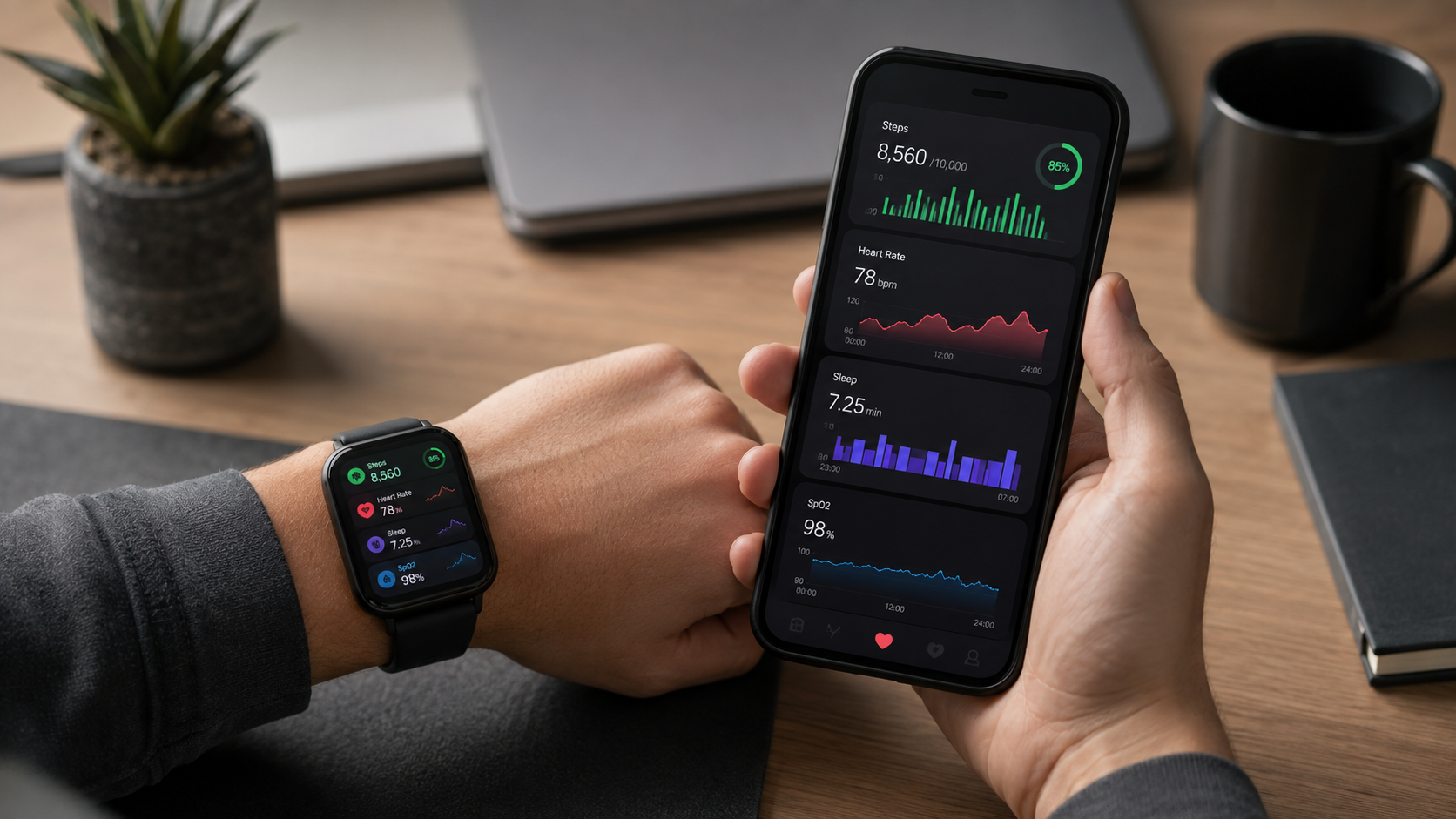
MCU Bluetooth watches use a low-power microcontroller running an RTOS-class system. They are optimized for fitness tracking, heart rate, SpO2, sleep and step data, and Bluetooth connection to a phone app. They typically offer longer battery life, lower BOM cost and a simpler certification path. They do not normally operate as an independent Android application platform.
Android/4G watches use an application processor and support independent cellular connectivity, GPS, richer applications and, in some configurations, app ecosystems. They carry higher BOM cost, higher power consumption, shorter battery life and substantially more complex software and cellular certification requirements.
This matters for the OEM/ODM decision because the architecture determines which route is even available. A private label project on an existing MCU platform can move quickly. A new Android/4G product with custom application and cloud integration is a development project regardless of what the contract calls it, and it will require higher order volumes to justify tooling and engineering.
Buyers should therefore define product positioning first — who the watch is for, what it must do independently, and which markets it will sell into — and only then discuss OEM or ODM scope with a smart watch manufacturer.
How the Route You Choose Affects Cost, MOQ and Lead Time
Suppliers are often reluctant to publish MOQ and lead time because both are genuinely project-dependent. The underlying logic, however, is predictable, and understanding it helps buyers negotiate realistically.
Cost drivers. The largest cost levers are architecture (MCU versus Android/4G), display and case specification, sensor combination, battery capacity, connectivity modules, and the depth of firmware and app customization. Tooling is a separate one-time cost when a new housing is required. Certification testing is a separate cost that scales with radio complexity and the number of target markets.
MOQ drivers. MOQ is driven by how much of the BOM and production setup is dedicated to your project. Existing-platform private label work can be quoted at relatively low volumes because the platform is shared. A new Android/4G architecture with new tooling and new application development requires a much larger initial order to amortize engineering and setup. As a general reference, existing MCU platforms with logo and packaging customization can often be quoted at lower volumes, standard ODM customization typically requires a higher volume, and a fully custom Android/4G program generally requires the highest initial order. These are reference patterns only; final MOQ depends on the selected model and confirmed scope, and must be confirmed in the official quotation.
Lead-time drivers. Sample timing depends on whether you are changing branding only, adjusting UI or functions, modifying housing or mainboard, or integrating an application and cloud platform. Mass production timing depends on platform maturity, material availability and seasonality. Q3–Q4 and periods of chipset or module shortage can extend schedules. Any lead time quoted should be treated as an estimate until the production schedule is confirmed with the order.
Certification Planning Differs by Route and Market
Certification is where OEM/ODM decisions become expensive to reverse. The applicable requirements depend on the product configuration, the radio technologies used, the battery design, the intended use and the destination market. They must be confirmed with the applicable laboratory, authority or qualified regulatory advisor for each project.
For Bluetooth-only MCU watches, the common baseline for many markets includes CE for the European Union, FCC for the United States and RoHS for restricted substances, plus Bluetooth qualification where relevant. For cellular Android/4G watches, additional cellular-device and carrier or market-specific approvals may apply depending on the destination country and network configuration. Products sold in China may require CCC where legally applicable, and environmental requirements such as REACH may be requested by the buyer or channel.
Two rules prevent most certification problems. First, factory capability is not the same as model certification. A manufacturer that supports CE, FCC and RoHS applications does not thereby certify every model it produces; the certificate, its holder and its scope must be verified for the specific product. Second, certification scope should be agreed before the BOM is frozen, because changing a module, antenna or battery after testing can invalidate the work.
Whether a supplier can provide technical documentation, testing support or application assistance for CE, FCC or RoHS depends on the specific project, model and target market, and should be confirmed with the supplier and the applicable laboratory or authority. Final certification depends on the specific model, configuration and target market, and approval is not guaranteed.
Buyer Verification Checklist Before You Request a Quotation
A quotation is only meaningful if the scope behind it is defined. Use this checklist to force that definition before pricing discussions begin.
- Architecture confirmed. MCU Bluetooth or Android/4G, stated explicitly in the requirement document.
- Target markets listed. Country-by-country, because certification and cellular approval depend on it.
- Specification frozen at the right level. Display, case shape and material, sensor set, battery target, water-resistance rating and connectivity.
- Customization scope written down. Which layers are standard platform and which are project-specific development.
- Software rights clarified. SDK and API availability, data fields, raw-data access, firmware source code, OTA authority and cloud ownership.
- Tooling terms agreed. Cost, ownership, maintenance responsibility and transfer conditions.
- MOQ and sample fee confirmed. Including whether the sample fee is credited against a qualifying bulk order.
- Sample rounds defined. Engineering sample, functional and water-resistance testing, pilot run and mass-production approval.
- Quality plan agreed. Incoming, in-process, final and outgoing inspection stages, plus any project-specific reliability tests and AQL criteria.
- Certification responsibility assigned. Who submits, who holds the certificate, and which party pays for testing and retesting.
- Packaging and accessory list confirmed. Including manual language and any region-specific inserts.
- IP and NDA terms signed. Before sharing detailed design files or software requirements.
Common Misconceptions That Cause Project Delays
“OEM means we own the design.” Ownership of design, tooling, firmware and source code is defined by the signed agreement, not by the label OEM. Buyers who need full IP ownership should negotiate it explicitly and expect it to affect pricing and MOQ.
“The SDK gives us all sensor data.” SDK availability and the specific data fields exposed vary by platform. Raw data access and cloud-data ownership should be defined separately in the contract.
“A higher price means a better watch.” Price differences usually reflect architecture, display, sensor set, battery and certification scope. A cheaper Android/4G quote may simply exclude cellular certification or application development.
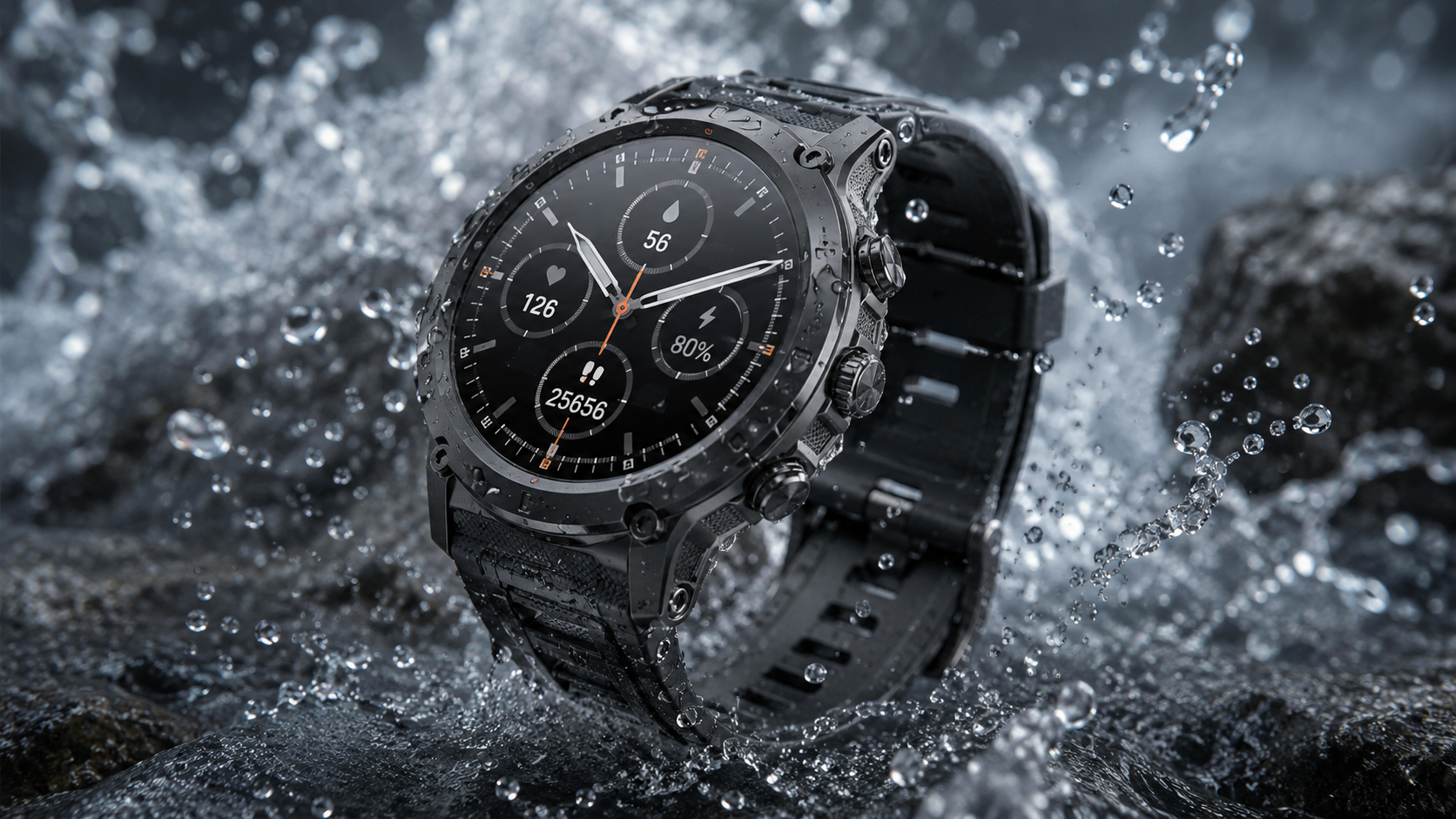
“Water resistance is a single number.” IP67, IP68 and 5ATM are different standards with different test conditions and usage limits. The exact rating and its documentation must be confirmed for the selected model, and Android/4G watches with speakers, microphones and SIM openings have more complex sealing requirements.
“Battery life can be quoted from the datasheet.” Endurance depends on display, screen-on time, GPS frequency, cellular use, sensor sampling and firmware optimization. Treat published figures as typical reference ranges unless model-specific testing is provided.
Pineeon Manufacturer-Side Recommendation
From the factory side, the projects that run smoothly share a pattern: the buyer defines the product and the market before asking for a price, and the supplier states clearly which parts of the product are standard and which are development.
Our recommendation is to start with the simplest route that satisfies your commercial requirement. If you are entering the category, launching a private label program on an existing MCU Bluetooth platform lets you validate demand, packaging and channel economics without funding tooling or application development. If your product needs independent connectivity, a custom application or a differentiated form factor, treat it as a development project from day one: budget for engineering, plan for a pilot run, and expect higher MOQ and longer timelines.
Pineeon has operated from Shenzhen since 2000 and is ISO 9001:2015-certified, serving brands and buyers in more than 40 countries. We evaluate customer requirements before recommending a project approach, and we confirm scope before quotation and development. For buyers comparing routes, the most useful first step is a written requirement covering architecture, target markets, customization layers and software expectations — that document, not a catalog, is what makes an OEM or ODM quotation comparable.
Frequently Asked Questions
Is OEM always more expensive than ODM? Not necessarily. OEM scope can be narrower than a deep ODM customization if you are modifying an existing platform rather than developing new hardware. Cost is driven by architecture, tooling, software work and certification scope, not by the label.
Can we use our own mobile app with a private label watch? Sometimes, through an SDK or API, but availability and exposed data fields depend on the selected platform. This must be confirmed during technical evaluation and written into the agreement.
Who owns the mold and the firmware? Ownership is defined by the signed project contract. Do not assume that paying for tooling or development automatically transfers ownership; negotiate the terms before work begins.
Do we need different certification for a 4G watch? Cellular products generally require additional network and market-specific evaluation beyond Bluetooth-only requirements. The exact scope depends on the destination country, network configuration and applicable standards, and should be confirmed with a qualified laboratory or regulatory advisor.
How many sample rounds should we plan for? For platform-based private label work, one engineering sample round plus a pilot run is common. For custom hardware, firmware or application projects, plan for multiple rounds and a pilot production stage to validate yield and functional consistency before mass production.