Smart Ring Sustainability Practices: A Beginner’s Overview
Published November 13, 2026 · Pineeon Insights
Sustainability questions usually arrive late in a smart ring project — after the design is frozen, the sample is approved and the packaging artwork is at the printer. That is the wrong sequence. For a ring, most of the decisions that determine whether a product can credibly be described as a sustainable smart ring are locked in during specification, not during production. Shell material, battery construction, printed documentation and packaging format all have cost, tooling and compliance consequences that a smart ring manufacturer can only quote accurately if the buyer states them up front.
This overview is written for importers, brand owners and procurement teams who are new to the topic. It does not promise eco-labels, recycled-content percentages or certification outcomes. Instead, it explains what sustainability means in a smart ring bill of materials, which claims a supplier can realistically support with documents, and how to verify those documents before you commit to a private label smart ring program.
What “Sustainable” Actually Covers in a Smart Ring
A smart ring is a small, sealed, battery-powered wearable. That form factor limits what is achievable. Buyers should think in five separate dimensions rather than one vague “green” label, because each dimension is verified differently and each has a different cost impact.
| Dimension | What it touches | How a buyer verifies it | Typical constraint |
|---|---|---|---|
| Shell and finish materials | Metal or polymer outer shell, coating, hypoallergenic contact surfaces | Material declaration, supplier spec sheet, skin-contact test reports where applicable | Ring size and wall thickness limit material substitution |
| Battery chemistry and transport | Cell type, capacity, shipping classification | Battery specification, UN38.3 test summary, MSDS | Capacity is constrained by internal volume |
| Restricted substances | RoHS and REACH obligations for the target market | RoHS test report, REACH declaration or SVHC statement | Scope is model- and market-dependent |
| Packaging and print | Box, insert, manual, labels, shipping cartons | Packaging spec, material grade, FSC or recycled-content evidence if claimed | Custom tooling and print minimums |
| End-of-life | Disassembly, battery removal, take-back, e-waste marking | Design-for-disassembly review, local EPR registration evidence | Sealed rings are hard to repair by design |
Manufacturer-side reasoning matters here. A ring is not a phone. There is no room for a user-replaceable battery, and the sealed enclosure that delivers water resistance also makes repair and recycling harder. Buyers who ask for “an eco-friendly smart ring” without specifying which of the five dimensions they mean will usually receive a generic answer that cannot be defended in a retail listing or a tender document.
Material Choices: Where Sustainability Meets Engineering

Shell material is the most visible sustainability decision and the one most likely to collide with engineering. Common outer-shell options include stainless steel, titanium alloys and engineering polymers, with inner contact surfaces chosen for skin compatibility. Each choice changes weight, scratch resistance, radio performance and cost.
Three practical points for buyers:
- Recycled content is a supply-chain claim, not a design claim. If you want recycled metal or polymer, ask for the mill or resin supplier declaration and confirm it applies to the specific grade used in your model. A manufacturer can source a grade; it cannot certify content it has not received documentation for.
- Coating and plating matter as much as the substrate. A recycled substrate with an unverified coating still needs restricted-substance review. Ask which surfaces contact skin and what finish is applied.
- Material substitution can force re-tooling. Changing shell material often changes wall thickness, antenna clearance and sealing design. That is a new tooling and validation cycle, not a line-item swap.
For a custom smart ring project, the honest sequence is: define the material requirement, confirm whether the selected platform can accommodate it, then quote. Asking for a material change after the golden sample is approved is one of the most common causes of schedule slippage in wearable sourcing.
Battery, RoHS and REACH: The Documentation Buyers Should Request
Most sustainability risk in a smart ring sits in the battery and in restricted substances. Neither can be handled by a verbal assurance.
Battery documentation
Lithium cells in wearables are subject to transport rules. Buyers should request the battery specification, a UN38.3 test summary for the cell or pack, and the safety data sheet. Note that UN38.3 is a transport-safety test, not an environmental certification — it is often misrepresented in supplier marketing. Confirm that the test summary matches the cell actually used in your model, not a different capacity or form factor.
RoHS and REACH
A RoHS compliant smart ring claim should be backed by a test report that names the model, the laboratory and the restricted-substance list applied. REACH obligations are different: they concern substances of very high concern and, depending on the market, declaration and communication duties. Ask for a REACH declaration or SVHC statement that identifies the article and the date of assessment.
Two cautions. First, a report for one model does not automatically cover a variant with a different shell, coating or battery. Second, a factory-level compliance statement is not the same as a model-level test report. Whether any certification or compliance application is appropriate, and what documentation or testing support is available, must be confirmed for the specific model, configuration, target market, laboratory and applicable authority. Buyers should confirm current requirements with the applicable laboratory, authority or qualified advisor.
Packaging and Printed Materials: The Fastest Win, With Hidden Costs
Packaging is usually the easiest sustainability improvement to implement and the easiest to overclaim. A smart ring supplier can typically offer standard color boxes, custom color boxes, premium gift boxes, molded pulp or EVA inserts, quick-start guides and sizing kits. The sustainability-relevant questions are about material grade, recyclability, print chemistry and volume.
- Paper grade and certification. If you intend to claim certified or recycled paper, request the supplier’s chain-of-custody evidence for the specific board used. Do not assume a generic “eco box” is certified.
- Plastic inserts. Replacing EVA or velvet with molded pulp or paper-based inserts is feasible but changes drop protection. Validate it with a packaging drop test rather than assuming equivalence.
- Print and finishing. Foil stamping, lamination and certain inks can reduce recyclability. Specify the finish you want and ask what it does to the recyclability claim.
- Documentation. Multi-language manuals add paper and weight. A QR-linked digital manual can reduce print, but check destination-market requirements for printed safety information before removing it.
Custom packaging carries tooling and minimum-order implications. It should be specified before quotation, because packaging changes can move a project between MOQ tiers. Reference MOQ ranges vary by project type and must be confirmed against the selected model and configuration.
End-of-Life: The Question Most Buyers Forget
Smart rings are sealed. That single fact shapes everything about end-of-life. Buyers should ask three questions early:
- Can the battery be removed for recycling? If not, what disassembly guidance exists for recyclers?
- What e-waste marking or registration applies in the destination market? Extended producer responsibility rules vary by country and are the importer’s obligation in many jurisdictions, not the factory’s.
- Is a take-back or repair program realistic? For a sealed wearable, a take-back scheme is usually a logistics and compliance project rather than a product feature.
Manufacturer-side reality: designing for disassembly in a ring competes directly with water resistance and miniaturization. A supplier that promises easy battery replacement in a sealed IP-rated ring without explaining the trade-off is not giving you a usable answer. Treat end-of-life as a market-compliance workstream you own, supported by product documentation from the factory.
Buyer Verification Checklist Before You Commit
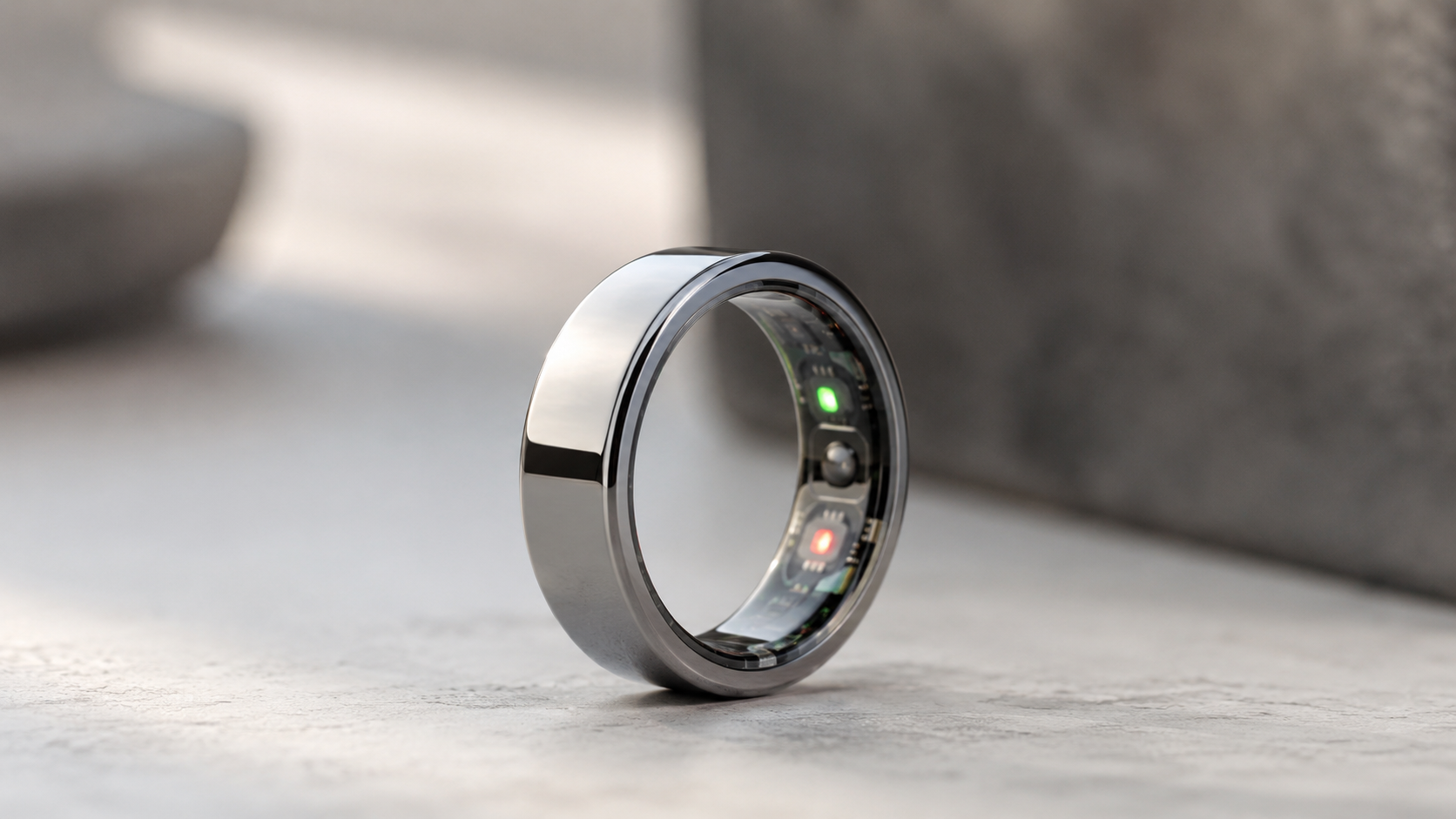
Use this checklist during supplier evaluation, before sample approval and again before mass production. Mark each item as verified, pending or not applicable.
| # | Item to request | What “verified” looks like |
|---|---|---|
| 1 | Material declaration for shell, coating and skin-contact surfaces | Document names the grade and supplier; matches your model |
| 2 | RoHS test report | Names the model, laboratory and substance list; dated |
| 3 | REACH declaration or SVHC statement | Identifies the article and assessment date |
| 4 | Battery specification and UN38.3 summary | Matches the cell capacity and form factor in your BOM |
| 5 | Packaging specification | Material grade, insert type, print finish, recyclability notes |
| 6 | Claim scope confirmation | Written statement of which claims are model-specific vs company-level |
| 7 | Destination-market obligations | Your own EPR, labeling and registration status confirmed |
| 8 | Quality system evidence | Current ISO 9001:2015 certificate, scope and validity checked |
Two rules make this checklist useful. First, ask for documents, not adjectives. Second, ask the supplier to state in writing which claims apply to your exact model and which are company-level statements. That single question resolves most green-claim disputes before they reach a retail listing.
How Sustainability Requirements Interact With OEM/ODM Scope
Sustainability requirements are scope decisions, and scope decisions drive price and lead time. In practice, they interact with the project in four places:
- Platform selection. If you need a specific shell material or packaging format, an existing public-mold platform may not accommodate it. A custom enclosure means tooling and a longer development cycle.
- BOM and testing. A different battery or coating can trigger new restricted-substance testing and new transport documentation.
- Packaging tooling. Custom boxes and inserts carry their own tooling and minimum quantities.
- Certification scope. Changes to radio, battery or enclosure can affect which compliance applications are needed for your target market.
The practical consequence: write sustainability requirements into the request for quotation. A supplier quoting a standard configuration and then discovering a material or packaging requirement later will either re-quote or absorb the change — neither outcome is good for schedule certainty. For a fuller view of how these projects are structured, see Pineeon’s smart ring OEM/ODM and private label solutions.
Pineeon Manufacturer-Side Recommendation
Pineeon is a B2B private label Smart Wearable, Computer Peripheral and AI Hardware OEM/ODM manufacturer based in Shenzhen, China, operating since 2000 and ISO 9001:2015-certified. From that position, our recommendation to buyers is deliberately conservative.
Separate what you can verify from what you want to say. Most sustainability problems in smart ring sourcing are claim problems, not engineering problems. A brand that says “recycled aluminum shell” without a mill declaration, or “RoHS compliant” without a model-specific report, carries risk that no factory statement can remove after the fact.
Specify before quotation. Bring material, battery, packaging and documentation requirements into the first technical discussion. Requirements are evaluated before a project approach is recommended, and OEM/ODM options depend on the level of hardware, firmware, software, tooling, branding and packaging customization. Final project scope should be confirmed before quotation and development.
Certification documentation, testing and compliance-support capabilities vary by supplier and project. Confirm the exact scope, responsible parties and available records in writing before relying on them.
Keep eco-labels out of the brief unless you can support them. Third-party environmental labels require their own audits and evidence. If a label is part of your brand plan, treat it as a separate compliance project with its own timeline, and confirm requirements with the applicable authority or qualified advisor.
Glossary for New Buyers
- RoHS — restriction on hazardous substances in electrical and electronic equipment; verified by test report, model-specific.
- REACH — EU chemicals regulation; relevant to SVHC declarations and communication duties.
- UN38.3 — transport-safety test for lithium batteries; not an environmental certification.
- Recycled content — percentage of material derived from recovered sources; requires supplier documentation.
- Biodegradable packaging — a material property that depends on the specific grade and disposal environment; often overclaimed.
- EPR — extended producer responsibility; usually the importer’s registration and reporting obligation.
Related Pineeon Resources

Frequently Asked Questions
Can a smart ring genuinely be called sustainable?
Only with a defined scope. A sealed battery-powered wearable has inherent limits. Buyers should describe specific, verifiable attributes — a declared material, a documented battery, a packaging specification — rather than a general sustainability claim.
Does a RoHS report for one model cover my private label variant?
Not automatically. A variant with a different shell, coating or battery may need its own assessment. Ask the supplier to confirm the report matches your model and configuration.
Is UN38.3 an environmental certification?
No. UN38.3 addresses transport safety for lithium batteries. It is often listed alongside environmental documents, but it does not demonstrate restricted-substance compliance or recyclability.
Can packaging be changed without affecting MOQ?
It depends on the format. Standard boxes may fit existing tiers; custom tooling and print usually carry their own minimums. Confirm packaging before quotation so the MOQ tier is accurate.
Who is responsible for e-waste registration?
In many markets the importer or producer placing the product on the market holds the registration and reporting obligation. Confirm your obligations with the applicable authority or qualified advisor.
What should I ask for first?
Start with the material declaration, the model-specific RoHS report, the battery specification and the packaging spec. Those four documents answer most sustainability questions before a sample is built.
If you are planning a private label or custom smart ring program and want sustainability requirements reflected in the quotation from the start, review Pineeon’s smart ring OEM/ODM options and share your material, battery, packaging and target-market requirements with the team.
Editorial note: This article provides general B2B sourcing and manufacturing information. Legal, regulatory, certification, intellectual-property and market-entry requirements vary by jurisdiction and project. Obtain qualified professional advice and verify the requirements that apply to your product and target market.