Smart Ring Manufacturer Selection Criteria: A Beginner’s Overview
Published October 23, 2026 · Pineeon Insights
A smart ring is one of the hardest wearable formats to manufacture well, and most supplier shortlists fail for the same reason: buyers evaluate candidates with generic wearable criteria. A ring has almost no internal volume, a curved rigid-flex or miniaturized PCB, a battery sized by the shell, an optical sensor that only works if the mechanical fit is right, and a seal that has to survive daily wear. A supplier that assembles watches competently may still be the wrong partner for a ring.
This overview is written for brands, importers, distributors and startups that are still building a shortlist. It explains which capabilities actually matter for a smart ring, how to score candidates before you spend money on samples, and what to verify in writing. It does not replace a technical evaluation of a specific model; it tells you what to ask so that evaluation is meaningful.
Why smart ring sourcing is not watch sourcing with a smaller shell
Manufacturer-side, the ring format changes the engineering conversation in four ways.
Space is the constraint, not the feature list. Ring size determines internal volume, and internal volume determines battery capacity, antenna clearance and how many sensors fit. A supplier that quotes a feature set without asking about your size range is quoting something it has not engineered. Expect a serious candidate to ask which sizes you intend to sell before discussing battery life or sensor configuration.
The PCB is curved and miniaturized. Rigid-flex or heavily miniaturized rigid boards raise assembly difficulty, increase yield sensitivity and make design-for-manufacturing (DFM) feedback more valuable than any brochure. Ask how the supplier handles curved-board assembly and what its DFM review actually covers.
Optical sensing depends on mechanical fit. PPG performance is a function of optical contact, mechanical design, firmware, algorithms and how the user wears the ring. A supplier that promises accuracy figures before discussing fit is telling you something about its sales process, not its engineering.
Sealing is a system, not a gasket. Water resistance in a ring depends on the shell design, sealing method, charging architecture and test method. IP68 and 5ATM are not interchangeable labels; they describe different test regimes. Confirm the exact model and test specification rather than accepting a rating as a category-wide promise.
These four constraints are the reason the criteria below are weighted toward engineering and verification rather than catalog breadth.
The seven criteria that decide a smart ring manufacturer shortlist

Use these as the backbone of your evaluation. Each one should produce evidence, not just an answer.
1. Ring-specific engineering and DFM capability
Look for a supplier that can discuss curved PCB assembly, antenna placement in a metal-adjacent shell, battery selection by size, sensor window design and sealing architecture in concrete terms. The strongest signal is the quality of DFM feedback on your concept: does it identify the two or three design decisions that will drive cost and yield, or does it send a generic capability deck?
2. Sensor and firmware integration
Ask which sensor architectures the supplier has worked with, how firmware handles sampling frequency versus battery life, and how algorithm updates are delivered. Reference component families exist across the industry, but a component name in a proposal is not a confirmed production BOM. Treat any specific part number as unverified until it appears in a model-specific BOM you have reviewed.
3. App, SDK and data access
Decide early whether you need a private-label app, a customized app, or your own app integrated through an SDK. Then ask what is actually available: Android and iOS SDKs, which data fields, whether raw sensor data is accessible, and whether cloud API integration is possible. Raw data access and source-code rights are contract terms, not catalog features. If your business model depends on health data, clarify data ownership and processing arrangements before sampling.
4. Quality management system
ISO 9001:2015 certification is a reasonable baseline signal that a supplier operates a documented quality system. It is a starting filter, not proof of ring-specific process control. Ask how incoming inspection (IQC), in-process inspection (IPQC), final inspection (FQC) and outgoing sampling (OQC) are applied to ring assembly, and what AQL level the project quality agreement will use. AQL 1.5 and AQL 2.5 are common reference points; the exact criteria must be agreed per project.
5. Testing and inspection approach
Ask what is tested on every unit versus sampled, how functional testing is done on a sealed ring, and how battery, Bluetooth connection and sensor functions are validated before packing. Request the test documentation structure, not just a promise that testing happens.
6. Compliance documentation support
Distinguish company-level capability from model-level status. A factory may support applicable CE, FCC and RoHS certification or compliance applications and provide technical documentation and testing support, while an individual model’s certification status still depends on its configuration, radio technology, battery design and target market. Ask for the certificate holder, the tested configuration and the scope of the report, and confirm requirements with the applicable laboratory or authority.
7. Commercial transparency
MOQ, sample lead time and mass-production lead time should be presented as reference ranges tied to a specific configuration, not as fixed promises. A supplier that gives one number for every project is either oversimplifying or has not understood your scope.
A weighted scorecard you can use before requesting quotes
Score each candidate from 1 to 5 on each criterion, multiply by the weight, and compare totals. Adjust weights to your business model; a startup prioritizing speed will weight app support and sample turnaround differently from a distributor prioritizing compliance documentation.
| Criterion | Weight | What a 5 looks like | What a 2 looks like |
|---|---|---|---|
| Ring-specific engineering and DFM | 25% | Specific DFM comments on your concept within the first technical exchange | Generic wearable capability deck; no ring-specific questions |
| Sensor and firmware integration | 20% | Clear explanation of sampling, battery trade-offs and update path | Feature list with no architecture discussion |
| App, SDK and data access | 15% | Documented SDK scope and contract-defined data rights | Verbal assurance that “everything is possible” |
| Quality management | 15% | ISO 9001:2015 plus described IQC/IPQC/FQC/OQC flow | “We check every unit” with no process detail |
| Testing and inspection | 10% | Test documentation structure available for review | Testing described only in marketing language |
| Compliance documentation support | 10% | Clear separation of company capability and model status | Claims every model is certified |
| Commercial transparency | 5% | Reference ranges tied to configuration, confirmed at quotation | Single fixed number for all projects |
A candidate scoring below 3 on engineering or firmware should not proceed to sampling regardless of price. Those two criteria determine whether the product works at all; the rest determine how smoothly it ships.
How to verify claims during the process
Supplier claims are cheap. Verification is what separates a shortlist from a partnership.
- Use sample rounds deliberately. A first sample proves the platform exists. A second round, with your logo, packaging and any configuration changes, proves the supplier can execute to your specification. Approve a golden sample before mass production and keep it as the reference for inspection.
- Judge DFM feedback quality. Good feedback names trade-offs: this battery choice costs you a size, this sealing method affects serviceability, this sensor window design affects optical performance. Weak feedback restates your requirements back to you.
- Request test documentation. Ask for the structure of functional test records and outgoing inspection reports. You do not need to audit a factory to learn whether it can produce evidence.
- Ask ownership questions in writing. Who owns the tooling? Who owns the firmware? Can you obtain OTA authority? Is source code available, and under what terms? These are contract-defined items, and a supplier that answers vaguely at RFQ stage will answer vaguely at dispute stage.
- Confirm certification scope. Ask which model, which configuration and which market the documentation covers, and who holds the certificate. Verify with the laboratory or authority where the answer matters commercially.
Red flags and first-contact questions
These signals should slow a shortlist down or remove a candidate.
- Quotes a feature set without asking about ring sizes.
- Promises specific battery life or sensor accuracy before discussing fit, sampling or firmware.
- States that every model holds CE, FCC or RoHS certification without model-specific evidence.
- Offers “full customization” with no discussion of NRE, tooling or development cycle.
- Cannot explain what happens between sample approval and mass production.
- Treats IP68 and 5ATM as interchangeable.
- Avoids written answers on firmware, app or data ownership.
First-contact questions that produce useful answers:
- Which ring sizes do you support, and how does size affect battery and sensor configuration?
- What DFM feedback can you provide on our concept before we commit to tooling?
- What is the sample process, and what does each round validate?
- What app, SDK and data-access options exist, and which are contract-dependent?
- How is quality controlled from incoming materials to outgoing inspection?
- What compliance documentation can you support for our target markets, and what remains model-specific?
- What are the reference MOQ and lead-time ranges for the configuration we are discussing?
Pineeon Manufacturer-Side Recommendation
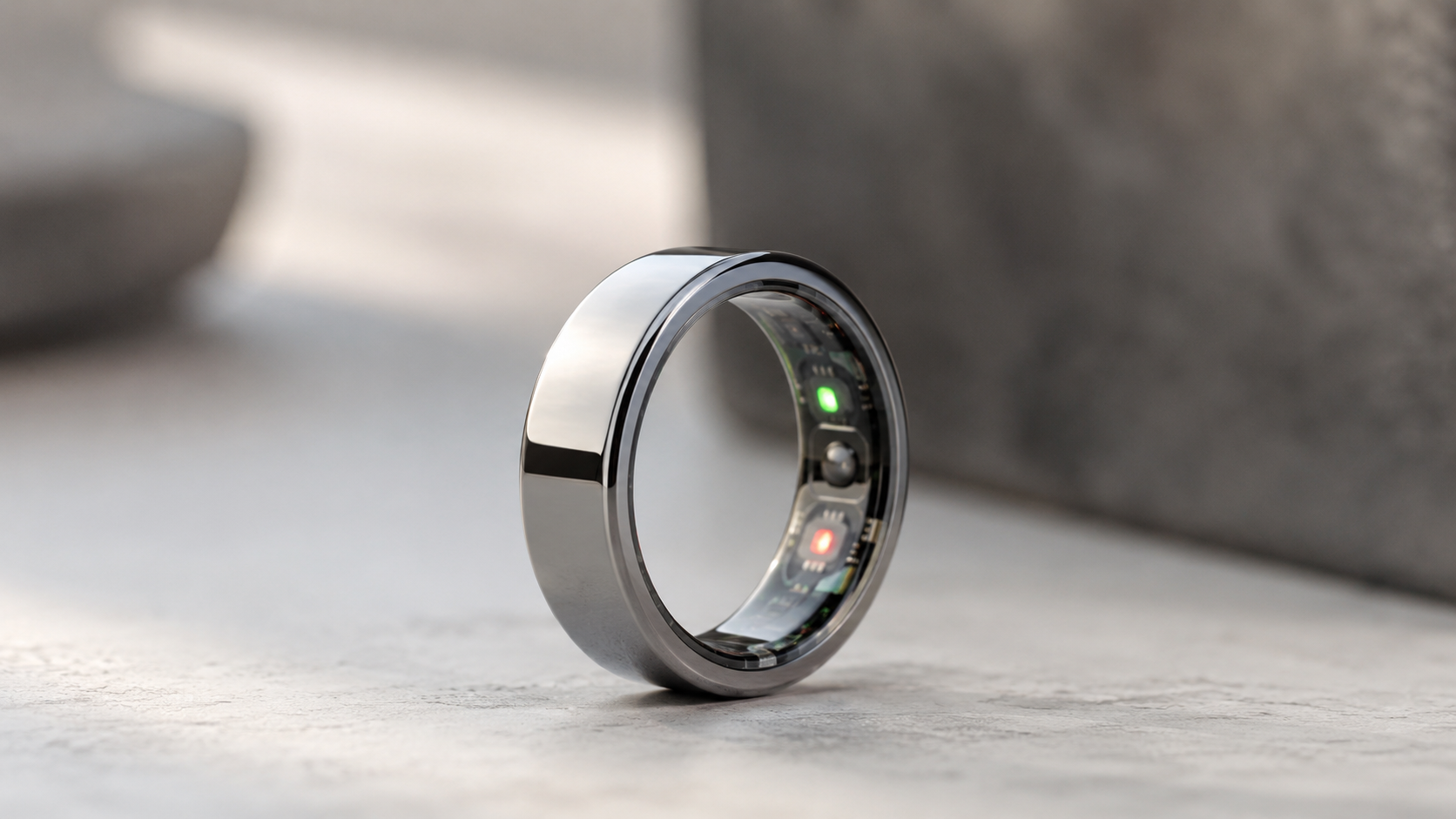
From the factory side, the buyers who get the best outcomes are not the ones who ask for the lowest price first. They are the ones who define the product before the quotation: ring size range, sensor configuration, app model, target markets and expected volume band. That definition lets a manufacturer give a real answer instead of a safe one.
Certification documentation, testing and compliance-support capabilities vary by supplier and project. Confirm the exact scope, responsible parties and available records in writing before relying on them.
Our practical advice for a first-time buyer: shortlist three to five candidates, score them with the table above, and move only the top two to sampling. Ask each one the same seven first-contact questions and compare the specificity of the answers. Then review the smart ring OEM/ODM solutions page to see how a defined project scope maps to a manufacturing approach, and bring your size range and app requirements to the first technical call.
When to move from shortlist to sample and pilot run
Move to sampling when a candidate has scored well on engineering and firmware, answered the ownership questions in writing, and given you a reference MOQ and lead time tied to your configuration. Do not sample to find out whether a supplier understands rings; sample to validate a design you both understand.
Move from sample to pilot run when the golden sample is approved, the quality agreement defines AQL and acceptance criteria, the compliance documentation path is agreed for your target markets, and the app or SDK integration has been tested against your requirements. A pilot run is also the right moment to confirm packaging, labeling and batch traceability, because those details are cheap to fix before mass production and expensive afterward.
Final specifications, MOQ, pricing, lead time, certification scope, customization capability, software capability, data access and commercial terms are subject to the selected product model, project requirements, technical evaluation and official quotation. Treat every number in this article as a reference until it appears in your signed project documents.