How Wholesalers Approach Smart Ring Sustainability Practices
Published October 27, 2026 · Pineeon Insights
Sustainability questions arrive at the wholesale desk in a predictable shape: a retail buyer asks for an “eco-friendly smart ring,” a marketplace listing template demands a RoHS statement, or a distributor’s own customer wants to know what happens to the battery at end of life. The wholesaler then has to turn a vague green request into something a smart ring manufacturer can actually answer, document and ship against.
That translation step is where most sourcing teams lose time. Sustainability in a smart ring is not a single attribute you can tick. It is a set of decisions spread across the shell material, the battery, the packaging, the documentation pack and the disposal instructions — and each decision has a cost, a lead-time and a verification trail. This guide sets out how wholesalers can evaluate those decisions without accepting marketing language as evidence.
Why sustainability is a procurement risk, not a marketing badge
For a wholesaler, an unverified sustainability claim is a commercial liability before it is an environmental virtue. If a private label smart ring is sold into a market that enforces RoHS or REACH-style restrictions, the importer is typically the party asked to produce evidence. If the claim on the box says “eco-friendly” and the documentation pack contains nothing but a logo, the wholesaler carries the exposure.
There is also a retail-positioning upside, but it only works when the claim is narrow and provable. “Housing made from recycled aluminium, declaration available on request” is a defensible line. “Sustainable smart ring” as a standalone slogan is not, because it invites a question the supplier may not be able to answer in writing.
The practical rule: treat every sustainability attribute as a specification with a document attached. If there is no document, it is not a specification — it is a preference.
The five sustainability levers in a smart ring

Smart rings are small, sealed and battery-powered, which limits where sustainability choices can realistically be made. In practice, wholesalers should focus on five levers.
1. Shell and finish materials
The outer shell is the most visible lever. Common options include titanium or stainless steel, coated plastics, and recycled-content metals where the supplier can source them consistently. Each choice affects scratch resistance, skin contact, weight, radio performance and cost. A recycled-content claim needs a material declaration from the mill or compounder, not just a supplier statement. Ask whether the recycled content applies to the whole shell, the inner carrier, or only a decorative component — the answer is often narrower than the headline.
2. Battery chemistry and handling
The battery is the highest-risk component in any wearable from a compliance and logistics standpoint. Wholesalers should confirm the cell chemistry, whether a UN38.3-style transport test summary exists for the shipping configuration, and how the supplier handles cells that fail incoming inspection. A smart ring manufacturer that can describe its incoming battery inspection and its segregated storage for suspect cells is demonstrating process control, which matters more than a chemistry label.
3. Packaging reduction
Packaging is where wholesalers get the fastest, cheapest sustainability win, because it is a print-and-tooling decision rather than an engineering one. Moving from a rigid box with a plastic tray to a paper-based insert, removing a laminated sleeve, or right-sizing the box to the ring and charging case all reduce material without touching the product. The trade-off is retail presence: a smaller, plainer box may underperform on shelf. Confirm with your retail channel before cutting packaging, and ask the supplier for the packaging BOM so you can see exactly what is being removed.
4. Documentation and declarations
This is the lever most wholesalers under-specify. A RoHS compliant smart ring should come with a declaration of conformity or a test report traceable to the actual model and configuration being shipped. REACH obligations, where applicable to your market, are typically addressed through supplier declarations on substances of very high concern. The key discipline is matching the document to the SKU: a report for a different shell material or a different PCBA revision does not cover your order.
5. End-of-life and disposal instructions
Sealed wearables are rarely designed for user-replaceable batteries, so end-of-life guidance matters. Wholesalers should ask for the disposal and battery-removal instructions the supplier expects to be included in the retail pack, and confirm they are consistent with the destination market’s e-waste labelling rules. This is a low-cost item that is frequently missing from the pack and easy to add at the packaging stage.
Separating verifiable evidence from eco-marketing
The single most useful skill in this category is telling a document from a slogan. The table below is a working filter wholesalers can apply to any supplier response.
| Claim type | What counts as evidence | What does not count |
|---|---|---|
| RoHS compliance | Declaration of conformity or test report naming the model and configuration | A logo on the website or a generic statement in a brochure |
| Recycled content | Material declaration from the mill or compounder, with percentage and scope | “Eco-friendly materials” with no percentage or scope |
| Packaging reduction | Packaging BOM showing removed components and material substitution | “Plastic-free packaging” without a BOM |
| Battery transport | Test summary for the shipping configuration, plus cell specification | “Air-safe battery” with no document reference |
| Factory environmental management | Current certificate with scope and validity dates | An expired certificate or one covering a different site |
Two cautions apply. First, a factory-level certificate does not certify the product; it describes the management system. Second, a product-level declaration is only valid for the configuration it names. If you change the shell material, the coating or the PCBA, ask whether the declaration still applies.
A wholesaler due-diligence checklist for smart ring suppliers
Use this checklist as an RFQ attachment rather than a conversation. Written answers create a record you can compare across vendors.
- Model and configuration: exact model name, shell material, coating, PCBA revision and packaging version that the sustainability claims apply to.
- Restricted substances: RoHS declaration or test report for the named configuration; REACH-style substance declarations where your market requires them.
- Material claims: recycled-content percentage and scope, with the upstream material declaration.
- Battery: cell chemistry, capacity reference range, incoming inspection method, segregated storage for suspect cells, transport test summary for the shipping configuration.
- Packaging: packaging BOM, material types, whether plastic inserts are used, and the labelling plan for e-waste and battery disposal.
- Documentation pack: which documents ship with the order, in which language, and who is named as the certificate holder.
- Change control: how the supplier notifies you if a material, cell or packaging component changes after approval.
- Quality system: current ISO 9001:2015 certificate with scope and validity, and the AQL or acceptance criteria proposed for the order.
If a supplier cannot answer the change-control question, treat the other answers as provisional. Material substitution after approval is the most common way a documented claim quietly stops being true.
Building a sustainability scorecard across multiple vendors
Wholesalers rarely buy from one smart ring supplier forever, and comparing vendors on sustainability is difficult when each one answers in a different format. A simple weighted scorecard solves this. The weights below are a starting point; adjust them to your channel.
| Criterion | Weight | What you are scoring |
|---|---|---|
| Documentation completeness | 25% | RoHS and applicable substance declarations matched to the exact configuration |
| Material traceability | 20% | Recycled-content or material declarations with percentage and scope |
| Battery handling | 20% | Incoming inspection, segregated storage, transport test summary |
| Packaging design | 15% | Packaging BOM, plastic reduction, right-sizing, disposal labelling |
| Change control | 10% | Written notification process for material or component changes |
| Quality system | 10% | Current ISO 9001:2015 certificate with scope and validity |
Score each criterion 1–5 and multiply by the weight. The value of the exercise is less in the final number than in the gaps it exposes: a supplier that scores well on documentation but poorly on change control is a supplier whose paperwork may not survive the next production run.
What to put in the RFQ so answers are comparable
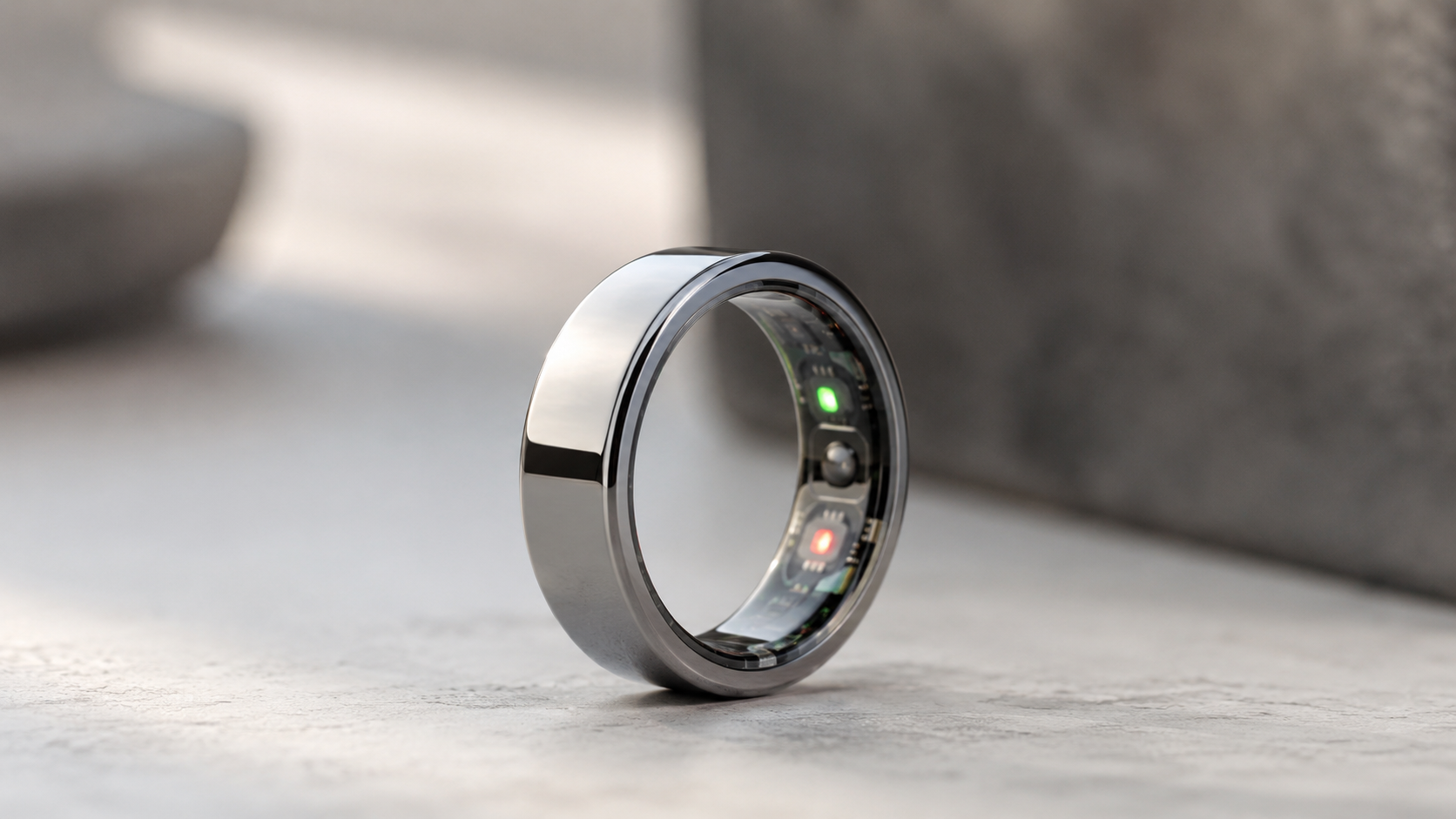
Most sustainability information gaps are created by the buyer, not the supplier. An open question like “what are your sustainability practices?” produces a brochure. A structured RFQ produces a document pack. Include the following in the RFQ for any wholesale smart ring or private label smart ring project:
- The exact model and configuration you intend to order, so declarations can be matched.
- A request for the RoHS declaration or test report, and any substance declarations required by your destination market.
- A request for the packaging BOM and a statement of which plastic components, if any, remain.
- A request for the battery specification and transport test summary for the shipping configuration.
- A request for the disposal and battery-removal instructions intended for the retail pack.
- A question on change control: how and when the supplier notifies you of material or component changes.
- A question on certificate ownership: who is named as the holder, and whether the declaration can be issued in your company’s name.
For a custom smart ring project, add a question about how the chosen shell material and coating affect the declaration scope. A new coating can change the substance profile, and the supplier should say so before tooling is committed.
Failure modes wholesalers should plan for
Three failure modes account for most sustainability disputes in wearable sourcing.
Documentation drift. The declaration was issued for an earlier shell material or PCBA revision, and nobody updated it when the BOM changed. Prevention: make change notification a contractual requirement and re-request declarations at each production run.
Claim inflation at the retail layer. The supplier’s accurate, narrow statement (“housing contains recycled aluminium”) becomes a broad claim on the marketplace listing (“100% sustainable”). Prevention: control the listing copy yourself and keep it to what the documentation supports.
Packaging optimism. A plastic-free packaging plan is approved at sample stage but reverts to the standard insert at mass production because the paper insert did not survive transit testing. Prevention: approve the packaging as a tested item, not a concept, and confirm it in the golden sample.
Pineeon Manufacturer-Side Recommendation
From the manufacturing side, the most useful thing a wholesaler can do is separate the sustainability request into two buckets: what must be documented, and what is a design preference. Documented items — restricted substances, battery transport information, disposal labelling — should be specified in the RFQ and confirmed before the purchase order. Design preferences — recycled content, packaging format, finish — should be decided early, because they affect tooling, cost and lead time.
Certification documentation, testing and compliance-support capabilities vary by supplier and project. Confirm the exact scope, responsible parties and available records in writing before relying on them.
If you are building a wholesale or private label smart ring programme, the practical next step is to send your sustainability questions as part of the RFQ rather than after sample approval. You can review the smart ring platform options on the Pineeon smart rings page and use the checklist above to structure the first conversation.
Frequently asked questions

Does a RoHS declaration cover every smart ring a supplier makes?
No. A declaration or test report is normally tied to a specific model and configuration. If the shell material, coating or PCBA changes, ask whether the existing document still applies or whether a new one is needed.
Can a wholesaler ask for certification in their own company name?
Certificate-holder arrangements vary by project and must be agreed in the commercial contract. Raise the question at RFQ stage rather than after the order is placed, because it affects how the documentation is issued.
Is a factory ISO 9001:2015 certificate proof that a product is sustainable?
No. ISO 9001:2015 describes a quality management system, not a product’s environmental attributes. Product-level claims need product-level documents such as material declarations or restricted-substance reports.
What is the fastest packaging change a wholesaler can make?
Usually right-sizing the box and replacing a plastic tray with a paper-based insert. Both are print-and-tooling decisions rather than product engineering changes, but the revised packaging should be transit-tested and approved in the golden sample.
How should battery disposal instructions be handled?
Ask the supplier for the disposal and battery-removal text intended for the retail pack, then confirm it matches your destination market’s e-waste labelling rules. This is typically a packaging-stage item and is often missing if not requested.
What single question best tests a supplier’s sustainability process?
Ask how they notify you if a material, cell or packaging component changes after approval. A supplier with a written change-control process can keep documentation accurate; one without it cannot, regardless of what the brochure says.
Editorial note: This article provides general B2B sourcing and manufacturing information. Legal, regulatory, certification, intellectual-property and market-entry requirements vary by jurisdiction and project. Obtain qualified professional advice and verify the requirements that apply to your product and target market.