The Complete Checklist for Smart Watch Manufacturer Selection Criteria
Published November 23, 2026 · Pineeon Insights
Most smart watch sourcing failures are not caused by a bad quotation. They are caused by qualifying the wrong factory against the wrong criteria. A supplier that is excellent at private label MCU Bluetooth watches with logo and packaging changes may be a poor fit for an Android/4G project that needs application integration, cellular certification planning and a pilot build. The reverse is also true: a factory set up for complex ODM work may be commercially inefficient for a small private label run.
This checklist is built for importers, private label brands, distributors and procurement teams who need a repeatable way to shortlist and qualify smart watch manufacturers before requesting quotes or samples. It is organized by stage, includes a weighted scoring rubric, and separates what you can verify from what you must confirm project by project.
Why generic supplier criteria fail for smart watches
Smart watches combine several risk areas in one product: a radio module, a battery, a display, sensors, firmware, a companion app, and often a cloud service. A factory can be strong in assembly and weak in firmware ownership. Another can be strong in software and weak in incoming component control. A single “good factory” score hides these differences.
The most important structural distinction is product architecture. MCU Bluetooth smart watches use a low-power microcontroller architecture and are typically positioned for sports, fitness and wellness functions with Bluetooth connectivity. Android/4G smart watches use an application processor architecture and can support independent networking and richer applications, but normally carry higher BOM cost, higher power consumption, more complex software integration and more complex certification requirements.
Selection criteria must therefore be weighted against the architecture you intend to buy. A factory that is credible for one family is not automatically credible for the other. Ask every candidate to state which architecture families they actually build, and ask for evidence rather than a category list.
Stage 1: Desk research before you contact anyone

Desk research is about eliminating candidates cheaply. Do not request quotations at this stage. Build a long list of candidates and screen them against the following:
- Product scope fit. Does the manufacturer publicly describe smart watches as a current category, or only as a historical one? Check whether the product pages distinguish MCU Bluetooth and Android/4G families, or present one generic watch.
- Business model. Is the company positioned as an OEM/ODM and private label manufacturer, or as a trading company reselling other factories’ products? Trading companies are not automatically disqualifying, but they change who controls quality, firmware and corrective action.
- Quality system claim. Look for a stated quality management system, such as ISO 9001:2015. Treat this as a company-level claim to verify later, not as proof of product quality.
- Export experience. Look for evidence of serving buyers in multiple markets. This is a signal of documentation and logistics experience, not a guarantee of compliance in your destination market.
- Customization language. Does the site describe logo and packaging only, or also firmware, app, SDK/API and cloud integration? Match the depth of customization to your project.
Record the source and date of every claim you note. You will use this list in the RFI stage to check whether the company’s answers match its public statements.
Stage 2: The RFI — what to ask and how to read the answers
Send the same structured request for information to every shortlisted candidate. Identical questions make answers comparable. A practical RFI for smart watch projects covers six areas:
- Architecture and platform. Which MCU Bluetooth platforms and which Android/4G platforms do you currently build? Which functions are standard, and which are optional per model?
- Customization scope. What is included in private label, what requires ODM development, and what requires new tooling? Ask specifically about logo, packaging, UI language, function enable/disable, firmware changes, app changes and cloud integration.
- Software ownership. Who owns the firmware, the app and the cloud platform? Is source-code access available, and under what contractual conditions? Is OTA update authority transferred to the buyer?
- Data access. Which SDKs or APIs are available for the selected platform, and which data fields can be exposed? Do not assume open SDK or raw sensor data access on every model.
- Compliance support. Which certification or compliance application processes can you support for our target markets, and which documents can you provide? Distinguish company-level support capability from model-specific certification status.
- Quality and production. What is your QC flow from incoming inspection to outgoing sampling? Which reliability tests are standard, and which are optional per project?
Read answers for specificity. A response that names the platform family, the customization boundary and the document types is more useful than a response that says “all certifications available.” The second answer usually means the factory can apply for certification, not that the model you want already holds it.
Stage 3: Verifying documents without over-reading them
Document verification is where many buyers either skip due diligence or over-trust a PDF. Use the following rules.
ISO 9001:2015
Ask for the certificate and check the certificate holder’s legal name, the certification body, the validity dates and the scope statement. Confirm that the scope covers the activities relevant to your product, such as design, manufacturing or assembly of wearable electronics. A certificate with a narrow scope may still be valid but may not cover the process you are relying on.
CE, FCC and RoHS
These are the most commonly misunderstood documents in smart watch sourcing. Separate three different things:
- Company capability. The manufacturer can support applicable CE, FCC and RoHS certification or compliance applications, provide relevant technical documentation and testing support, and assist with application processes.
- Model status. The specific model you are buying may or may not already hold the relevant certification or compliance documentation.
- Market requirement. What is legally required depends on the product configuration, radio technology, battery design, intended use and destination market.
For each target market, request the document set that applies to your model and configuration, and confirm with the applicable laboratory, authority or qualified regulatory advisor where requirements are unclear. Do not accept a factory-level certificate as evidence that your model is certified.
Bluetooth and cellular
For Bluetooth products, ask whether Bluetooth qualification is planned for the specific module and model. For Android/4G products, ask separately about cellular-device and carrier or market-specific approval paths. These requirements depend on destination country and network configuration and should be evaluated per project, not assumed.
Stage 4: Sample evaluation that tests the right things
Samples are often evaluated as a look-and-feel exercise. For smart watches, the sample should also test the manufacturing and software assumptions you will depend on in mass production.
- Functional consistency. Test the same function repeatedly across several units, not just one sample.
- Battery behavior. Ask for the test conditions behind any battery-life claim: display brightness, screen-on time, GPS frequency, connectivity and sensor sampling. Treat battery figures as typical reference ranges unless model-specific testing is provided.
- Water resistance. Confirm the exact rating for the model and the test method used. IP67, IP68 and 5ATM are not equivalent, and swimming should not be assumed without model-specific confirmation.
- App and firmware. Test pairing, data sync, language switching, OTA behavior and any custom functions. Confirm which behaviors are firmware-controlled and which are app-controlled.
- Documentation. Request the specification sheet, the accessory list and the packaging artwork proof alongside the sample.
Where the project involves custom hardware, firmware, app, cloud or cellular architecture, plan a pilot run before mass production. A pilot validates yield, functional consistency and production stability on the actual line.
Stage 5: Audit and pilot before mass production
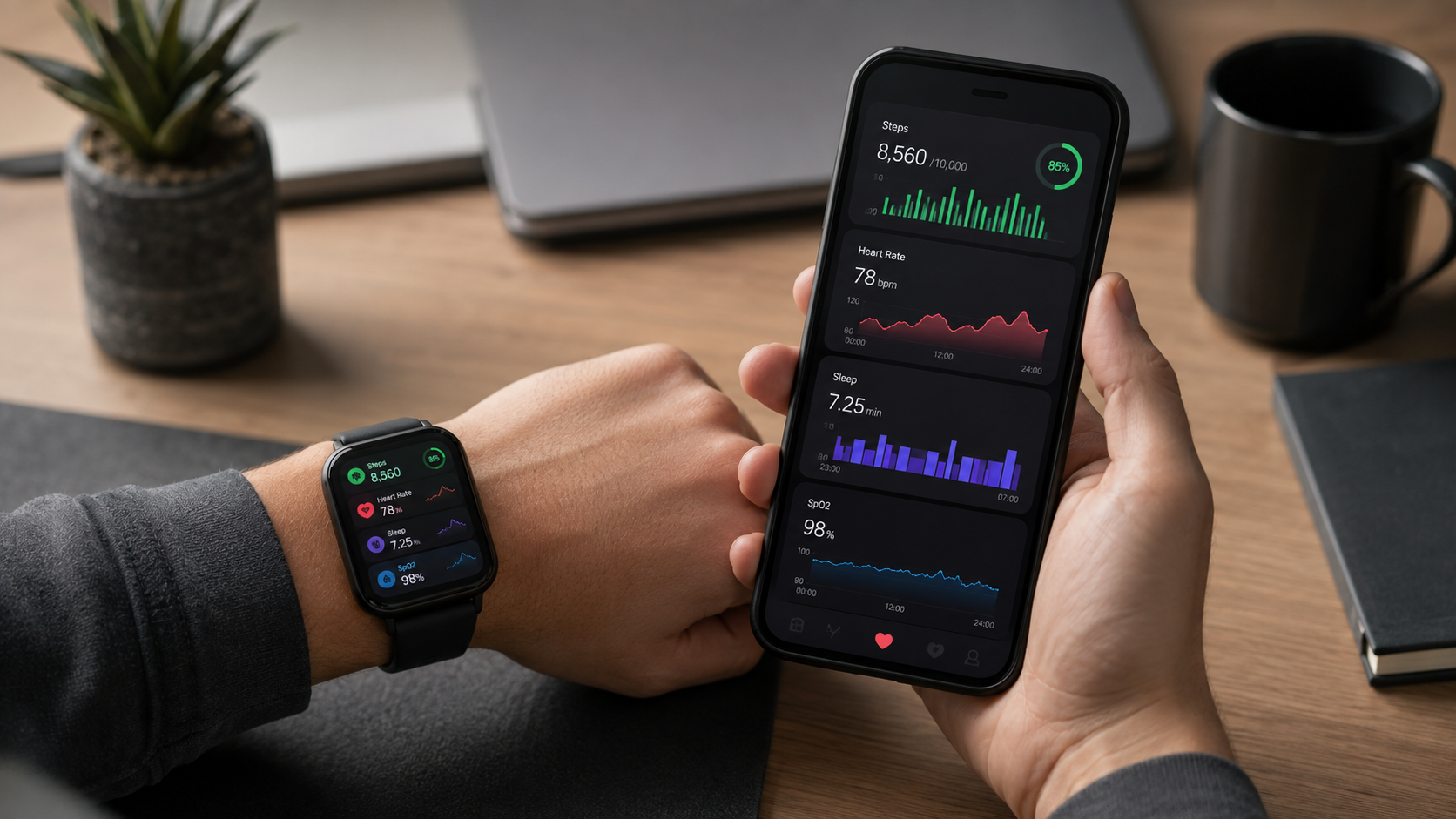
If the order value or risk justifies it, conduct an on-site or remote audit focused on the processes your product depends on: incoming inspection of controllers, batteries, displays and sensors; SMT and assembly checkpoints; final functional inspection; and outgoing sampling. Ask to see how nonconforming units are segregated and how corrective actions are closed.
For custom projects, define pilot acceptance criteria in advance: sample size, functions tested, pass/fail thresholds and the disposition of failed units. Approve the production specification before mass production begins.
Weighted scoring rubric for comparing candidates
Use the same weights for every candidate and score each criterion from 1 (poor) to 5 (strong). Adjust weights to your project, but decide the weights before you see the scores.
| Criterion | What you are scoring | Suggested weight |
|---|---|---|
| Architecture fit | Demonstrated experience with the MCU Bluetooth or Android/4G family you need | 20% |
| Customization depth | Ability to deliver your required level of hardware, firmware, app and packaging customization | 15% |
| Software and data terms | Clarity on firmware ownership, SDK/API availability, data access and OTA authority | 15% |
| Compliance support | Documented ability to support applicable certification or compliance applications for your markets | 15% |
| Quality system and QC flow | Verifiable quality management system and a defined IQC–IPQC–FQC–OQC process | 15% |
| Commercial fit | MOQ, sample and production lead times consistent with your launch plan | 10% |
| Communication and responsiveness | Clarity, speed and willingness to answer technical questions in writing | 10% |
Treat the total score as a shortlisting tool, not a decision. A candidate with a low score on software and data terms should not proceed to quotation for a custom ODM project, regardless of total score.
Red flags and disqualifying conditions
- Certification blur. The factory presents company-level certification support as proof that every model is certified, or cannot name the certificate holder and scope.
- Architecture blur. The factory describes Android/4G capabilities as features of its MCU watches, or cannot explain the difference in power, BOM and certification implications.
- Software ambiguity. No written answer on firmware ownership, source-code access, SDK availability or OTA authority.
- Battery and waterproof claims without conditions. Battery life or water resistance stated without test conditions or model-specific documentation.
- Sensor sourcing opacity. Unwillingness to identify the sensor or controller family used on the platform, or to explain how sensor data is processed.
- Quotation before scope. A price issued without confirming architecture, customization scope, certification plan and target market.
- No pilot willingness. Refusal to run a pilot for a custom hardware, firmware, app or cellular project.
Contract points to lock before you place an order
Several criteria cannot be protected by a checklist alone. They must be written into the agreement:
- Firmware, source-code and tooling ownership, and whether OTA update authority transfers to you.
- SDK/API access, data fields exposed and cloud-data ownership.
- Certification responsibilities: who applies, who holds the certificate, and which documents are delivered to you.
- Approved production specification, including the BOM revision and the packaging artwork version.
- Pilot acceptance criteria and the process for corrective action.
- MOQ, lead time and change-control terms for component substitutions.
These terms are project- and contract-specific. Do not assume they are included by default.
Pineeon Manufacturer-Side Recommendation
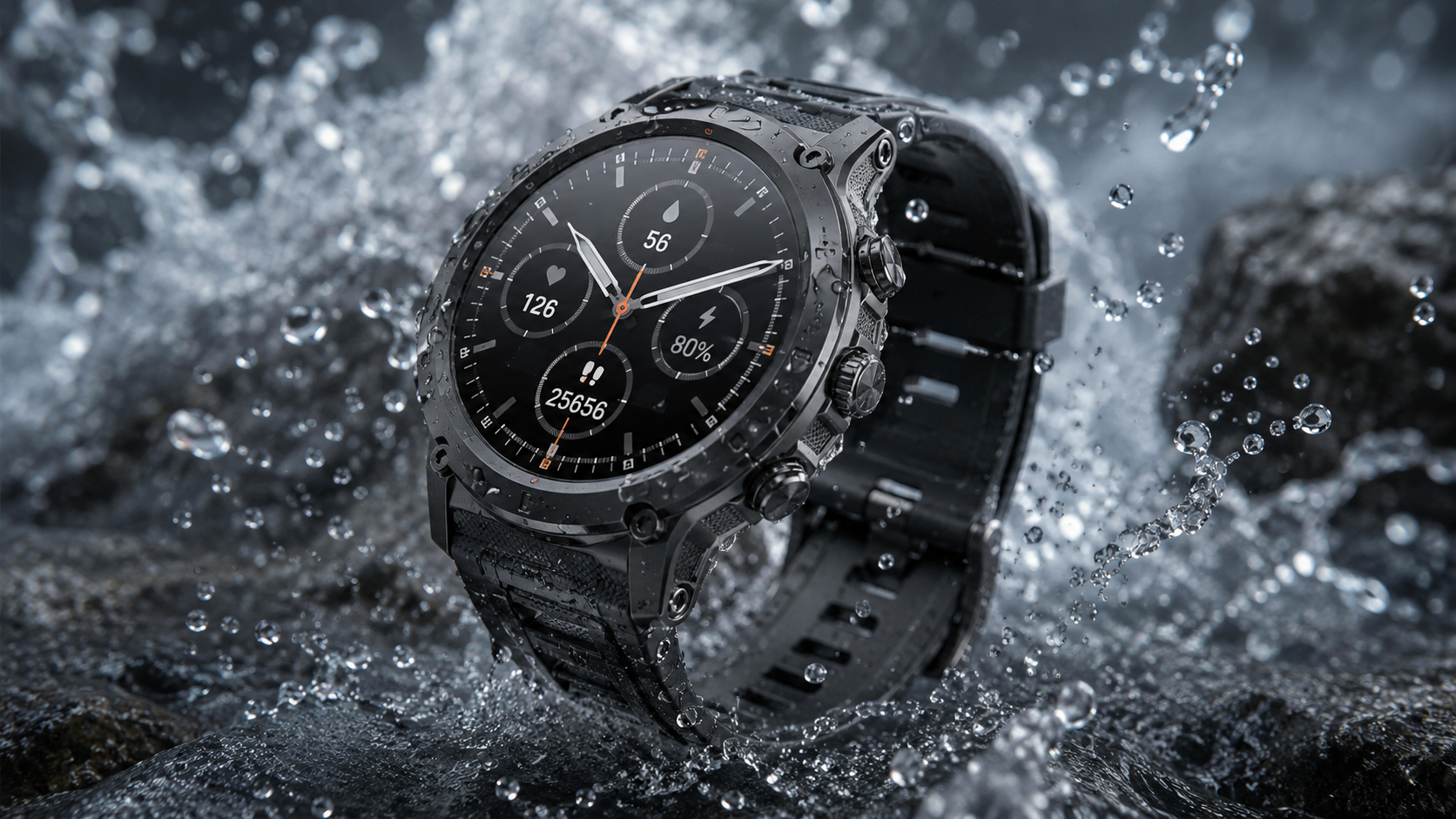
From the factory side, the buyers who get the smoothest projects are not the ones who ask for the lowest price first. They are the ones who define the product architecture, target market and customization boundary before requesting a quotation. That single discipline prevents most of the rework we see: samples built on the wrong platform, certification plans that do not match the destination market, and app requirements discovered after tooling has started.
Certification documentation, testing and compliance-support capabilities vary by supplier and project. Confirm the exact scope, responsible parties and available records in writing before relying on them.
Certification documentation, testing and compliance-support capabilities vary by supplier and project. Confirm the exact scope, responsible parties and available records in writing before relying on them.
If you are evaluating smart watch OEM/ODM options, start with the Pineeon smart watch product page to confirm which architecture family and customization level match your project, then send your RFI against the criteria above.
Quick pre-quotation checklist
- Architecture selected: MCU Bluetooth or Android/4G.
- Target markets listed, with the certification or compliance questions for each.
- Customization level defined: logo/packaging, UI/function, firmware, app, cloud.
- Software ownership and data access questions written into the RFI.
- Quality system certificate requested and scope checked.
- Sample evaluation plan includes repeated functional tests and documented test conditions.
- Pilot acceptance criteria drafted for custom projects.
- Contract clauses identified for IP, firmware, OTA, certification responsibility and change control.