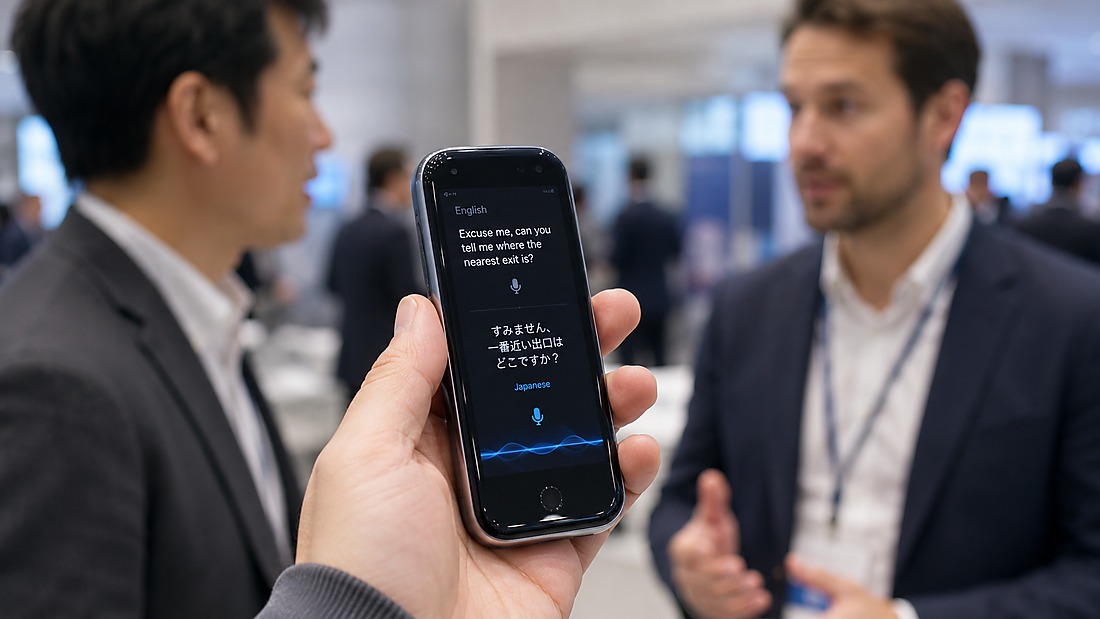
Most AI translator sourcing failures do not start in mass production. They start earlier, when a buyer treats a translation device like a generic Bluetooth accessory and vets the supplier on price, MOQ and a spec sheet. Translation hardware combines acoustics, firmware, a companion app or device UI, and a cloud or on-device translation engine. A supplier can look competent on paper and still fail at microphone sealing, language-package management or firmware update discipline.
This guide sets out a stage-gated vetting workflow for importers, distributors, private label brands and procurement teams. Each stage has an exit decision: continue, request more evidence, or drop the candidate. The goal is not to find the cheapest quote. It is to find a supplier whose engineering, quality system and documentation can carry your project from sample to repeat order.
Why AI translator supplier vetting differs from generic electronics vetting
Generic consumer-electronics vetting focuses on BOM control, assembly quality, packaging and certification paperwork. Those still matter. But an AI translator adds three layers that a standard factory audit will not reveal:
- Translation architecture. The device may be cloud-first (audio captured on the device, ASR/NMT/TTS handled by an app or cloud service) or support meaningful offline language packages on local compute. These are different products with different cost, privacy and reliability profiles.
- Acoustic dependency. Speech recognition quality depends on microphone placement, sealing and noise handling. A visually perfect unit can underperform in a noisy room.
- Software lifecycle. Language lists, translation engines, app UI and firmware updates are software deliverables. The supplier’s ability to manage them after shipment is part of the product, not an afterthought.
Before vetting suppliers, classify your project by device form: translation pen, pocket touchscreen translator, or translator earbuds. The three forms share many consumer-electronics components, but their software architecture, acoustic requirements and offline capability differ. Vetting criteria should follow the form you are actually buying.
Stage 1: Desk screening before any NDA or quote
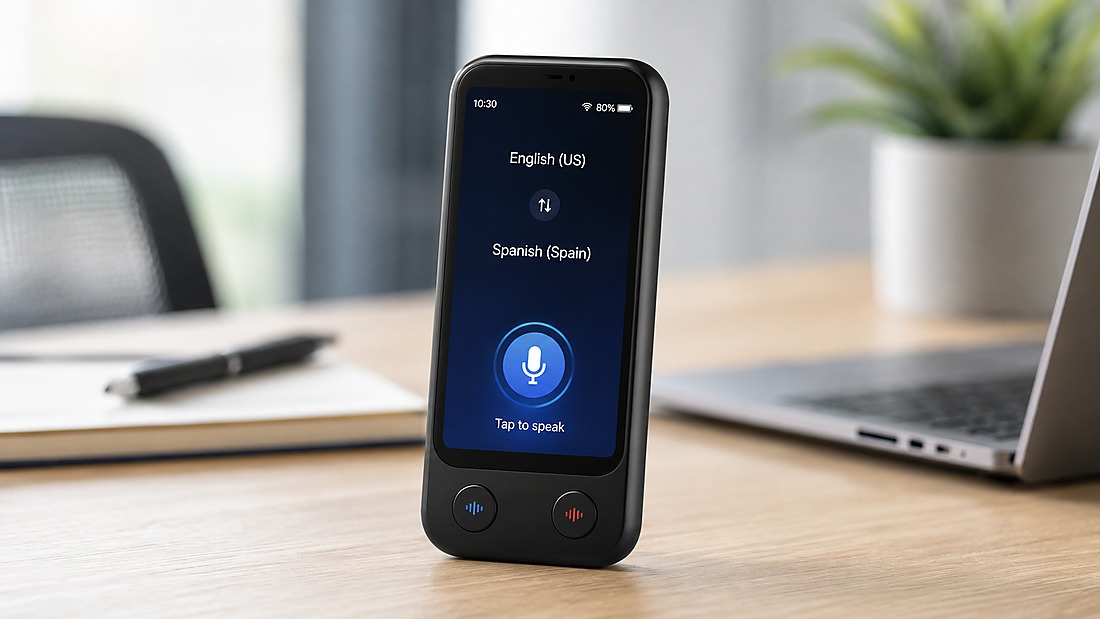
Desk screening is cheap and eliminates candidates before you spend time on samples. Do not send an NDA or RFQ yet. Gather public and requested information and score it against your project.
What to look for at this stage:
- Product-form coverage. Does the supplier actually offer the form you need, or does it list every category on its website? Ask for the current product framework and which forms are in-house versus sourced.
- Engineering language. Product pages and catalogues that describe ASR, NMT and TTS, offline language packages, app customization and firmware updates suggest a supplier that understands the category. Pages that only list a large language count and a very fast translation claim are a warning sign.
- Company stability. Establishment year, location, quality-system claims and export experience. Verify claims later; at desk stage you are checking whether the story is coherent.
- Commercial transparency. A supplier that explains how MOQ bands and sample lead times are set, with clear conditions, is easier to work with than one that answers every question with “depends, contact us.”
Exit decision: keep three to five candidates for the capability questionnaire. Drop any candidate that cannot state which device forms it manufactures and which translation engines it typically integrates.
Stage 2: The capability questionnaire
Send the same written questionnaire to every shortlisted supplier. Written answers are comparable; sales calls are not. The questionnaire should force specificity on the items that determine project risk.
Hardware and acoustics
- Which audio SoC or local AI platform families do you design with, and how do you select between cloud-first and offline-capable architectures?
- How do you control microphone alignment and acoustic sealing in assembly, and what in-process checks apply?
- What acoustic or speech-recognition testing is performed at final inspection, and on what sample basis?
Translation and software
- Which ASR, NMT and TTS providers can you integrate? Can the customer use its own API account or translation backend?
- How are online and offline language packages managed, updated and version-controlled?
- What is the scope of app customization: logo and splash screen only, UI and language priority, or enterprise terminology and backend integration?
- Who stores raw voice audio and translated text, where, and for how long? Can storage be disabled?
- How are firmware updates delivered after shipment, and who approves them?
Quality and compliance
- Describe your IQC, IPQC, FQC and OQC process for this product form.
- Which quality-management system certification do you hold, and can you provide the certificate and scope?
- Which markets do you currently support with CE, FCC and RoHS documentation, and what is your process for model-specific testing?
Exit decision: score answers for specificity. Vague answers on data handling, offline language management or acoustic testing are grounds to drop a candidate regardless of price.
Stage 3: Documentation and compliance evidence review
Ask for documents, not assurances. The exact document set depends on your market and product configuration, but a credible supplier should be able to provide or discuss the following.
| Document | What it proves | What it does not prove |
|---|---|---|
| ISO 9001:2015 certificate with scope | A certified quality-management system covering the relevant activities | That your specific model will meet your quality targets |
| CE, FCC and RoHS technical documentation and test reports for comparable models | The supplier has supported compliance work for similar configurations | That your model, in your configuration, is certified for your market |
| Model-specific test reports | Evidence for a defined configuration | Coverage of a different BOM, radio module or language package |
| Inspection plan and AQL agreement | How outgoing quality will be sampled | That every optional reliability test is performed on every order |
Two rules apply here. First, factory-level certification support is not model-level certification. A supplier may be able to support applicable CE, FCC and RoHS applications without every model already holding every certificate. Second, certification scope, required documents, testing scope and approval depend on the specific model, configuration, target market, laboratory and applicable authority. Confirm current requirements with the applicable laboratory, authority or qualified regulatory advisor before you commit to a market launch date.
If the device includes an independent cellular module, additional cellular and operator approvals apply and should be evaluated separately. Most AI translators use Wi-Fi, Bluetooth or a phone hotspot, which keeps the compliance path simpler.
Stage 4: Sample evaluation protocol
Samples are where supplier claims meet reality. Evaluate them against a written protocol, not a quick demo in a quiet office. Request samples in your actual target language pairs and test in conditions your users will encounter.
Acoustic and speech-recognition testing
- Test in quiet, office, street and transport noise. Record failure rates per condition, not impressions.
- Test multiple speakers with different accents and speaking speeds.
- Check microphone consistency across several units from the same sample batch. Unit-to-unit variation is a manufacturing signal.
Translation accuracy spot-checks
- Build a short test set of sentences per language pair, including domain terminology relevant to your buyers (travel, business, education).
- Score meaning retention, not word-for-word match. Supplier-claimed accuracy percentages are not a substitute for your own test set.
- Test online and offline modes separately. Do not accept an online demonstration as evidence of offline capability.
Latency, battery and connectivity
- Measure response latency across several network conditions. Latency depends on network, engine and device, so record the conditions with the result.
- Measure continuous translation runtime and standby behavior. For earbuds, distinguish single-charge runtime from total runtime with the charging case.
- Test Bluetooth pairing stability and reconnection behavior if the device relies on a phone.
Firmware and software process
- Ask the supplier to demonstrate a firmware update, including how the update is distributed, signed and rolled back if it fails.
- Confirm how language packages are added or removed and who controls the language list.
- Confirm what happens to the device if the cloud translation service is unavailable.
Exit decision: approve the sample only when it passes your protocol across multiple units, and when the supplier can explain any failures with a corrective plan.
Stage 5: Factory audit and pilot run
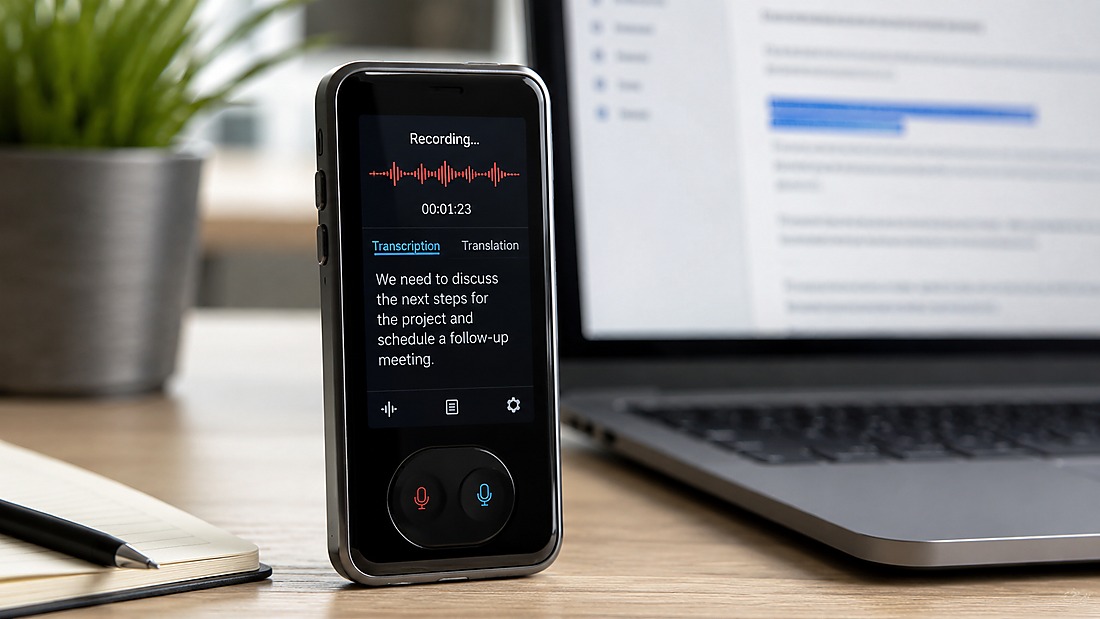
An audit confirms that what you saw in samples can be repeated. Focus the audit on the process steps that matter for translation hardware: incoming inspection of audio SoCs, microphones, batteries and displays; microphone alignment and acoustic sealing on the line; final functional testing of speech recognition, translation latency, offline language functions and Bluetooth stability; and outgoing sampling.
Then run a pilot batch before mass production. The pilot should verify yield, software and hardware consistency, packaging and language documentation. Freeze the product and software configuration after pilot approval. Configuration drift between pilot and mass production is one of the most common causes of quality disputes in software-heavy devices.
Supplier scorecard and red flags
Use a weighted scorecard so that commercial pressure does not override engineering risk. Adjust weights to your project, but keep the categories.
| Criterion | Weight (example) | What good looks like |
|---|---|---|
| Engineering depth (translation architecture, acoustics, firmware) | 25% | Specific answers on ASR/NMT/TTS integration, offline packages and acoustic process control |
| Quality management system | 15% | Certified QMS with scope, documented IQC/IPQC/FQC/OQC, functional testing at final inspection |
| Compliance support | 15% | Clear process for model-specific CE, FCC and RoHS documentation; no blanket certification claims |
| Sample performance | 20% | Passes your protocol across multiple units and noise conditions |
| Communication and responsiveness | 10% | Written answers, named engineering contact, clear escalation path |
| MOQ and lead-time transparency | 10% | Clear conditions attached to any MOQ or lead-time figure, not fixed figures presented as guaranteed |
| Data and IP terms | 5% | Clear answers on data storage, API account ownership and software rights before contract |
Red flags to watch for:
- Language counts presented as hardware specifications, with no distinction between online and offline languages.
- Accuracy or latency claims offered as guarantees without model-specific testing.
- No clear answer on who stores raw voice audio or translated text.
- Certification claims that cannot be tied to a model and configuration.
- Reluctance to run a pilot batch or to freeze configuration after pilot approval.
- Sample units that vary noticeably in microphone performance.
Pineeon Manufacturer-Side Recommendation
From the factory side, the buyers who have the fewest problems are the ones who define the architecture before they ask for a price. Decide early whether offline translation is a critical requirement, which language pairs matter most, and whether you need your own translation API account or cloud backend. Those decisions change the chipset, storage, software scope and MOQ far more than cosmetic customization does.
Certification documentation, testing and compliance-support capabilities vary by supplier and project. Confirm the exact scope, responsible parties and available records in writing before relying on them.
Our practical recommendation to procurement teams: run the five stages in order and do not let a low quote skip the sample protocol. If you are comparing OEM and private label options, start from the AI translator OEM/ODM product page and bring your language list and offline requirement to the first conversation.
Buyer checklist before NDA and quote
- Device form defined: translation pen, pocket translator or translator earbuds.
- Target online languages and required offline languages listed separately.
- Offline translation marked as critical or optional.
- Translation engine preference stated, including whether you need your own API account.
- Data handling questions prepared: raw audio, translated text, storage location, retention.
- Destination markets identified, with certification questions framed as model-specific.
- Sample test protocol written, including language pairs and noise conditions.
- Scorecard weights agreed internally before quotes arrive.
- Pilot batch and configuration-freeze requirement included in the RFQ.
Vetting an AI translator supplier is a sequence of evidence checks, not a single factory visit. Suppliers that welcome the sequence, answer written questions specifically and separate verified facts from claims are the ones most likely to deliver a repeatable product.
Related Pineeon Resources