AI Translator Manufacturing in Latin America Best Practices for 2026
Published November 9, 2026 · Pineeon Insights
Buyers asking about AI translator manufacturing in Latin America usually have one of two goals: they want a regional supply chain to shorten lead times and reduce tariff exposure, or they want a “Made in Latin America” story for retail and public-sector tenders. Both are legitimate. But the first decision is not “which country” — it is “which manufacturing steps can actually be performed regionally, and which will remain imported.” Getting that wrong is the most common way regional projects fail before the first purchase order.
This guide is written from the manufacturer side. It separates true regional manufacturing from assembly and kitting, gives a verification procedure for regional partners, maps the compliance and trade stack you must plan for, and closes with a three-model decision framework you can take into a sourcing committee. All regulatory and tariff points are market-dependent and must be confirmed with local authorities, laboratories and a customs advisor.
What “Manufacturing in Latin America” Actually Means for an AI Translator
An AI translator is not a single manufactured object. It is a stack: a PCBA with an application processor or audio SoC, microphone and speaker acoustic modules, a battery, an enclosure, firmware, a translation engine (ASR, NMT, TTS), language packages, and packaging with localized documentation. Regional capability almost never covers the whole stack.
In practice, the following steps can often be localized in Latin America with the right partner:
- Final assembly and configuration — inserting imported sub-assemblies into locally produced or imported enclosures, flashing firmware, loading language packs, pairing and functional testing.
- Language and terminology loading — installing Spanish and Portuguese variants, regional terminology sets, and offline language packages before boxing.
- Packaging and labeling — local-language manuals, warranty cards, importer information, and market-specific regulatory labels.
- Quality gates — incoming inspection of imported modules, functional and acoustic testing, and final AQL sampling.
- Rework and service — regional repair, firmware reflash, and spare-parts handling, which is often the strongest commercial reason to have a regional partner.
The following steps typically remain imported, because the capital, yield learning and supplier ecosystem are concentrated elsewhere:
- PCBA fabrication and SMT assembly of the main board.
- Acoustic module manufacturing (microphone arrays, speaker chambers, earbud acoustic sealing).
- Battery cell and pack manufacturing.
- Chipset supply and firmware platform development.
- Translation engine and offline language model development.
This is not a criticism of the region. It is the normal structure of consumer-electronics supply chains worldwide: a small number of upstream component clusters feed many regional assembly and customization sites. A regional partner that claims to “manufacture” an AI translator from scratch should be asked to show exactly which of the steps above it performs in-house.
Verifying a Regional Partner: Manufacturing vs. Kitting and Relabeling
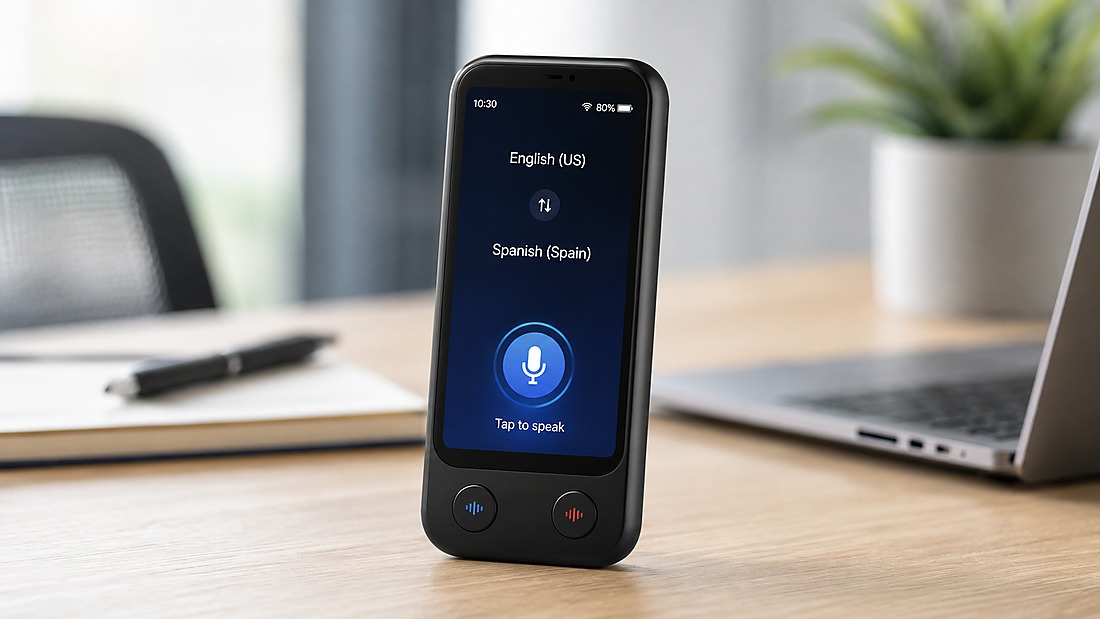
Many companies in Latin America describe themselves as manufacturers when they operate a kitting and relabeling line. That can still be a useful partner — but you must price and contract it as what it is. Use the following verification procedure before signing anything.
| Verification item | What to request | Red flag |
|---|---|---|
| Process flow | A written process flow from incoming goods to outbound shipment, with each step marked as in-house or outsourced | Vague descriptions; no distinction between assembly and kitting |
| Line evidence | Dated photos or a live video walkthrough of the actual line that will run your product | Stock photos, or a line that does not match the described process |
| Traceability | Records linking imported sub-assemblies (lot/serial) to finished units | No lot tracking; cannot trace a defect back to an incoming batch |
| Test equipment | List of functional and acoustic test fixtures, calibration records | Only visual inspection; no acoustic or latency testing |
| Firmware control | Procedure for flashing, version locking and reflash/rework | No version control; ad-hoc firmware loading |
| Quality system | Documented IQC/IPQC/FQC/OQC gates and AQL plan | No incoming inspection of imported modules |
| Regulatory role | Clarity on who holds import licenses, homologation and labeling responsibility | Partner assumes you will handle all local approvals |
Two questions cut through most ambiguity. First: “Which components arrive already assembled, and which do you assemble here?” Second: “Show me a unit you built last month and its test record.” A genuine assembly operation can answer both in minutes. A relabeling operation usually cannot.
The Compliance Stack You Must Plan For
AI translators are radio devices (Wi-Fi, Bluetooth) with a battery and, in some configurations, a camera for OCR. That combination triggers several regulatory tracks. Requirements vary by country and by product configuration, so treat the list below as a planning map, not a legal opinion.
- Telecom and radio homologation — most Latin American markets require type approval or homologation for radio-emitting devices. The authority, process and labeling differ by country. Confirm the current requirement with the national telecom authority or a local laboratory.
- Electrical safety — applicable depending on the product’s power architecture and the market’s scheme. Confirm with the local authority or accredited laboratory.
- Battery transport — lithium batteries are regulated for transport. UN38.3 is a widely referenced test standard for battery transport; whether and how it applies to your shipment must be verified with your carrier and a qualified testing provider.
- Labeling and language — local-language manuals, importer identification, warranty terms and warning statements are commonly required. Spanish and Portuguese variants are not interchangeable, and terminology differs by country.
- Data protection — voice data and translation text may be personal data. Whether processing occurs on-device, in a factory cloud, or through a third-party translation API changes your obligations. Confirm with a local privacy advisor.
One structural point matters for planning: most AI translators use Wi-Fi, Bluetooth or a smartphone hotspot, which keeps the radio certification path relatively simple. If the device contains an independent cellular module with a SIM, additional cellular and operator approvals apply and should be evaluated early, because they can dominate the timeline.
Tariffs, Trade Blocs and Rules of Origin
Regional trade arrangements can reduce or eliminate duties on goods traded between member countries — but only if the product qualifies under the applicable rules of origin. Qualification generally depends on where value is added and how much of the finished product’s content originates within the bloc. A device assembled regionally from imported PCBA, battery and acoustic modules may or may not qualify.
Three planning cautions:
- Do not assume assembly equals origin. Rules of origin often include tariff-shift tests, regional value-content thresholds, or both. Confirm with a customs advisor before you build a pricing model on preferential duty.
- Model the non-preferential case too. Your business case should survive if preferential treatment is unavailable.
- Document the bill of materials by origin. A customs advisor will need component-level origin data, not a summary. Ask your upstream supplier for this early; retrofitting origin data after mass production is painful.
Tariff schedules and trade arrangements change. Any duty assumption you use in a 2026 business case should be verified against the current schedule for your specific HS classification and destination.
Three Sourcing Models Compared
Most buyers converge on one of three structures. The right choice depends on volume, customization depth, service requirements and how much regulatory responsibility you want to carry locally.
| Criterion | Model A: Import finished goods from Asia | Model B: Hybrid — Asian core hardware + regional final assembly/customization | Model C: Fully regional build |
|---|---|---|---|
| What is localized | Nothing; you import finished units | Assembly, firmware flashing, language loading, packaging, labeling, testing, rework | Everything, including PCBA and acoustic modules |
| Upstream dependency | High | High for core modules; lower for finished goods | Low in theory, but requires a regional component ecosystem |
| Customization depth | Limited to what the factory offers | Good for language packs, terminology, packaging and firmware configuration | Highest, if the ecosystem supports it |
| Lead time to first sale | Shortest | Medium; requires partner qualification and process transfer | Longest; typically not realistic for a 2026 launch |
| Tariff/origin exposure | Full import duty | Partial; origin qualification uncertain and must be confirmed | Potentially favorable, subject to rules-of-origin confirmation |
| Service and rework | Returns cross borders | Regional repair and reflash possible | Regional service is native |
| Main risk | Tariff and lead-time exposure; slow customization | Partner capability gap; quality drift between sites | Component availability; capital and yield learning |
| Best fit | Market test, low volume, fast launch | Brands with regional service needs and moderate volume | Large-volume programs with a multi-year horizon |
For most 2026 launches, Model B is the realistic middle path. Model C is rarely achievable for an AI translator within a single planning year because the upstream component ecosystem is not concentrated in the region. Model A remains the correct choice for market testing and for buyers whose volume does not justify a regional operation.
Quality Control Adaptations for Distributed Manufacturing
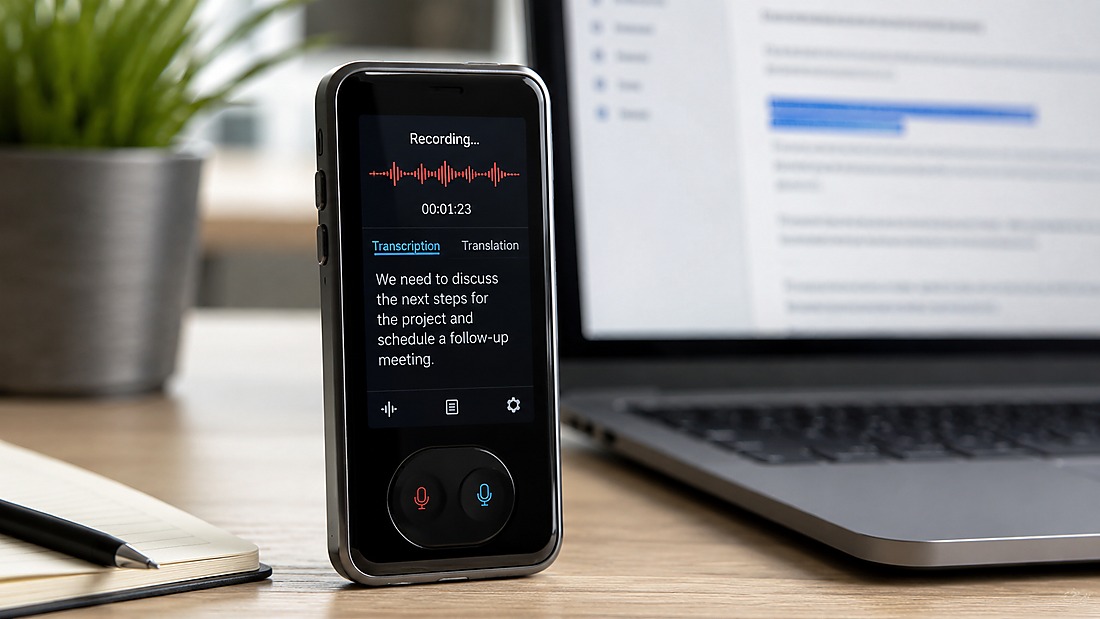
When assembly moves to a second site, quality risk shifts from “can the factory build it” to “can two sites build it identically.” Four controls matter most.
Incoming inspection of imported modules. The regional site should inspect PCBA, battery, acoustic modules and displays on arrival, with documented sampling and defect classification. Defects found at final test are far more expensive than defects found at goods-in.
In-region functional and acoustic testing. Speech recognition depends on microphone alignment and acoustic sealing. Small assembly deviations that pass visual inspection can degrade ASR performance. The regional line needs a functional test fixture that exercises speech capture, translation latency and playback — not just power-on.
Firmware version control across sites. Every unit should carry a traceable firmware and language-pack version. Define who can authorize a version change, how reflash is recorded, and how a field issue is traced back to a production batch.
A single golden-sample standard. Keep a sealed, signed golden sample at each site, with a defined comparison procedure (functional, acoustic, cosmetic). When sites disagree about a marginal unit, the golden sample is the arbiter. Review it whenever firmware or BOM changes.
These controls are standard practice in distributed electronics manufacturing. They are not exotic — but they must be written into the quality agreement, not assumed.
Language and Localization as a Manufacturing Spec
In an AI translator project, language is not a marketing detail. It is a manufacturing specification that must be frozen before mass production.
- Which Spanish and Portuguese variants? Terminology and formality differ across markets. Decide whether you need one neutral variant or country-specific sets.
- Online vs. offline languages. These are different specifications. Online language counts depend on the translation engine; offline capability depends on local compute, memory and storage. Do not let a supplier’s online language count stand in for offline capability.
- Terminology customization. Enterprise, education and public-sector buyers often need domain vocabulary. Confirm whether terminology sets can be loaded at the regional site and how they are versioned.
- Validation before mass production. Test the actual target language pairs, accents and terminology in the actual operating environment. Supplier-claimed accuracy percentages are not a substitute for project-specific testing.
Freeze the language matrix — device form, online languages, offline languages, terminology sets, UI language — as a controlled document. Changes after mass production start are expensive and hard to roll back across two sites.
Project Timeline and Documentation Checklist
Timelines are project-dependent and should be planned as ranges, not commitments. The sequence below reflects the dependencies that most often drive delay.
- Define the product and language matrix — device form (translation pen, pocket translator or translator earbuds), online and offline languages, connectivity, OCR requirement, destination markets.
- Select the upstream hardware platform — confirm the model, BOM and firmware baseline with the manufacturer.
- Qualify the regional partner — run the verification procedure above; agree process flow, test fixtures and traceability.
- Map regulatory requirements per market — homologation, safety, battery transport, labeling, privacy. Confirm with authorities and laboratories.
- Confirm origin and duty treatment — with a customs advisor, using component-level origin data.
- Build and approve golden samples — at both the upstream and regional sites.
- Run a pilot batch regionally — verify yield, firmware consistency and acoustic performance.
- Freeze configuration and documentation — BOM, firmware version, language matrix, packaging artwork, labels.
- Mass production and ongoing version control — with a defined change-control process across sites.
Documentation checklist: process flow with in-house/outsourced marking; line evidence; traceability records; test fixture list and calibration records; quality agreement with AQL plan; firmware and language-pack version log; golden-sample records; regulatory approvals and label artwork per market; component-level origin data; import/export documentation; warranty and service procedure.
Pineeon Manufacturer-Side Recommendation
From the manufacturing side, the most reliable way to structure a Latin America project in 2026 is to separate the upstream hardware decision from the regional assembly decision, and to contract them separately even when the same brand owns both.
Certification documentation, testing and compliance-support capabilities vary by supplier and project. Confirm the exact scope, responsible parties and available records in writing before relying on them.
Then qualify the regional partner on process discipline, not on claims. Require a written process flow, line evidence, traceability and a golden-sample procedure before the first pilot batch. Write the quality agreement so that firmware version control, incoming inspection and acoustic testing are contractual obligations, not good intentions.
Finally, keep the language matrix and the origin documentation under your own configuration control. These two documents determine whether the regional project delivers its commercial benefit — faster service and favorable duty treatment — or becomes an expensive relabeling exercise. For OEM/ODM and private label AI translator programs, start from the AI Translator product page and confirm the platform, language matrix and certification scope for your target markets before committing to a regional structure.
Related Pineeon Resources

Frequently Asked Questions
Can an AI translator be fully manufactured in Latin America in 2026?
Full upstream manufacturing — PCBA, acoustic modules, battery packs — is generally not available at scale in the region. Regional final assembly, configuration, language loading, packaging and testing are realistic. Confirm the specific steps with each candidate partner.
Does regional assembly qualify the product for preferential tariff treatment?
Not automatically. Qualification depends on the applicable rules of origin, including value-content and tariff-shift tests. Confirm with a customs advisor using component-level origin data before building a pricing model on preferential duty.
Which certifications should I plan for?
Radio homologation, electrical safety, battery transport and labeling requirements vary by country and configuration. CE, FCC and RoHS are common reference points for other markets, but Latin American requirements are market-specific and must be confirmed with the national authority or an accredited laboratory.
How do I prevent quality drift between the upstream factory and the regional site?
Use a single golden-sample standard at both sites, contractual firmware version control, incoming inspection of imported modules, and in-region functional and acoustic testing. Review the golden sample whenever firmware or BOM changes.
Should offline language capability be decided before or after choosing a regional partner?
Before. Offline capability affects chipset, memory and storage requirements, which in turn affect the BOM and the assembly process. Deciding it late forces rework at both sites.
Is a regional partner still useful if it only does kitting and relabeling?
Yes, if priced and contracted as such. Kitting, labeling and regional rework can shorten service cycles and satisfy local labeling requirements. The mistake is paying manufacturing prices for kitting capability.