AI Translator Factory Comparison Criteria for Retailers
Published November 21, 2026 · Pineeon Insights
Most AI translator factory comparisons fail before the first quotation arrives. Buyers compare brochures, language counts and headline prices, then discover after sample approval that the factory cannot support the offline language package they promised their channel, that microphone sealing is inconsistent between pilot and mass production, or that the certification documents belong to a different model configuration.
This guide gives retailers, importers and procurement teams a criteria-based comparison method for an ai translator factory comparison — one that separates what a factory can genuinely do from what a sales deck implies. It is written from the manufacturer side, where the real constraints live: product architecture, translation-engine control, acoustic process discipline, documentation scope and contract terms.
One framing rule applies throughout: a factory’s company-level capability is not the same as a specific model’s verified status. Keep those two layers separate in every comparison you run.
Start by comparing product architecture, not factories
AI translators are not one product category. Three hardware forms behave differently in the field, and each one changes what you should demand from a factory:
- Translation pen / stick with display: OCR scan translation, photo translation, two-way voice, offline dictionary, and on selected models AI Q&A. The critical factory competence is camera/OCR calibration and dictionary packaging.
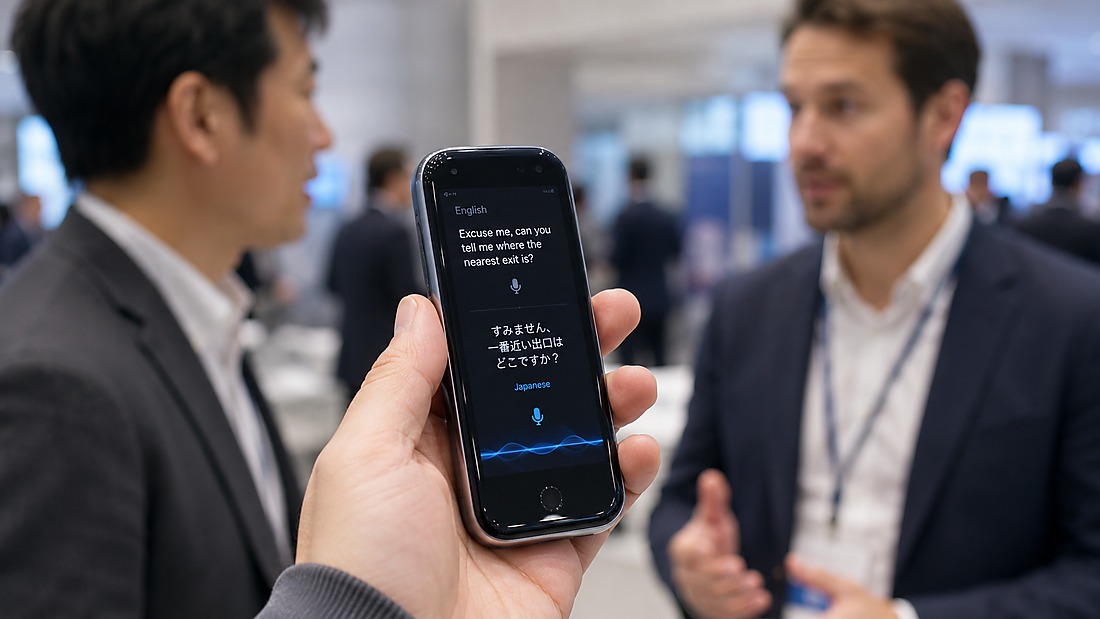
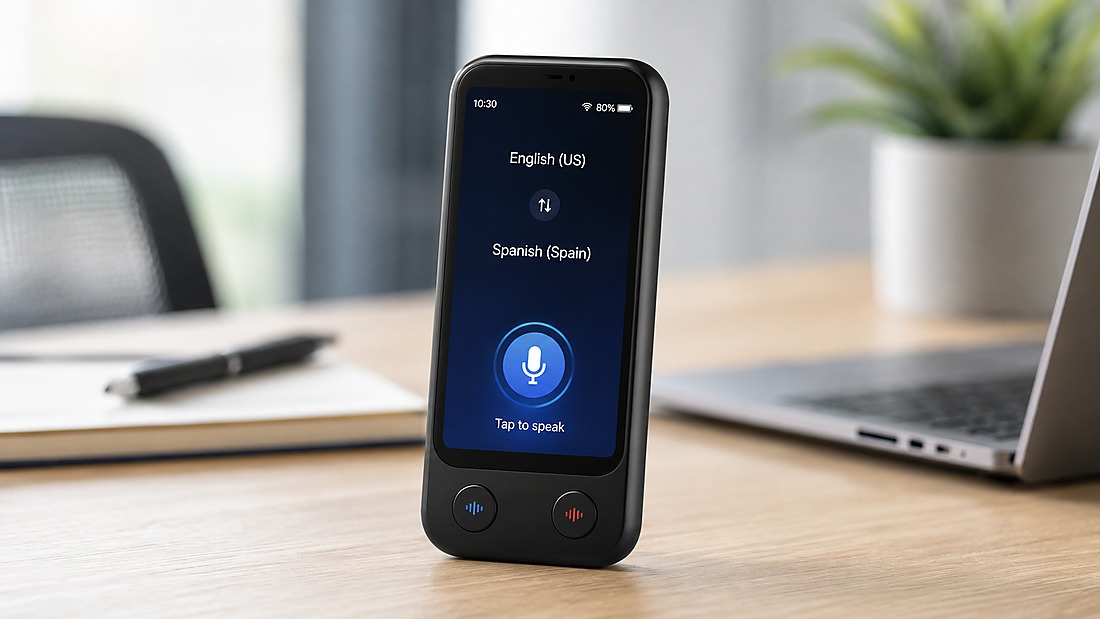
- Pocket touchscreen translator: real-time subtitles, speaker and private-listening modes, standalone operation without mandatory phone pairing. The critical competence is on-device UI, thermal and battery management under continuous translation load.
- Translator earbuds: TWS audio capture and playback, app-assisted translation, hybrid ANC on selected models. The critical competence is acoustic process control — microphone alignment and sealing — because small assembly deviations degrade speech recognition.
If you send the same RFQ to factories that build pens and factories that build earbuds, you will get incomparable quotes. Fix the form factor first, then compare factories within that form. This single step removes most of the noise from an ai translator manufacturer shortlist.
Scorecard: eight criteria that actually differentiate factories
Use a weighted scorecard rather than a pass/fail list. The weights below are a starting point for a consumer retail program; adjust them if your channel is enterprise or education.
| Criterion | What to verify | Weight | Typical failure mode |
|---|---|---|---|
| 1. Architecture fit | Factory builds your chosen form (pen, pocket, earbuds) as a standard platform, not a one-off | 15% | Quote is based on a platform the factory has never shipped |
| 2. Translation engine & language packages | Which ASR / NMT / TTS providers; online vs offline language split; who owns the API account | 20% | Online language count presented as offline capability |
| 3. App / firmware customization scope | White-label vs UI customization vs customer-owned app via SDK/API | 15% | “Full customization” collapses to logo and splash screen after deposit |
| 4. Acoustic & microphone testing | How microphone alignment and sealing are controlled in IPQC; how ASR performance is tested in FQC | 15% | Visual inspection only; recognition drift appears in the field |
| 5. QC process | IQC → IPQC → FQC → OQC flow; AQL level; reliability tests agreed in writing | 10% | “100% inspection” claimed without a defined test list |
| 6. Compliance documentation support | CE / FCC / RoHS support scope, technical file ownership, certificate holder | 10% | Company certificates shown as model certificates |
| 7. Commercial terms | MOQ, NRE, tooling ownership, lead time, exclusivity | 10% | Verbal MOQ that rises after sample approval |
| 8. Data & IP terms | Raw audio storage, translation text retention, firmware/source-code rights | 5% | Assumed local processing that is actually cloud-based |
Score each factory 1–5 per criterion, multiply by weight, and keep the raw notes. The score matters less than the discipline of asking the same question in the same way to every ai translator suppliers candidate.
Translation engine and language packages: the criterion buyers under-scrutinize
For AI translators, the translation engine is closer to the product than the enclosure is. A cloud-first architecture captures audio on the device and performs ASR, NMT and TTS in the app or cloud. It lowers hardware cost and makes language expansion easier, but it requires connectivity, introduces recurring cloud-service cost, and raises data-handling questions. An offline architecture uses local compute and offline language models — better availability, higher hardware cost, larger storage and memory requirements, and more complex language-package management.
Ask every candidate these questions in writing:
- Which languages are supported online, and which are supported offline? Treat these as two separate lists.
- Does translation traffic pass through a factory-operated cloud, or can we use our own API account?
- Can the translation engine (ASR, NMT or TTS provider) be switched, and is that a software-layer or firmware-layer change?
- Who stores raw voice audio and translated text, and can storage be disabled?
- Can offline terminology packages be customized for our vertical (medical vocabulary, legal terms, brand names)?
Supplier-claimed accuracy figures are widely quoted in sales material, but they should never be accepted as a program specification. Accuracy depends on language pair, accent, terminology, microphone quality, network conditions and the engine itself. Test it yourself on your target pairs, and treat any headline percentage as a marketing reference rather than a verified result.
Run a structured RFQ and sample protocol instead of comparing brochures
The fastest way to expose weak factories is to make the RFQ answer operational questions rather than marketing ones. A workable protocol:
- Requirement sheet first. State form factor, target online languages, required offline languages, connectivity model, OCR requirement, destination markets and language-package priorities. Factories that cannot answer precisely will generalize.
- Ask for a written scope split. Require the factory to separate: standard platform features, light customization (logo, packaging, splash screen), mid customization (UI layout, language priority, offline package configuration) and advanced customization (terminology database, backend integration, customer-owned app).
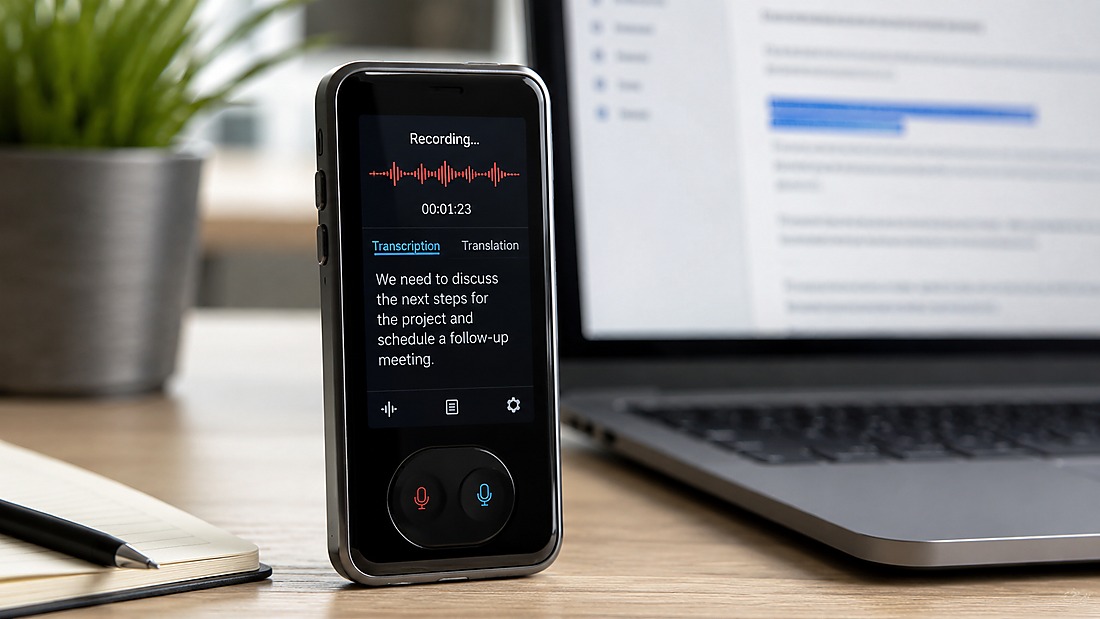
- Request the QC test list, not the QC slogan. Ask which functions are tested at FQC — speech recognition, translation latency, offline language function, OCR accuracy where applicable, Bluetooth stability, touchscreen function — and at what sampling level.
- Order samples from the same configuration you intend to buy. A sample built on a different chipset or language package proves nothing about the production unit.
- Run a side-by-side sample evaluation. Same script, same language pairs, same noisy and quiet environments, same network conditions. Record latency, recognition failures and battery behavior under continuous translation.
- Pilot before mass production. A small pilot batch verifies yield and software/hardware consistency — the step where acoustic and firmware drift usually appears.
For a custom ai translator or private label ai translator program, this protocol also protects you commercially: it creates a written record of what the factory committed to before pricing was finalized.
Verify compliance support without conflating company and model status
This is the most common comparison mistake retailers make. A factory may legitimately support CE, FCC and RoHS certification or compliance applications at company level while an individual model configuration has not yet been tested. Those are different facts and must be documented separately.
Ask for:
- The scope of compliance support offered for your project — documentation, testing coordination, application assistance, or all three.
- Which model and configuration any existing certificate covers, and who the certificate holder is.
- Whether radio-related approvals (for Bluetooth earbuds, for example) are handled by the factory or by you.
- Whether any cellular module is involved — most translators use Wi-Fi, Bluetooth or phone hotspot, but an independent SIM-based 4G module changes the approval path substantially.
Requirements vary by product configuration, radio technology, battery design and destination market. Confirm current requirements with the applicable laboratory, authority or qualified regulatory advisor before you commit to a launch date. No factory should guarantee approval or a fixed certification timeline; treat any such guarantee as a warning sign.
Commercial terms that must be in writing before quotation
Several criteria are entirely project-dependent and cannot be compared fairly from a price list. Pin them down in the RFQ response:
- MOQ by customization tier. Light logo/packaging work, mid-level UI and language-package work, and deep structural or offline-language customization normally sit at different volume thresholds. Ask for all three, not one number, and treat every figure as a reference until it appears in an official quotation.
- NRE and tooling. Who pays, who owns the tooling, and what happens to it if the program ends.
- Lead time by phase. Sample, pilot and mass production should be quoted separately, with the delay risks named (certification, language-package customization, acoustic tuning, microphone sealing, wearing-comfort optimization).
- Exclusivity and IP. Firmware ownership, source-code access, language-data ownership and exclusivity are contract items, not catalog features. Assume nothing that is not signed.
- Packaging and accessories. Color box, manual languages, language-list card, charging accessories — specify per SKU.
When you import ai translator hardware, these written terms are also what your customs broker and compliance consultant will ask for. Verbal agreements do not survive the first shipment.
Factory audit and pilot-run checklist for AI translator hardware
Use this checklist during a factory audit or pilot review. Each line should produce a document, a demonstration or a named responsible person — not a verbal assurance.
- ☐ Quality management system certificate sighted and current (for example, ISO 9001:2015).
- ☐ IQC list includes main SoC, audio SoC, microphone, battery, touchscreen module and housing materials.
- ☐ IPQC checkpoints explicitly cover microphone alignment and acoustic sealing (critical for earbuds).
- ☐ FQC test list names the functions tested and the sampling rule.
- ☐ OQC defines AQL level and reliability tests (drop, button life, touchscreen life where applicable).
- ☐ Sample units traceable to the exact BOM and software build you intend to order.
- ☐ Translation engine, API account ownership and data-retention policy documented.
- ☐ Offline language list verified on the sample device, not on a datasheet.
- ☐ Compliance support scope and certificate holder confirmed in writing.
- ☐ Pilot batch yield and software/hardware consistency reviewed before mass-production release.
Pineeon Manufacturer-Side Recommendation
From the manufacturing side, the comparison that predicts program success is not the one with the lowest quote — it is the one where the factory’s platform genuinely matches your architecture and where the commitments are written down before money moves.
Our practical recommendation to retailers and procurement teams:
- Lock the form factor and the offline requirement first. Everything downstream — chipset class, storage, battery, MOQ, NRE — follows from whether meaningful offline translation is a must-have or a nice-to-have.
- Score engine control and acoustic QC highest. These two criteria determine field return rates more than enclosure quality does.
- Separate company capability from model status in every document. Ask each candidate to state, in writing, what is verified for your exact configuration.
- Buy samples from the configuration you will produce. Then pilot. Then scale.
Certification documentation, testing and compliance-support capabilities vary by supplier and project. Confirm the exact scope, responsible parties and available records in writing before relying on them.
If you are building a private label or OEM translator line, start with the AI Translator OEM/ODM product page to review the platform options, then send a requirement sheet rather than a price request. The comparison gets faster and far more honest once the architecture is fixed.