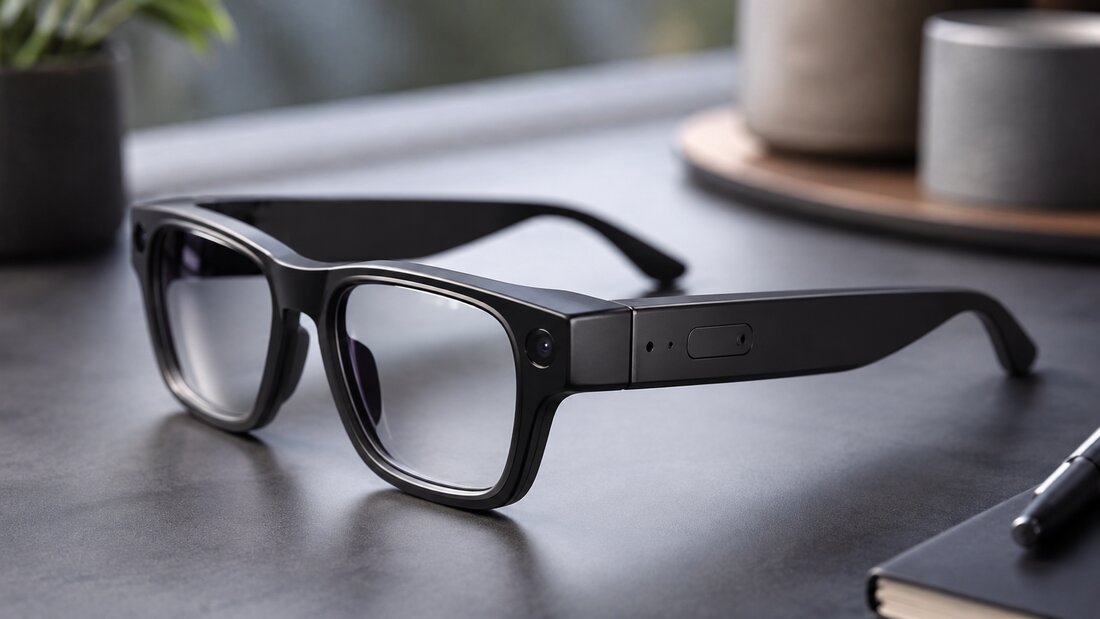
AI Glasses Packaging Customization Options: Frequently Asked Questions
Published October 24, 2026 · Pineeon Insights
Packaging is usually the last item on an AI glasses OEM/ODM project plan and the first one to cause a delay. Buyers spend weeks on frame color, firmware features and app branding, then discover that the retail box artwork was never approved, the barcode data does not match the retailer’s system, or the manual is missing the language required in the destination market.
This FAQ answers the questions importers, private label brands and procurement teams actually ask about custom AI glasses packaging: what can be customized, where packaging intersects with compliance labeling and logistics, and what to confirm before a supplier quotes. Because AI glasses span audio-only, camera and AR display architectures, packaging scope also varies by product family — a camera model with a charging case and a prescription-lens accessory has a different packaging bill of materials than an audio-only model.
Everything below is written from the manufacturer side. Where a detail depends on the selected model, destination market or contract, it is flagged as project-dependent rather than presented as a fixed rule.
What can actually be customized in AI glasses packaging?
In practice, packaging customization breaks into seven layers. Buyers should confirm which layers are in scope before requesting a quotation, because each layer has a different tooling, artwork and approval path.
- Retail box structure. Standard factory box, a modified stock structure, or a fully custom structure with new tooling. Custom structures typically require a cutting die and a longer artwork-to-sample cycle.
- Printing and finishes. Print method, color matching, and surface finishes such as matte or gloss lamination, spot UV or foil. Finishes affect cost, scuff resistance and recyclability.
- Inserts and trays. Paper, molded pulp or EVA foam trays that hold the glasses, charging case and accessories. The insert is a protection decision as much as a presentation decision.
- Accessory packaging. Bags or pouches for the charging cable, lens-cleaning cloth, spare nose pads and prescription-lens accessories where the model supports them.
- Manuals and inserts. Quick start guide, safety information, warranty card and multi-language booklets. Language sets are market-dependent.
- Labels and barcodes. Retail barcode, serial number label, and any regulatory or importer identification markings required in the destination market.
- Shipping cartons. Inner and outer carton configuration, carton marking, and pallet or FBA labeling where the buyer ships to a fulfillment center.
A common misconception is that packaging customization is purely cosmetic. In AI glasses, the insert design determines how the product survives transit, and the label set determines whether the carton can clear retail receiving. Both are engineering and compliance inputs, not decoration.
How does packaging interact with compliance labeling?
This is where most packaging problems originate. The retail box and the product itself usually carry different markings, and the required content depends on the product configuration, the radio technology, the battery design and the destination market.
Typical questions buyers raise include where CE or FCC marking should appear, whether the manufacturer or importer must be identified on the box, and which languages the manual and safety information must cover. The honest manufacturer-side answer is that these requirements are market-dependent and subject to verification. They should be confirmed with the applicable authority, a qualified laboratory or a regulatory advisor for the specific product and market — not assumed from a previous project or copied from a competitor’s box.
Two practical points follow from this:
- Label content is an input to artwork, not a finishing step. If the compliance marking block is still undecided when artwork is submitted, the box will be reprinted or stickered later, which adds cost and risk at the worst possible moment.
- Factory support is not the same as a model certificate. A manufacturer may be able to assist with applicable certification or compliance application processes and provide technical documentation and testing support for applicable projects, but that does not mean every model already holds every certificate. Buyers should verify the exact model, certificate holder and target market before printing any compliance claim on packaging.
Camera-enabled AI glasses add a further layer: privacy and recording-related information may need to appear in the manual or on the packaging depending on the market. Treat this as a project-specific review item rather than a standard insert.
What should a buyer verify before approving packaging?
The most reliable way to avoid packaging rework is a fixed four-step verification sequence. Each step produces a document the buyer signs off, so responsibility is clear if something changes later.
- Dieline and artwork proof. Request the packaging dieline and a digital artwork proof. Check dimensions, fold lines, bleed, barcode placement and the compliance marking block. Confirm the proof reflects the exact model and configuration.
- Material and print method confirmation. Confirm board grade, insert material, print method and finishes in writing. If the buyer is pursuing eco-friendly AI glasses positioning, confirm which materials and finishes are actually recyclable in the destination market rather than accepting a generic “green” description.
- Physical pre-production packaging sample. Approve a physical sample, not only a PDF. Check color against the brand standard, insert fit with the actual product and accessories, box rigidity, and how the product sits after a drop or vibration check.
- Barcode and label data check. Scan the barcode, verify the number against the retailer’s system, and confirm serial number format, language set and importer identification before mass production begins.
Buyers who skip step three are the most common source of late-stage disputes. A screen proof cannot show whether a matte lamination scuffs, whether the insert grips the charging case, or whether the box closes cleanly after the manual is added.
Which packaging elements are project-specific, and why does it matter for MOQ and lead time?
Not all packaging customization carries the same commercial weight. The table below separates elements that are usually low-friction from those that typically change tooling, MOQ or schedule. The categories are general industry practice; the actual impact must be confirmed for the selected model and project scope before quotation.
| Packaging element | Typical customization route | What it usually affects |
|---|---|---|
| Logo and brand colors on a standard box | Print or sticker on existing structure | Artwork approval only; lowest impact |
| Manual language set | Content and translation change | Artwork cycle; translation review time |
| Custom insert or tray | New cutting die or molded tooling | Tooling, sample cycle, minimum order quantity |
| Fully custom box structure | New structural design and die | Tooling, sample cycle, MOQ, lead time |
| Barcode and retailer labeling | Data and print setup | Data verification; receiving compliance |
| Shipping carton configuration | Carton spec and marking | Transit protection; freight and warehouse handling |
Two manufacturer-side realities are worth stating plainly. First, custom structural tooling is normally amortized over an order, so a bespoke box on a small trial order is rarely economical — buyers testing a market often do better with a modified stock structure and strong print. Second, packaging sits on the critical path of mass production: if artwork approval lands after the production slot is booked, the order either ships in standard packaging or waits. Neither outcome is desirable, and both are avoidable with earlier sign-off.
For buyers comparing routes, the packaging decision should be made alongside the product architecture decision. Audio-only, camera and AR display AI glasses have different accessory sets and different box volumes, so packaging designed for one family rarely transfers cleanly to another.
Standard versus customized packaging: a pre-order checklist
Use this checklist to decide which route fits the project and to catch the mistakes that most often surface after the purchase order is signed.
- Scope decision. Is the project standard factory packaging with a logo sticker, or full custom packaging? Write the answer down before requesting a quote.
- Model and configuration confirmed. Box contents must match the exact model: charging case, cable, cloth, nose pads and prescription-lens accessories where applicable.
- Artwork ownership. Confirm who supplies print-ready artwork, who owns the files, and who approves the final proof.
- Language set. List every language required per destination market and confirm who reviews translations.
- Compliance marking block. Confirm placement and content with the applicable authority or qualified advisor; do not copy from another product.
- Barcode and label data. Verify numbers, serial format and importer identification against the retailer’s requirements.
- Material and finish specification. Confirm board grade, insert material and finishes in writing, including recyclability claims if eco-positioning is used.
- Physical sample approval. Sign off a physical pre-production packaging sample with the actual product inside.
- Carton and logistics labeling. Confirm inner and outer carton configuration and any fulfillment-center labeling requirements.
- Change control. Agree in writing how late artwork or specification changes are handled and who bears the cost.
The most frequent buyer mistakes are consistent across projects: artwork approved too late, multi-language inserts omitted or added after printing, label data never scanned against the retailer’s system, and packaging designed without the actual accessory set in hand. Each is inexpensive to prevent and expensive to fix.
Pineeon Manufacturer-Side Recommendation

Pineeon is a B2B private label Smart Wearable, Computer Peripheral and AI Hardware OEM/ODM manufacturer based in Shenzhen, China, operating since 2000 and ISO 9001:2015-certified, serving brands and buyers in 40+ countries. Packaging customization is part of the OEM/ODM and private label service scope, and the AI glasses OEM/ODM product page is the right starting point for buyers evaluating a project.
Our recommendation to buyers is to treat packaging as a project workstream with its own owner and deadline, not as an afterthought to the hardware order. Concretely:
- Decide the packaging route at the same time as the product family. Audio-only, camera and AR display AI glasses differ in accessory set, box volume and insert design. Locking packaging late forces compromises.
- Submit artwork early and approve a physical sample. Digital proofs cannot validate fit, finish durability or box closure with the manual inside.
- Separate compliance labeling from brand design. Confirm marking and language requirements with the applicable authority or qualified advisor for the specific model and market, and keep that block under change control.
- Verify label data before mass production. Scan the barcode, check the serial format and confirm importer identification against the retailer’s requirements.
- Confirm scope before quotation. Tooling, MOQ and lead-time impact depend on the selected structure, insert and print method. Final packaging scope, MOQ, pricing and schedule are subject to the selected model, project requirements and official Pineeon quotation.
Certification documentation, testing and compliance-support capabilities vary by supplier and project. Confirm the exact scope, responsible parties and available records in writing before relying on them.
Frequently asked questions
Can I get fully custom packaging on a small trial order?
Usually not economically. Custom box structures and inserts require tooling that is normally amortized over volume. For market testing, a modified stock structure with custom print and a custom manual is often the more practical route. Confirm the tooling and MOQ implications for the specific model before committing.
Who is responsible for compliance markings on the box?
Responsibility is defined by the commercial agreement and the destination market’s rules, but the content itself should be confirmed with the applicable authority, qualified laboratory or regulatory advisor. The manufacturer may be able to support documentation and label placement where applicable, but the buyer should verify the exact marking requirements for the model and market before artwork is finalized.
Can packaging be eco-friendly without changing the product?
Often yes, through board grade, insert material and finish selection. However, recyclability and labeling claims are market-dependent and should be verified against local requirements. Avoid generic environmental claims on packaging unless they can be substantiated for the specific materials used.
How late can artwork changes be made?
This depends on the print method, tooling and production schedule, and should be agreed in writing at project start. As a rule, artwork changes after the production slot is booked either delay shipment or force standard packaging. Build an artwork freeze date into the project plan.
Does packaging differ between audio, camera and AR display AI glasses?
Yes. Accessory sets, box volume and insert geometry differ by product family, and AR display models may require additional protection for optical components. Packaging designed for one family should not be assumed to fit another without re-verification.
Can the packaging carry my brand without revealing the manufacturer?
Private label branding is a standard OEM/ODM arrangement, but what appears on the box — including manufacturer or importer identification — is governed by destination-market requirements and the contract. Confirm the required identification content with a qualified advisor before finalizing artwork.