AI Translator Retail Distribution Channels: What Startups Should Know
Published November 8, 2026 · Pineeon Insights
Most first-time AI translator brands lose time not because the hardware is wrong, but because they pick a channel before they understand what that channel will ask for. A specialty travel retailer, a corporate reseller and a regional distributor each evaluate an AI translator differently — and each one pushes different requirements back into the OEM/ODM brief. Getting the channel sequence right is cheaper than re-tooling packaging, manuals or firmware language packs after the first purchase order.
This guide is written from the manufacturer side. It explains what each channel type typically expects, how channel choice changes the private label or OEM brief, what documentation a startup should prepare before approaching an ai translator distributor, and where startups most often over-commit. MOQ, lead time and certification scope remain project-dependent and must be confirmed against the selected model and official quotation.
Why channel choice is an OEM decision, not just a sales decision
In AI translator projects, the channel determines four things that are locked in at the factory, not in the sales deck:
- Packaging and retail readiness. A marketplace listing tolerates a plain color box with a sticker. A duty-free or specialty travel shelf usually does not.
- Documentation depth. Distributors and corporate resellers ask for spec sheets, compliance status, warranty terms and an RMA process before they will onboard a SKU.
- Language scope. A tourism-focused channel may prioritize offline language packages; an enterprise reseller may prioritize terminology customization and data-handling answers.
- After-sales structure. Who handles returns, firmware updates and replacement units changes the warranty and spare-parts plan agreed with the factory.
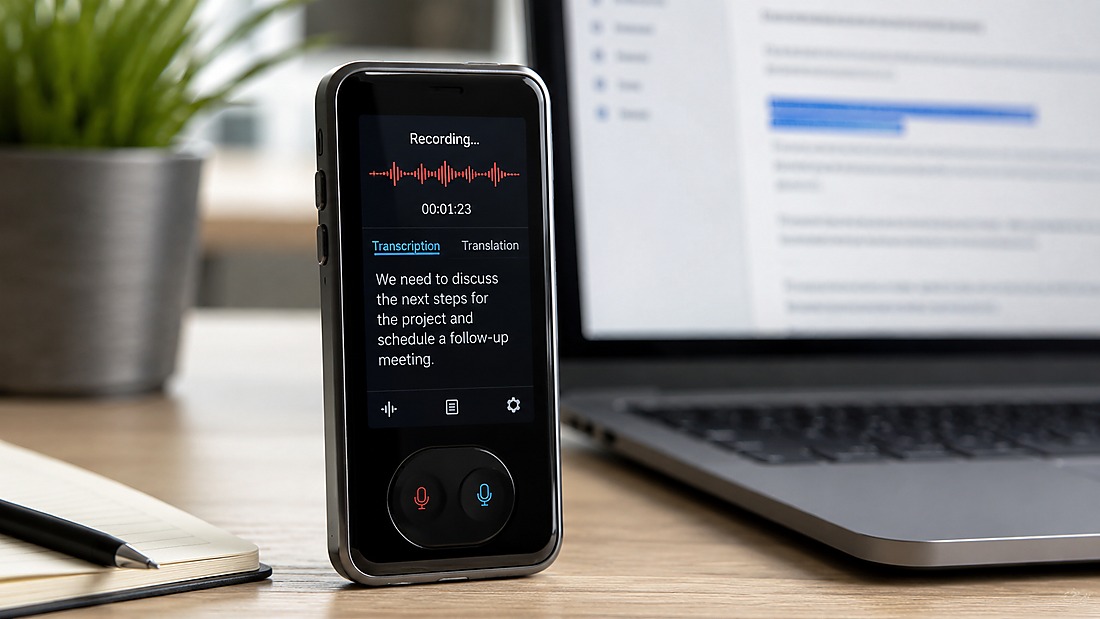
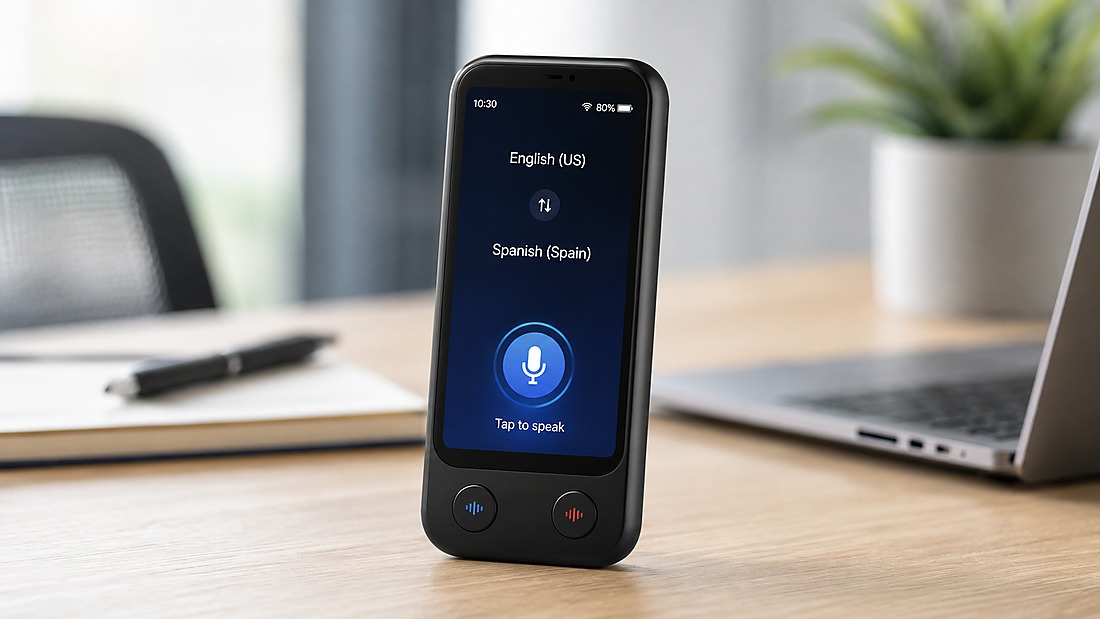
Because translation pens, pocket translators and translator earbuds have different software architectures and acoustic requirements, the channel conversation should happen before the device form is frozen. A buyer who selects translator earbuds for a corporate meeting channel is making a different acoustic and app-integration commitment than a buyer selecting a pocket translator for travel retail.
Channel-by-channel requirement matrix

The table below summarizes what each channel type typically asks for. These are general industry patterns, not Pineeon commitments; actual requirements vary by buyer, market and model.
| Channel type | Typical packaging expectation | Documentation typically requested | Warranty / after-sales expectation | MOQ pattern (general) |
|---|---|---|---|---|
| Specialty travel retail | Retail-ready color box, multi-language quick start, language-list card | Spec sheet, compliance status by market, barcode and carton data | Defined return window; replacement policy | Moderate; often pilot order first |
| Corporate / enterprise resellers | Neutral or co-branded packaging; asset tags optional | Spec sheet, data-flow explanation, warranty terms, RMA process, firmware update policy | Longer warranty; spare-unit pool; update commitments | Higher per deal, lumpy |
| E-commerce marketplaces | Custom box optional; strong listing images and A+ content | Listing compliance documents, battery shipping documents where applicable | Consumer-facing returns; self-managed RMA | Low entry; scales with ranking |
| Regional distributors / wholesalers | Localized packaging and manual language | Full document pack, territory terms, price protection, certification status | Distributor-level RMA and spare parts | Higher; often tied to territory |
| Duty-free / travel hubs | Premium unboxing, multi-language, gift-ready | Market-specific compliance, country-of-origin and labeling data | Short shelf cycles; fast replacement | Moderate to high; seasonal |
| Education / tourism resellers | Functional packaging; teacher or guide materials optional | Language-list accuracy, offline capability statement, training material | Bulk replacement; firmware update path | Moderate; tender-driven |
Two rows deserve emphasis. First, corporate resellers almost always ask who stores voice data and whether the customer can use its own translation API account. Those are software and contract questions, not hardware questions, and they should be raised with the factory before the sample is approved. Second, regional distributors will ask about territory and price protection — a commercial topic that belongs in the supply agreement, not in a WhatsApp thread.
How channel choice changes the OEM/ODM brief
Once the channel is chosen, the brief to the factory should change in specific, checkable ways.
Private label vs white label
A white-label approach uses an existing model with minimal branding change. A private label ai translator project typically adds logo, packaging graphics, manual language and app splash screen. Deeper OEM/ODM work — custom UI, offline language package selection, enterprise terminology, customer-owned app — moves the project into a different development track with different MOQ and NRE expectations. The brief should state which of these levels is required, because the factory cannot price a project accurately from a one-line request.
Retail-ready packaging and manuals
If the channel is travel retail or duty-free, packaging must survive shelf handling and support multi-language quick-start content. Manual language is a factory deliverable, so the buyer should supply final translated text early. Late manual changes are a common cause of shipment delays.
Firmware and language-pack scope
Language scope should be split into online languages and offline languages. They are not the same commitment. A cloud-first device can list many online languages, but offline capability depends on the chipset, storage and software architecture. Buyers targeting tourism or education channels should confirm offline language packages explicitly rather than assuming them from a marketing list.
After-sales and update path
Distributors want to know how firmware updates reach end users and who pays for replacement units. The factory-side answer depends on whether the app is factory-operated or customer-owned, and on the warranty terms in the contract. These should be written down before the first bulk order.
Distributor onboarding documentation checklist
Startups often approach distributors before they have a document pack. That wastes a meeting cycle. Prepare the following before outreach:
- Product specification sheet — device form, screen, microphone configuration, connectivity, battery reference, supported online and offline languages (clearly separated), and app requirements.
- Compliance documentation status — which markets the model is intended for and the current status of applicable CE, FCC or RoHS work. Certification scope is model- and market-dependent and must be confirmed with the applicable laboratory or authority; do not present a factory capability as a model certificate.
- Warranty terms — duration, what is covered, and who bears freight on returns.
- RMA process — how a distributor reports a fault, expected response path, and whether spare units are held.
- Firmware and app update policy — who publishes updates and how users receive them.
- Data-handling statement — where translation traffic goes, whether raw audio is stored, and whether the customer can use its own API account. These answers must come from the actual software architecture, not from assumptions.
- Packaging and carton data — dimensions, weights, barcodes and master-carton quantities.
- Commercial terms summary — MOQ reference, lead-time reference, territory and price-protection position.
A distributor who receives this pack in one PDF will move faster than one who has to chase eight answers across email threads. It also protects the startup: writing down the data-handling and warranty position forces an early conversation with the factory instead of a late surprise.
Margin structure and channel conflict
Startups frequently launch direct-to-consumer first, then add distributors. That sequence creates a predictable conflict: the distributor discovers the brand selling the same SKU online at or below the distributor’s cost. The manufacturer cannot resolve this for the brand — it is a commercial design problem.
Three practical structures are common in consumer electronics:
- Channel-differentiated SKUs. A slightly different bundle, color or accessory set for the distributor channel reduces direct price comparison.
- Territory exclusivity with performance conditions. Exclusivity is granted for a defined territory and period, tied to purchase commitments. The supply agreement should define what happens if commitments are missed.
- MAP-style resale guidance. The brand sets a minimum advertised price policy for resellers. Enforcement is a brand-side task, but the policy should be referenced in distributor terms.
Margin expectations vary widely by channel and market and should not be assumed from another brand’s deck. What matters at the factory stage is that the buyer knows the target landed cost and the channel’s required margin before negotiating MOQ, because those two numbers determine whether the project is viable at all.
Common channel-sequencing mistakes
From the manufacturer side, the same failure patterns recur:
- Launching on marketplaces before distributor documentation exists. The listing goes live, a distributor asks for the compliance pack, and the brand cannot supply it. The distributor moves on.
- Over-committing MOQ to an unvalidated channel. A startup signs a large volume to secure a lower unit price, then discovers the channel does not convert. A pilot order followed by a volume order is usually the safer sequence.
- Freezing hardware before the channel is known. Choosing translator earbuds for a channel that needs a standalone touchscreen device forces a redesign.
- Treating online language count as offline capability. This creates returns and negative reviews in tourism and education channels.
- Leaving data-handling and API ownership undefined. Corporate resellers will ask, and a vague answer stalls the deal.
- Assuming certification is automatic. Compliance scope depends on the model, radio configuration, battery and target market. It must be planned, not assumed.
Pineeon Manufacturer-Side Recommendation
Pineeon is a B2B private label Smart Wearable, Computer Peripheral and AI Hardware OEM/ODM manufacturer based in Shenzhen, China, ISO 9001:2015-certified and serving brands and buyers in 40+ countries since 2000. From that position, the recommendation for startups is to sequence channels deliberately:
- Start with one channel and one device form. Validate demand with a sample or small pilot order before committing to volume. The AI translator OEM/ODM product page is the right starting point for matching device form to channel.
- Brief the factory with the channel in mind. State the target channel, packaging level, manual languages, online and offline language priorities, and whether the app will be factory-branded or customer-owned.
- Prepare the distributor document pack before outreach. Spec sheet, compliance status, warranty, RMA and data-handling statement in one place.
- Define territory and data rights in the contract. Firmware, software, cloud backend, language data and API account ownership must be explicitly agreed; they are not automatic.
- Plan compliance per market. Certification requirements, required documents, testing scope and approval depend on the specific model, configuration, target market, laboratory and applicable authority, and approval is not guaranteed. Buyers should confirm current requirements with the applicable authority, qualified laboratory or regulatory advisor before committing to a market launch.
For startups, the most expensive mistake is not choosing the wrong channel — it is choosing a channel and a hardware configuration that cannot be changed without a new tooling cycle. Sequencing the channel decision before the OEM brief keeps that option open.