AI Translator Wholesale Pricing Strategy in 2026: A Practical Overview
Published October 31, 2026 · Pineeon Insights
Most wholesale AI translator quotes are not directly comparable. One supplier bundles certification documentation into the unit price; another quotes a lower unit rate but excludes the offline language package, the companion app white-labeling, or the cloud translation API account. By the time a distributor or private label brand normalizes the numbers, the apparent gap between two quotes can invert.
This overview is written from the manufacturer side of the table. It explains how a wholesale AI translator cost stack is typically assembled, which variables a buyer can actually negotiate, and how to build a 2026 pricing strategy that survives currency movement, tariff documentation costs and the recurring nature of cloud translation. It does not quote prices, MOQ or lead times — those are project-specific and must come from an official quotation.
Why AI Translator Pricing Is Not a Single Number
An AI translator is a hybrid product: consumer electronics hardware plus a software and cloud service layer. That hybrid nature is the root cause of most pricing confusion. A translation pen, a pocket touchscreen translator and translator earbuds share many mature consumer-electronics components, but their acoustic requirements, software architecture and offline capability differ — and so does the cost structure.
When a buyer asks an ai translator manufacturer for a unit price, the supplier has to make assumptions. Which device form? Which languages online, which offline? Is the app white-labeled or customer-owned? Does the buyer bring its own translation API account? Each assumption moves the number. A responsible quote therefore separates one-time development costs from recurring per-unit costs, and separates hardware from software and service.
For a bulk ai translator program, the practical rule is: never accept a single blended unit price without a cost-stack breakdown. The breakdown is what you negotiate against, and it is what protects you when volumes shift.
The Wholesale AI Translator Cost Stack, Category by Category
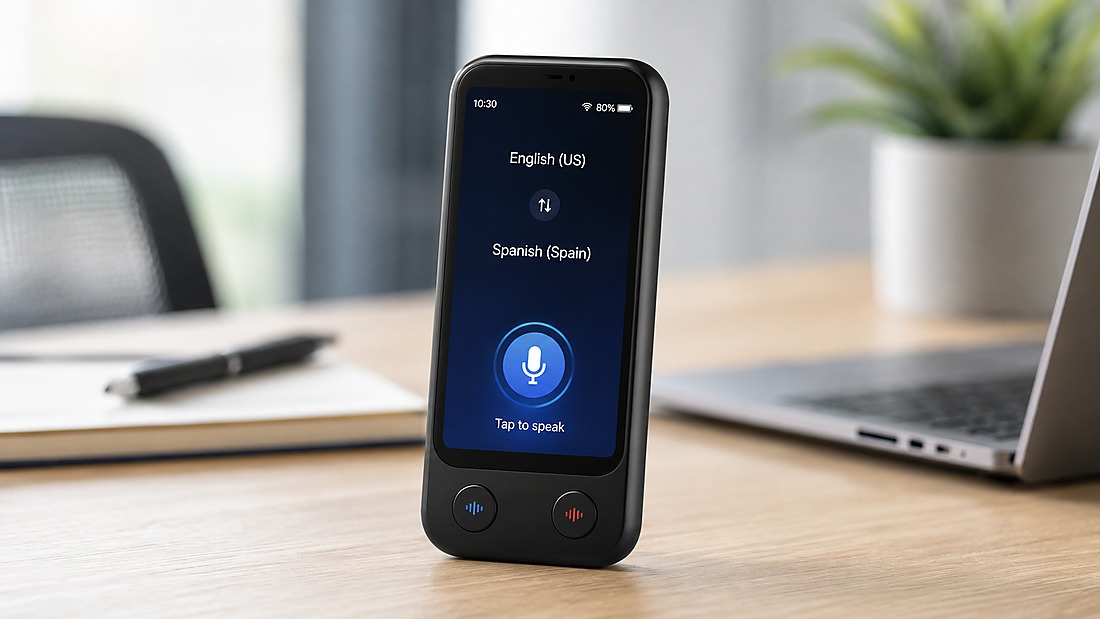
The following categories are general industry cost groupings, not Pineeon price figures. Use them as the skeleton of your quote normalization sheet.
| Cost category | What it covers | One-time or recurring | Typical negotiation lever |
|---|---|---|---|
| Hardware BOM | SoC/audio platform, memory, display or camera module, microphone array, battery, enclosure, PCB | Per unit | Volume tier, component substitution within approved spec |
| Translation engine / API licensing | ASR, NMT and TTS service usage; per-minute or per-request billing | Recurring | Customer-owned API account, engine switching, usage caps |
| Offline language package | Local models, storage, memory headroom, language selection and priority | One-time + per unit | Scope the language list to actual target markets |
| Firmware and app integration | UI, white-label app, device UI, backend integration, terminology database | One-time (NRE) | Define ownership and iteration rights upfront |
| Packaging and branding | Color box, manual languages, accessories, language-list card | Per unit + tooling | Standard vs custom packaging, print language count |
| Testing and compliance documentation | Functional test, acoustic consistency test, CE/FCC/RoHS documentation and testing support | One-time + per unit | Clarify who holds the certificate and who pays the lab |
| Logistics | Freight mode, Incoterms, duties, insurance, warehousing | Per shipment | Incoterm choice, consolidation, lead-time buffer |
Two categories deserve extra attention because they are where quotes most often hide differences. First, translation engine licensing: cloud-first architectures carry an ongoing per-use cost that does not appear in the unit price but lands on the brand or distributor after launch. Second, testing and compliance documentation: some suppliers quote certification support as a separate line, others amortize it into the unit price. Neither approach is wrong, but you cannot compare them until both are on the same sheet.
How Language Coverage and Offline Architecture Change Unit Economics
Language support is the most frequently misunderstood cost driver in custom ai translator projects. Buyers see a large language count on a spec sheet and assume it is a hardware property. It is not. Supported language counts are a function of the translation engine and the software platform, and they must always be split into online and offline categories.
Online languages are relatively cheap to expand because the processing happens in the cloud. Offline languages are expensive because each one consumes local compute, memory and storage, and because offline packages require validation across accents and terminology. A device that supports a meaningful offline set needs a more capable application processor or NPU, more RAM and more flash — all of which raise the BOM.
The manufacturer-side implication is straightforward: scope offline languages to the markets you actually sell into. If your distribution is concentrated in a few language regions, paying for a very large offline language set is dead cost. If your buyers are frequent business travelers who expect function without a network, offline capability is a genuine differentiator and worth the BOM increase.
Ask the supplier to quote these as separate scenarios: cloud-first, hybrid, and offline-capable. The delta between them is your real architecture decision, and it is far more useful than a single unit price.
A Tiered Negotiation Framework for Bulk AI Translator Orders
Negotiation works best when both sides understand which levers exist. In AI translator programs, the levers fall into five groups.
1. Volume tiers. Unit price typically steps down at defined quantity bands. Ask for the band structure in writing rather than a single price at a single quantity, so you can model your own sell-through scenarios.
2. MOQ trade-offs. MOQ is not fixed physics. Standard logo and packaging customization generally sits at a lower volume than deep software, offline-language or structural customization. If your forecast is uncertain, negotiate a smaller first order with a committed follow-on volume rather than inflating the first PO. Final MOQ must be confirmed by official quotation.
3. Tooling and NRE amortization. One-time engineering — tooling, UI development, offline package integration, terminology database work — can be paid upfront, amortized into unit price, or split. Amortizing lowers the entry cash requirement but raises the per-unit cost and can create friction if volumes fall short. Upfront payment protects unit margin but increases risk. Decide based on how confident you are in the forecast, and put the amortization formula in the contract.
4. Payment terms. Deposit and balance structure affects the supplier’s working capital and therefore its willingness to hold price. Terms are a legitimate negotiation variable, but they should be traded explicitly, not assumed.
5. Separation of one-time and recurring costs. This is the most important discipline. Development costs, tooling, certification documentation and language-package integration are one-time. BOM, packaging, cloud API usage and freight are recurring. Mixing them into one number makes it impossible to renegotiate later or to compare suppliers.
For an OEM ai translator program with meaningful customization, expect the one-time component to be a larger share of the first order and a smaller share of later orders. Model both.
Quote Normalization: A Buyer Checklist
Before comparing two quotes, force both onto the same structure. Use this checklist.
- Device form stated explicitly — translation pen, pocket translator or translator earbuds. These are different products with different acoustic and software requirements.
- Online language list attached — not a headline count, an actual list.
- Offline language list attached separately — with the storage and memory implication noted.
- Translation engine named — ASR, NMT and TTS providers, and whether the buyer can bring its own API account.
- Cloud usage billing model disclosed — per minute, per request, or included; and who pays after launch.
- App scope defined — white-label only, UI customization, or customer-owned app with SDK/API integration.
- Firmware and software ownership stated — including source-code access if claimed, and data rights.
- Packaging and accessory list itemized — box type, manual languages, cables, cards.
- Testing scope itemized — which functional and acoustic tests are included per unit.
- Certification line clarified — CE, FCC and RoHS support quoted separately or bundled; certificate holder named; lab fees identified.
- Incoterm and freight basis stated — EXW, FOB, CIF or DDP, with insurance.
- Validity period and currency — and whether the price is fixed or indexed.
- One-time vs recurring split shown — NRE, tooling and amortization formula visible.
Red flags. A quote that bundles certification costs without naming the certificate holder. Vague language-support claims with no list. A cloud translation service with no disclosed billing model. “Free” app customization with no ownership clause. A unit price that changes materially when you ask for the same quote in a different currency without an exchange-rate basis.
2026 Planning Factors: Currency, Tariffs and Lead-Time Buffers
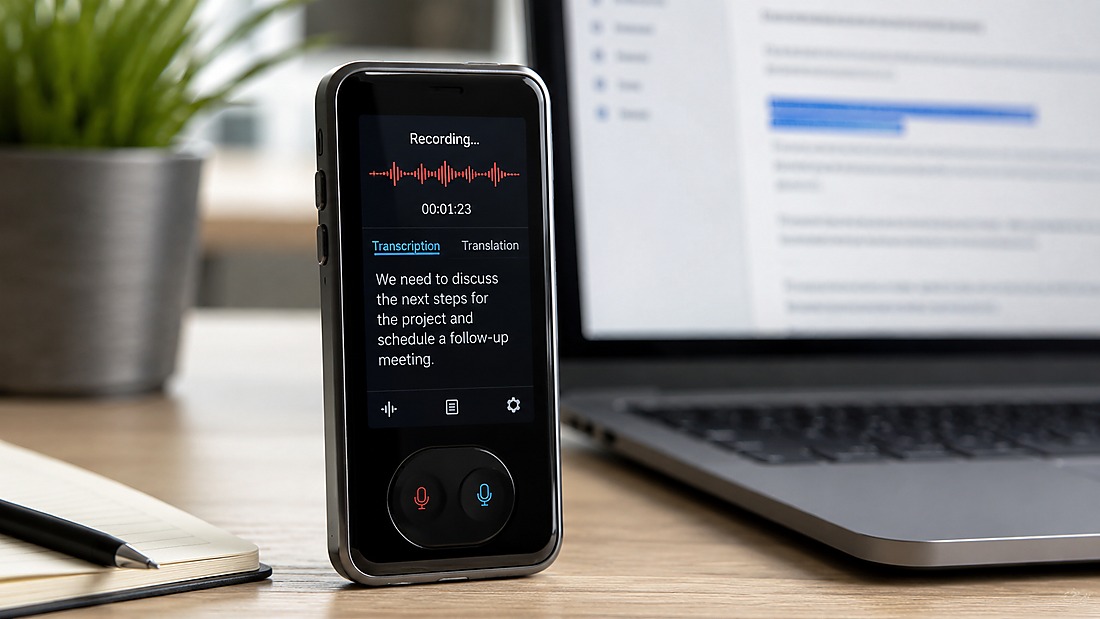
Three external variables deserve a line in your 2026 pricing model. Treat each as a general consideration subject to verification with your forwarder, customs broker and financial advisor.
Currency volatility. If your quote is in USD but your costs or revenues are in another currency, build a buffer into your retail price rather than assuming the rate holds for the contract term. Ask whether the supplier will fix the price for a defined period or index it.
Tariff and compliance documentation costs. Duties and documentation requirements vary by destination market and product configuration. These are landed-cost items, not unit-price items, and they should be modeled separately so a tariff change does not silently consume your margin.
Lead-time buffers. Certification, deep language-package customization and acoustic tuning are commonly cited delay risks in translator programs. Build a buffer into your launch plan and your reorder point rather than assuming the first production run lands on the earliest possible date. Final lead time is subject to confirmed production scheduling and project complexity.
Landed-Cost and Margin Planning Worksheet Structure
Distributors and private label brands should model wholesale-to-retail pricing in a worksheet with these rows. No prices are suggested here — the structure is the deliverable.
- Ex-works unit price (per volume tier)
- Packaging and accessory cost per unit
- One-time NRE and tooling, divided by planned volume
- Certification documentation cost, divided by planned volume
- Freight and insurance per unit
- Duty and customs clearance per unit
- Inland transport and warehousing per unit
- Cloud translation API cost per unit per year (estimate from expected usage)
- Warranty and return reserve
- Landed cost per unit (sum of 1–9)
- Target wholesale or retail price
- Gross margin and margin percentage
- Sensitivity: landed cost at a higher freight assumption, an adverse currency movement, and one volume tier lower
Row 8 is the one most often omitted. A cloud-first translator with no per-unit service cost in the model can look profitable at launch and erode over the product’s life. If the buyer owns the API account, the cost is visible and controllable; if the supplier bundles it, ask how usage is metered.
Pineeon Manufacturer-Side Recommendation
From the factory side, the buyers who get the most predictable pricing are the ones who define scope before asking for a number. Pineeon evaluates customer requirements before recommending a project approach, and OEM/ODM options depend on the level of hardware, firmware, software, tooling, branding and packaging customization. Final project scope should be confirmed before quotation and development.
Concretely, we recommend that buyers:
- Choose the device form first — translation pen, pocket translator or translator earbuds — because acoustic requirements and software architecture differ.
- Decide whether offline translation is a critical requirement before chipset and software architecture selection.
- Bring a target language list, not a target language count.
- Decide upfront whether the brand wants its own translation API account and cloud backend, and define data ownership in the contract.
- Ask for one-time and recurring costs as separate lines, and for volume tiers in writing.
- Confirm certification scope, certificate holder and testing responsibility per market.
Certification documentation, testing and compliance-support capabilities vary by supplier and project. Confirm the exact scope, responsible parties and available records in writing before relying on them.
To review device forms and customization routes before requesting a quotation, see the AI Translator OEM/ODM product page.
Frequently Asked Questions
Should I ask for a single unit price or a cost breakdown?
Ask for the breakdown. A single blended price cannot be compared across suppliers and cannot be renegotiated when your volume or language scope changes. The breakdown should separate hardware, translation engine licensing, offline language scope, firmware and app integration, packaging, testing and compliance documentation, and logistics.
Is offline translation always more expensive?
Generally yes, because offline languages require more local compute, memory and storage and more validation work. The right question is whether offline capability is a genuine requirement for your target buyers. If it is, scope the offline language list tightly to your markets rather than paying for unused capability.
Who pays for cloud translation usage after launch?
That depends on the architecture and the contract. Some programs bundle cloud usage into the unit price; others require the buyer to hold its own API account. Ask explicitly who stores raw voice data, who pays for usage, and whether the translation engine can be switched. Do not assume customer control unless it is contractually confirmed.
How should certification costs appear in a quote?
As a clearly identified line, with the certificate holder named and the laboratory fees distinguished from the supplier’s support work. Bundling certification into the unit price is acceptable only if the scope and holder are documented. Whether a supplier can support CE, FCC or RoHS certification or compliance applications, and what that support covers, must be confirmed for the specific project with the applicable laboratory or authority.
What is the biggest pricing mistake distributors make?
Omitting recurring cloud translation cost from the landed-cost model. A device that looks profitable at launch can erode over its product life if per-use translation billing is invisible. Model it per unit per year and stress-test the assumption.
Can MOQ be negotiated down for a first order?
Often there is room, but it depends on the customization depth. Standard logo and packaging work generally sits at lower volumes than deep software, offline-language or structural customization. A smaller first order with a committed follow-on volume is usually a more productive conversation than a straight request to lower MOQ. Final MOQ must be confirmed by official quotation.