Most first-time buyers approach an AI translator project with a single question: “Can you make this with our logo?” That question hides a much bigger decision. An AI translator is not one product — it is a device plus a translation stack, and the OEM/ODM choice determines which of those layers you actually control.
This overview is written from the manufacturer side. It explains what OEM and ODM mean specifically for AI translator hardware, where the real customization happens, and how to pick a starting route before you send out RFQs. It is not a price guide, and it does not promise that any route gives you source-code ownership or guaranteed certification — those depend on the model, the contract and the target market.
Why the OEM vs ODM Question Is Harder for AI Translators
In conventional consumer electronics, OEM usually means the factory builds to your specification and ODM means the factory supplies a design you brand. That framing breaks down for AI translators because the product has two distinct halves.
The device layer includes the microphone array, speaker, display or touchscreen, battery, enclosure, buttons and — for earbud-style products — the acoustic chamber and charging case. This is conventional hardware engineering.
The translation stack includes automatic speech recognition (ASR), neural machine translation (NMT) and text-to-speech (TTS), plus the app or on-device UI that ties them together. This layer can run in the cloud, on-device, or in a hybrid arrangement, and it is where most of the user-perceived quality actually lives.
That split matters because a buyer can have deep control of one layer and almost none of the other. A project can be “OEM” on the enclosure and “ODM” on the translation engine. Before choosing a route, decide which layer your brand genuinely needs to own.
What OEM Actually Changes on an AI Translator Project

In an OEM ai translator project, the buyer brings a defined specification and the manufacturer builds to it. In practice, that specification has to be concrete enough to quote and to test against. Vague briefs such as “a premium pocket translator with good accuracy” cannot be engineered, sampled or inspected.
A workable OEM brief typically pins down:
- Device form: translation pen, pocket touchscreen translator, or translator earbuds. These are architecturally different products, not cosmetic variants.
- Connectivity model: Wi-Fi and Bluetooth with smartphone hotspot, standalone operation, or an independent cellular module. The last option changes the certification path substantially.
- Offline requirement: whether offline language packages are a core feature or a nice-to-have. This drives chipset class, memory and storage.
- Translation engine sourcing: a licensed third-party engine, a cloud API integration, or your own backend.
- Industrial design and tooling: whether existing tooling can be adapted or new tooling is required.
The trade-off is straightforward. OEM gives you more control over the device and the user experience, but you carry more specification work, more validation responsibility and usually more non-recurring engineering (NRE) and tooling exposure. If your team cannot write and defend that specification, OEM becomes an expensive way to discover what you did not know.
What ODM Actually Changes — and What It Does Not
In an ODM ai translator project, the manufacturer supplies a platform that already exists in some form, and customization happens on top of it: branding, packaging, UI adjustments, language-package configuration, terminology, and sometimes acoustic or structural tuning.
The most common first-time buyer mistake is assuming ODM means zero customization. It does not. A well-run ODM project can include a custom app skin, a reordered language list, an enterprise terminology database, custom packaging and a modified accessory set. What ODM generally does not give you is a device architecture designed from a blank sheet around your requirements.
The second common mistake is assuming OEM means full source-code control. It usually does not. Firmware source access, software source access, cloud backend ownership and translation-engine account ownership are commercial terms, not automatic consequences of choosing an OEM route. They must be negotiated and written into the agreement.
ODM’s real advantage is time and risk. The platform has already been through sampling, acoustic tuning and — depending on the model — compliance work. You inherit that maturity. The cost is that you also inherit design decisions you did not make, including microphone placement, speaker choice and the default translation architecture.
Decision Framework: Which Route Fits Your Situation
Use the table below as a starting filter, not a final answer. Most real projects sit between rows.
| Buyer situation | Likely starting route | What you control | Main trade-off |
|---|---|---|---|
| Brand-only launch; no hardware or software team | Private label / light ODM | Logo, packaging, manual, app name and splash screen | Fastest path, least differentiation; platform limits are fixed |
| Existing app or translation backend; need hardware | ODM with SDK/API integration | Translation engine, data flow, app experience | Depends on whether the platform exposes the audio and API access you need |
| Defined spec, own ID, target market requirements | OEM | Device architecture, tooling, firmware behavior, engine choice | Higher NRE, longer validation, more internal specification work |
| Regulated or enterprise deployment with terminology needs | OEM or deep ODM | Terminology, data handling, offline packages, audit documentation | Requires contractual clarity on data ownership and storage |
| Market test with uncertain demand | Sample / small private-label order | Branding only | Low commitment, but limited learning about your real differentiation |
Two rules of thumb help. First, if your differentiation lives in the translation experience — terminology, language coverage, data handling — prioritize control of the translation stack over control of the enclosure. Second, if your differentiation lives in the physical product — form factor, acoustics, wearability — prioritize the device layer and accept a more standard translation stack.
How Translation Engine Sourcing Interacts With the Route
This is the part buyers most often leave until too late. The translation engine decision affects cost structure, privacy posture and how easily you can change the product later.
Cloud-first architecture captures audio on the device and sends it to an app or cloud service for ASR, NMT and TTS. Hardware cost is lower, language expansion is easier, and model updates happen server-side. The limitations are real: full function requires connectivity, there is an ongoing service cost, and voice data crosses borders and third parties.
Offline or on-device architecture runs selected language models locally. It reduces network dependence but raises hardware cost and storage requirements, and offline language packages must be managed as a product asset rather than a server setting.
Whichever architecture you choose, confirm these points in writing before development starts:
- Does translation traffic pass through a factory-operated cloud, or can it go directly to your account?
- Can you use your own API account and be billed directly?
- Can the engine be switched later, and what does that change — software only, or hardware too?
- Who stores raw voice audio and translated text, for how long, and can storage be disabled?
- Who owns the terminology and language data you contribute?
For many projects, engine switching is a software and cloud-layer change rather than a firmware change. That is good news for flexibility, but only if the contract gives you the right to make that change.
Tooling, Firmware and Software Rights: What to Verify Before Signing
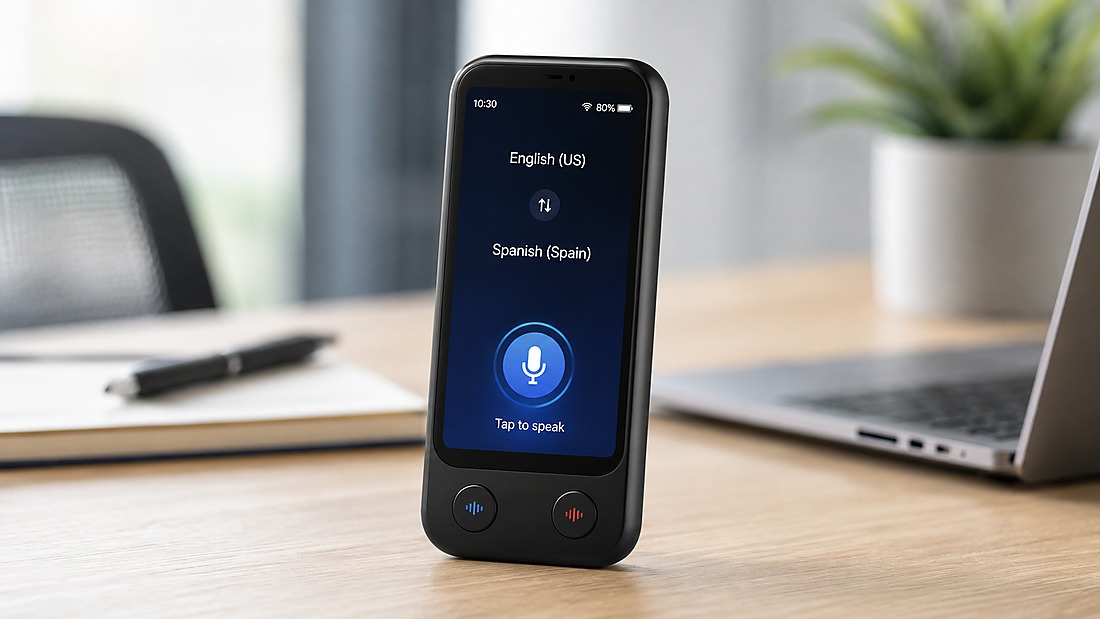
Beginners often discover ownership gaps after mass production, when leverage is lowest. Resolve these before the purchase order, not after.
- Tooling ownership: who owns molds and fixtures, where they are stored, and what happens to them if the relationship ends.
- Firmware rights: whether you receive source access, object code only, or a licensed binary with defined update rights.
- App and cloud rights: who owns the companion app, the backend and the accounts used to operate the service.
- SDK/API access: whether hardware audio access is documented and supported, and whether it survives platform changes.
- Exclusivity: whether the platform or ID is reserved for you in your market, and for how long.
None of these are automatic in either route. They are negotiated terms, and they should appear in the signed agreement rather than in email threads.
Compliance Planning Differences Between OEM and ODM
AI translators generally have a simpler compliance path than cellular smart devices because most use Wi-Fi, Bluetooth or a phone hotspot. That simplicity disappears if the device contains an independent SIM-based cellular module, which brings additional cellular and operator approvals into scope.
In an ODM or private-label project, you are usually relying on documentation and test evidence generated for the platform. Your job is to confirm that the evidence matches your exact configuration — your battery, your enclosure, your radio module, your accessories — and that the certificate holder arrangement is acceptable to your market and your retail channel.
In an OEM project, compliance work follows your design. That means earlier planning, earlier laboratory engagement and a higher chance that a late design change forces retesting.
Certification documentation, testing and compliance-support capabilities vary by supplier and project. Confirm the exact scope, responsible parties and available records in writing before relying on them.
Buyer Checklist: Questions to Ask at First Contact
Ask these before requesting a quotation. The answers will tell you quickly whether a supplier can support the route you want.
- Which device forms do you actually manufacture — pen, pocket translator, earbuds — and which is your most mature platform?
- Is the translation engine cloud-based, on-device, or hybrid, and which ASR/NMT/TTS providers are involved?
- Can we use our own translation API account, and who pays for usage?
- What offline language scope is realistic on the platform you are proposing, and is it expandable?
- Who owns the firmware, app, cloud backend and tooling, and how is that documented?
- Is there an SDK or API for hardware audio access, and what is its support status?
- What documentation and test evidence exist for CE, FCC and RoHS for this configuration?
- What is the sample process, and which validation tests are performed on the sample?
- How is acoustic consistency controlled in production, especially for earbuds?
- How do MOQ bands differ between light branding and deep customization?
Treat MOQ and lead-time answers as reference ranges until confirmed in an official quotation for your specific configuration.
Common First-Time Buyer Mistakes
Treating language counts as a hardware spec. Supported language numbers come from the software platform, not the microphone. Always separate online languages from offline languages, and test the pairs you actually need.
Accepting supplier accuracy claims as your product’s performance. Accuracy depends on language pair, accent, terminology, microphone quality, network conditions and the engine. Only your own testing on your target use case is meaningful.
Assuming ODM means no customization. It usually means customization within a fixed architecture — which is often enough for a first launch.
Assuming OEM means you own everything. Source code, cloud accounts and data rights are contract terms.
Leaving offline capability to the end. If offline translation is core to your positioning, it must be decided before chipset and storage selection, not after the sample arrives.
Underestimating acoustic process control. On translator earbuds, small deviations in microphone alignment or acoustic sealing can degrade speech recognition — a defect that visual inspection will not catch.
Pineeon Manufacturer-Side Recommendation
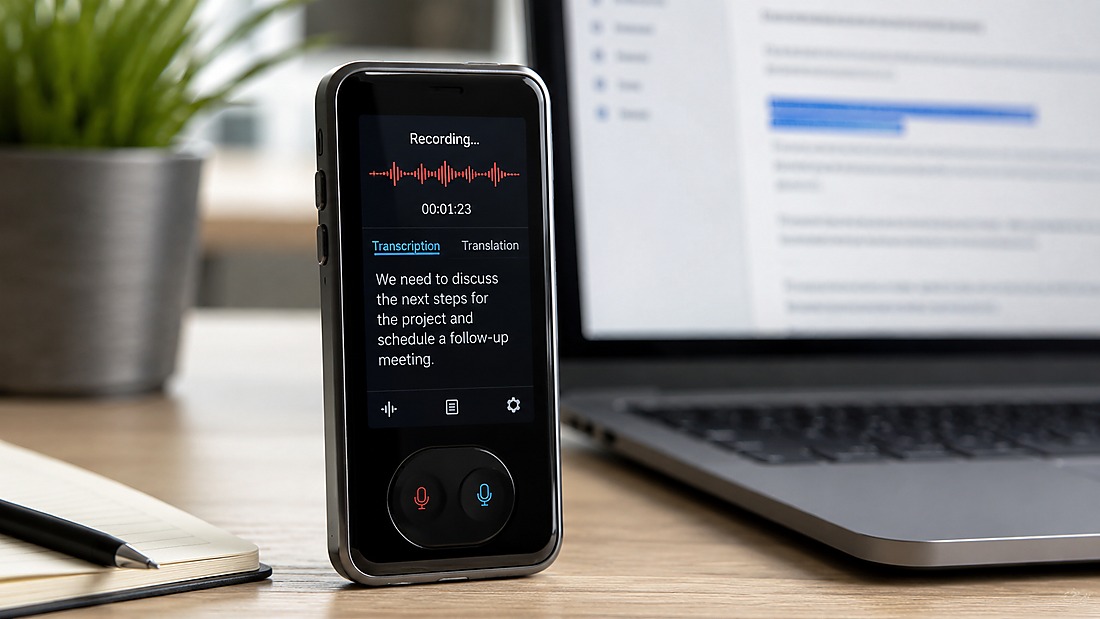
From our side of the table, the route matters less than the sequence. We evaluate customer requirements before recommending a project approach, because the same brief can lead to very different recommendations depending on whether offline translation, terminology control or industrial design is the real differentiator.
For most first-time buyers, we suggest starting with a defined device form and a written statement of the translation architecture you need, then running a sample evaluation that tests speech recognition, translation latency, offline packages, microphone noise reduction and Bluetooth stability in your actual use environment. Only after that should you commit to tooling or deep software work.
If your differentiation is the translation experience, invest your customization budget in the engine, terminology and data handling, and keep the hardware close to a proven platform. If your differentiation is the physical product, invest in ID, tooling and acoustic tuning, and accept a standard translation stack for the first generation. Trying to customize both deeply on a first project is the most common cause of schedule slip.
You can review the current device forms and customization scope on our AI Translator OEM/ODM product page, then bring a written brief to the first conversation. Final specifications, MOQ, pricing, lead time, certification scope and customization capability are subject to the selected model, project requirements, technical evaluation and an official quotation.
Next Step
Write a one-page brief covering device form, target markets, required online and offline languages, connectivity model, translation engine preference, data handling requirements and branding scope. Send it with your target volume band. A supplier who can respond to that brief with specific questions — rather than a generic catalogue — is usually the one worth sampling with.