Smart Watch Manufacturer Selection Criteria: A Step-by-Step Guide
Published October 27, 2026 · Pineeon Insights
Most smart watch sourcing problems are not caused by a bad factory. They are caused by a buyer selecting a factory before defining what the project actually requires. A supplier that is excellent for a private label MCU Bluetooth watch may be the wrong partner for a 4G children’s watch with custom firmware, cloud integration and cellular certification. The reverse is also true.
This guide gives procurement teams, brand owners and importers a sequential selection framework. Each stage produces a decision: continue, request more evidence, or stop. The goal is not to collect the longest supplier questionnaire. It is to reduce the risk of discovering a capability gap after tooling, certification or mass production has already started.
Stage 1: Define the Project Before Screening Suppliers
Smart watch manufacturer selection criteria only work when they are applied to a defined project. Before contacting suppliers, write down the following:
- Architecture family: MCU Bluetooth watch or Android/4G application-processor watch. These are materially different product families with different BOM, power, software and certification requirements.
- Target market: Destination countries determine which compliance and radio requirements apply.
- Customization depth: Logo and packaging only, UI and function changes, PCBA and firmware modification, or a new hardware and application platform.
- Software scope: White-label app, customer-owned app, SDK/API integration, cloud platform integration, or no app requirement.
- Volume expectation: First order, repeat order and annual forecast. Volume affects which manufacturing route is commercially realistic.
- Certification expectation: Which markets, which radio technologies, and whether cellular certification is involved.
This definition becomes the scoring baseline. Without it, every supplier looks comparable because the buyer has not stated what “comparable” means.
Stage 2: Screen Manufacturing and Engineering Capability
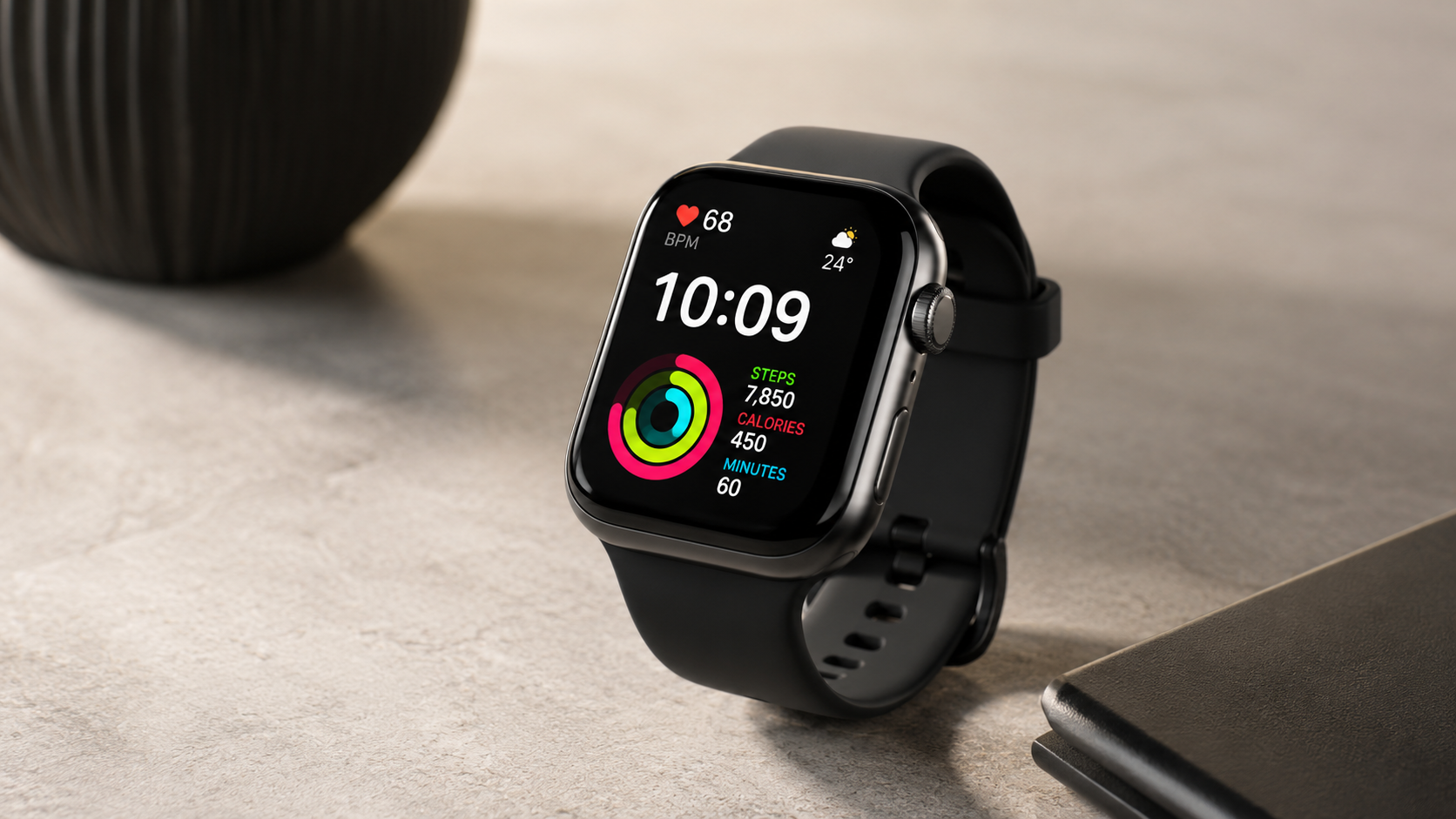
Capability screening should confirm that the supplier can support the architecture and customization depth you defined, not just that they list smart watches on a website.
Questions that separate suppliers quickly
- Do you manufacture both MCU Bluetooth and Android/4G smart watches, or only one family?
- Which parts of the product do you control in-house: PCBA, assembly, testing, packaging, firmware, app?
- For our customization level, what is the reference MOQ and why?
- What is the sample route and typical sample lead time for this specific configuration?
- Which components are standard and which would require new tooling or a new BOM?
Manufacturer-side reasoning matters here. A supplier that only assembles finished modules will have limited ability to change sensor configuration, firmware behavior or enclosure sealing. A supplier with deeper engineering involvement can discuss trade-offs between display, battery, connectivity and water resistance before quoting.
Be cautious with suppliers who quote a firm MOQ and lead time before asking about architecture, target market and software scope. Those numbers are usually generic and will change once the project is understood.
Stage 3: Verify the Quality Management System
An ISO 9001:2015 certificate is a useful screening signal, but it is not a product quality guarantee. It indicates that a quality management system has been defined and audited against that standard. Buyers should verify the certificate and then ask how the system is applied to smart watch production.
Documents to request during quality screening
- Current ISO 9001:2015 certificate, including scope and certification body.
- Quality manual summary or process map covering incoming, in-process, final and outgoing inspection.
- Incoming inspection criteria for main controller, battery, display and sensors.
- In-process checkpoints for SMT and assembly.
- Final inspection checklist, including functional and appearance checks.
- Outgoing sampling plan and AQL criteria used for the project.
- Reliability test list and which tests are standard versus project-specific.
A common failure mode is assuming that every reliability test is performed on every order. In practice, aging, drop, UV, water-resistance pressure testing and similar checks should be agreed in the project inspection plan. Ask which tests are routine and which are added on request.
Pineeon is ISO 9001:2015-certified and follows an IQC, IPQC, FQC and OQC quality framework for smart watch production. Project-specific reliability tests and AQL acceptance criteria are confirmed against the order specification.
Stage 4: Evaluate Samples and Engineering Response
The sample stage is where supplier selection criteria become concrete. A sample is not only a product preview; it is a test of the supplier’s engineering communication.
What to evaluate in a smart watch sample
- Build consistency: enclosure fit, button feel, strap attachment, display alignment and sealing quality.
- Functional behavior: pairing stability, sensor response, charging behavior, screen performance and language accuracy.
- Battery behavior: compare observed use against the supplier’s stated reference range, and ask what conditions the range assumes.
- Water resistance: confirm the exact rating and test method for the selected model. IP67, IP68 and 5ATM are not equivalent.
- Documentation: specification sheet, BOM summary where appropriate, user manual draft and packaging artwork proof.
- Engineering response: how quickly and clearly the supplier explains deviations, limitations and proposed fixes.
Sample lead time varies by customization depth and must be confirmed for the specific project. As a general reference, existing MCU platforms with logo and packaging changes are typically faster than projects involving UI or function changes, which in turn are faster than MCU ODM projects with appearance or mainboard changes. Android/4G projects with application and cloud integration generally require the longest sample preparation. These are reference patterns, not commitments; the actual schedule depends on platform, customization, tooling and material availability.
Use the sample stage as a gate. If the supplier cannot explain why a sample behaves differently from the specification, that is a warning sign for mass production communication.
Stage 5: Review Compliance and Certification Support
Compliance is one of the most misunderstood areas in smart watch sourcing. A factory’s ability to support certification is not the same as a certificate for your specific model.
What to clarify with each supplier
- Which compliance programs do you routinely support: CE, FCC, RoHS, REACH, BQB, PTCRB or others?
- Who holds the certificate for the model you are quoting, and what exactly does the scope cover?
- Which laboratory or testing route is used, and who manages the application?
- For 4G products, which cellular certifications or carrier approvals are relevant to our destination market?
- What technical documentation can you provide: test reports, declarations, user manuals, labeling artwork?
MCU Bluetooth watches generally have a simpler certification path than Android/4G cellular watches. Cellular products may require additional network and market-specific evaluation. Requirements vary by product configuration, radio technology, battery design, intended use and destination market.
Whether a supplier can support CE, FCC or RoHS certification or compliance applications, and what documentation or testing support it can provide, must be confirmed for the specific project with the applicable authority, qualified laboratory or regulatory advisor. Final certification scope, required documents, testing scope and approval depend on the specific product model, configuration, target market, laboratory and applicable authority. Approval is not guaranteed.
For high-risk regulatory questions, confirm current requirements with the applicable authority, qualified laboratory or regulatory advisor before committing to a market launch date.
Stage 6: Check Commercial Terms, IP and Software Rights

Commercial and contractual checks should happen before tooling or development begins. The most common disputes in smart watch projects involve ownership and scope, not unit price.
Terms to define in writing
- MOQ and the conditions under which it changes.
- Tooling cost, tooling ownership and tooling lead time.
- Sample fee and whether it is credited against a qualifying bulk order.
- Payment terms and milestone structure.
- Firmware ownership, source-code access and OTA authority.
- App ownership, SDK/API access, raw data access and cloud data ownership.
- IP ownership and NDA arrangements.
- Warranty, defect handling and spare parts policy.
- Packaging, accessory list and shipping terms.
Do not assume that SDK access, raw sensor data, source-code ownership or exclusive IP rights are included by default. These are project- and contract-specific. If they matter to your business model, they must be explicitly agreed.
Supplier Scorecard: A Practical Decision Table
Use a weighted scorecard to compare shortlisted suppliers on the same basis. Adjust weights to your project; the example below assumes a private label or OEM project with moderate customization.
| Criterion | What to verify | Example weight |
|---|---|---|
| Architecture fit | Experience with MCU Bluetooth or Android/4G watches matching your project | 15% |
| Customization depth | Hardware, firmware, app, branding and packaging capability | 15% |
| Quality system | ISO 9001:2015 verification, IQC/IPQC/FQC/OQC process, inspection criteria | 15% |
| Sample performance | Build quality, functional consistency, documentation, engineering response | 15% |
| Compliance support | CE, FCC, RoHS support; cellular certification awareness for 4G products | 10% |
| Commercial terms | MOQ, lead time, tooling, payment, warranty | 10% |
| Software and IP terms | SDK/API, data access, firmware ownership, OTA rights | 10% |
| Communication | Responsiveness, clarity, escalation path, English documentation quality | 10% |
Score each supplier from 1 to 5 per criterion, multiply by weight and total. A supplier that scores well on price but poorly on architecture fit or compliance support is usually a higher total-cost risk.
Red Flags and Verification Questions Before Signing
Some warning signs appear repeatedly in smart watch sourcing. None of them automatically disqualifies a supplier, but each should trigger a direct question.
- Certification claims without documents: Ask for the certificate, holder name, model and scope. A factory-level certificate does not prove model-level certification.
- MOQ quoted before project definition: Ask which architecture and customization level the MOQ assumes.
- Lead time quoted without schedule assumptions: Ask about chipset, module and display availability, and seasonality.
- Vague software answers: Ask specifically about SDK availability, data fields, app ownership and OTA authority.
- No pilot production step: For custom hardware, firmware, app or cellular projects, ask how yield and functional consistency are validated before mass production.
- Unclear IP terms: Ask who owns tooling, firmware, app code and cloud data, and get it in the contract.
- Reliability tests presented as universal: Ask which tests are standard and which are project-specific.
Pineeon Manufacturer-Side Recommendation
From a manufacturer’s perspective, the most reliable selection process is sequential, not comparative. Define the project, screen capability, verify the quality system, evaluate a sample, review compliance support, then negotiate commercial and IP terms. Buyers who reverse this order often end up comparing quotations that are not based on the same scope.
Certification documentation, testing and compliance-support capabilities vary by supplier and project. Confirm the exact scope, responsible parties and available records in writing before relying on them.
For smart watch projects, we recommend confirming the architecture family first, then the customization depth, then the certification route. MOQ, sample lead time and mass production lead time should be treated as reference values until the selected model, BOM, software scope and target market are confirmed. Final specifications, MOQ, pricing, lead time, certification scope and commercial terms are subject to the selected product model, project requirements, technical evaluation and official quotation.
To review current smart watch OEM/ODM and private label options, visit the Pineeon smart watch product page.
Related Pineeon Resources
Frequently Asked Questions
How many smart watch manufacturers should a buyer shortlist?
Three to five suppliers is usually enough to compare capability without creating an unmanageable evaluation. The shortlist should include suppliers that can support your architecture family and customization depth, not only the lowest quoted price.
Is an ISO 9001:2015 certificate enough to qualify a smart watch factory?
No. It is a useful quality-system signal, but buyers should also review inspection criteria, reliability test scope, AQL plans and how the system applies to the specific product. Product-level evidence and sample performance matter alongside the certificate.
How do I verify CE, FCC or RoHS claims for a smart watch model?
Request the certificate or declaration, confirm the holder, model and scope, and check that the document matches the product you are buying. Factory-level support for certification applications does not mean every model already holds that certification.
Why do smart watch MOQs vary so much between suppliers?
MOQ depends on architecture, tooling, BOM, software scope and certification requirements. An existing MCU Bluetooth platform with logo and packaging changes normally has a lower MOQ than a new Android/4G project with new tooling and application development.
Should a buyer require pilot production before mass production?
For projects involving custom hardware, firmware, app, cloud or cellular architecture, a pilot run is a practical way to validate yield, functional consistency and production stability before committing to a full order.
What software rights should be agreed before signing?
Firmware ownership, source-code access, OTA authority, SDK/API availability, raw data access and cloud data ownership should be defined in the contract. These are project-specific and should not be assumed as standard inclusions.