New importers often start a GPS tracker project by collecting quotes from several Chinese factories and comparing unit prices. That approach usually produces a shortlist that looks competitive on paper but fails at the sample, pilot or deployment stage. The reason is structural: a GPS tracker is not a single component purchase. It is a GNSS receiver, a cellular modem, an antenna system, firmware, a communication protocol and a cloud or platform layer that must work together in the buyer’s target market.
This guide gives new importers a criteria-based way to compare GPS trackers factory candidates before requesting quotes, samples or a first bulk order. It is written from the manufacturer side, so it focuses on what is actually being compared, what a factory can and cannot prove at the quotation stage, and which questions separate a capable supplier from a trading intermediary with a catalog.
Why a Price-First Comparison Fails for GPS Trackers
Two GPS tracker factories can quote similar prices for devices that are not comparable. One may use a modern LTE module with verified band support for the destination market; another may quote a legacy 2G design that cannot connect where the buyer intends to sell. One may include a tested protocol implementation for the buyer’s platform; another may assume the buyer will “sort out the server.” One may have a documented IQC–IPQC–FQC–OQC flow; another may inspect only at final assembly.
For a new importer, the comparison problem is therefore not “who is cheapest” but “who can demonstrate the specific capabilities this project depends on.” A weighted scorecard makes those dependencies visible before commercial negotiation begins.
A Weighted Factory Comparison Scorecard
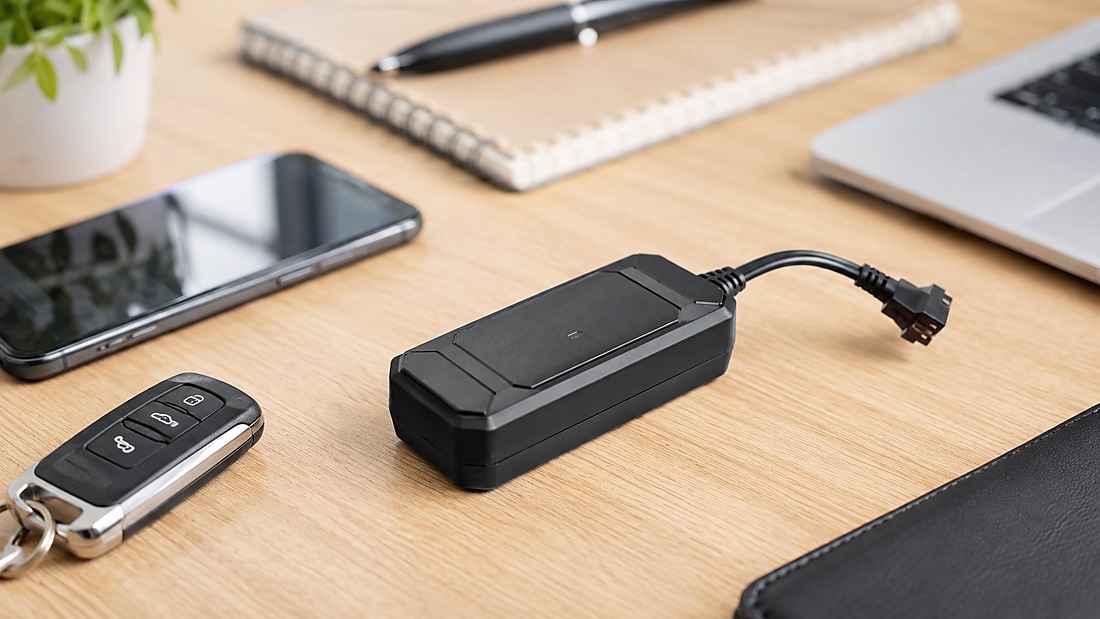
The scorecard below is a starting structure. Weights should be adjusted to the project: a fleet-management buyer integrating with its own platform should weight firmware and protocol capability higher, while a distributor selling branded stock products may weight certification documentation and packaging higher.
| Criterion | What to verify | Suggested weight |
|---|---|---|
| Manufacturing and quality system | ISO 9001:2015 certificate validity and scope; documented IQC/IPQC/FQC/OQC flow; final inspection content for GNSS, cellular and platform functions | 20% |
| GNSS and cellular module sourcing | Which module families are used; whether the factory can explain band and network compatibility for the destination market; BOM transparency under NDA | 20% |
| Firmware and platform integration | Standard protocol support (for example GT06-family or Wialon IPS where applicable); ability to connect to customer-owned platforms; reporting-interval and sleep-logic configuration | 20% |
| Certification and compliance support | CE, FCC and RoHS documentation process; model-to-report matching; clarity on what is factory support versus model-specific approval | 15% |
| Sample and field validation | Willingness to test in the buyer’s target environment; cold-start and reporting behavior checks; battery-life claims framed as project-dependent | 15% |
| Commercial terms | MOQ logic by customization level; lead-time assumptions; tooling and firmware ownership; warranty and RMA process | 10% |
Score each candidate from 1 to 5 per criterion, multiply by the weight, and compare totals. The value of the exercise is less in the final number than in the evidence required to justify each score. A factory that cannot supply evidence for a criterion should be scored low regardless of how confident its sales representative sounds.
Manufacturing Capability and What ISO 9001:2015 Actually Proves
ISO 9001:2015 is a quality management system certification. It indicates that a factory has documented processes for quality planning, control, corrective action and continual improvement, and that those processes have been assessed by a certification body. It does not certify that a specific GPS tracker model meets a performance specification, that a particular unit will position accurately, or that the product holds CE, FCC or RoHS approval.
For a new importer, ISO 9001:2015 is a useful first filter because it suggests the factory manages quality systematically rather than informally. Pineeon, for example, is an ISO 9001:2015-certified OEM/ODM manufacturer based in Shenzhen, China, and has operated since 2000. That company-level certification is a starting point for due diligence, not a substitute for product-level evidence.
To verify the certificate, request a copy and check the certificate number, issuing body, scope statement, issue and expiry dates, and the legal entity name against the company you are contracting with. Confirm the certificate with the issuing body where possible. Then ask a separate question: what does your final quality control actually test on a GPS tracker? A credible answer will mention GNSS positioning, cellular connection stability, SIM and APN configuration, reporting-interval accuracy and platform data verification, not only visual inspection and packing.
Module Sourcing, Cellular Compatibility and BOM Transparency
GPS tracker performance is heavily influenced by the GNSS module, the cellular module and the antenna design. Factories may reference common module families such as Quectel, SIMCom, MediaTek or u-blox platforms, but a reference is not a confirmed production BOM. New importers should ask which module family the quoted model uses, whether the module is in active production, and how the factory verifies band and operator compatibility for the destination market.
Cellular compatibility is a project-dependent question, not a specification-sheet checkbox. 2G availability varies significantly by market and should never be assumed. 4G LTE categories, NB-IoT support, SIM and APN requirements, roaming and carrier approval all need confirmation for the specific country and network. A factory that answers “it works worldwide” without asking about your destination market is giving a commercial answer, not an engineering one.
BOM transparency is usually handled under NDA. A factory unwilling to discuss module families, antenna architecture or power design at a technical level before an order is a risk signal, particularly for custom gps trackers or ODM gps trackers projects where the buyer will carry the field-failure cost.
Firmware, Protocol and Platform Integration
This is where many first-time importers underestimate the comparison. The device must send data somewhere, in a format something can read. Three architecture routes are common: the factory’s own cloud platform, a third-party platform such as Traccar or Wialon where protocol compatibility exists, or the customer’s own cloud and fleet-management system.
Ask each candidate factory these questions before shortlisting:
- Which communication protocols does the quoted firmware implement, and has compatibility been tested rather than assumed?
- Can the device connect directly to a customer-owned server, or does data pass through a factory-operated relay?
- Who controls historical location data, SIM and APN configuration, and server address settings?
- Can reporting interval, sleep strategy and alarm logic be configured, and at what customization level?
- Is firmware source-code access, OTA authority or protocol ownership available, and under what contractual terms?
Protocol compatibility claims should be verified through actual testing with the buyer’s platform, not accepted from a brochure. The same applies to app and dashboard branding: basic white-label branding, UI customization and advanced API integration are different engagement levels with different MOQ implications.
Certification Documentation: What to Request and How to Check It

Certification is one of the most frequently mishandled parts of a first import project. The practical rule is simple: factory support for CE, FCC and RoHS applications is not the same as a model-specific certificate. Whether a supplier can provide technical documentation or testing support for a given application depends on the specific product model, configuration, target market, laboratory and applicable authority, and approval is not guaranteed.
When comparing factories, request the following for the exact model you intend to import:
- The test report or certificate, not a logo on a webpage.
- A check that the model number, hardware version and radio configuration on the report match the quoted product.
- The certificate holder and scope, and whether the certificate covers the variant you are buying.
- Clarification of which certifications are already held and which would be applied for under your project.
- For cellular products, confirmation of whether additional market-specific or operator certification is relevant to your destination.
Where regulatory requirements are unclear, confirm current requirements with the applicable authority, a qualified laboratory or a regulatory advisor. Certification requirements vary by product configuration, radio technology, battery design and intended use, and they change over time.
Sample Testing and Field Validation for GPS Trackers
Sample approval should be a structured test, not a visual check. A GPS tracker sample program should confirm the destination market and cellular route, SIM type and APN settings, required GNSS systems, reporting frequency and platform integration before the sample is built. Then test the device in the environment where it will actually operate.
Useful field checks include:
- Cold-start and warm-start positioning behavior under realistic sky visibility.
- Reporting-interval behavior over several days, including sleep and wake cycles.
- Cellular connection stability in weak-signal locations and after power cycling.
- Route-history accuracy and platform data consistency.
- Geo-fence and alarm behavior where applicable.
- Battery behavior under the intended reporting strategy, treated as a project-dependent observation rather than a guaranteed runtime.
Vehicle metal structures, underground parking, urban canyons and container installation can materially affect GNSS and cellular performance. A sample that performs well on a desk may behave differently once installed. Pilot production after sample approval should verify yield, signal stability, GNSS consistency and platform compatibility before mass production is authorized.
OEM, ODM and Private Label: What Each Model Implies
New importers often use OEM, ODM and private label interchangeably. They are not the same engagement, and the difference affects firmware, app and platform ownership.
| Engagement model | Typical scope | Ownership and control considerations |
|---|---|---|
| Private label | Existing product with sticker, branding and packaging customization | Firmware and platform remain factory-standard; buyer controls brand presentation |
| Certification documentation, testing and compliance-support capabilities vary by supplier and project. Confirm the exact scope, responsible parties and available records in writing before relying on them. | Buyer brand on a factory platform with defined configuration and packaging | Firmware configuration may be adjustable; source-code and platform ownership usually remain with the factory unless contracted otherwise |
| Certification documentation, testing and compliance-support capabilities vary by supplier and project. Confirm the exact scope, responsible parties and available records in writing before relying on them. | Deeper hardware, firmware or platform development based on factory architecture | IP, firmware, tooling and data ownership must be defined in the signed agreement |
| Full custom | Dedicated structure, electronics and software development | Highest MOQ and development commitment; ownership terms are project-specific |
The critical procurement question is not which label sounds most advanced, but which model matches the buyer’s need for control over firmware, app, platform and data. A buyer who needs a customer-owned cloud architecture should confirm that route before firmware development begins, because changing platform architecture later is expensive.
Red Flags in Factory Quotes and Capability Claims
Certain patterns should slow down a shortlisting decision:
- Certification statements that are vague, undated or not tied to a model number.
- “Worldwide compatibility” claims without questions about destination market, bands or operator.
- No willingness to discuss module families, antenna design or BOM under NDA.
- MOQ and lead time quoted as fixed numbers before customization scope is defined.
- Protocol or platform compatibility asserted without a test plan.
- Battery-life figures presented as guaranteed rather than dependent on reporting interval and environment.
- Unclear ownership of firmware, tooling, app, platform or tracking data.
- No documented final inspection content for GNSS, cellular and platform functions.
None of these alone disqualifies a factory. Together, they suggest the supplier is selling catalog access rather than engineering accountability.
Due-Diligence Checklist Before Shortlisting GPS Tracker Suppliers

Use this checklist to decide which gps trackers suppliers move to the sample stage:
- Legal entity name, address and business license match the contracting party.
- ISO 9001:2015 certificate verified for number, scope, validity and entity.
- Documented IQC, IPQC, FQC and OQC flow, with final inspection content described specifically.
- Module families and antenna architecture discussed at a technical level under NDA.
- Cellular route and band compatibility confirmed for the destination market.
- Protocol and platform integration route defined before quotation.
- CE, FCC and RoHS documentation process explained, with model-to-report matching required.
- Sample test plan agreed, including field validation in the target environment.
- MOQ, lead time and tooling assumptions tied to the customization level.
- Ownership of firmware, app, platform, data and tooling addressed in the draft agreement.
Pineeon Manufacturer-Side Recommendation
From the manufacturer side, the most reliable way to compare GPS tracker factories is to define the project architecture before requesting prices. Destination market, cellular route, tracking application, reporting frequency, platform architecture and data ownership determine which factory capabilities matter. A buyer who brings those answers to the first conversation gets comparable quotes; a buyer who asks only for a unit price gets quotes for different products.
Certification documentation, testing and compliance-support capabilities vary by supplier and project. Confirm the exact scope, responsible parties and available records in writing before relying on them.
To review the product range and start a requirements-based discussion, see the GPS tracker OEM/ODM product page.
Frequently Asked Questions
Does ISO 9001:2015 certification mean a GPS tracker model is certified for CE or FCC?
No. ISO 9001:2015 certifies the factory’s quality management system. CE, FCC and RoHS are product- and market-specific compliance matters, and each model and configuration must be assessed separately with the applicable laboratory and authority.
How can a new importer verify a factory’s certification documents?
Request the test report or certificate for the exact model, check that the model number and hardware version match the quoted product, confirm the certificate holder and scope, and verify the document with the issuing body or laboratory where possible.
Should a first order use the factory cloud platform or a customer-owned platform?
That depends on the business model. Factory cloud is faster to deploy; a customer-owned platform gives more control over data and long-term integration but requires protocol or API work. The architecture should be decided before firmware is frozen.
Why do two factories quote very different MOQs for similar GPS trackers?
MOQ usually reflects customization level rather than product similarity. Label-only branding, firmware customization, hardware modification and full ODM development carry different minimum quantities because tooling, engineering and production setup costs differ.
What should be tested in a GPS tracker sample before mass production?
Test positioning behavior, cellular connection stability, reporting-interval accuracy, platform data consistency, alarm functions where applicable and battery behavior under the intended reporting strategy, ideally in the target installation environment.
Can a factory guarantee battery life or positioning accuracy in writing?
Battery life and positioning accuracy depend on reporting strategy, installation environment, signal conditions and module configuration. Treat figures as reference ranges and require model-specific field testing rather than accepting guaranteed numbers at the quotation stage.