Most boutique brands start GPS tracker supplier vetting with a factory checklist: ISO certificate, product photos, MOQ, price. That sequence is backwards. A GPS tracker is not a sealed consumer gadget you can evaluate on appearance. It is an enterprise IoT device whose value depends on cellular network compatibility, cloud platform architecture, communication protocol, firmware behavior and installation environment. If you vet the factory before you define those requirements, every supplier will look equally capable — and you will discover the mismatch only after tooling or a bulk order.
This guide lays out a boutique-brand-specific vetting sequence. It assumes you are sourcing for a differentiated product line, not a commodity resale item, and that you need enough volume flexibility to launch without committing to a full custom ODM program on day one.
Step 1: Define the Project Before You Contact Any Supplier
Supplier vetting begins internally. Before outreach, write down the following and treat them as your evaluation criteria:
- Destination market and cellular route. 2G availability varies significantly by market and should never be assumed. If your target market has retired or is retiring legacy networks, a 2G platform is a dead end regardless of price. 4G, NB-IoT or another modern IoT route may be required.
- Application. Vehicle/fleet tracking, asset or container tracking, pet and child safety, agriculture and surveying each imply different power, enclosure and sensor priorities.
- Reporting frequency. This is one of the largest battery-life variables and a major firmware decision.
- Platform route. Will you use a factory cloud, a third-party platform, or your own cloud? This must be decided before firmware is frozen.
- Protocol requirement. Do you need GT06-family output, Wialon IPS, or a customer-specific protocol?
- Data ownership. Who controls historical location data, SIM/APN configuration and server hosting?
Only after these are written down can you ask a supplier a question that produces a useful answer. A supplier that cannot discuss cellular band planning, protocol behavior or platform architecture is not a GPS tracker partner — it is a box seller.
Step 2: Build a Verification Matrix for Technical Claims

GPS tracker suppliers make claims that sound technical but are difficult to verify. Convert each claim into a verifiable question and a required evidence type.
| Supplier claim | What to verify | Acceptable evidence |
|---|---|---|
| “4G worldwide” | LTE bands, Cat.1 or other category, operator compatibility for your destination | Band list tied to the exact model; confirmation that band support is checked per market |
| “Supports Traccar / Wialon” | Exact protocol implementation (e.g., GT06 family, Wialon IPS) and tested packet behavior | Protocol test result on the selected firmware, not a marketing logo |
| “High positioning accuracy” | GNSS module architecture, antenna design, test conditions | Field test data from a comparable installation environment |
| “Long battery life” | Reporting interval, sleep strategy, GNSS wake time, cellular transmission frequency | Runtime statement tied to a defined reporting profile |
| “IP67 waterproof” | Model-specific rating documentation | Test documentation for that model, not a generic IP claim |
| “CE / FCC / RoHS certified” | Whether this is company-level support capability or model-specific certification | Certificate scope and holder for the exact model and market |
Two distinctions matter here. First, company-level certification support is not the same as model-specific certification. A factory may be able to support applicable CE, FCC and RoHS applications while a given model has not yet been certified for your market. Second, a reference module in a supplier’s presentation is not a confirmed production BOM. Ask which module is in the quoted configuration and confirm it in writing.
Step 3: Vet Firmware, Protocol and Platform Claims Without Assuming Ownership
This is where boutique brands get trapped. Firmware customization and platform integration are the most valuable parts of a GPS tracker project, and the easiest to over-promise.
Ask these questions in sequence:
- What is the standard firmware scope? Typical items include reporting interval, sleep strategy, SOS logic, geo-fence logic and selected alarm thresholds.
- Can the communication protocol be changed — packet format, server address, reporting logic?
- Does location data pass through a factory-operated server, or can the device connect directly to a customer server?
- Can the customer receive raw device packets?
- Who holds OTA authority after launch?
- Is firmware source-code access available, and under what contractual terms?
Do not assume that source-code ownership, OTA authority, raw-data access or exclusive IP are included by default. These are project- and contract-specific. A supplier that answers vaguely on data routing is a risk regardless of price. A supplier that says “we can do it” without a protocol test is also a risk.
For platform integration, separate three routes clearly: factory cloud with white-label branding, third-party platform connection, and customer-owned cloud. Each has different firmware implications. Choosing the route after firmware freeze is expensive.
Step 4: Run Sample Testing as a Field Test, Not a Photo Review
Sample approval is the highest-leverage decision in the entire vetting process. Treat it as a structured test program:
- Network confirmation: SIM type, APN settings, destination-market LTE compatibility, antenna architecture.
- Positioning test: actual positioning in the target environment, not on a desk.
- Connection stability: cellular signal behavior over time, including weak-signal conditions.
- Reporting accuracy: does the device report at the interval you specified?
- Platform data: route history, geo-fence and alarm behavior where applicable.
- Environmental test: waterproof behavior where the model claims a rating; battery-life verification against a defined reporting profile.
- Installation test: vehicle metal shielding, underground parking, urban canyon, container installation, indoor transition.
Field validation is critical because metal structures, antenna placement and cellular coverage can materially change performance. A sample that works on a desk may fail in a vehicle. Approve the sample only after it passes in the actual installation environment, and freeze the hardware, firmware and protocol configuration that passed.
Step 5: Verify Certification and Compliance Claims Correctly
Certification is where buyers most often accept the wrong evidence. Use this hierarchy:
- Quality system: ISO 9001 is a factory quality management system certificate. It says nothing about product compliance.
- Basic compliance: CE, FCC and RoHS are common reference points for European market access, United States market access and restricted substances respectively.
- Cellular certification: PTCRB and local carrier or telecom approval may be relevant for applicable LTE trackers, depending on country, network bands, module and operator requirements.
Ask for the certificate scope and certificate holder for the exact model and target market. Distinguish between a supplier that can support applicable CE, FCC and RoHS certification or compliance applications and a supplier whose specific model already holds those certifications. Final certification scope, required documents, testing scope and approval depend on the specific product model, configuration, target market, laboratory and applicable authority. Approval is not guaranteed, and timelines and costs should be confirmed with the applicable laboratory or qualified advisor.
Step 6: Audit Quality Control at the Process Level
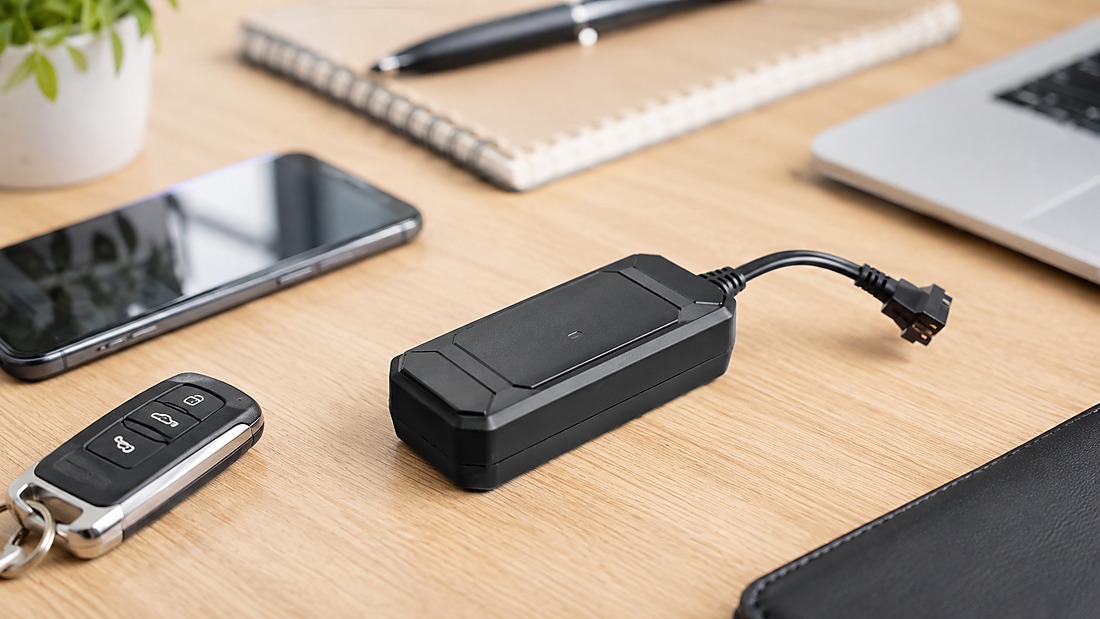
A GPS tracker factory audit should focus on the process steps that determine field failure rates. Ask how the supplier structures IQC, IPQC, FQC and OQC, and what is actually inspected at each stage.
- IQC: GNSS module, cellular module, battery, SIM holder, sensors, antenna components, waterproof mechanical components.
- IPQC: SMT, antenna routing and assembly, waterproof structure assembly, critical assembly checkpoints.
- FQC: SIM verification, APN verification, cellular connection stability, GNSS positioning, route-history verification, reporting-interval accuracy, platform data verification.
- OQC: AQL sampling, aging test, drop test, IPX or waterproof testing where required.
Ask whether final inspection covers all of the functional items above or only sampling. Ask how the supplier handles a unit that passes GNSS but fails cellular stability. The answer reveals whether quality control is a real gate or a paperwork exercise. Exact reliability tests and AQL criteria should be defined in the order quality agreement.
Step 7: Vet Commercial Terms as Project-Dependent Items
MOQ, lead time, tooling ownership, payment terms and warranty are not universal numbers. They are functions of the selected model, cellular architecture, customization scope and BOM. Treat any fixed number quoted before technical evaluation as a placeholder.
For reference, boutique brands should expect MOQ to scale with customization depth: basic branding of an existing platform sits at the low end; firmware customization requires higher volume; hardware modification higher still; full custom ODM with dedicated tooling is a different category of commitment. Sample and platform-compatibility testing may use much smaller quantities than production. Confirm the actual MOQ against the selected model and an official quotation.
On lead time, separate sample lead time from mass-production lead time. Existing-mold branding, firmware customization, hardware modification and new ODM design each carry different timelines. Cellular module supply constraints and target-market certification scheduling can extend projects. Get the timeline in writing with the assumptions stated.
On ownership, define in the contract: tooling ownership, firmware source-code ownership, protocol ownership, OTA authority, platform and server ownership, tracking-data ownership and long-term hosting responsibility. On warranty and after-sales, confirm the return process, replacement policy and who bears shipping cost for field failures.
Supplier Scorecard for Boutique Brands
Weight the criteria according to your business model. A boutique brand usually values customization and compliance support more than the lowest unit price.
| Criterion | Suggested weight | What a strong answer looks like |
|---|---|---|
| Use-case and platform fit | 20% | Supplier asks about destination market, cellular route and platform before quoting |
| Cellular and GNSS verification | 15% | Band support tied to exact model; field test data available |
| Protocol and platform integration | 15% | Protocol test performed; data routing explained clearly |
| Firmware customization depth | 10% | Clear scope tiers; ownership terms defined in contract |
| Certification support clarity | 10% | Distinguishes company support from model-specific certification |
| QC process and field validation | 15% | IQC/IPQC/FQC/OQC detail; field test before mass production |
| Commercial flexibility | 10% | MOQ and lead time tied to scope; terms in writing |
| After-sales and warranty | 5% | Defined return, replacement and shipping responsibility |
Pineeon Manufacturer-Side Recommendation
From the manufacturer side, the vetting failures we see most often are not factory capability failures — they are sequencing failures. Buyers request samples before defining the platform route, then discover the firmware cannot support their cloud architecture. Buyers accept a generic CE claim, then learn it was company-level support rather than model-specific certification for their market. Buyers approve a sample on a desk, then face field failures in vehicles.
Certification documentation, testing and compliance-support capabilities vary by supplier and project. Confirm the exact scope, responsible parties and available records in writing before relying on them.
For buyers evaluating GPS tracker platforms, the commercial starting point is the GPS tracker OEM/ODM and private label program, where the platform, cellular and customization options can be reviewed against your project requirements before quotation.
Related Pineeon Resources

Frequently Asked Questions
What should a boutique brand verify first in GPS tracker supplier vetting?
Verify the destination market and cellular route first. 2G availability cannot be assumed, and a platform that cannot connect in your market has no value regardless of price or features. Confirm the network route, application, reporting frequency and platform architecture before evaluating factory capability.
How do I check whether a supplier’s CE or FCC claim applies to my model?
Ask for the certificate scope and certificate holder for the exact model and target market. Distinguish between a supplier that can support applicable CE, FCC and RoHS certification or compliance applications and a model that already holds those certifications. Final approval depends on the specific model, configuration, market, laboratory and applicable authority.
Can a supplier confirm Traccar or Wialon compatibility without testing?
No. Protocol compatibility should be confirmed through actual protocol testing on the selected firmware. Common protocols such as the GT06 family and Wialon IPS may be supported, but a marketing statement is not a substitute for a test result on the configuration you will produce.
What is the most important sample test for a GPS tracker?
Field testing in the actual installation environment. Vehicle metal shielding, underground parking, urban canyons and container installation can materially affect GNSS and cellular performance. A sample that works on a desk may fail in the field.
Does firmware customization include source-code ownership?
Not automatically. Firmware source-code access, OTA authority, protocol ownership and custom-development IP are project- and contract-specific. Define them explicitly in the signed agreement before development begins.
How should MOQ and lead time be treated during vetting?
As reference ranges tied to scope, not fixed commitments. MOQ and lead time depend on the selected model, cellular architecture, firmware scope, hardware modification and tooling. Confirm final values against the selected model and an official quotation.
Editorial note: This article provides general B2B sourcing and manufacturing information. Legal, regulatory, certification, intellectual-property and market-entry requirements vary by jurisdiction and project. Obtain qualified professional advice and verify the requirements that apply to your product and target market.