Most AI glasses programs that run into trouble in 2026 will not fail because the trend they chose was wrong. They will fail because the trend was chosen without translating it into the decisions that actually cost money: which architecture, which chipset pairing, which battery budget, which privacy posture, which tooling, and which certification scope. This article treats AI glasses innovation and design trends as a set of design decisions with sourcing consequences, not as a list of consumer features to copy.
The first thing to settle is the product family. In Pineeon’s internal OEM/ODM framework, AI glasses are separated into three architectures before MOQ, chipset, battery, software, optical design, certification and lead time are discussed: audio-only AI glasses, camera AI glasses, and AR display glasses. These are not three trim levels of the same product. They have materially different BOM cost, power profiles, firmware complexity, optical yield risk and development cycles. A buyer who picks a trend before picking a family will usually over-specify the first sample and under-plan the certification and tooling that follow.
Trend 1: Audio-first AI glasses as the volume entry point
The most commercially significant 2026 trend is not the most technically impressive one. It is the continued expansion of audio-first AI glasses: open-ear speakers, a microphone array, noise-reduced calling, voice-assistant wake-up, Bluetooth music and calling, with no camera and no display. This architecture has the lowest technical complexity of the three families, the lowest BOM cost, the lowest power consumption and the most mature Bluetooth audio supply chain.
From a sourcing standpoint, audio-first is where private label AI glasses and small-batch market testing are most realistic. Existing white-label platforms can support logo, packaging and color changes with relatively short sample cycles, and standard OEM projects are generally available at lower volumes than camera or AR programs. The design decision that matters most here is not the frame shape; it is the microphone array and the wake-word/power architecture. A two-mic array with a low-power audio coprocessor handling Bluetooth and voice wake-up, waking a higher-power AI SoC only when needed, is a common reference pattern. Whether that pattern is present on a given model must be confirmed against the BOM, not assumed from a trend article.
The failure mode to watch: buyers treat audio-first as a stepping stone and quietly add a camera “for the demo.” That single change moves the project into a different architecture with different power, firmware, privacy and certification consequences, usually after tooling has been quoted.
Trend 2: Camera AI glasses move from novelty to a defined use case
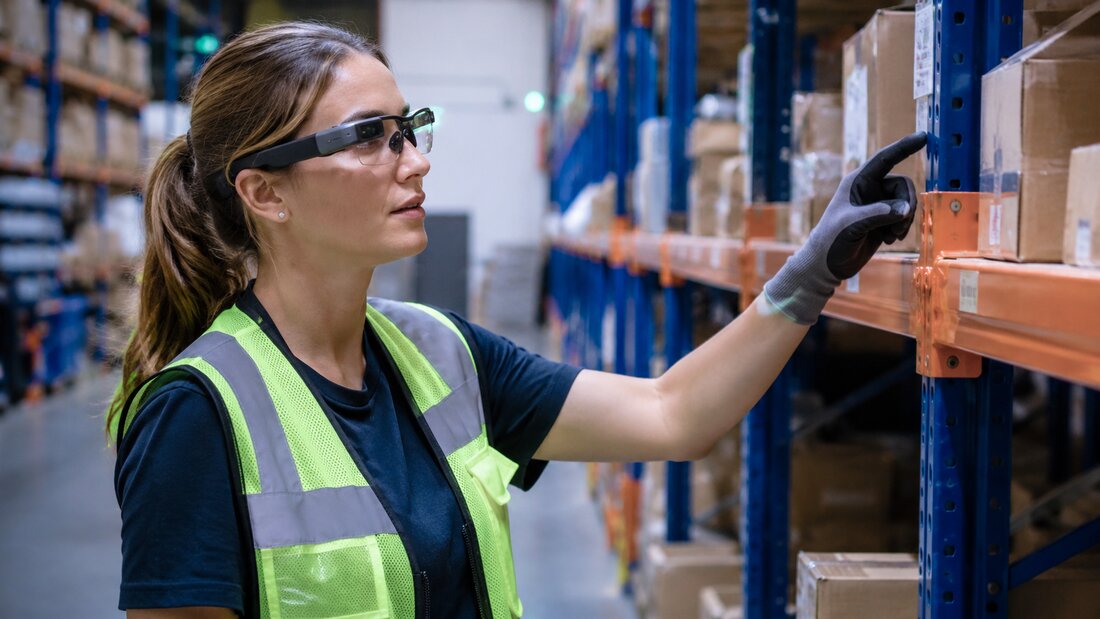
Camera AI glasses remain the mainstream growth category for 2026, but the design conversation has shifted from “can it take a photo” to “which use case justifies the camera.” Photo and video capture, AI scene recognition, low-light enhancement where supported, microphone-array AI audio, dual speakers where supported, and real-time translation where supported are the typical function clusters. Each one has a different power and thermal signature.
Manufacturer-side, the camera decision cascades quickly. A camera module adds an opening in the frame, which affects water-resistance ceiling; it adds image-quality testing to final QC; it adds privacy and recording-related compliance review in destination markets; and it usually pushes the design toward a dual-chip architecture (an AI SoC plus a low-power audio coprocessor) to keep standby and audio playback from draining the battery. Reference architectures in Pineeon’s internal knowledge base include Qualcomm AR1-family platforms and domestic ISP options, but these are BOM references until confirmed for a specific production model.
The trend to resist is specifying camera resolution as a headline number without specifying the pipeline behind it. A high-resolution sensor reference means little if the ISP, encoding, storage and AI inference path cannot sustain the frame rate the use case needs. Ask for the confirmed configuration and the test method, not the marketing figure.
Trend 3: AR display glasses stay a specialist program, not a default
AR display glasses using waveguide and/or MicroLED modules are the highest-complexity family: navigation prompts, message display, AR information overlay and dynamic visual information. They also carry the highest technical threshold, the highest MOQ reference range (full-custom waveguide projects are typically referenced at a substantially higher volume tier than camera programs, with enterprise or industrial projects sometimes higher), the longest development cycle and the highest optical yield risk.
The 2026 design trend worth noting is not that AR is becoming mainstream; it is that AR programs are being scoped more honestly. Buyers increasingly separate the optical module decision (waveguide vs. other display approaches), the calibration and optical-yield plan, and the photobiological safety evaluation (IEC 62471 may require separate assessment depending on product and market) from the rest of the hardware program. If a supplier quotes an AR waveguide project on the same timeline as a camera project, that is a signal to ask harder questions about optical calibration and pilot yield validation.
Trend 4: On-device vs. cloud AI is a sourcing decision, not a slogan
“On-device AI” is one of the most overused phrases in 2026 AI glasses design trends. For a buyer, the useful question is narrower: which functions must work without a network, and which may depend on the cloud? Basic audio and calling can operate offline. Cloud AI assistants, online translation and similar functions generally require connectivity. Presenting cloud-dependent AI as fully offline is a common and expensive misrepresentation.
This decision affects chipset selection, battery budget, firmware complexity, app architecture and data handling. It also affects the commercial contract: firmware ownership, OTA authority and cloud-AI data ownership should be defined separately in the ODM agreement rather than assumed. SDK openness, camera API access, raw sensor data and OTA rights vary by platform and must be confirmed platform by platform; white-label routes typically offer more limited SDK access than deeper ODM routes.
Trend 5: Form factor, weight and wearability drive tooling more than styling
Frame material choices such as acetate, titanium alloy or TR90, prescription-lens adaptation, nose-pad geometry and temple weight distribution are not cosmetic details. They determine whether the product can be worn for the use case, and they determine tooling. A design that looks plausible in a render can fail at the pilot stage because the battery and mainboard cannot fit the temple without changing the frame structure, which resets tooling and sample rounds.
The practical 2026 trend is design-for-manufacturability earlier in the process: confirm the internal volume budget for battery, mainboard, camera module and antenna before locking ID; confirm whether the selected model supports a prescription-lens clip or adaptation accessory; and confirm water-resistance expectations against the openings the design requires. AI glasses typically include camera, microphone-array and optical openings, so their practical water-resistance ceiling is generally lower than many smart rings or watches. IPX4 is a mainstream reference level for light rain, sweat and splash; it is not immersion resistance, and IP67/IP68-class claims should not be implied without verified model documentation.
Buyer decision table: which trends to adopt for which program
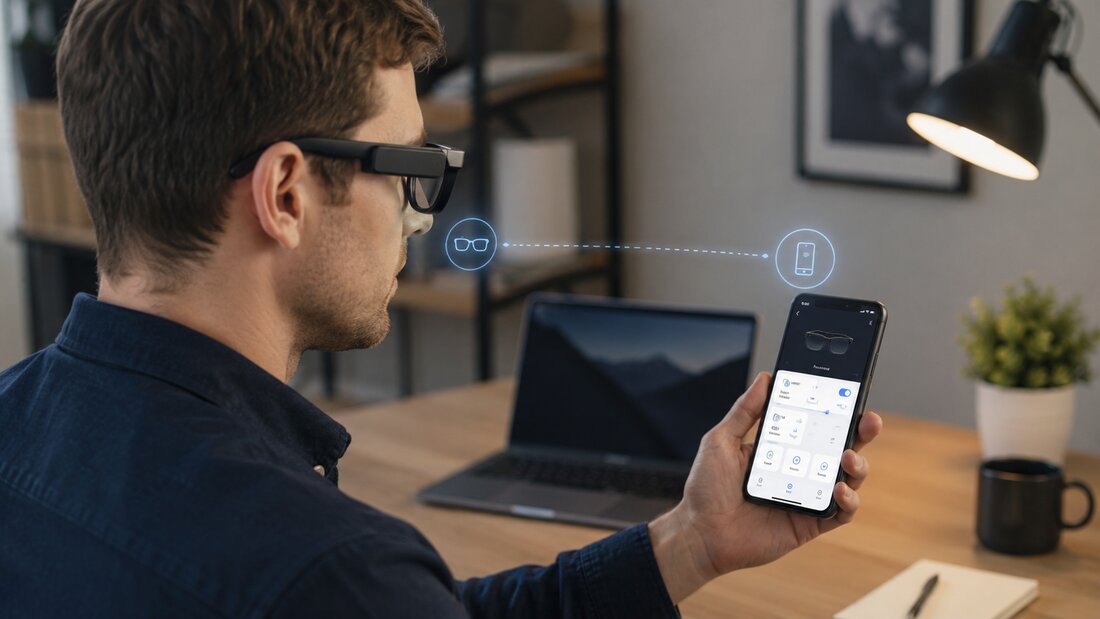
| Target market / use case | Recommended architecture focus | Trends to adopt now | Trends to defer | Key sourcing consequence |
|---|---|---|---|---|
| Office / productivity and calling | Audio-first, optionally camera for meetings | Microphone array, noise-reduced calling, low-power audio coprocessor, wearability | AR display, high-resolution camera | Lower MOQ, shorter sample cycle, simpler certification scope |
| Travel / translation | Camera AI with cloud translation | Real-time translation where supported, dual-chip power scheduling, connectivity planning | Full AR overlay | Privacy review, app/cloud integration, translation accuracy must be verified per language |
| Industrial / field service | Camera AI or AR display | Hands-free capture, navigation prompts, rugged frame, defined data handling | Consumer styling variants | Higher MOQ, optical-yield validation, enterprise data and privacy terms |
| Market test / private label launch | Audio-first white label | Logo, packaging, color, basic app branding | Custom mainboard, custom optics | Fastest path to a sellable SKU; limited SDK depth |
| Brand differentiation program | Camera AI ODM | Custom firmware features, app integration, frame structure | Full waveguide development | Higher NRE, longer engineering lead time, contract-defined IP and OTA rights |
Buyer checklist: questions to ask an AI glasses OEM/ODM supplier
Use this checklist to convert trend interest into verifiable supplier answers. A supplier who cannot answer these concretely is asking you to fund their learning curve.
- Architecture: Which product family is this model — audio-only, camera AI or AR display — and what is the confirmed BOM for the configuration quoted?
- Chipset roadmap: Which main SoC and audio coprocessor are used, and is the dual-chip power-scheduling strategy documented?
- Microphone array: How many microphones, what noise-reduction approach, and how is wake-word performance tested?
- Camera pipeline: What is the confirmed sensor, ISP, encoding and frame-rate configuration, and what image-quality test is performed at FQC?
- On-device vs. cloud: Which functions work offline, which require connectivity, and what happens to the user experience when the network drops?
- Firmware and OTA: What firmware customization is included, who holds OTA authority, and is source-code access contractually available?
- SDK/API: Is camera API, sensor-fusion access and app integration available, and at what depth for white-label versus ODM?
- Privacy: How are camera recording indicators, data handling and destination-market privacy requirements addressed?
- Battery and thermal: What is the typical endurance reference for the intended workload, and how is thermal behavior validated at pilot?
- Water resistance: What rating is actually documented for this model, and what usage restrictions apply?
- Certification scope: Which certifications are planned for which markets, who is the certificate holder, and what documentation and testing support is provided?
- Tooling and samples: What tooling is required, how many sample rounds are planned, and what is the pilot-yield validation plan?
Avoiding over-specification and design-for-manufacturability pitfalls
First-time AI glasses projects tend to over-specify in three places. The first is camera resolution without pipeline capability. The second is battery endurance quoted as a single number without a workload definition; endurance depends on processor architecture, camera use, AI inference, display use, audio workload, connectivity, firmware optimization and battery capacity, so a reference range is only meaningful alongside the test scenario. The third is water resistance, where a marketing target (“IP67”) collides with the openings the design requires.
Design-for-manufacturability pitfalls are equally predictable. Locking ID before the internal volume budget is confirmed resets tooling. Choosing a frame material without checking prescription-lens adaptation limits the addressable market. Skipping pilot-yield validation on camera or AR programs hides optical and assembly problems until mass production. And treating certification as a post-design paperwork step rather than a scope decision made alongside the BOM usually produces re-testing and schedule slip. Certification scope, required documents, testing scope and approval depend on the specific product model, configuration, target market, laboratory and applicable authority; approval is not guaranteed.
Pineeon Manufacturer-Side Recommendation
Pineeon is a B2B private label Smart Wearable, Computer Peripheral & AI Hardware OEM/ODM manufacturer based in Shenzhen, China, operating since 2000 and ISO 9001:2015-certified, serving brands and buyers in 40+ countries. From that manufacturer-side position, the recommendation for 2026 is to sequence the decisions rather than bundle them.
First, define the product family and the single use case that justifies it. Second, confirm the BOM and the power architecture against that use case, including whether on-device or cloud AI is required. Third, confirm the software route — white-label, UI customization, or deeper ODM with SDK/API and firmware integration — because SDK depth and OTA authority change the commercial terms. Fourth, plan certification scope and privacy review alongside the BOM, not after tooling. Fifth, validate at pilot before committing to mass production, with particular attention to optical yield on AR display programs.
Certification scope, required documents, testing scope and approval depend on the specific product model, configuration, target market, laboratory and applicable authority, and approval is not guaranteed. Buyers should confirm current requirements with the applicable authority, qualified laboratory or regulatory advisor. For a fuller view of available platforms and customization routes, see the AI glasses OEM/ODM product page.
The practical takeaway: the 2026 AI glasses innovation and design trends that matter commercially are the ones you can trace to a BOM line, a test method, a certification scope and a contract clause. Trends that cannot be traced that far are still concepts, not products.
Related Pineeon Resources