Buyers searching for GPS tracker manufacturing in Latin America in 2026 are usually not looking for a factory tour. They are trying to answer a narrower commercial question: can a regional supplier shorten my lead time, reduce freight risk and simplify compliance, or am I better served by an established Asian OEM/ODM partner with deeper tooling and firmware capability?
That question deserves a straight answer. The regional GPS tracker manufacturing base is thin compared with Shenzhen and other established electronics clusters. Many suppliers that present themselves as Latin American manufacturers are assemblers, distributors or local brands sourcing imported modules and finished devices. Some are genuine manufacturers with real SMT and assembly lines. The difference matters commercially, because it determines who controls the BOM, who can change firmware, who owns the certification file and who is accountable when a fleet deployment fails in the field.
This overview is written from the manufacturer side. It explains what to verify before you commit, how regional certification actually works, why cellular band planning is a project-level engineering decision, and how to compare nearshore sourcing with China-based OEM/ODM supply without relying on assumptions.
What “manufacturing in Latin America” actually means in this category
In GPS tracking hardware, manufacturing is not a single activity. It is a stack of capabilities, and different suppliers sit at different points on that stack.
- Module and chipset supply. GNSS and cellular modules are overwhelmingly designed and produced outside Latin America. A regional supplier almost always imports these modules.
- Board design and layout. Some regional suppliers design their own PCBs. Many do not, and instead buy finished boards or complete devices.
- SMT and assembly. This is where genuine regional manufacturers exist. A supplier with in-house SMT, antenna assembly and waterproofing capability is materially different from one that only labels boxes.
- Firmware and protocol development. This is the scarcest capability regionally. Firmware determines reporting logic, sleep strategy, protocol compatibility and platform integration.
- Certification and market access. Certification is usually held by whoever places the product on the market, not necessarily by the factory that built it.
A practical way to classify a supplier is to ask a single question: if I request a firmware change to the reporting interval and a custom packet format for my platform, can you implement it in-house, and who signs the technical documentation? The answer tells you whether you are dealing with a manufacturer, an assembler or a trading company.
How to verify whether a regional supplier is a true manufacturer
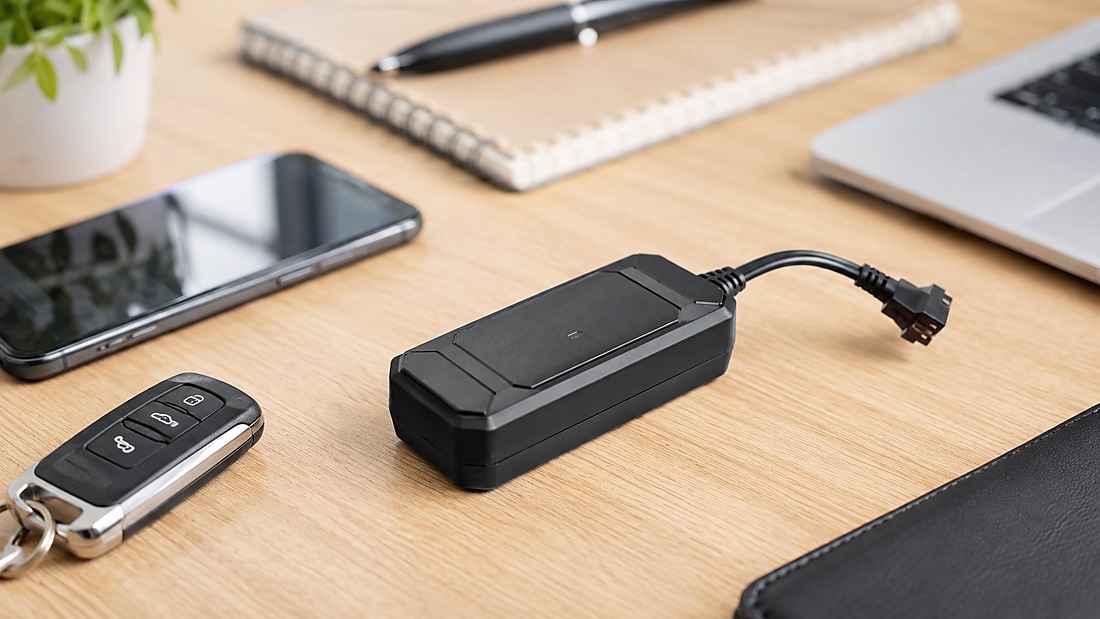
Supplier verification should happen before commercial negotiation, not after. The following procedure is designed to surface the real operating model quickly.
- Request the BOM at module level. Ask which GNSS module and which cellular module family are used, and whether these are fixed or substitutable. A supplier that cannot name the module family is not controlling its own design.
- Ask who writes the firmware. If firmware is developed by a third party or by the overseas module supplier, your customization options are limited and your support path is indirect.
- Request the certification file holder. Ask who is named on the certificate and whether the certificate covers the exact model and variant you are buying. A certificate for a different variant is not evidence for your product.
- Confirm local content claims in writing. “Assembled in” and “manufactured in” are not the same claim. Ask for the specific operations performed locally.
- Ask for the quality control flow. A manufacturer should be able to describe incoming inspection, in-process checks, final functional testing and outgoing sampling. Vague answers about “strict quality control” are a warning sign.
- Request a field test, not a datasheet. Trackers behave differently in a metal vehicle, a container or an underground car park. Ask for a test in your actual installation environment.
None of these requests are unusual. Established OEM/ODM suppliers expect them. A supplier that resists BOM transparency or firmware questions is telling you something useful about the limits of the relationship.
Certification and regulatory reality across the region
Certification is the area where buyer assumptions cause the most expensive mistakes. Latin America is not a single regulatory market. Each country has its own telecom authority and its own process, and requirements vary by product configuration, radio technology, battery design and intended use.
Three authorities are commonly encountered:
- ANATEL in Brazil for telecom and radio products.
- IFETEL in Mexico for telecom and broadcasting equipment.
- ENACOM in Argentina for communications equipment.
Other markets have their own regimes, and some rely on recognized international test reports to varying degrees. The practical point for buyers is this: certification scope, required documents, testing scope, cost and timeline are market-dependent and project-dependent. They should be confirmed with the applicable authority, a qualified laboratory or a regulatory advisor for your specific model and destination. No supplier should promise a fixed certification timeline or a guaranteed approval outcome before the product configuration is frozen.
Certification documentation, testing and compliance-support capabilities vary by supplier and project. Confirm the exact scope, responsible parties and available records in writing before relying on them.
For cellular trackers, there is an additional layer. Network operator requirements and cellular device certification paths can affect schedule independently of the telecom authority process. This is one reason GPS tracker projects carry more compliance complexity than Bluetooth-only consumer devices.
Cellular band and network planning: an engineering question, not a purchasing one
Latin American mobile networks are not uniform. 2G availability varies significantly by country and operator, and legacy network shutdowns mean 2G should never be assumed. LTE band plans differ across markets, and operator support for specific IoT categories varies.
Before selecting hardware, a buyer should be able to answer these questions with the supplier:
- Which cellular route does the project require: 2G, 4G LTE (including Cat.1 or other categories), or NB-IoT?
- Which bands must the device support for the target country and operator?
- Is roaming required, and how is it configured?
- What SIM and APN arrangements are needed?
- Does the operator require any device approval or registration?
These are project-dependent engineering decisions. A supplier that claims “worldwide compatibility” without discussing bands, operator requirements and SIM configuration is not giving you engineering support. Cellular band and operator compatibility must be confirmed for every destination market before mass production.
Nearshore Latin America versus China-based OEM/ODM: a decision framework
Nearshoring has real advantages for US and regional buyers: shorter freight lanes, overlapping time zones, faster iteration on small changes and lower exposure to long ocean transit. Those advantages are strongest for assembly, configuration, fulfillment and after-sales support.
They are weaker where deep tooling, firmware development, protocol customization and multi-market certification documentation are required. That is where established Asian OEM/ODM partners typically have more depth.
| Decision factor | Regional Latin American supplier | Established China-based OEM/ODM |
|---|---|---|
| Freight and transit time | Shorter to US and regional markets | Longer ocean transit; air freight available |
| Time-zone responsiveness | Strong for US buyers | Workable with scheduled communication |
| Tooling and enclosure development | Often limited or outsourced | Typically deeper in-house capability |
| Firmware and protocol customization | Variable; often the constraint | Commonly offered, scope depends on project |
| MOQ flexibility | Can be low for assembly and labeling | Reference ranges from low-volume private label upward |
| Certification documentation | Local market knowledge; scope varies | Support for applicable CE, FCC and RoHS applications |
| Platform integration | Depends on local software partners | Factory cloud, third-party or customer-owned platform routes |
| Supply chain depth | Module supply still imported | Broader component access; module constraints still possible |
The framework is not “which region is better.” It is “which region should own which part of the value chain.” Many buyers end up with a hybrid model: China-based manufacturing and firmware for the core device, plus regional assembly, SIM/APN preconfiguration, labeling and fulfillment closer to the end customer.
RFQ checklist and red flags for regional suppliers

Use this checklist when issuing an RFQ to a Latin American supplier. It is written to expose capability gaps early, while changes are still cheap.
- Destination country and target operators confirmed in writing.
- Cellular route and required bands stated explicitly.
- GNSS module family and cellular module family disclosed.
- Firmware ownership and change process described.
- Protocol support stated, with a commitment to test against your platform.
- Certification holder and certificate scope identified for the exact model.
- Quality control flow described from incoming inspection to outgoing sampling.
- Field test plan agreed for your installation environment.
- Data routing, server ownership and tracking-data ownership defined.
- Warranty terms and RMA process documented.
Red flags worth taking seriously:
- Claims of being a manufacturer without BOM or firmware transparency.
- Certification documents that do not match the model or variant being quoted.
- “Worldwide” cellular compatibility claims without band discussion.
- Platform compatibility asserted without protocol testing.
- Guaranteed certification timelines before the configuration is frozen.
- Unwillingness to provide a field test unit in your actual environment.
Pineeon Manufacturer-Side Recommendation
From a manufacturing standpoint, the most reliable way to evaluate GPS tracker manufacturing in Latin America is to separate the question into two decisions: where the device is engineered and built, and where it is configured and fulfilled.
For the engineering and build decision, ask for evidence rather than geography. A regional supplier with genuine SMT, firmware and certification capability can be a strong partner. A regional supplier that assembles imported modules can still be useful for fulfillment, but should not be treated as the design owner. For the configuration and fulfillment decision, nearshore operations can reduce deployment friction, especially for SIM and APN preconfiguration, device ID mapping and batch platform registration.
Certification documentation, testing and compliance-support capabilities vary by supplier and project. Confirm the exact scope, responsible parties and available records in writing before relying on them.
If you are comparing nearshore and offshore options, start with the GPS tracker OEM/ODM product page and bring your destination market, platform and protocol requirements to the first conversation. That is the point at which a realistic comparison becomes possible.
Implementation steps for a 2026 sourcing decision
- Define the market and network first. Country, operator, cellular route and bands before any hardware discussion.
- Define the platform and protocol. Factory cloud, third-party platform or customer-owned cloud. This decision constrains firmware.
- Classify candidate suppliers. Manufacturer, assembler or distributor. Request BOM and firmware evidence.
- Map certification ownership. Identify who holds the certificate and whether regional approval is required for your model.
- Run a field test. Test in the actual vehicle, asset or container environment, not only on a bench.
- Decide the hybrid split. Determine which activities stay offshore and which move nearshore.
- Freeze configuration before mass production. Hardware, firmware and protocol configuration should be locked after pilot approval.
Final specifications, MOQ, pricing, lead time, certification scope, customization capability, software capability, data access, protocol compatibility and commercial terms are subject to the selected product model, project requirements, technical evaluation and official quotation.