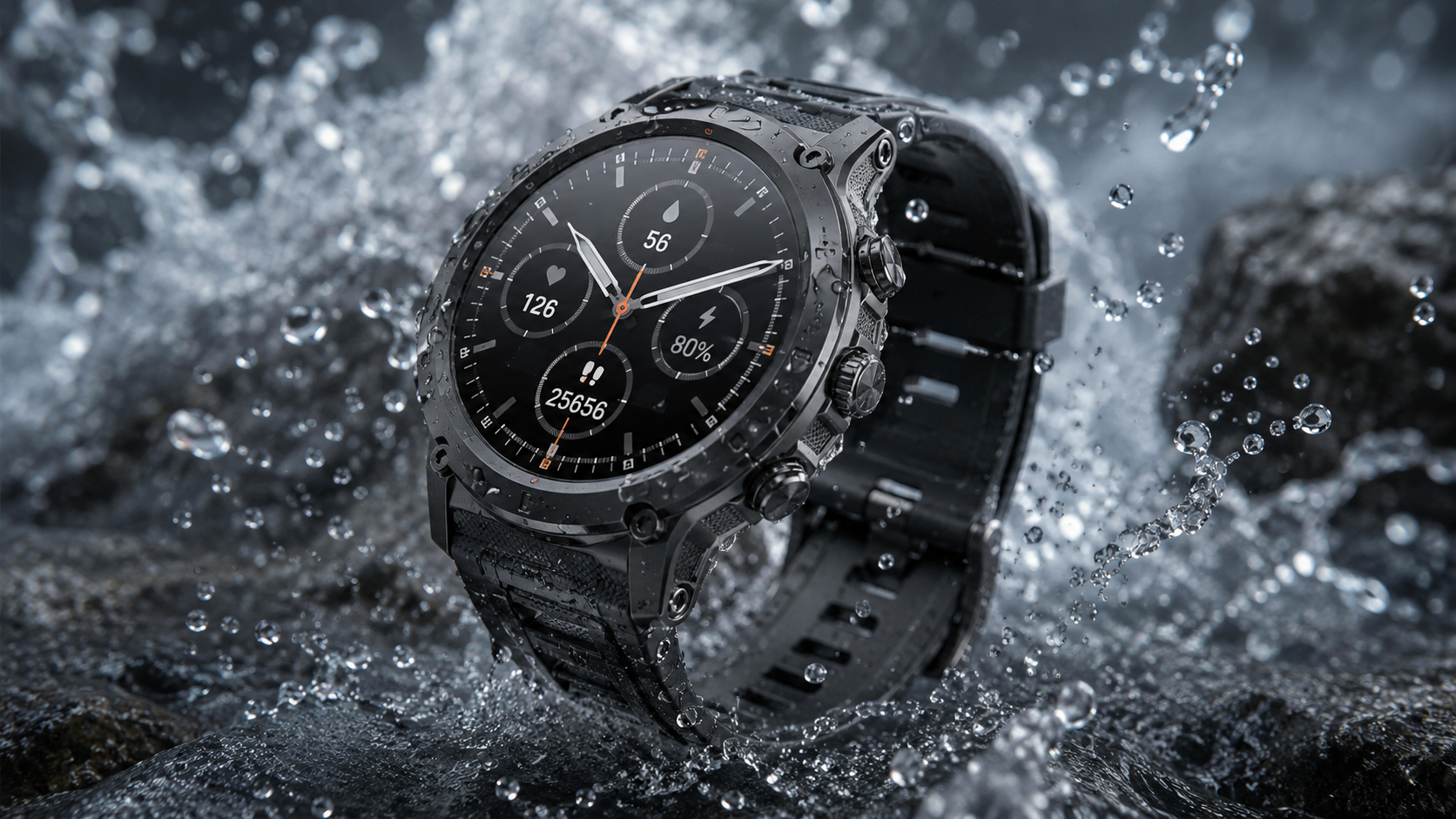
Smart Watch Multi-Region Distribution for E-commerce Brands
Published November 8, 2026 · Pineeon Insights
Distributing one smart watch platform across several e-commerce markets looks like a logistics problem. In practice, it is a configuration and documentation problem that starts long before the first carton is booked. A watch that sells cleanly in one country can stall in another because the charger plug, radio band plan, language pack, app-store dependency or battery shipping paperwork does not match the destination. For importers and brand owners, the cost of discovering this after a bulk order is far higher than the cost of mapping it before the quotation.
This article gives e-commerce brands and procurement teams a practical framework for wholesale smart watch multi-region distribution. It covers how to build a region-by-region configuration matrix, how to separate company-level compliance support from model-specific certification status, what documentation to request per market, how to allocate inventory without multiplying SKUs unnecessarily, and how to brief an OEM/ODM smart watch manufacturer so the quotation reflects the real project.
Start with the architecture decision, not the market list
Before mapping regions, confirm which smart watch architecture family you are distributing. Pineeon treats MCU Bluetooth smart watches and Android/4G smart watches as separate technical product families, and the distinction drives almost every downstream decision.
An MCU Bluetooth watch uses a low-power microcontroller architecture. It is typically positioned for sports, fitness and wellness tracking, Bluetooth-connected use and mass-market private label programs. It generally has a simpler certification path because it does not normally operate as an independent cellular or Android application platform.
An Android/4G watch uses an application processor and supports independent connectivity, richer application capability and, where configured, cellular communication. It normally carries higher BOM cost, higher power consumption, more complex software integration and additional cellular and market-specific certification requirements.
Why this matters for multi-region distribution: a Bluetooth-only watch can often share one hardware platform across many markets with packaging and language variants. A cellular watch may need different band plans, carrier approvals and market-specific documentation per region, which multiplies both SKU count and compliance workload. Choosing the architecture before the market list prevents a plan that looks efficient on paper but cannot be certified or shipped as designed.
Build a region-by-region configuration matrix before requesting a quotation

The single most useful document a buyer can hand an OEM/ODM supplier is a configuration matrix. It forces every market-specific variable into one table so the supplier can quote accurately and flag conflicts early. A generic request for a private label smart watch quotation will usually produce a generic answer; a matrix produces a project-specific one.
| Configuration dimension | What to specify per region | Why the supplier needs it |
|---|---|---|
| Radio and connectivity | Bluetooth-only, or 4G/Wi-Fi/GPS combinations; supported bands where cellular is required | Determines chipset family, antenna design, power budget and certification scope |
| Charger and plug type | Plug standard, charging dock or cable, input voltage assumptions | Affects accessory BOM, packaging cavity and shipping configuration |
| Language packs | UI languages, manual languages, packaging languages | Affects firmware build, printing plates and minimum order per variant |
| App dependency | Whether the companion app relies on services that may be unavailable in some markets | Affects software configuration and user onboarding instructions |
| Health and wellness claims | Which features are marketed, and how they are described | Determines whether claims stay in consumer-wellness territory or trigger regulatory review |
| Labeling and marking | Required marks, importer identity, language of warnings, battery symbols | Affects packaging artwork, silkscreen and approval before mass production |
| Documentation pack | Test reports, declarations, battery shipping documents, manuals | Determines what must be prepared, by whom, and before which shipment |
Two practical rules make the matrix usable. First, mark each row as either hard requirement or preference. Suppliers prioritize differently when everything is urgent. Second, record the source of each requirement — buyer’s own regulatory advisor, destination customs broker, marketplace policy, or supplier’s compliance team. When a requirement’s source is unclear, it becomes a project risk rather than a specification.
Separate company-level compliance support from model-specific certification
This is where many multi-region plans fail. A supplier may legitimately support CE, FCC and RoHS certification or compliance applications at company level, while an individual model, in a specific configuration, for a specific market, may not yet hold the relevant approval. Those are different facts and should never be merged in a buyer’s planning documents.
Certification documentation, testing and compliance-support capabilities vary by supplier and project. Confirm the exact scope, responsible parties and available records in writing before relying on them.
For a multi-region program, ask for evidence per destination market rather than a general statement. Useful requests include:
- The exact model and configuration covered by any existing certificate or report, including radio variant and accessory differences.
- The certificate holder and whether the buyer can be named or referenced appropriately.
- Which laboratory performed the testing and the date of the report.
- Whether the documentation covers the firmware and hardware revision actually being shipped.
- For cellular products, which network or carrier approvals have been evaluated and for which markets.
- For battery-containing products, which shipping documents are available and who prepares them.
Treat certification as market-dependent and subject to verification. Requirements vary by product configuration, radio technology, battery design, intended use and applicable standards. For high-risk areas — customs classification, data privacy, medical or health claims — confirm current requirements with the applicable authority, an accredited laboratory or a qualified advisor before committing to a launch date.
Assemble a documentation pack per region
Documentation is not a single folder. It is a set of packs that different parties request at different times: the marketplace onboarding team, the freight forwarder, the customs broker and, occasionally, the customer. Build the pack per region and keep it versioned against the shipment.
A practical per-region documentation checklist typically includes:
- Product compliance file: applicable declarations and test reports for the model and configuration being shipped, with clear scope notes.
- Labeling artwork: approved packaging and product marking showing required symbols, importer details and language requirements for that market.
- User manual: correct language, safety warnings and battery handling instructions.
- Battery shipping documents: the paperwork the forwarder requires for lithium battery-containing devices, prepared according to the chosen transport mode.
- Commercial documents: invoice, packing list and product description consistent with the customs classification agreed with the broker.
- Software notes: app name, supported languages and any market-specific setup instructions for customer service teams.
Assign an owner to each item — supplier, buyer, laboratory, forwarder or broker. Multi-region programs rarely fail because a document is difficult to obtain; they fail because no one was sure who was responsible for it.
Control SKU proliferation when one platform serves several regions
Every regional difference has an inventory cost. A separate plug type, language pack or packaging version creates a distinct SKU with its own forecast, safety stock and reorder point. Multiply that across several markets and a single watch platform can become a long list of slow-moving variants.
Manufacturer-side reasoning helps here. Variants that differ only in printed material — manual language, packaging sleeve, sticker — are usually the cheapest to manage because they can be kitted late and share the same hardware. Variants that differ in firmware language packs or radio configuration are more constrained because they affect the production build and testing. Variants that differ in hardware — plug type, band plan, sensor set — are the most expensive because they fragment the BOM and the certification scope.
A workable allocation approach for e-commerce brands:
- Identify a core SKU that covers the largest market or the largest combined demand with the fewest compromises.
- Convert differences that can be handled in packaging or accessories into late-stage variants rather than separate hardware SKUs.
- Reserve true hardware variants for markets where the difference is a hard requirement, not a preference.
- Set reorder triggers per variant based on sell-through, not on equal allocation across markets.
- Review variant performance regularly and retire the slowest before the next production cycle.
Also plan for the reorder implication: a variant that sells out faster than expected may not be quickly replenished if it requires a separate firmware build or a minimum production quantity per language. Ask the supplier early how variant changes affect minimum order quantities and production scheduling.
Brief the supplier with a structured project template
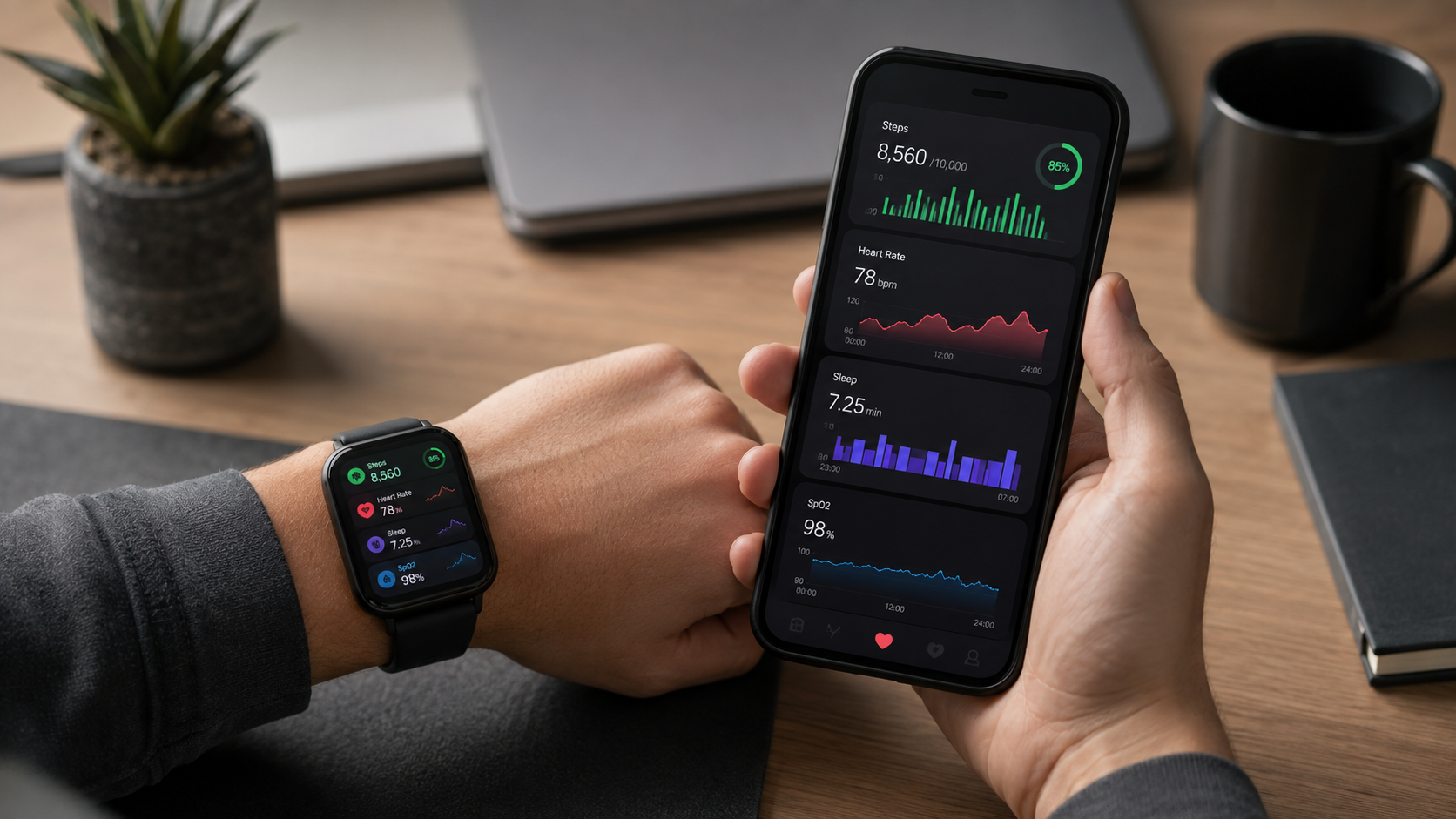
A supplier briefing is not a purchase order. It is the document that lets an OEM/ODM manufacturer evaluate feasibility, propose a platform and quote realistically. For multi-region programs, the briefing should include:
- Market list with destination countries and sales channels.
- Target volumes per market and per variant, with a first-order and annual view.
- Architecture preference — MCU Bluetooth or Android/4G — and the reason.
- Configuration matrix as described above, with hard requirements marked.
- Labeling and packaging rules per market, including language and importer information.
- Firmware locale needs — UI languages, default settings, units, date formats.
- App and data expectations — whether an SDK, API, raw data access or customer-owned cloud is required, noting these are project- and contract-specific.
- After-sales expectations — spare parts, warranty handling, firmware update responsibility and return process.
- Documentation expectations — which packs the supplier prepares and which the buyer provides.
Reference ranges help set expectations but should not be treated as commitments. Minimum order quantities, sample and production lead times, pricing and certification scope vary by platform, customization depth and project requirements, and should be confirmed for the specific project with the supplier and, where relevant, the applicable authority or laboratory. Final MOQ, lead time, pricing and certification scope are subject to the selected model, project requirements, technical evaluation and official quotation.
Pineeon Manufacturer-Side Recommendation
From a manufacturing standpoint, the most reliable multi-region programs share three habits. First, they lock the architecture and the core SKU before adding regional variants, so the BOM and certification scope stay stable. Second, they separate hard requirements from preferences in the configuration matrix, which prevents unnecessary SKU creation and keeps quotations comparable. Third, they assign documentation ownership per market at the briefing stage rather than at the shipping stage.
Certification documentation, testing and compliance-support capabilities vary by supplier and project. Confirm the exact scope, responsible parties and available records in writing before relying on them.
For product specifications, available configurations and OEM/ODM project information, see the Smart Watch product page.
Frequently asked questions
Can one smart watch platform be sold in several regions without separate certification?
Not automatically. Certification scope depends on the model, configuration, radio technology and destination market. A platform may share a base design across regions, but each market’s requirements must be verified, and some configurations — particularly cellular variants — may need separate evaluation. Confirm with the applicable laboratory or authority.
How many SKUs should a multi-region smart watch program have?
As few as the hard requirements allow. Convert packaging, manual and accessory differences into late-stage variants where possible, and reserve separate hardware SKUs for markets where the difference is mandatory. Review variant performance regularly and retire slow movers before the next production cycle.
What should an e-commerce brand request before approving a bulk smart watch order?
Request the approved configuration matrix, the model-specific documentation pack for each destination market, approved labeling artwork, the battery shipping documents required by the forwarder, and a written statement of which party owns each compliance and documentation task.
Does a supplier’s CE, FCC or RoHS support mean every model is certified?
No. Company-level capability to support applicable certification or compliance applications is different from model-specific certification status. Ask for the certificate or report that covers the exact model and configuration being shipped, and verify the holder and market.
How do language variants affect production planning?
Language differences that appear only in printed materials are usually easier to manage than firmware language packs, which affect the production build and testing. Ask how each variant affects minimum order quantities and scheduling before committing to a regional assortment.
When should a buyer involve a customs broker or regulatory advisor?
Early — ideally before the quotation is finalized. Customs classification, data privacy obligations and any health-related marketing claims are market-dependent and should be confirmed with the applicable authority, laboratory or qualified advisor rather than assumed from a supplier’s general documentation.