Smart Watch Inventory Planning: A Step-by-Step Guide
Published November 2, 2026 · Pineeon Insights
Most smart watch stock problems are created before the purchase order is signed. A buyer commits to a bulk smart watch order sized on a single demand forecast, spreads it across too many colorways, and then discovers that the hero model sells out while two long-tail strap colors sit in the warehouse for a year. The fix is not a better forecast. It is an inventory plan that treats each smart watch SKU as a separate decision, with its own demand pattern, reorder point and obsolescence risk.
This guide sets out a practical planning workflow for importers, distributors and private label brands buying from a smart watch manufacturer. It covers SKU segmentation, reorder points, safety stock, MOQ and lead-time buffers, and the firmware and component lifecycle risk that is specific to wearables. All MOQ and lead-time figures referenced here are internal reference ranges and must be confirmed for your selected model and project.
Why smart watch inventory behaves differently from generic consumer electronics
A smart watch is not one SKU. A single model typically multiplies into a matrix of case color, strap material and color, display size or shape, and sometimes language or region firmware. Each combination is a separate inventory position with its own sell-through rate. Planning at model level hides the fact that one colorway may carry most of the demand while another moves slowly.
Three structural factors make smart watch planning harder than, say, planning a phone case:
- Architecture drives cost and lead time. An MCU Bluetooth watch and an Android/4G watch are different product families. The MCU platform is lower BOM cost, lower power and simpler to certify; the Android/4G platform carries higher BOM cost, more software integration and additional cellular certification work. Mixing them in one inventory plan distorts both.
- Firmware and component lifecycle risk. A chipset, sensor stack or firmware baseline can change between production runs. Stock bought against an older baseline may become harder to replenish with identical units, which matters if your channel expects consistent app behavior.
- MOQ is not linear. Reference MOQ for an existing MCU platform with logo and packaging customization starts at approximately 1,000 pieces, while a new Android/4G program with new tooling and application development is referenced at a substantially higher initial mass-production quantity. Small reorders are not always available at the same unit economics.
If you are still choosing between architectures, settle that first. Inventory planning assumes you already know which product family you are buying.
Step 1: Build a SKU register before you forecast

Before any demand number, list every sellable combination and tag it with the attributes that affect replenishment. A workable register includes:
- Model and architecture (MCU Bluetooth or Android/4G)
- Case color, strap type and strap color
- Display shape and size
- Firmware baseline or version identifier
- Packaging version and language
- Certification or market variant, where applicable
- Supplier reference and confirmed MOQ per SKU
- Reference production lead time per SKU
The firmware and packaging columns are the ones buyers most often skip. They are also the columns that determine whether a reorder is a like-for-like replacement or a new SKU that requires new listings, new photography and possibly new compliance documentation.
Step 2: Segment SKUs into hero, seasonal and long-tail tiers
Not every SKU deserves the same service level. Segment by demand behavior and commercial role, then set inventory policy per tier.
| Tier | Typical profile | Planning policy | Main risk |
|---|---|---|---|
| Hero | One or two models carrying most volume; stable sell-through | Higher service level, tighter reorder point, more frequent review | Stockout during peak season |
| Seasonal / promotional | Gift seasons, back-to-school, fitness-season launches | Buy to a campaign quantity, plan exit before season ends | Residual stock after the season |
| Long-tail variants | Low-volume colors, strap materials, niche sizes | Low service level, small buffer, accept occasional stockout | Dead stock and write-downs |
| Test / pilot | New model or new market entry | Pilot quantity only, no automatic reorder | Over-committing before sell-through evidence |
The most common mistake is treating long-tail colorways with hero-tier service levels. If a strap color sells a few units a week, holding weeks of cover on it ties up cash that should be protecting the hero model. A defensible rule is to concentrate buffer stock on the two or three combinations that drive revenue and keep long-tail variants deliberately thin.
Step 3: Calculate reorder points using real lead time, not the quotation headline
The reorder point is the inventory level that triggers a new order. For a smart watch SKU it should be built from four inputs:
- Average daily demand for that specific SKU, not the model family.
- Total replenishment lead time from order confirmation to stock available for sale.
- Safety stock to cover demand and lead-time variability.
- Review period if you order on a fixed cycle rather than continuously.
A simple form is: reorder point = (average daily demand × total lead time) + safety stock. If you review stock weekly, add one review period of demand so you do not run out between reviews.
The lead-time input is where plans usually fail. Production lead time is only one segment. Add sampling and approval time if the SKU is new, plus transit, customs clearance and inbound receiving. Reference production ranges from the current knowledge base illustrate the spread:
- MCU Bluetooth watch, existing platform with standard private label customization: a short reference production window
- MCU platform with moderate customization: a longer reference window than standard private label
- ODM project with PCBA, firmware and application customization: a multi-week reference window, with complex projects extending further
- Fully customized Android/4G watch: a longer reference window than MCU private label programs
- Pilot build: a multi-week reference window
These are reference ranges, not commitments. Q3–Q4 demand and periods of chipset, 4G module or application-processor supply constraint can extend delivery. Final production lead time is confirmed when the order is accepted. For planning purposes, use the upper end of the range for hero SKUs and add your own transit and clearance time on top.
Step 4: Size safety stock against variability, not habit
Safety stock exists to absorb two kinds of variability: demand higher than forecast, and lead time longer than planned. Both are real in smart watches. A viral review can move a hero SKU faster than expected, and a component constraint can push a shipment by weeks.
Rather than applying a flat percentage across the catalog, set safety stock by tier and by lead-time uncertainty:
- Hero SKUs: buffer sized for the longest credible lead-time extension plus normal demand variance. This is where you spend your inventory budget.
- Seasonal SKUs: buffer sized to the campaign, with a hard stop date after which remaining stock is discounted or reallocated.
- Long-tail variants: minimal buffer. Accept that a rare color may go out of stock; the cost of a stockout on a slow mover is lower than the cost of holding it.
- New or pilot SKUs: no safety stock until you have at least one full replenishment cycle of sell-through data.
Two manufacturer-side realities should shape the buffer. First, MOQ constrains how small a replenishment can be. If the reference MOQ for your platform is high relative to your monthly demand, each order is effectively several months of cover, and safety stock math matters less than order timing. Second, if the SKU requires new tooling or a new firmware baseline, the effective lead time for a repeat order may be longer than for the first run, because tooling and validation steps repeat.
Step 5: Plan the pilot-to-mass-production transition explicitly
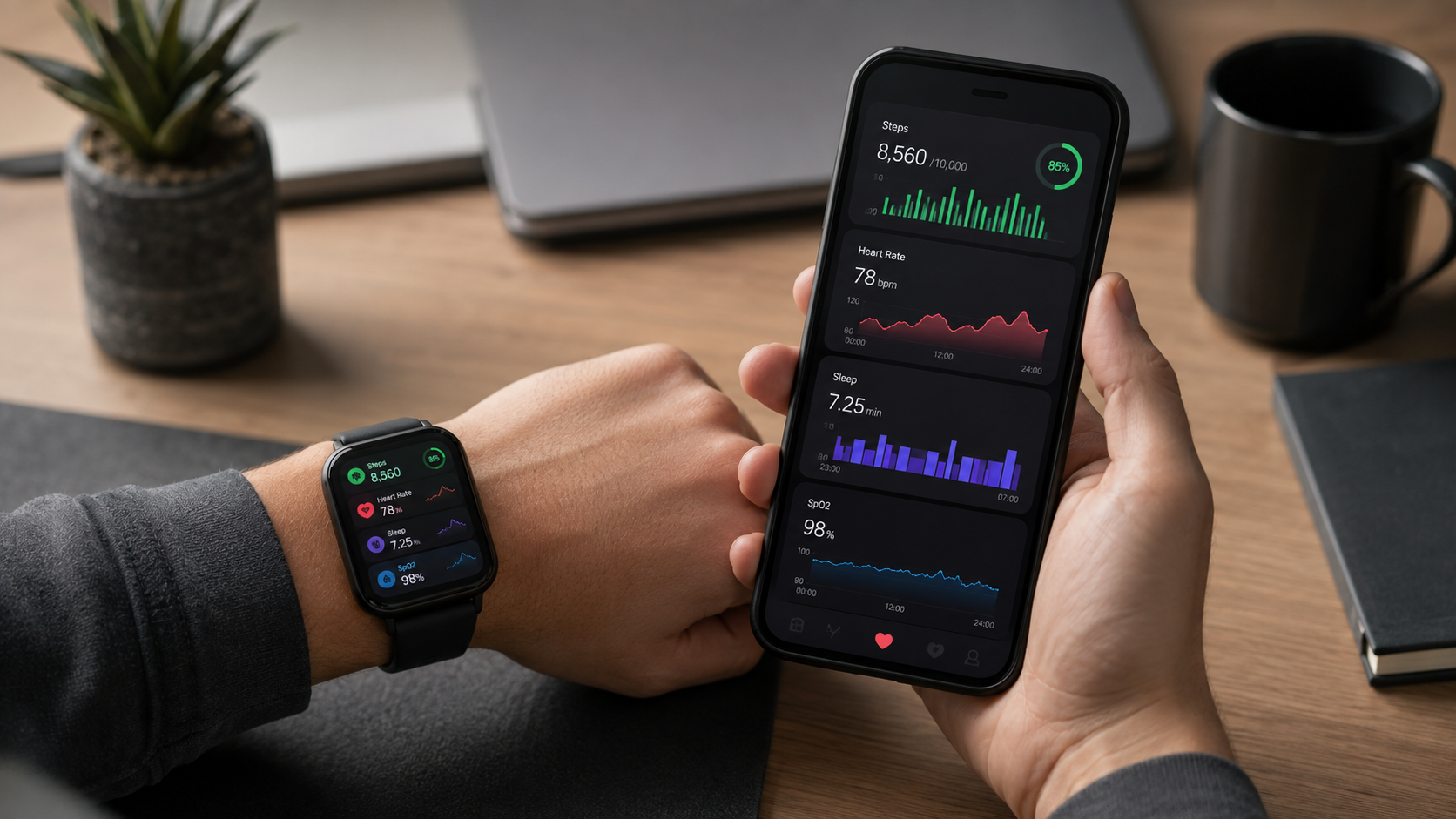
For custom smart watch programs, inventory planning starts at the sample stage. The sample process normally runs through requirement confirmation, quotation and sample fee, structure and ID confirmation, engineering sample, pilot run and mass-production approval. Each stage consumes calendar time that must be reflected in your first stock date.
Reference sample timelines give a sense of the spread: an existing MCU platform with logo and packaging changes may be ready quickly; UI language or function changes take longer; MCU ODM work involving appearance or mainboard changes takes longer still; and Android/4G projects with application and cloud integration take the longest. Actual timing depends on platform, customization depth, software integration, tooling and material availability.
For inventory purposes, treat the pilot run as your demand-validation gate. Pilot quantities for selected B2B, children GPS or elderly safety watch projects are referenced at a small pilot scale, with mass production referenced at a substantially higher quantity. Use pilot sell-through to set the first mass-production quantity rather than extrapolating from a forecast.
Step 6: Manage firmware and component obsolescence as an inventory cost
This is the step generic inventory guides miss. A smart watch is a hardware-plus-firmware product. If the chipset, sensor combination or firmware baseline changes, the units in your warehouse may no longer match the units you can reorder. That creates three risks:
- Listing drift: app behavior, language support or feature set differs between batches, which generates returns and support tickets.
- Replenishment mismatch: a reorder arrives on a newer baseline and cannot be sold as the same SKU without re-testing.
- Certification scope drift: a changed radio or component configuration can affect the compliance documentation applicable to that model and market.
Mitigations are procedural. Record the firmware baseline and key component configuration on every purchase order. Ask the supplier to notify you before a baseline change on an active SKU. Keep batch traceability so you can identify which units shipped under which configuration. And before committing to a large buy on a long-lifecycle SKU, confirm how long the platform is expected to remain in production and what the replacement path looks like.
Certification deserves a specific note. Whether a given model can be offered for a particular market depends on the certification or compliance requirements that apply to that model, configuration and destination. Buyers should confirm the applicable requirements, required documents, testing scope and approval path with the applicable authority, a qualified laboratory or a regulatory advisor for the specific project. Approval is not guaranteed, and a market-specific variant may carry a longer first-order lead time than a domestic-configuration unit.
Buyer verification checklist before committing to a bulk order
Use this checklist in the quotation and pre-production stage. Each item should be answered in writing for the specific SKU, not for the product family.
| Area | What to confirm | Why it affects inventory |
|---|---|---|
| Architecture | MCU Bluetooth or Android/4G, confirmed per SKU | Sets cost, power, certification path and lead time |
| MOQ | Reference MOQ per SKU and per colorway; whether mixed-color orders are allowed | Determines minimum order cover and cash commitment |
| Lead time | Production lead time, sample lead time, pilot lead time, transit and clearance assumptions | Drives reorder point and safety stock |
| Reorder flexibility | Whether repeat orders can be placed below initial MOQ; price effect of smaller runs | Determines whether you can replenish hero SKUs frequently |
| Firmware baseline | Version identifier, change notification process, OTA policy where applicable | Controls obsolescence and listing consistency |
| Component continuity | Expected production life of the platform; substitution policy | Affects long-term replenishment and residual stock risk |
| Packaging and language | Packaging version, manual language, market variant | Creates SKU splits that must be planned separately |
| Quality plan | AQL criteria, reliability tests included for the order, inspection stages | Affects defect allowance and replacement stock |
| Certification scope | Which certificates apply to this model and market, and who holds them | Affects which variants can be sold where, and first-order timing |
If any row is answered only verbally, treat the corresponding inventory assumption as unconfirmed.
Pineeon Manufacturer-Side Recommendation
From the manufacturing side, the buyers who manage smart watch inventory best do four things consistently.
First, they separate architecture decisions from inventory decisions. They choose MCU Bluetooth or Android/4G based on product positioning, then plan inventory within that family. They do not compare safety stock across families, because the cost, lead time and certification profiles are not comparable.
Second, they buy the pilot before the pallet. For custom programs, they use the pilot run to validate yield, functional consistency and production stability, and they size the first mass-production order from pilot sell-through. This is especially important for projects involving custom hardware, firmware, app, cloud or cellular architecture.
Third, they concentrate inventory on the SKUs that earn it. Hero models get the buffer and the frequent review. Long-tail colorways get thin cover and an accepted stockout risk. This single discipline removes most dead-stock exposure in a smart watch catalog.
Fourth, they write the replenishment terms into the commercial agreement. MOQ, lead time, firmware change notification, packaging version control and certification scope should be documented per SKU. Buyers should confirm these terms directly with their supplier and, where certification is involved, with the applicable authority or qualified advisor before committing to a bulk order. That agreement is also the right moment to settle how repeat orders will work.
If you are planning a private label or OEM/ODM smart watch program, start from the Pineeon smart watch product range to identify the architecture and platform that fit your market, then build the SKU register and reorder model around that selection. Pineeon is an ISO 9001:2015-certified manufacturer based in Shenzhen, China, operating since 2000 and serving brands and buyers in more than 40 countries, with OEM, ODM and private label manufacturing services.
Putting the plan into operation
A smart watch inventory plan is a living document. Review hero SKU reorder points monthly and after any lead-time change. Review long-tail variants quarterly and cut the ones that have not moved. Re-check firmware baselines and component continuity before every large seasonal buy. And keep the buyer verification checklist attached to each purchase order so that assumptions do not quietly drift between orders.
Final specifications, MOQ, pricing, lead time, certification scope, customization capability and commercial terms are subject to the selected product model, project requirements, technical evaluation and official quotation.