The Complete Checklist for Smart Ring Supplier Vetting Steps
Published November 2, 2026 · Pineeon Insights
Most smart ring sourcing problems are not caused by choosing an obviously bad factory. They are caused by skipping a vetting step that seemed unnecessary at the time: a sample that was never tested for optical contact on different finger sizes, a certification question answered at company level but never checked at model level, or an app dependency that only surfaced after the purchase order was signed.
This checklist is written from the manufacturer side of the table. It sequences supplier vetting into six stages, shows what to request at each stage, and explains where buyers most often misread the answers they receive. It applies whether you are sourcing a private label smart ring from an existing platform or commissioning a custom smart ring with new tooling, firmware and app work.
One rule runs through the whole process: separate what a supplier can do as a company from what a specific model has already demonstrated. That distinction decides most of the disputes that arise later.
Stage 1: Desk Research Before You Contact Anyone
Desk research is about filtering, not qualifying. The goal is to reduce a long list of smart ring suppliers to a short list worth a structured conversation.
Start with business scope. A supplier whose public materials describe watches, bands, rings and audio accessories may be a trading company aggregating several factories, or a manufacturer with broad lines. Neither is automatically wrong, but you need to know which you are talking to, because it changes who controls tooling, firmware and quality records.
Then check whether the supplier presents smart rings as a platform business or a single product. A serious ODM smart ring supplier will usually discuss ring sizes, sensor stacks, app options and firmware routes, because those are the variables that drive cost and lead time. A page that only lists colors and battery days is usually a reseller page.
Useful desk filters:
- Does the company describe OEM and ODM work separately, or use the terms interchangeably?
- Is there any indication of in-house engineering (firmware, app, structural design) versus assembly only?
- Are ring sizes, materials and sensor options presented as configurable, or fixed?
- Does the contact route lead to a sales address only, or to a project or engineering contact?
- Is the company’s stated certification position about the company (for example, ISO 9001:2015) or about individual models?
Do not treat a polished website as evidence of manufacturing capability, and do not treat a plain website as evidence against it. Many capable China smart ring factories have modest English-language sites. The desk stage is for generating questions, not conclusions.
Stage 2: Capability Screening Call

A structured screening call of roughly half an hour replaces weeks of email. Ask the same questions of every candidate so answers are comparable.
Cover four areas: platform, engineering, quality and commercial model.
Platform. Which ring platforms are available now, and which are public-mold versus tooled? What ring sizes are supported, and how does internal space change across sizes? Buyers often forget that a small ring and a large ring do not have the same battery volume or antenna behavior, so a supplier that quotes one battery figure for all sizes is either simplifying or has not thought it through.
Engineering. Who writes the firmware? Who owns the app? Can the customer integrate via SDK or API, and is raw sensor data available? Is ECG available on selected platforms only, and under what electrode and contact constraints? These answers determine whether your product roadmap is feasible, not just whether the current sample works.
Quality. What inspection stages exist (IQC, IPQC, FQC, OQC)? What AQL is used for outgoing inspection? How are optical performance and water resistance validated before shipment? Ask for the process, not a pass rate.
Commercial model. What MOQ applies to stock private label, standard ODM, hybrid OEM and full custom OEM/ODM? What drives MOQ up: new mold, dedicated PCBA, firmware customization, dedicated app, custom sensor configuration, packaging or certification scope? A supplier that can explain the drivers is easier to negotiate with than one that quotes a single number.
Red flags at this stage: vague answers about who owns the app, refusal to discuss firmware at all, or a claim that every model is certified for every market without asking your destination.
Stage 3: Documentation Request List
Send the same document request to every shortlisted supplier. Standardizing the request makes gaps visible.
| What it tells you | What it does not tell you | |
|---|---|---|
| Business license | Legal entity, registered scope, establishment date | Manufacturing capability or product quality |
| ISO 9001:2015 certificate | Quality management system certification at company level | That a specific ring model meets your specification |
| CE / FCC / RoHS support statement | Whether the supplier can support applicable certification or compliance applications, documentation and testing | That the model you are buying already holds those approvals |
| Model-level test reports (where available) | Evidence tied to a specific configuration | Coverage of your exact BOM, firmware or market |
| BOM summary | Sensor, IMU, battery and Bluetooth architecture at a high level | Final production BOM without model-specific confirmation |
| QC process description and AQL reference | Inspection stages and acceptance approach | Contractual acceptance criteria until agreed in writing |
| Sample and production lead-time ranges | Planning assumptions by customization level | Guaranteed dates before scheduling confirmation |
The most common confusion in this stage is certification scope. A supplier may legitimately support applicable CE, FCC and RoHS certification or compliance applications, provide technical documentation and testing support, and assist with the application process, while the final certification status still depends on the specific model, configuration, target market, laboratory and authority. Approval is not guaranteed by anyone in the chain. Ask two separate questions: “What can you support?” and “What does this exact model currently hold, and can you show the document?”
For medical, Bluetooth SIG, UN38.3 or other programme-specific questions, treat the answer as project-dependent and confirm requirements with the applicable laboratory, authority or qualified advisor.
Stage 4: Sample Validation for a Wearable Form Factor
A smart ring sample is not validated by putting it on one finger for ten minutes. The form factor creates specific failure modes that a generic sample checklist misses.
Fit and optical contact. Test across multiple users and finger sizes. PPG accuracy depends on optical contact, mechanical design, firmware, algorithms and user fit. A sample that reads well on a tight-fitting finger may underperform on a looser fit. Ask how the supplier validates contact pressure and light leakage.
Battery behavior. Battery life for smart rings is typically measured in days in standard mode and somewhat longer in power-saving mode, with charge times usually under a couple of hours, but these vary by model, size, firmware, sensor sampling frequency and user behavior. Test with your intended sampling settings, not the supplier’s demo settings. Higher sampling frequency and additional sensors reduce battery life.
Water resistance. Confirm the exact rating and test specification for the model. IP68 and 5ATM are not technically equivalent, and both typically exclude hot water, sauna and prolonged deep diving. Ask what test was performed, on how many units, and at what stage of production.
App and firmware. Pair, unpair, reconnect, update firmware, and check data sync under weak Bluetooth conditions. If you plan a customer-owned app, confirm SDK/API availability and data fields in writing, because raw sensor data access is often a separate commercial and contractual matter.
Sensor architecture. Confirm which sensors are present on the sample: multi-wavelength PPG, accelerometer or IMU, skin temperature, optional single-lead ECG on selected platforms, and optional ambient light or pressure sensors. Do not assume optional sensors are standard across models.
Record results in a sample validation sheet and keep the approved unit as a golden sample reference. The golden sample is the physical baseline for later inspection disputes.
Stage 5: Factory Audit and Verification Questions
An audit confirms that the process described on the call actually exists. If an on-site visit is not possible, request a live video walkthrough of the lines that would run your order, plus the incoming and outgoing inspection areas.
Questions worth asking on site or on video:
- Which specific line and shift would produce our order, and what else runs on it?
- How are incoming sensors and batteries verified before assembly?
- At which SMT and assembly stages does in-process inspection occur, and what is recorded?
- How is the golden sample stored and referenced during final inspection?
- How are firmware versions controlled and traced to production batches?
- What happens to units that fail water-resistance or optical testing?
- How are batch traceability labels applied to retail packaging?
Audit red flags: inspection records that exist only as blank templates, no separation between rework and new production, firmware flashed without version logging, or reluctance to show the area where your product would actually be built.
Stage 6: Scorecard Weighting and Commercial Terms
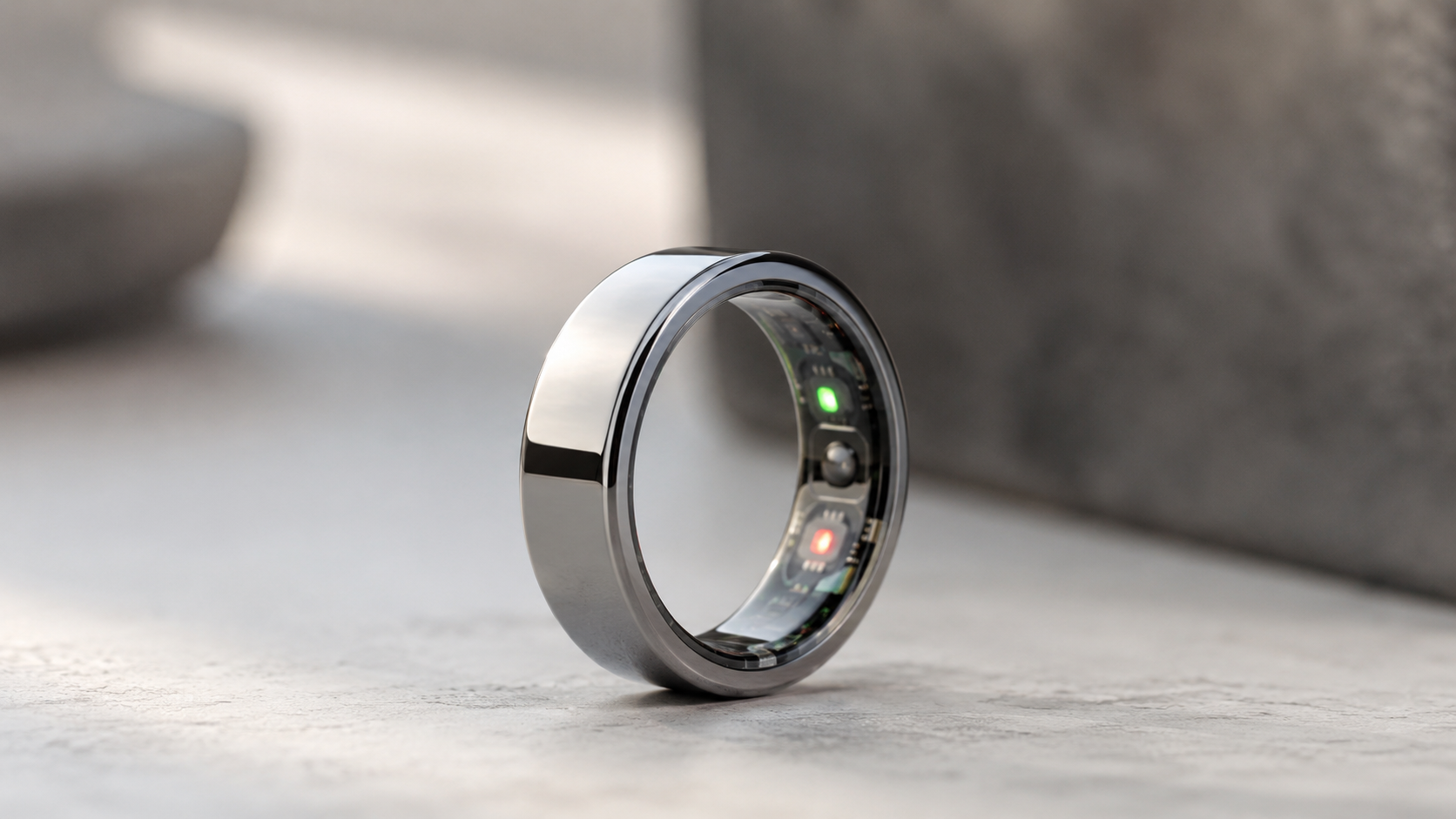
Score every shortlisted supplier on the same weighted model so the decision is defensible to your team and your customers.
| Criterion | Suggested weight | What you are scoring |
|---|---|---|
| Engineering and customization depth | 25% | Firmware, app, sensor configuration, structural design, willingness to scope custom work |
| Quality systems and sample performance | 25% | QC stages, AQL approach, sample validation results, golden sample discipline |
| Compliance support | 15% | Clarity on company-level support versus model-level evidence; documentation responsiveness |
| Communication and project management | 15% | Response quality, engineering access, change control, documentation habits |
| Commercial terms | 20% | MOQ logic, tooling and NRE structure, lead-time realism, payment terms, IP and ownership clauses |
Weights should reflect your business. A startup launching a private label smart ring on an existing platform should weight commercial terms and communication higher; a brand commissioning a custom smart ring should weight engineering and quality higher.
Before signing, confirm in writing: MOQ for your selected configuration, sample and mass production lead times, AQL and acceptance criteria, certification scope and certificate-holder arrangements, firmware and app ownership, source-code and OTA authority if relevant, raw data access, tooling ownership and exclusivity. These are contract matters, not catalogue matters, and they should be defined in the signed project agreement.
The Sample-to-Mass-Production Gate
Vetting does not end at supplier selection. Use a formal gate before releasing a bulk smart ring order.
- Golden sample signed and stored by both parties.
- Final BOM and firmware version frozen and documented.
- Sample validation results reviewed against agreed criteria, including fit across sizes and battery under your sampling settings.
- Water-resistance test specification and sampling plan agreed.
- Certification scope confirmed for the destination market, with documents requested for the exact model.
- App, SDK and data access confirmed in writing where applicable.
- Packaging, labels, barcodes and traceability format approved.
- Pilot run quantity, inspection plan and acceptance criteria agreed.
- Change-control process defined for any post-approval modification.
If any item is open, the correct decision is usually to hold the bulk order and close the gap, not to proceed on verbal assurance.
Pineeon Manufacturer-Side Recommendation
From the manufacturing side, the buyers who experience the fewest surprises are not the ones who negotiate the hardest on unit price. They are the ones who define the project before requesting a quotation: ring sizes, sensor set, app route, target markets, packaging and expected volume. That definition lets a smart ring manufacturer quote against a real configuration instead of a generic platform, and it exposes cost and lead-time drivers early.
Certification documentation, testing and compliance-support capabilities vary by supplier and project. Confirm the exact scope, responsible parties and available records in writing before relying on them.
Finally, put ownership on the table early. Firmware ownership, source-code access, OTA authority, app rights, raw data access and tooling ownership are project- and contract-specific. Discussing them during vetting is normal and protects both sides. You can review the platform options and customization routes on our smart ring OEM/ODM and private label page before starting a structured supplier conversation.
Frequently Asked Questions

Does an ISO 9001:2015 certificate prove a smart ring model is reliable?
No. ISO 9001:2015 certifies a quality management system at company level. It indicates that processes are defined and audited, but it does not certify the performance of a specific ring model. Model reliability still needs to be verified through sample validation, inspection records and agreed acceptance criteria.
How do I check certification without over-claiming?
Ask two questions separately: what certification or compliance support the supplier can provide, and what the exact model currently holds. Request the model-level document and confirm the certificate holder. Requirements vary by configuration and destination market, so confirm with the applicable laboratory, authority or qualified advisor before making public claims.
What should I test on a smart ring sample that a general checklist misses?
Optical contact across different finger sizes and users, battery behavior under your intended sampling settings, the exact water-resistance test specification, Bluetooth reconnection and firmware update behavior, and whether optional sensors such as ECG are actually present on the sample platform.
Can I use my own app with a supplier’s smart ring?
Often possible where SDK/API integration is technically and commercially supported, but it must be confirmed in writing. Raw sensor data access, cloud integration and source-code rights are separate matters and may require specific ODM contract terms.
What MOQ should I expect for a private label smart ring?
MOQ depends heavily on customization level. Stock private label on an existing platform generally carries the lowest minimum, while a fully custom ring with new tooling, dedicated firmware and a dedicated app carries the highest. Ask each supplier to explain what drives the number up for your configuration, and treat any figure as a reference until it is confirmed against the selected model and project in a written quotation.
When should I walk away from a supplier?
Walk away when the supplier cannot explain who owns the app or firmware, refuses to show the production area that would run your order, presents company-level certification as model-level proof, or will not put acceptance criteria, ownership and change control in writing.