Smart Ring Supplier Scorecard Systems: Trends to Watch in 2026
Published October 29, 2026 · Pineeon Insights
A smart ring supplier scorecard is a weighted decision table that converts supplier answers, documents and sample evidence into comparable scores. It exists to stop procurement teams from choosing a vendor on price and a polished catalog alone. For smart rings, the scorecard has to cover more than factory paperwork: optical sensor validation, battery and water-resistance documentation, firmware and app ownership, ring sizing and fit handling, and certification planning all sit inside the product decision.
This guide gives you a working framework: dimensions, example weights, scoring bands, red-flag thresholds, and the documents to request per criterion. It also explains which scorecard rows are gaining weight in 2026 and why. Treat the weights as a starting template, not a universal standard — your market, channel and risk tolerance should move them.
Why a generic supplier scorecard fails for smart rings
Most supplier scorecards were built for parts or simple consumer goods. They score price, lead time, quality system, communication and financial stability. Those rows still matter, but they miss the failure modes that actually hurt a smart ring program:
- Sensor contact and fit. A ring that fits poorly produces poor optical signal regardless of the PPG chip inside. Sizing kits, sizing guidance and mechanical tolerances are part of the product, not an accessory.
- Battery versus feature trade-offs. Ring size constrains internal space and battery capacity. Higher sampling frequency and additional sensors can reduce battery life. A supplier that quotes battery life without stating the test conditions is giving you a number, not evidence.
- Firmware and app ownership. Who owns the firmware, who controls OTA updates, and whether raw sensor data is accessible are contract questions that must be scored before the sample stage, not after.
- Certification planning. Radio, battery and water-resistance claims interact. A supplier that treats CE, FCC and RoHS as a last-minute paperwork task creates schedule risk.
The scorecard should therefore mix commercial rows with engineering-evidence rows. The next section sets out a structure you can copy into a spreadsheet.
The scorecard structure: dimensions, example weights and scoring bands

Use a 1–5 scoring band per criterion, then multiply by the weight. A five means documented evidence exists and has been reviewed; a one means the supplier could not provide evidence or gave inconsistent answers. Do not award a four or five on verbal assurance alone.
| Dimension | Example weight | What is actually scored | Evidence to request |
|---|---|---|---|
| Quality management system | 10% | Certified QMS, incoming and in-process inspection, final and outgoing inspection, AQL agreement | ISO 9001:2015 certificate and scope; QC flow description; sample inspection records |
| Sensor and PPG validation | 15% | How heart rate, SpO2 and sleep-related functions are validated; test conditions; fit sensitivity | Validation protocol summary; comparison data against a reference device; known limitations |
| Battery and power documentation | 10% | Capacity by ring size, test conditions, charging time, power-saving modes | Battery test report with conditions; charging specification; firmware sampling assumptions |
| Water resistance | 8% | Claimed rating, test method, restrictions, model-specific verification | Test report or declaration per model; restriction list (hot water, sauna, diving) |
| Certification documentation, testing and compliance-support capabilities vary by supplier and project. Confirm the exact scope, responsible parties and available records in writing before relying on them. | 15% | Customization depth, SDK/API availability, raw data access, OTA authority, ownership terms | Written scope matrix; sample SDK documentation; draft contract clauses on ownership |
| Sizing and fit handling | 7% | Size range, sizing kit availability, tolerance control, return-rate mitigation | Size chart; sizing kit sample; mechanical tolerance drawing |
| Certification planning | 10% | CE, FCC, RoHS planning support, documentation readiness, certificate-holder arrangements | Compliance plan per target market; document checklist; statement of who holds certificates |
| Commercial terms | 10% | MOQ by customization level, sample cost, tooling ownership, payment terms | Quotation with MOQ tiers; tooling ownership clause; sample fee schedule |
| Lead time and capacity transparency | 8% | Sample and mass-production lead times, seasonality disclosure, scheduling assumptions | Lead-time table with assumptions; capacity statement tied to your forecast |
| Communication and project management | 7% | Response quality, engineering access, escalation path, documentation discipline | Named contacts; sample project plan; meeting cadence proposal |
These weights sum to 100%. Adjust them by project type: a first-time private label buyer with an existing public-mold platform should raise commercial terms and lower firmware scope; a brand commissioning a custom PCBA and dedicated app should do the reverse.
How to score each criterion objectively
The scorecard only works if scoring is repeatable. Use the same questions, the same document requests and the same reviewer for every supplier. A practical procedure:
- Send a structured request, not a conversation. Ask each supplier to answer in writing against the same template. Verbal answers during a call are noted but not scored.
- Score evidence, not enthusiasm. A supplier that says “yes, we can customize the app” scores a two until a written scope matrix shows which modules, which platforms and what ownership terms apply.
- Separate company capability from model capability. A factory may be ISO 9001:2015 certified and able to support applicable CE, FCC and RoHS applications, but that does not mean every ring model already holds every certificate. Score the model-specific evidence separately.
- Record the gap, not just the score. For every criterion below four, write the missing evidence and the date it was promised. This becomes your sample-stage action list.
- Run a second reviewer on the top three suppliers. Independent scoring exposes criteria where one reviewer was persuaded by presentation quality.
For sensor validation, ask what the reference device was, what test conditions applied (skin tone range, motion, temperature, fit), and what the supplier considers a known limitation. A supplier that cannot describe limitations has probably not tested enough to find them.
Red-flag thresholds: when a score should stop the process
Weighted totals can hide fatal weaknesses. Apply hard thresholds before you rank suppliers by total score:
- Any score of one on sensor validation, battery documentation or certification planning should trigger a hold. These are not rows you can compensate for with a low price.
- No written firmware/app scope matrix before sample approval is a red flag for any project requiring app customization or data access.
- Certification claims without a named certificate holder and model scope should be treated as unverified. Ask for the certificate and check that the model and configuration match your project.
- MOQ or lead time presented as fixed before your specification is confirmed is a sign the supplier is quoting from a template rather than evaluating your project.
- Water-resistance claims without a test method should be scored at two or below, regardless of the marketing language.
These thresholds are a screening device, not a legal standard. Your quality agreement and contract should define the actual acceptance criteria.
2026 weighting shifts: which rows are gaining weight
Scorecard weights are not static. Based on general market direction, several rows are carrying more weight in 2026 buyer evaluations. These are industry considerations, not guarantees about any supplier.
Compliance documentation readiness
Buyers are asking earlier and in more detail about how CE, FCC and RoHS planning will be handled, who holds the certificate, and what happens when the target market changes. The shift is from “do you have certificates?” to “show me the documentation plan for this model and this market.” Suppliers that can produce a document checklist and a testing plan before tooling score higher.
Firmware and app ownership clarity
As more brands build subscription or data-driven services around ring data, ownership of firmware, OTA authority and raw sensor data access have moved from legal footnotes to scorecard rows. A supplier that cannot clearly state what is customer-owned, what is licensed and what is negotiated per contract creates downstream risk.
Sustainability and packaging claims
Packaging and material claims are being scrutinized more closely in some markets. Buyers are adding rows for packaging customization discipline, material declarations and the supplier’s willingness to document claims rather than repeat them. Score what can be documented.
Lead-time transparency
Buyers increasingly score whether a supplier discloses assumptions behind lead times — tooling, material availability, seasonality — rather than a single number. A supplier that explains the drivers behind its lead time and ties them to scheduling assumptions is more useful than one that promises a fixed date before the BOM is frozen.
Fit and sizing support
As ring programs scale, return rates and user experience push sizing kits and fit guidance higher on the scorecard. This is a product-quality issue disguised as logistics.
From scorecard to shortlist and sample gates
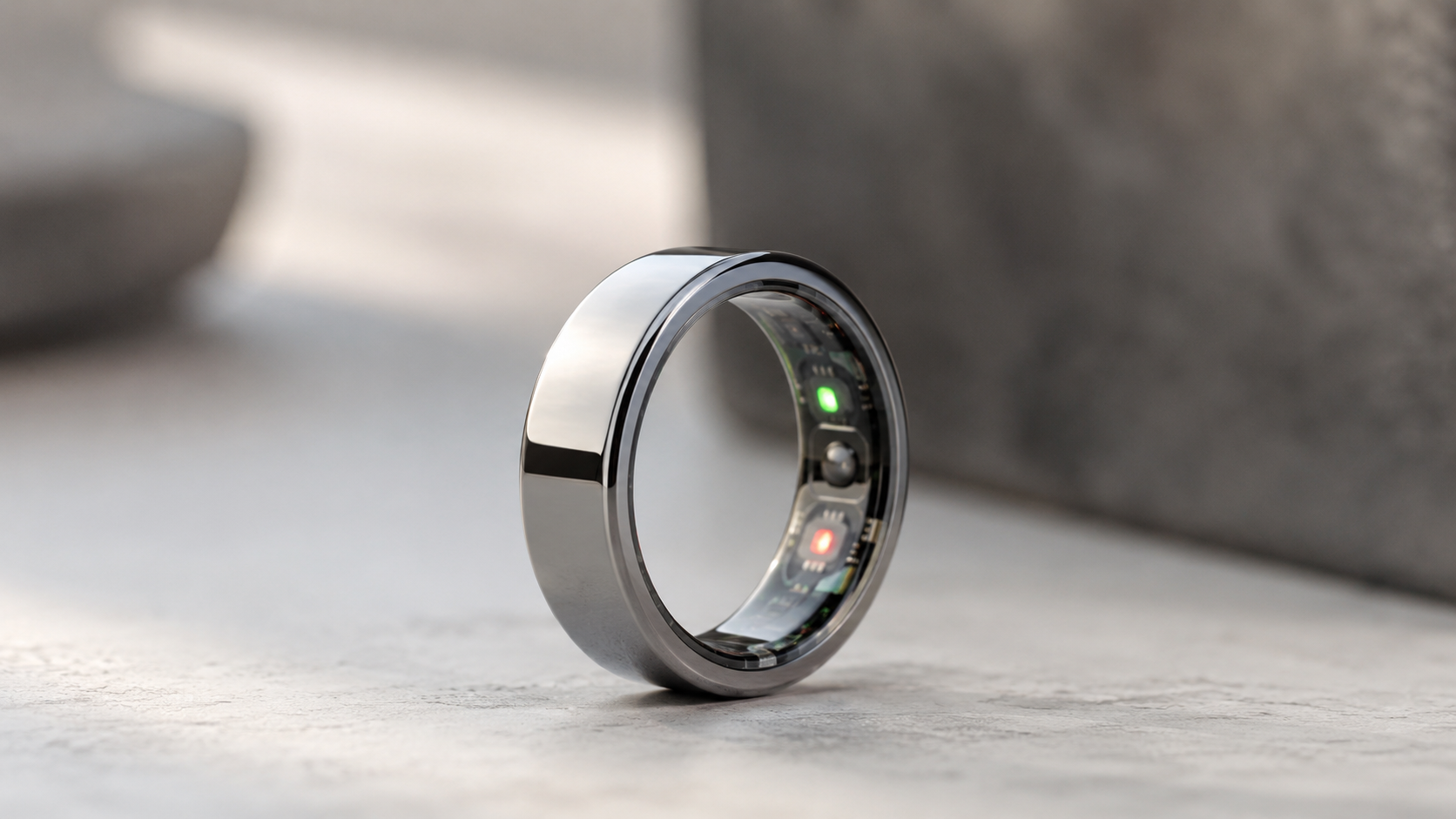
A scorecard is only useful if it drives the next decision. A practical sequence:
- Rank by weighted total, then apply red-flag thresholds. Remove suppliers with fatal gaps before comparing totals.
- Shortlist two to three suppliers for sample development. Keep one backup if your forecast is large or your timeline is tight.
- Define sample gates. At the sample stage, require validation of heart rate, SpO2, sleep-related functions, battery, water resistance, Bluetooth and app connection. Where required, proceed to EVT/DVT or pilot validation.
- Re-score after the sample. The sample is the strongest evidence you will get before mass production. Update sensor, battery, fit and app rows with observed results.
- Approve a golden sample before mass production and attach it to the quality agreement.
This gate structure keeps the scorecard honest: a supplier that scored well on documents but poorly on the sample should not advance on the strength of the original total.
Pineeon Manufacturer-Side Recommendation
Certification documentation, testing and compliance-support capabilities vary by supplier and project. Confirm the exact scope, responsible parties and available records in writing before relying on them.
That company-level capability should be scored as a row, not treated as proof that a specific ring model already holds a specific certificate. Final certification scope, required documents, testing scope and approval depend on the specific product model, configuration, target market, laboratory and applicable authority. Pineeon does not guarantee final certification or regulatory approval.
Certification documentation, testing and compliance-support capabilities vary by supplier and project. Confirm the exact scope, responsible parties and available records in writing before relying on them.
Buyer checklist: documents to request per scorecard row
- ISO 9001:2015 certificate and scope statement
- QC flow description covering incoming, in-process, final and outgoing inspection, plus agreed AQL
- Sensor validation protocol summary and known limitations
- Battery test report with conditions and capacity by ring size
- Water-resistance test report or declaration per model, with restrictions
- Firmware and app scope matrix, including SDK/API availability and ownership terms
- Raw sensor data access statement, if your product requires it
- Ring size chart, sizing kit sample and tolerance drawing
- Certification plan per target market, with certificate-holder arrangement
- Quotation with MOQ tiers by customization level and tooling ownership clause
- Lead-time table with assumptions and seasonality disclosure
- Named project contacts and escalation path
Score each item only when the document has been received and reviewed. A promised document is a gap, not a score.
For product specifications, available configurations and OEM/ODM project information, see the Smart Ring product page.
FAQ

How many suppliers should I score before shortlisting?
Five to eight is usually enough to see the market range without exhausting your team. Score all of them on the same template, then shortlist two to three for samples.
Should price be a separate scorecard or a weighted row?
Keep price as a weighted row (around 10% in the template above) and review the quotation separately for cost drivers. A low unit price with unclear tooling ownership or certification scope is not comparable.
How do I score firmware customization if I do not have an engineering team?
Ask for a written scope matrix and a sample SDK document. Score the clarity and completeness of the documentation, not your ability to evaluate the code. If raw data access matters, require a written statement before the sample stage.
Can a supplier’s ISO 9001 certificate cover my product’s certification?
No. ISO 9001:2015 is a quality management system certification. Product certification such as CE, FCC or RoHS is model- and market-specific and must be verified separately for the exact configuration you are buying.
How often should the scorecard weights change?
Review weights at least annually and whenever your channel, target market or product architecture changes. A first private label order and a full custom OEM program should not use identical weights.
Next step
Build the scorecard before you request quotations. Send the same document request to every candidate, score only what you receive, and apply red-flag thresholds before ranking. If you are planning a smart ring project and want to discuss which rows apply to your configuration, contact Pineeon with your target market, ring size range, sensor requirements and app scope so the project can be evaluated against your actual specification.