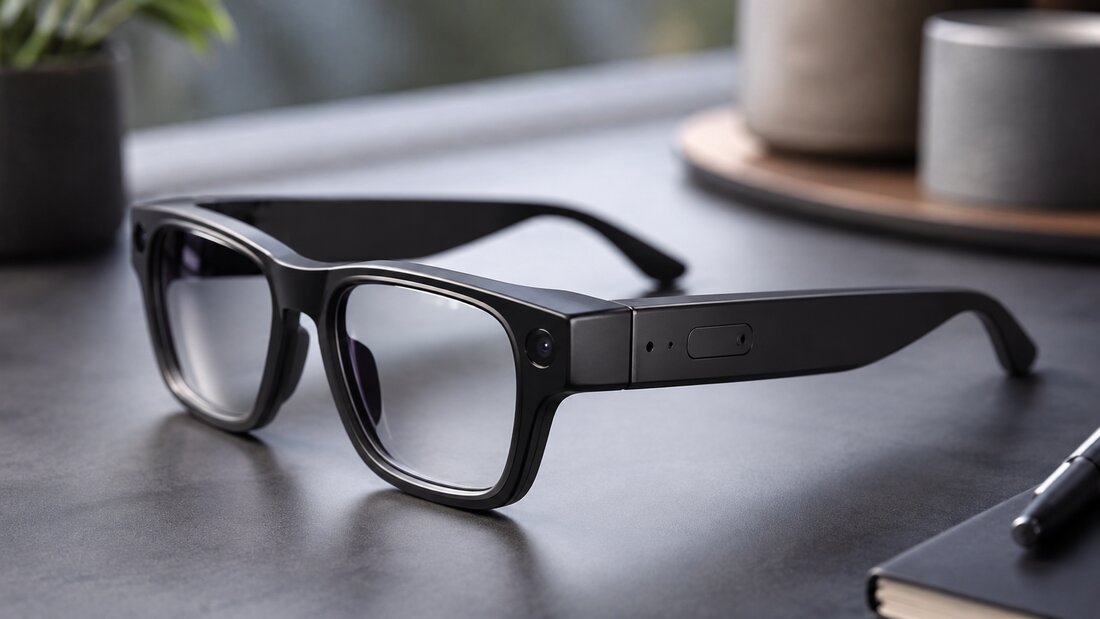
AI Glasses Wholesale Pricing Strategy for Retailers
Published October 26, 2026 · Pineeon Insights
A wholesale AI glasses quote is not a single number to compare against three other numbers. It is a bundle of decisions — product family, chipset architecture, firmware scope, packaging, testing documentation, Incoterm and payment terms — and each decision moves the unit price. Retailers who treat the quote as a price tag usually discover the real cost after the purchase order is signed. Retailers who treat it as a cost stack negotiate from a position of knowledge.
This guide is written from the manufacturer side of the table. It explains how wholesale AI glasses pricing is typically structured, which variables a buyer can actually influence, and how to build a retail margin plan that survives markdowns, returns and after-sales cost. It deliberately avoids quoting specific prices, MOQs or lead times as universal facts, because those are project-dependent and must come from a current quotation for a defined configuration.
Why “AI Glasses” Is Not One Price Category
The first pricing mistake is benchmarking an audio-only pair against a camera pair or an AR display pair. These are three different product families with materially different bills of materials, software effort and production yield risk.
| Family | Core architecture | What drives cost up | Typical buyer profile |
|---|---|---|---|
| Audio AI glasses | Open-ear speakers, microphone array, Bluetooth audio, voice assistant wake-up | Mature audio architecture; cost is dominated by frame, acoustics and firmware polish rather than compute | Entry-level private label, promotional programs, audio-first brands |
| Camera AI glasses | Camera + microphone array + AI processing | Image sensor, ISP or AI SoC, thermal and power design, camera privacy compliance, deeper app integration | Mainstream consumer brands, translation and capture use cases |
| AR display glasses | Waveguide and/or MicroLED display modules with optical calibration | Optical module cost, calibration time, optical yield loss, longer development cycle | Enterprise, industrial, navigation and AR solution providers |
Manufacturer-side reasoning: optical yield is the hidden cost line in AR display projects. A factory can quote an attractive unit price and still lose money on rework, which is why serious suppliers build yield assumptions into the quote rather than absorbing them. When an AR quote looks unusually low relative to other AR quotes, ask what yield assumption and what calibration standard sit behind it.
The Cost Stack: What a Wholesale AI Glasses Quote Should Contain
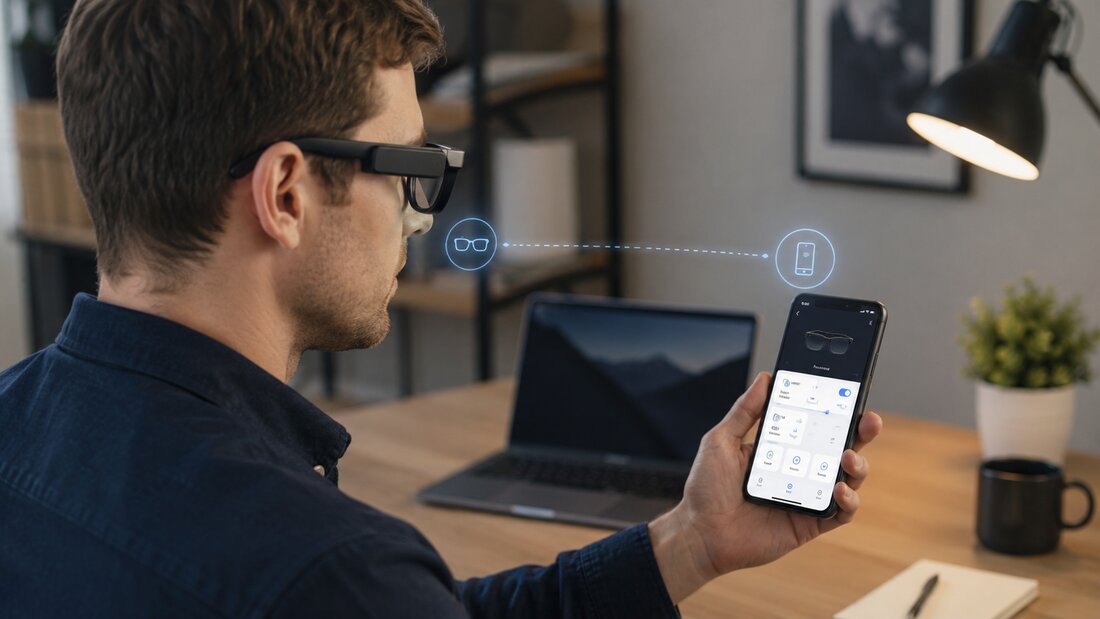
Ask any AI glasses wholesaler or manufacturer to break the quote into verifiable buckets. You will not receive exact component prices — no supplier discloses those — but you should be able to see which buckets are included and which are excluded. A quote that cannot be decomposed is a quote you cannot audit.
- Frame and mechanical assembly. Material choice (acetate, titanium alloy, TR90 where supported), hinge and temple design, nose pad system, and whether prescription-lens adaptation is included or treated as an accessory.
- Optics and sensing. Camera module and lens, waveguide or display module for AR, IMU, ambient light sensing. This is the bucket where configuration choices create the widest price spread.
- Compute and connectivity. AI SoC selection, audio coprocessor, Bluetooth architecture, memory and storage. A dual-chip architecture (AI SoC plus low-power audio coprocessor) changes both BOM and firmware effort.
- Battery and power management. Cell capacity, charging case inclusion, and the engineering effort behind power scheduling between processors.
- Firmware and application scope. Standard firmware versus UI customization versus custom AI features, cloud integration or customer-developed app using SDK/API access.
- Branding and packaging. Logo application, color, retail box design, manual localization, accessory set.
- Testing and compliance documentation. Incoming, in-process, final and outgoing inspection scope; reliability tests; technical documentation prepared for applicable CE, FCC and RoHS certification or compliance applications.
- Logistics and terms. Incoterm, freight mode, consolidation, and who bears insurance and destination charges.
Two quotes that differ by a wide margin are usually not competing on the same stack. One may exclude packaging customization, another may exclude compliance documentation support, a third may assume a simpler firmware baseline. Normalize the stacks before you compare the totals.
How Configuration Choices Move the Wholesale Tier
Volume is only one lever on wholesale AI glasses pricing. Configuration is often the larger one. The following shifts are general industry patterns, not fixed multipliers, and each must be confirmed against a specific quotation.
- Audio-only to camera. Adding imaging introduces sensor cost, ISP or AI SoC cost, thermal design, additional firmware and app work, and privacy-related compliance review for camera-enabled devices in the destination market.
- On-device versus cloud processing. On-device AI inference raises silicon and power requirements; cloud-dependent functions reduce on-device compute but add backend, latency and data-handling considerations. Neither is automatically cheaper at the retail level once service costs are counted.
- Standard firmware versus deep customization. Deep firmware work, custom translation models or algorithm adaptation normally carries non-recurring engineering (NRE) charges and longer engineering lead time. NRE is amortized across the order quantity, so the same engineering scope produces a very different per-unit contribution at a small order versus a large one.
- Tooling and structure. Reusing an existing mold keeps tooling out of the unit price. A new structure or mainboard spreads tooling and validation cost across the program.
- Packaging customization. Custom retail packaging carries design, print setup and minimum print-run effects. It is a small per-unit line at high volume and a noticeable one at low volume.
Practical consequence: if your target retail price is fixed by your channel, negotiate configuration before you negotiate unit price. Removing a feature you cannot merchandise is usually worth more than a percentage point on the unit cost.
Volume Tiers, MOQ Logic and Landed Cost
Per-unit price typically steps down across quantity bands, but the steps are not arbitrary. They reflect setup amortization (tooling, fixtures, programming, packaging print setup), material purchasing tiers, line changeover time and yield learning. This is why a supplier may decline to quote a band that sits just below a natural break point — the setup cost per unit becomes commercially unworkable.
MOQ should be read as a function of architecture, not as a negotiating posture. In the current Pineeon internal reference framework, selected existing white-label AI glasses may start from approximately 100 pieces, standard OEM projects commonly begin from approximately 200–500 pieces depending on model, ODM joint development is referenced at roughly 1,000–3,000 pieces, and full-custom AR waveguide projects at approximately 3,000–5,000 pieces or more. These are reference ranges only; final MOQ depends on the selected platform and customization scope and must be confirmed in the official quotation.
Landed cost is where many retail margin plans break. Model it explicitly:
- Unit price at your confirmed quantity band, with the Incoterm stated.
- Freight and insurance for the chosen mode — air for launch velocity, sea for margin.
- Duties and taxes at the destination, based on the correct product classification for your market. Confirm classification with your customs broker; it is not a supplier decision.
- Compliance documentation cost for your market and model, including any testing scope your channel requires.
- Inspection and sampling if you use a third-party inspector.
- Inland handling and warehousing to your fulfillment point.
- Payment and currency cost — letter of credit fees, deposit financing, FX spread.
Only after these lines are added should you compare landed cost against your planned selling price. A lower FOB price with a slower freight mode and a stricter payment term can be the more expensive option.
Building a Retail Margin Plan Before You Commit
Wholesale price should be evaluated against sell-through, not against unit cost alone. Use a worksheet with these rows and fill it before you request the final quotation:
| Worksheet line | What to enter | Why it matters |
|---|---|---|
| Target retail price | Price the channel will accept for this feature set | Anchors everything else; do not derive it from cost |
| Channel margin | Distributor or marketplace margin expectation | Determines the maximum landed cost you can carry |
| Markdown reserve | Allowance for promotional pricing during the season | AI glasses are a fast-moving category; launch pricing rarely holds |
| Returns allowance | Expected return rate for fit, comfort and expectation mismatch | Fit-related returns are a real cost in eyewear-adjacent products |
| After-sales cost | Spare parts, replacement units, warranty handling labor | Warranty terms and spare-part availability are quote variables |
| Marketing and content | Creative, sampling to creators, retail assets | Often omitted, always spent |
| Landed cost | From the model above | The number the margin must clear |
If the plan only works at full price with zero returns, the wholesale price is not the problem — the configuration or the channel is. Go back to the product family decision before renegotiating.
Questions That Validate a Quoted Price

Use this checklist when reviewing any quote from an AI glasses distributor or manufacturer. Each question has a commercial consequence if left unanswered.
- What exactly is included in the unit price — packaging, accessories, charging case, manual localization, compliance documentation support?
- Which Incoterm applies, and what is excluded from it?
- What is the price validity window, and what triggers a price change — component cost, exchange rate, order quantity, specification change?
- Which currency is quoted, and who bears FX movement between quotation and payment?
- What are the payment terms — deposit percentage, balance trigger, accepted instruments?
- Is the sample price consistent with the mass-production price for the same specification, and what changes between them?
- What is the inspection standard and AQL for this order, and which reliability tests are included versus optional?
- Which certification or compliance documentation is prepared for my model and market, and who is the certificate holder?
- What is the reorder price logic — does the second order reset to the same tier, and does packaging setup repeat?
- What spare-part and warranty support is included, and at what cost after the warranty period?
On certification specifically: a supplier’s factory-level capability to support applicable CE, FCC and RoHS certification or compliance applications is not evidence that a given model already holds those approvals. Final certification scope, required documents, testing scope and approval depend on the specific product model, configuration, target market, laboratory and applicable authority. Confirm the model-level documentation before you print compliance marks on retail packaging.
Negotiation Levers Beyond Unit Price
Experienced buyers extract more value from terms than from a percentage point. Consider these levers, all project-dependent:
- Payment terms. A modest deposit with balance against shipping documents improves cash conversion more than a small unit discount.
- Price validity. A longer validity window protects you against component volatility; a shorter one may come with a better price. Match it to your purchase order timing.
- Volume commitment structure. A committed annual volume with scheduled releases can secure tier pricing without warehousing the entire quantity at once.
- Packaging customization staging. Use standard packaging for the first production run and custom packaging on reorder to reduce first-order setup cost.
- Reorder pricing. Agree in writing how the second and third orders are priced, including whether tooling or NRE is treated as fully amortized.
- Sample fee credit. Sample fees may be credited against a qualifying bulk order according to the commercial agreement — confirm the qualifying threshold.
- Specification freeze. A written freeze point prevents mid-production changes that quietly reprice the order.
What not to negotiate: inspection scope, compliance documentation and battery or optical safety testing. Cutting those lines transfers risk to you, not to the supplier.
Pineeon Manufacturer-Side Recommendation
Pineeon is a private label Smart Wearable, Computer Peripheral & AI Hardware OEM/ODM manufacturer based in Shenzhen, China, operating since 2000 and ISO 9001:2015-certified, serving brands and buyers in 40+ countries. From that position, the recommendation to retailers is to sequence the decision correctly: define the product family first, then the configuration, then the volume band, and only then discuss price.
In practice this means bringing three things to a quotation request: the destination market, the intended retail price band, and a clear statement of which functions are must-have versus nice-to-have. Suppliers can then propose a configuration that fits the price band rather than quoting a flagship specification you cannot merchandise. Pineeon evaluates customer requirements before recommending a project approach, and OEM/ODM options depend on the level of hardware, firmware, software, tooling, branding and packaging customization — which is precisely why two buyers with the same target retail price can receive different quotes.
Whether a given project can be supported for CE, FCC or RoHS certification or compliance applications, and what technical documentation or testing support may be available, must be confirmed for the specific product model, configuration and destination market with the applicable authority, qualified laboratory or regulatory advisor. Final certification approval is not guaranteed. For buyers who want to see how the product families are structured before requesting pricing, the AI glasses OEM/ODM product page is the right starting point.
Implementation Sequence
- Lock the product family and the must-have function list.
- Request quotes on two configurations, not one, so you can see the cost of each feature.
- Normalize the cost stacks and confirm inclusions and exclusions in writing.
- Build the landed-cost model and the margin worksheet.
- Order samples and test fit, audio, camera or display performance against your retail claims.
- Confirm model-level compliance documentation for your market.
- Negotiate terms, freeze the specification, and place the order against a written quality plan.
Final specifications, MOQ, pricing, lead time, certification scope, customization capability, software capability and commercial terms are subject to the selected product model, project requirements, technical evaluation and official quotation. Treat every figure in this article as a framework for asking better questions, not as a substitute for a confirmed quote.
Related Pineeon Resources