12 Things to Know About Smart Ring Factory Comparison Criteria
Published October 26, 2026 · Pineeon Insights
Most smart ring factory comparisons fail for a simple reason: buyers compare marketing pages instead of evidence. Two suppliers can both claim “OEM support,” “quality control” and “CE/FCC compliance,” yet one can show a documented sample validation protocol and the other cannot. The difference rarely appears in a quotation. It appears when you ask for proof.
This guide gives you 12 comparison criteria for shortlisting smart ring factories, grouped into capability, quality and compliance, customization, and commercial terms. For each criterion, it explains what to request, what a weak answer looks like, and how to score it. It is written for brands, importers, distributors and procurement teams comparing OEM, ODM or private label smart ring suppliers before committing to samples or tooling.
One framing note before the criteria: factory capability and model-level capability are not the same thing. A factory may support CE, FCC and RoHS application work for customer projects without every model already holding every certificate. Treat certification as a model-, configuration- and market-dependent question, and verify it per project.
Why a structured comparison beats a quotation comparison
Quotations are easy to compare and easy to misread. A lower unit price can hide a narrower sensor stack, a smaller battery constrained by ring size, a shorter validation cycle, or certification work that has not been scoped. A higher price can reflect tooling amortization, a dedicated PCBA, firmware customization or packaging development that another quote simply excludes.
A structured comparison forces each supplier to answer the same questions in the same format. It also creates a record you can use for internal procurement approval. When a finance or compliance reviewer asks why you selected a factory, a scored comparison with evidence notes is far stronger than a summary email.
The 12 criteria below are deliberately evidence-oriented. For each one, the question is not “can you do this?” but “what can you show me?”
The 12 smart ring factory comparison criteria

Capability criteria (1–4)
1. Smart ring experience versus general wearable experience. A factory that makes smart watches or bands is not automatically a smart ring factory. Rings are mechanically constrained: internal space limits battery capacity, antenna design is tighter, and sensor contact depends on fit. Ask for the specific ring platforms the factory has worked on, the ring size range it can support, and how it handles sensor-to-skin contact across sizes. Weak answer: general wearable claims with no ring-specific detail.
2. Sensor architecture and component transparency. Ask which PPG, IMU and optional ECG architectures are available, and whether the quoted components are reference options or confirmed BOM items. A credible factory will distinguish the two. It should also explain how sampling frequency, LED configuration and algorithm choices affect battery life. Weak answer: a component list presented as a guaranteed production BOM without model confirmation.
3. Engineering workflow from sample to mass production. Ask how the factory moves from sample to EVT/DVT or pilot validation, who approves the golden sample, and what documentation accompanies each stage. A factory that cannot describe its stage gates is likely to improvise when issues appear. Weak answer: “we will send samples and then produce.”
4. Firmware and app capability boundary. Clarify what is standard firmware, what is parameter adjustment, what is algorithm integration, and what requires separate contract terms. Ask about SDK/API availability, raw sensor data access and OTA authority. These are project- and contract-specific, so a factory that promises everything without conditions is a warning sign, not a strength.
Quality and compliance criteria (5–8)
5. Quality management system and process coverage. Ask for the quality system certificate and how IQC, IPQC, FQC and OQC are applied to ring production. Request the AQL reference used for outgoing inspection and how acceptance criteria are documented. A credible factory should be able to describe its inspection stages and the acceptance criteria it applies, with the exact AQL and criteria confirmed per project quality agreement. Weak answer: “we have strict quality control” with no process names or acceptance criteria.
6. Test protocol for ring-specific failure modes. Rings fail in specific ways: charging contact issues, water ingress, sensor drift, battery degradation and Bluetooth dropouts. Ask for the test protocol covering these areas and whether results are recorded per batch. Weak answer: a generic “100% tested” claim with no test list.
7. Certification support scope and ownership. Ask which markets the factory can support for CE, FCC and RoHS application work, what documentation and testing support it provides, and who holds the certificate. Confirm that final certification scope depends on the model, configuration, target market, laboratory and authority. Weak answer: “all products are CE and FCC certified” without model-level evidence or certificate-holder clarity.
8. Traceability and batch documentation. Ask how units are traced from incoming materials to outgoing cartons, and what labels or records accompany each batch. Traceability matters most when a field issue appears and you need to isolate affected units. Weak answer: no batch labeling or record retention policy.
Customization criteria (9–10)
9. Customization scope by project type. Distinguish private label (logo, packaging, app skin), ODM (selected hardware and firmware configuration on an existing platform) and OEM (dedicated tooling, PCBA or sensor configuration). Ask which route the factory recommends for your volume and timeline, and what each route changes in MOQ, NRE and lead time. Weak answer: one customization story for every buyer.
10. App, packaging and branding execution. Ask what app customization levels are available (logo and theme, UI layout, functional modules, backend integration), what packaging options exist (standard color box, custom box, premium gift box, inserts, sizing kit), and how branding assets are approved before production. Weak answer: verbal confirmation with no artwork approval step.
Commercial criteria (11–12)
11. MOQ and lead-time logic. Ask for MOQ by project type and the drivers behind it: new mold, dedicated PCBA, firmware customization, dedicated app, material, color, packaging and certification scope. Ask for sample and mass production lead times separately, and how seasonality affects scheduling. Treat all values as reference ranges until confirmed in a quotation. Weak answer: a single MOQ number with no explanation of what changes it.
12. Commercial terms and IP clarity. Confirm tooling ownership, firmware and source-code ownership, OTA authority, exclusivity, data rights and certificate-holder arrangements in the signed agreement. These are contract questions, not brochure questions. Weak answer: “that is all included” without written terms.
Comparison scorecard: how to weight and rank factories
Use a 1–5 score per criterion, where 1 means no evidence, 3 means partial evidence, and 5 means documented evidence reviewed by your team. Weight the criteria according to your project type, then multiply and sum. The weights below are starting points, not fixed rules.
| Criterion | Private label weight | ODM weight | Full OEM weight |
|---|---|---|---|
| 1. Ring-specific experience | 15% | 15% | 10% |
| 2. Sensor architecture transparency | 5% | 10% | 15% |
| 3. Engineering workflow | 5% | 10% | 15% |
| 4. Firmware and app boundary | 5% | 10% | 10% |
| 5. Quality system and process | 15% | 10% | 10% |
| 6. Ring-specific test protocol | 10% | 10% | 5% |
| 7. Certification support scope | 10% | 10% | 5% |
| 8. Traceability | 5% | 5% | 5% |
| 9. Customization scope | 10% | 10% | 10% |
| 10. App and packaging execution | 10% | 5% | 5% |
| 11. MOQ and lead-time logic | 5% | 5% | 5% |
| 12. Commercial terms and IP | 5% | 5% | 5% |
Two practical rules keep the score honest. First, score only what you have seen, not what you have been told. Second, record the evidence next to each score so a colleague can audit the decision later. A factory that scores 4 on certification support should have a named document or process behind that score.
Evidence requests that separate strong factories from weak ones
The fastest way to compare factories is to send the same evidence request list to all shortlisted suppliers and compare responses side by side. A useful request list includes:
- Quality system certificate and scope statement.
- Process flow for IQC, IPQC, FQC and OQC, with acceptance criteria references.
- Ring-specific test list covering charging, water resistance, sensor function, battery and Bluetooth connection.
- Sample validation protocol and golden sample approval process.
- Certification support statement per target market, with document and testing support described.
- MOQ table by project type, with drivers explained.
- Sample and mass production lead-time ranges, with dependencies noted.
- Customization menu for app, packaging and branding.
- Draft terms covering tooling, firmware, data and certificate ownership.
Compare not only whether each item is answered, but how. A factory that answers with conditions and dependencies is usually more reliable than one that answers everything with “yes.” Conditions show that the factory understands where projects vary.
Red flags in smart ring factory comparisons
Certain answers should slow a comparison down or remove a supplier from the shortlist:
- Certification claimed for every model without model-level evidence or certificate-holder clarity.
- MOQ or lead time presented as fixed before the project scope is defined.
- Sensor components presented as confirmed BOM without model verification.
- Raw sensor data, source code or OTA authority promised without contract terms.
- No ring-specific test protocol, only general wearable claims.
- No golden sample or artwork approval step before mass production.
- Medical or diagnostic claims for consumer wellness features without regulatory evidence.
- Unwillingness to put ownership, exclusivity or data rights in writing.
None of these flags automatically disqualifies a factory. Each one, however, should trigger a follow-up question and a documented answer before you proceed.
How OEM, ODM and private label change the comparison
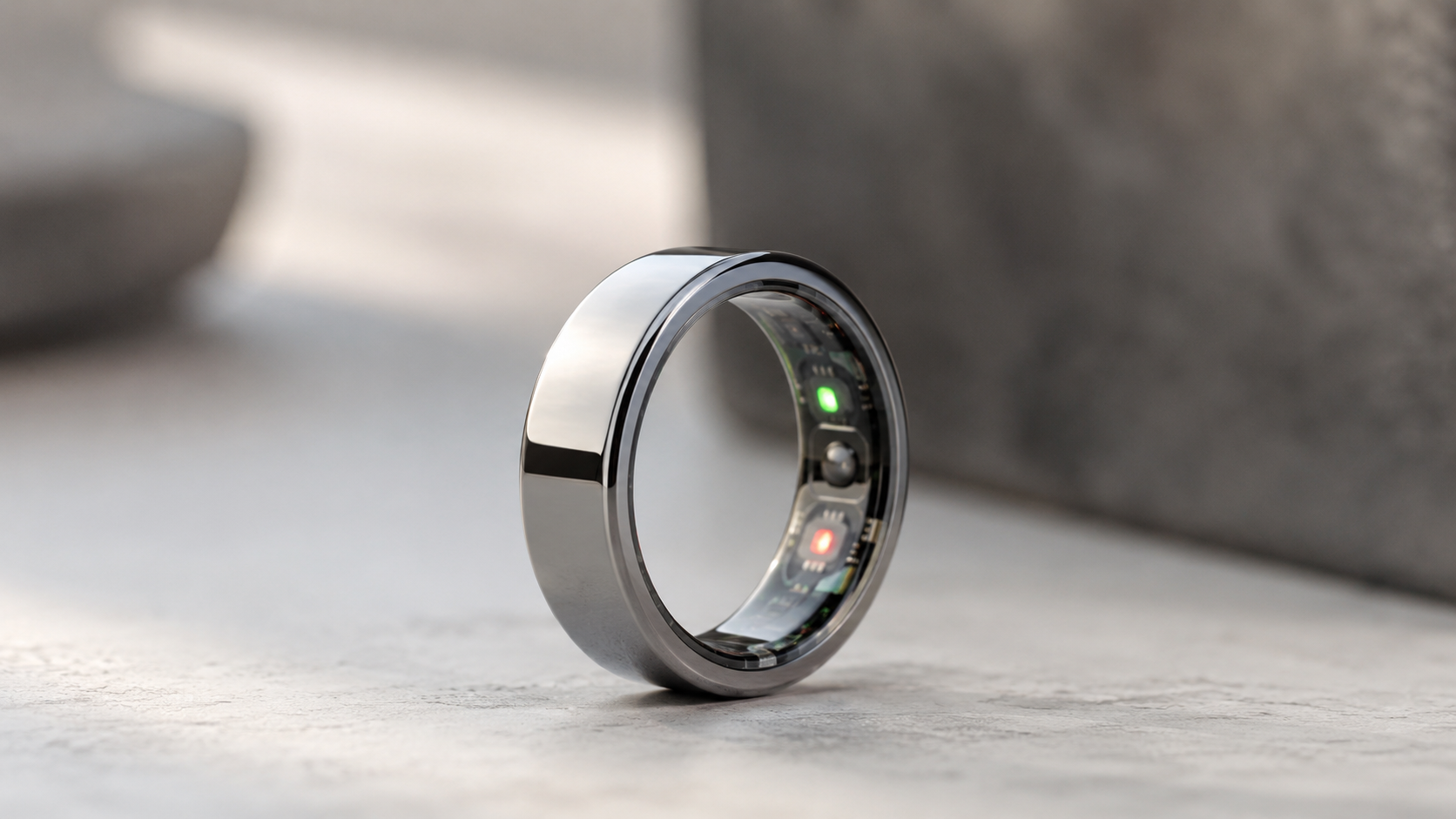
The same 12 criteria apply to every project type, but the weighting changes. In private label projects, quality system, test protocol, app and packaging execution and certification support usually matter most, because the hardware platform is largely fixed. In ODM projects, sensor architecture transparency and firmware boundary become more important, because you are selecting among existing platforms and need to understand what can be configured. In full OEM projects, engineering workflow, sensor architecture and commercial terms carry more weight, because tooling, PCBA and development risk are higher.
This is also where MOQ logic matters. Private label on an existing mold typically sits at the lower end of the range, while full custom OEM/ODM sits at the higher end. MOQ is driven by the selected model and project scope, including new mold, dedicated PCBA, firmware customization, dedicated app, material, color, packaging and certification scope. Small-quantity sampling may be possible on selected existing public-mold platforms. All MOQ and sampling quantities are reference ranges only and must be confirmed against the selected model and project in the official quotation.
Pineeon Manufacturer-Side Recommendation
From the manufacturing side, the most useful comparison question is not “which factory is best?” but “which factory has shown evidence for the criteria that matter most to this project?” Buyers who send a structured evidence request list usually get clearer answers, faster sample iterations and fewer surprises at mass production.
Certification documentation, testing and compliance-support capabilities vary by supplier and project. Confirm the exact scope, responsible parties and available records in writing before relying on them.
A practical recommendation: shortlist three to five factories, send the same evidence request list to all of them, score the responses with the weighted table above, and only then request samples. This sequence costs little and prevents the common mistake of falling in love with a sample before checking the process behind it. You can review Pineeon’s smart ring OEM/ODM and private label solutions as one input to that comparison.
Implementation steps for your next comparison
- Define your project type (private label, ODM or OEM) and target markets.
- Set weights for the 12 criteria based on that project type.
- Build a one-page evidence request list and send it to all shortlisted factories.
- Score responses 1–5 with evidence notes, not impressions.
- Remove or flag suppliers with unresolved red flags.
- Request samples only from the top two or three scored factories.
- Validate samples against a written protocol, including ring-specific failure modes.
- Confirm MOQ, lead time, certification scope and ownership terms in the quotation and contract before tooling or mass production.
Done this way, smart ring factory comparison becomes a repeatable procurement process rather than a series of sales conversations. The scorecard also gives you a defensible record for internal approval and a baseline for future supplier reviews.