Smart Ring Supplier Vetting Steps: What Startups Should Know
Published October 24, 2026 · Pineeon Insights
A startup buying smart rings for the first time usually has the same problem: the supplier conversation feels convincing, but the buyer has no structured way to tell a capable smart ring manufacturer from a trading company with a good website. The risk is not only a bad batch. It is money spent on tooling, app development and certification preparation before the product architecture is proven.
The practical answer is to vet in stages, and to make each stage a gate. You should not move to tooling until samples have been validated against your own use case. You should not move to bulk production until quality evidence and contract terms are in writing. This guide sets out that staged process from a manufacturer-side perspective, with the specific questions that separate a real smart ring factory from a supplier that only resells.
Why smart rings need a different vetting process
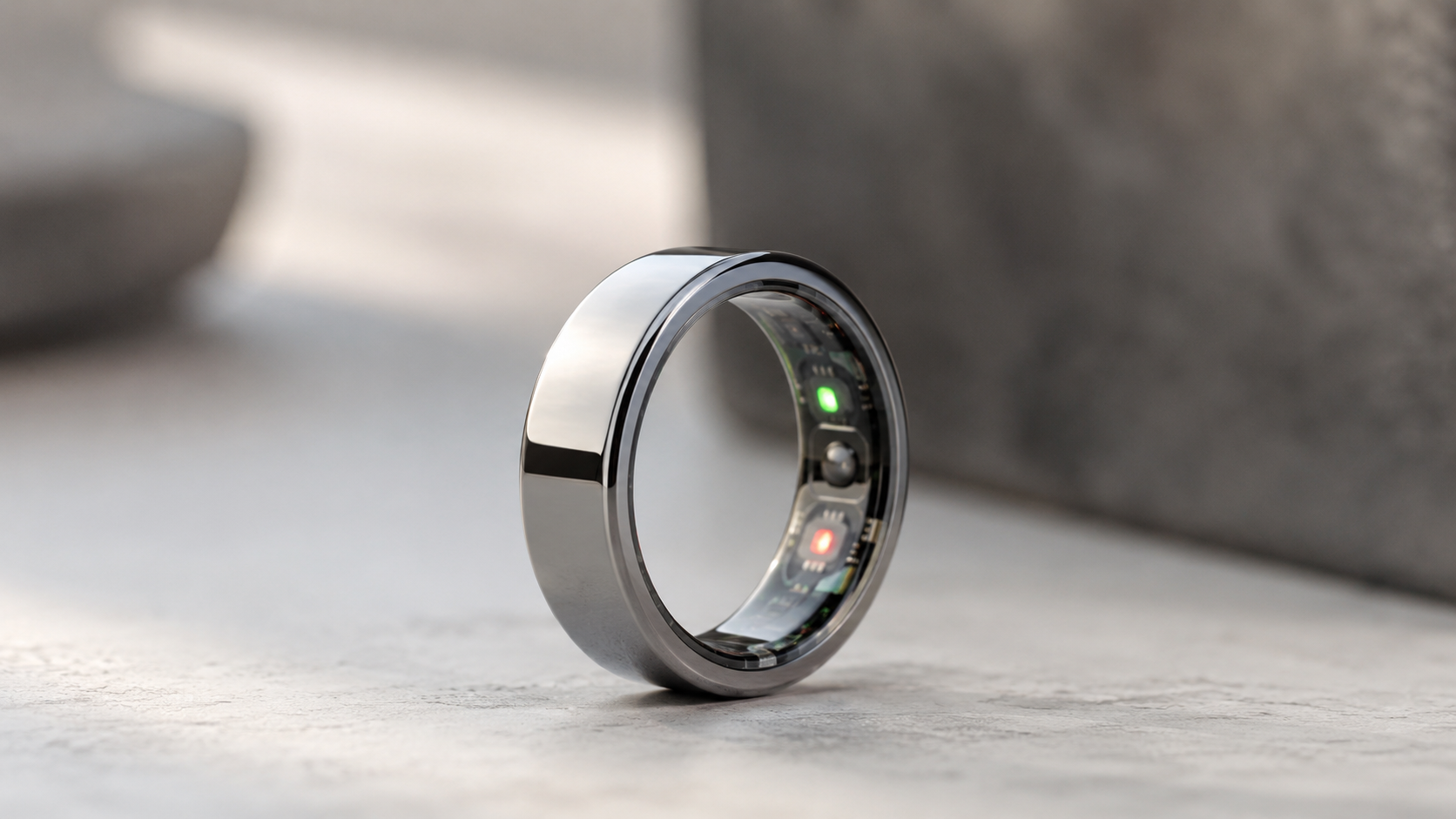
A smart ring is not a simple accessory. It is a miniaturized wearable in which the enclosure, battery, sensor stack, antenna, firmware and mobile app are tightly coupled. Ring size constrains internal space and battery capacity. Optical heart-rate accuracy depends on mechanical fit, optical contact, firmware and algorithms, not on the sensor part number alone. Water resistance depends on sealing design and test method, not on a marketing label.
That coupling changes what you are vetting. You are not only checking whether a supplier can assemble a product. You are checking whether they understand the trade-offs between size, battery life, sensor sampling, water resistance and app functionality, and whether they can tell you honestly where those trade-offs land for your project.
For startups, the commercial exposure is asymmetric. A brand with an existing wearable line can absorb a failed pilot. A startup that pays for new enclosure tooling, a dedicated PCBA and a custom app before validating the platform may not recover. Vetting is therefore a risk-reduction exercise, not a formality.
Stage 1: Desk screening before you contact anyone

Desk screening is cheap and eliminates most unsuitable smart ring suppliers before a call. The goal is to establish what the company actually is: a manufacturer, an ODM platform owner, a trading company, or a brand with outsourced production.
Ask for and review:
- Company identity and history. Legal name, year established, location and whether the smart ring line is a core category or an occasional listing.
- Business model. Does the supplier describe OEM, ODM and private label capability in specific terms, or only generic “customization” language?
- Quality management certification. An ISO 9001:2015 certificate should state the scope and the certified entity. Check that the certificate is current and that the scope covers the relevant manufacturing activity.
- Product platform documentation. Existing public-mold platforms, available ring sizes, sensor options and app/SDK options. A supplier that cannot describe its platforms in structured terms is unlikely to manage a custom smart ring project well.
- Export experience. Which markets the supplier regularly ships to, and whether they can describe destination-market documentation requirements in general terms.
At this stage, treat certification claims carefully. A factory-level ISO 9001:2015 certificate is evidence of a quality management system, not evidence that a specific ring model holds CE, FCC or RoHS approval. Those are separate questions you will ask later, model by model.
Stage 2: The capability call — questions that reveal engineering depth
A capability call should be structured. Generic questions get generic answers. Ask about the engineering constraints that only a real smart ring manufacturer deals with daily.
Hardware and mechanical questions
- How does ring size affect battery capacity and sensor placement on your platforms?
- What enclosure materials and finishes are available, and what are the tooling implications of a new enclosure?
- How is the charging architecture designed, and how should a buyer think about charging time on the selected platform?
- What water-resistance level is validated on representative configurations, and how is it tested? Ask specifically whether IP68 and 5ATM are treated as equivalent (they are not).
Sensor and firmware questions
- Which PPG architectures are available, and what changes when a buyer requests multi-wavelength sensing?
- How does sampling frequency affect battery life, and what power-saving modes exist?
- Is ECG available as an option on selected platforms, and what electrode and contact constraints apply?
- What firmware customization is possible: parameter adjustment, algorithm integration, deeper changes?
App, SDK and data questions
- Is there an Android and iOS SDK, and what data does it expose?
- Is raw PPG waveform access available, and under what contract terms?
- Can the buyer develop its own app, and what integration support is provided?
- What is the policy on firmware source code, OTA authority and cloud API integration?
Listen for qualification. A capable supplier will say “that depends on the selected platform and must be confirmed for your project.” A supplier that answers every question with an unconditional yes is telling you something about how they handle risk.
Stage 3: Sample validation — test the product, not the pitch
Samples are where most startup sourcing decisions are actually made, and where most are made badly. A sample that looks good in a photo proves very little. Validate against a written checklist tied to your target use case.
| Validation area | What to check | Why it matters for startups |
|---|---|---|
| Fit and sizing | Ring size range, comfort over multi-hour wear, stability during movement | Optical accuracy depends on fit; returns often trace to sizing |
| Sensor performance | Heart rate, SpO2 and sleep-related functions under realistic conditions | Algorithm and mechanical design matter more than the sensor part number |
| Battery | Typical runtime and charging behavior on the actual sample | Reference ranges vary by size, firmware and sampling |
| Water resistance | Stated level and test specification for the exact model | IP68 and 5ATM are not interchangeable claims |
| Bluetooth and app | Pairing stability, reconnection, data sync, app UX | App quality is part of the product, not an accessory |
| Build quality | Sealing, finish, button or touch interaction, charging contacts | Early field failures damage a new brand disproportionately |
Ask for the sample process in writing: what is validated at sample stage, whether EVT and DVT stages apply to your project, and what the golden-sample approval step looks like before mass production. Sample lead time depends heavily on scope. Logo and packaging changes on an existing mold are a different timeline from new enclosure tooling or custom PCBA and sensor work.
Stage 4: Reading quality evidence like a buyer, not a visitor
Quality evidence is often presented as a folder of certificates. Read it in layers.
- System level. ISO 9001:2015 certification with a clear scope. This tells you a quality management system exists. It does not tell you the AQL used on your order.
- Process level. How incoming material inspection (IQC), in-process inspection (IPQC), final inspection (FQC) and outgoing sampling (OQC) are handled. Ask which stages cover SMT and assembly.
- Order level. The AQL and acceptance criteria that will apply to your shipment. Reference levels such as AQL 1.5 or AQL 2.5 are common in the industry, but the exact criteria must be written into your project quality agreement.
- Model level. Test reports for the specific model and configuration, not a generic report for a different product.
A supplier that can explain the difference between these layers is usually a supplier that can also explain what went wrong when something fails.
Stage 5: Compliance questions — separate capability from certificate
Compliance is where startups most often confuse factory capability with model status. The distinction matters commercially: a retailer or marketplace may ask for documentation for your specific model, not for your supplier’s factory.
Ask these questions directly:
- Which certification or compliance programs can you support for this project — for example CE, FCC and RoHS?
- What technical documentation and testing support can you provide for those applications?
- Who holds the certificate, and can the arrangement be agreed in the contract?
- Which laboratory or testing route is proposed, and who selects it?
- What changes to the model or configuration would require re-testing?
Requirements vary by product configuration, radio technology, battery design, intended use and destination market. Final certification scope, required documents, testing scope and approval depend on the specific model, configuration, target market, laboratory and applicable authority. No supplier should promise approval. For high-risk categories, confirm current requirements with the applicable authority, a qualified laboratory or a regulatory advisor.
Also be explicit about what you are not claiming. A consumer wellness ring should not be presented as a diagnostic device, and blood glucose monitoring is not a supported claim for standard consumer smart rings.
Stage 6: Commercial and IP safeguards before you commit
The contract stage is where startups lose leverage, usually because they signed before asking. Confirm the following in the signed agreement, not in email:
- Tooling ownership. Who owns new molds and tooling, and what happens to them if the relationship ends?
- Firmware and source code. Whether source-code access, OTA authority and firmware ownership are included, licensed or excluded.
- App and data rights. Who owns the app, who can access raw sensor data, and how cloud integration is governed.
- IP and exclusivity. Whether any exclusivity applies to your design, and on what terms.
- NDA scope. What is confidential, for how long, and whether it covers BOM, firmware and app architecture.
- MOQ and lead time. Confirmed for your selected model and configuration, with the drivers of change stated.
- Quality agreement. AQL, acceptance criteria, warranty terms and failure-handling process.
MOQ in smart rings is driven by new molds, dedicated PCBA, firmware customization, dedicated app work, sensor configuration, materials, packaging and certification scope. Reference ranges exist, but your number must come from a quotation for your project.
Red flags that should stop a startup deal
- Unconditional yes to every technical and certification question.
- Certification documents that cannot be tied to a specific model or certificate holder.
- Reluctance to define tooling, firmware or app ownership in writing.
- Sample performance that cannot be reproduced on a second sample.
- Water-resistance claims without a stated test specification.
- Pressure to pay for tooling before sample validation is complete.
- No clear answer on what changes trigger re-testing.
Pineeon Manufacturer-Side Recommendation
From the manufacturing side, the startups that ramp most smoothly are not the ones that negotiate the hardest on unit price. They are the ones that define the project before asking for a quotation: ring size range, sensor requirements, app model, target markets and expected volumes. That definition lets the supplier give a real answer instead of a range.
Use the staged gates in this guide. Complete desk screening and the capability call before paying for samples. Validate samples against a written checklist before approving tooling. Confirm quality evidence and compliance scope before mass production. Put tooling, firmware, app and data rights in the signed agreement.
Certification documentation, testing and compliance-support capabilities vary by supplier and project. Confirm the exact scope, responsible parties and available records in writing before relying on them.
If you are evaluating a custom smart ring program, review the smart ring OEM/ODM and private label options and bring a defined project brief to the first call.
Related Pineeon Resources

Frequently asked questions
How many smart ring suppliers should a startup vet?
Three to five is usually enough to compare capability without spreading evaluation effort too thin. Screen more at desk stage, then narrow to two or three for capability calls and samples.
Is an ISO 9001:2015 certificate enough to trust a smart ring factory?
No. It confirms a quality management system exists within a stated scope. You still need to confirm the AQL and acceptance criteria for your order, the inspection stages used, and model-specific test evidence.
Can a supplier guarantee CE or FCC approval for my smart ring?
No credible supplier should guarantee approval. Suppliers can support applicable certification or compliance applications with documentation and testing support, but final scope and approval depend on the model, configuration, market, laboratory and authority.
What should I validate on a smart ring sample before paying for tooling?
Fit and sizing, sensor performance under realistic conditions, battery runtime and charging behavior, water-resistance specification, Bluetooth and app stability, and build quality. Validate on more than one sample where possible.
Who owns the app and firmware in an ODM smart ring project?
It depends on the contract. App ownership, firmware source-code access, OTA authority and raw data rights are project-specific and must be defined in the signed agreement rather than assumed.
Why does ring size affect battery life and sensor accuracy?
Ring size constrains internal space and therefore battery capacity, and it affects optical contact between the sensor and the skin. Both influence runtime and measurement stability, which is why reference ranges must be confirmed on the selected model.