AI Voice Mouse Retail Distribution Channels in 2026: A Practical Overview
Published October 23, 2026 · Pineeon Insights
An AI voice mouse is not a standard peripheral with a microphone bolted on. It combines a mature mouse platform with microphone input, desktop software, and cloud AI services. That architecture changes what each retail channel demands from a distributor: packaging must explain a software dependency, after-sales must handle app and firmware questions, and compliance now includes data-handling questions that ordinary mice never raise. This overview maps the main AI voice mouse distribution channels in 2026 and gives distributors, importers, and procurement teams a practical framework for choosing a channel before committing to an AI voice mouse distributor or supplier.
Why AI Voice Mouse Channels Differ from Ordinary Peripheral Channels
In a conventional mouse, the product is the hardware. In an AI voice mouse, the hardware captures voice, but speech-to-text, translation, meeting transcription, and AI assistant functions are generally performed by companion software and cloud services. The mouse itself typically does not contain a dedicated AI processor. This means the end-user experience depends on software stability, cross-platform compatibility, cloud-service availability, and ongoing maintenance.
For a distributor, this creates three channel obligations that do not exist with a basic mouse:
- Software support burden: Buyers and end users will ask about app installation, account setup, language support, and firmware updates. The channel must be able to answer or route these questions.
- Data-handling questions: Voice data may be uploaded to a cloud service. Retailers and corporate buyers increasingly ask where audio is stored, who processes it, and whether a customer-owned API key or cloud account can be used.
- Documentation depth: Packaging, quick-start guides, and warranty terms must explain the software dependency clearly, or return rates rise.
These obligations should shape channel selection more than generic retail advice about shelf space or price points.
The Main AI Voice Mouse Channels in 2026
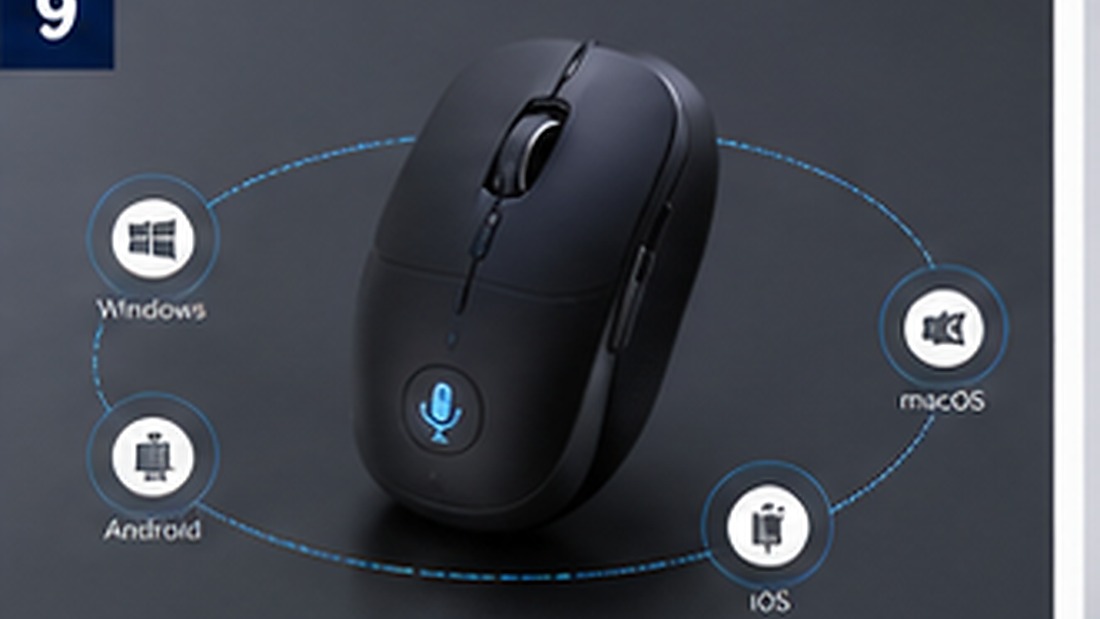
AI voice mice reach end markets through several distinct channel types. Each demands different packaging, documentation, order volumes, and after-sales capability from the supplier.
IT and Office Equipment Distributors
These distributors serve corporate resellers, office supply chains, and B2B procurement. They typically expect consistent carton marking, business-ready packaging, a clear warranty statement, and documentation that a reseller can hand to an IT manager. Order volumes are usually higher and repeat orders more predictable, but the distributor will ask hard questions about software maintenance and data routing before listing the product.
Consumer Electronics Retail
Retail chains and electronics stores need shelf-ready packaging, a strong quick-start guide, and a support phone number or web portal. Because store staff cannot troubleshoot software, the packaging must set expectations: the mouse works as a standard mouse offline, but AI features require the companion app and an internet connection. Retail buyers also care about return rates, so sample validation and pilot production results matter.
E-commerce Marketplaces
Marketplace sellers need product listings that explain software requirements, compatibility (Windows and macOS where applicable), and language support. They also need a clear RMA process because returns are handled remotely. For private label sellers, packaging and branding customization are important, but so is the ability to update software and documentation without reprinting physical materials.
Corporate and B2B Resale
Enterprise buyers and corporate resellers often require volume pricing, consistent firmware configuration, and sometimes integration with a customer-owned AI backend or API key. They may ask for data-processing agreements, security questionnaires, and confirmation of where voice data is stored. This channel rewards suppliers who can document their software architecture clearly.
System Integrators and AV Channels
Integrators deploying meeting-room and presentation solutions may use AI voice mice as an accessory to collaboration software. They need button-function customization, SDK or API access where contractually agreed, and a supplier who can support firmware and software configuration changes. This is a smaller but technically demanding channel.
Channel Selection Framework for Distributors
Rather than choosing a channel by margin alone, distributors should match the channel to their after-sales capability, order volume, and willingness to manage software support. The table below summarizes the key decision criteria.
| Channel | Typical Order Profile | Packaging & Documentation Demand | After-Sales Burden | Key Supplier Question |
|---|---|---|---|---|
| IT/Office Distributor | Higher volume, repeat orders | Business packaging, warranty statement, reseller documentation | Medium — reseller handles first line | Who maintains the software and cloud service? |
| Consumer Electronics Retail | Medium volume, seasonal | Shelf-ready box, clear quick-start, support contact | High — store staff cannot troubleshoot | What is the return rate and RMA process? |
| E-commerce Marketplace | Variable, test orders common | Listing content, digital documentation, private label options | High — remote returns | Can packaging and manuals be customized? |
| Corporate/B2B Resale | Volume, contract-based | Security and data-handling documentation | Medium — IT department handles support | Can we use our own API key or cloud account? |
| System Integrator/AV | Lower volume, custom | Technical integration docs, SDK/API terms | High — configuration support | What firmware and software customization is available? |
Use this table as a starting point. The right channel depends on whether you can support software questions, whether you need private label branding, and how much documentation your buyer expects.
Margin, Stock, and Inventory Planning
AI voice mouse wholesale margins are affected by more than unit cost. Cloud AI services may create ongoing API usage costs, and software maintenance can be an ongoing expense. Distributors should clarify with the AI voice mouse manufacturer whether API costs are included in the unit price, whether the customer can use its own API key, and who bears the cost of software updates.
Inventory planning should account for software version changes. If the companion app is updated, packaging and quick-start guides may become outdated. Distributors should ask how software updates are communicated and whether digital documentation can be updated without reprinting. For private label projects, packaging customization should be planned alongside software versioning.
Stock levels should also reflect the channel’s return profile. Consumer retail and marketplace channels typically see higher return rates for software-dependent products, so a larger buffer or a pilot order is prudent before committing to volume.
Compliance and Documentation Handoff by Channel
Compliance requirements for AI voice mice vary by product configuration, target market, radio technology, and intended use. They are project-dependent and market-dependent. Distributors should confirm requirements with the applicable laboratory, authority, or qualified advisor before committing to a channel.
At the hardware level, common reference points include CE for the European market, FCC for the United States, and RoHS for restricted substances. Bluetooth-related models may require BQB qualification where applicable. Other market-specific requirements, such as SASO, KC, or PSE, should be evaluated according to destination-market rules.
At the software level, data-handling questions are separate from hardware certification. If voice data is uploaded to a cloud service, buyers may ask about privacy notices, data retention, cross-border transfer, and processor/subprocessor arrangements. These are software and data-governance issues, not traditional hardware certifications. Distributors should request documentation from the supplier and, where necessary, seek qualified legal or regulatory advice.
Certification scope, required documents, testing scope, and approval depend on the specific product model, configuration, target market, laboratory, and applicable authority. Distributors should confirm the applicable requirements for their specific project with the applicable laboratory, authority, or qualified advisor, and should not assume that any model already holds a given certification.
Pre-Launch Checklist for Distributors
Before launching an AI voice mouse through any channel, complete the following checks. This checklist is designed for distributors and importers working with an AI voice mouse supplier or private label partner.
- Sample approval: Test basic mouse operation, DPI performance, button feel, scroll wheel, wireless stability, microphone pickup, speech recognition, and companion software integration.
- Packaging and branding: Confirm box design, manual language, software download instructions, and whether digital documentation can be updated.
- Warranty and RMA flow: Define who handles first-line support, how returns are processed, and what software issues are covered.
- Firmware update responsibility: Clarify who provides firmware updates, how they are distributed, and whether the distributor or supplier bears the cost.
- Software and cloud service terms: Confirm which AI provider is used, whether a customer-owned API key or cloud account is possible, and where voice data is stored.
- Compliance documentation: Request model-specific certification documents where applicable and confirm they match the target market.
- Inventory planning: Decide pilot order quantity, buffer stock, and reorder triggers based on channel return profile.
- Support materials: Prepare FAQ, troubleshooting guides, and escalation paths for software and connectivity issues.
Pineeon Manufacturer-Side Recommendation
From a manufacturer’s perspective, the most common channel failure is not hardware quality but a mismatch between the channel’s support capability and the product’s software dependency. A distributor who cannot answer basic app and connectivity questions will see returns rise regardless of the mouse’s build quality.
Distributors should generally choose a channel where they can support the software layer, or partner with a reseller who can. For private label projects, it is worth defining early whether the companion software will be white-label, UI-customized, or fully customer-owned. The appropriate software customization level should match the channel: consumer retail needs clear, stable, branded software; corporate resale may need customer-owned API keys and data-handling documentation; system integrators may need SDK or API access, which is project- and contract-specific. The exact customization scope for any project must be confirmed with the supplier and defined in the commercial agreement.
Pineeon is a B2B private label Smart Wearable, Computer Peripheral & AI Hardware OEM/ODM manufacturer based in Shenzhen, China, operating since 2000 and ISO 9001:2015-certified, serving brands and buyers in 40+ countries. For AI voice mouse projects, Pineeon evaluates customer requirements before recommending a project approach. MOQ, lead time, and customization scope are project-dependent and must be confirmed by official quotation and selected project scope. Distributors can review the AI Voice Mouse product page for current platform information before starting a channel discussion.
Frequently Asked Questions
What should a distributor verify about an AI voice mouse supplier’s software support?
Verify who maintains the companion software, how updates are delivered, whether the supplier operates an intermediate server for voice data, and whether a customer-owned API key or cloud account is possible. These answers affect after-sales burden and data-handling documentation.
Can an AI voice mouse work without internet access?
Standard mouse functions such as pointing, clicking, and scrolling generally work offline. AI features such as speech recognition, online translation, and LLM interaction generally require internet access because they depend on cloud services. Confirm the exact offline boundary for the selected software platform.
What documentation should be requested for corporate or B2B resale channels?
Corporate buyers may request data-handling documentation, security questionnaires, and confirmation of where voice data is stored. Distributors should request these from the supplier and, where necessary, seek qualified legal or regulatory advice. Hardware certification documents should be model-specific and match the target market.
How does private label branding affect channel selection?
Private label branding is more than a logo on the box. It affects software branding, manual language, warranty terms, and support routing. Channels with higher after-sales burden, such as consumer retail and marketplaces, benefit from clear branded support materials and a defined RMA process.
What is the main inventory risk for AI voice mice?
Software version changes can make packaging and manuals outdated. Distributors should ask how updates are communicated and whether digital documentation can be revised without reprinting. A pilot order before volume commitment helps validate return rates and support load.
Does Pineeon guarantee certification for every AI voice mouse model?
No. Certification scope and approval depend on the specific product model, configuration, target market, laboratory, and applicable authority, and Pineeon does not guarantee final certification or regulatory approval. Distributors should confirm the applicable requirements and model-specific certification status for their specific project with the applicable laboratory, authority, or qualified advisor before publication or listing.