Smart watch sourcing trends in 2026 point to one uncomfortable reality: most sourcing problems are not caused by a bad factory. They are caused by a buyer locking a platform, a price and a launch date before confirming what the product actually has to do. Three shifts matter most. Platform architecture now drives almost every downstream cost and compliance decision. Buyers are being asked to verify firmware and app capability rather than accept a feature list. And certification planning has moved from a late-stage task to an early-stage filter for supplier shortlisting.
This guide is written from the manufacturer side of the table. It explains what to confirm before you request a quotation, how to separate real platform capability from marketing language, and how to sequence a 2026 procurement plan so that sample approval, pilot run, tooling and certification testing do not collide at the end of the project.
Why 2026 Sourcing Decisions Start With Architecture, Not Price
The single most useful distinction in smart watch sourcing trends is between MCU Bluetooth smart watches and Android/4G smart watches. These are not two price tiers of the same product. They are two different technical families with different BOM structures, power profiles, software stacks, development effort and certification paths.
An MCU Bluetooth watch uses an RTOS-class microcontroller architecture. It is optimized for low power consumption, longer battery life and Bluetooth-connected functions such as fitness tracking, wellness monitoring and companion-app data sync. It normally does not operate as a fully independent Android application platform.
An Android/4G watch uses an application processor architecture. It supports independent connectivity, richer application execution and, in many cases, cellular communication, GPS and a broader software ecosystem. The trade-off is higher BOM cost, higher power consumption, shorter battery life, more complex software integration and additional cellular and market certification requirements.
Buyers who skip this decision tend to receive quotations that look comparable but are not. A quotation for a 1.8-inch AMOLED display on an MCU platform and a quotation for a similar-looking Android/4G device may differ substantially in tooling, software, certification and MOQ because the underlying engineering work is not the same. The practical rule is simple: define the product positioning first, then select the chipset and system architecture, then discuss price.
How to Verify a Smart Watch Manufacturer’s Platform Capability

Supplier capability claims are easy to write and hard to disprove from a website. Verification should happen at the sample and firmware level, not at the brochure level. When evaluating a potential smart watch manufacturer, ask for evidence in four areas.
1. Platform clarity. Ask the supplier to state, in writing, which architecture family the proposed model belongs to and which main controller or application processor platform it is based on. A supplier that cannot clearly separate MCU Bluetooth and Android/4G product lines is likely to blur the same distinction in your quotation.
2. Firmware customization depth. Ask what can actually be changed: sampling rate, sensitivity thresholds, function enable/disable, alert logic, OTA behavior, language packages. Then ask which of those changes require source-code access and which are exposed through configuration. The answer tells you how much of your product roadmap depends on the supplier’s willingness to cooperate later.
3. App and SDK integration. For MCU platforms, ask whether Android and iOS SDKs are available and which data fields they expose. For Android/4G platforms, ask how the application layer is structured and whether the platform depends on factory-specific cloud services. Do not assume that every model includes an open SDK, raw sensor data access or a customer-owned cloud. These are project- and contract-specific.
4. Sample testing against your own use case. Test the sample the way your end customer will use it, not the way the supplier demonstrates it. Battery endurance, display behavior in daylight, Bluetooth reconnection stability, GPS acquisition time and water resistance are all affected by configuration and usage. A sample that performs well in a controlled demo may behave differently under continuous sensor sampling or cellular connectivity.
One useful verification technique is to request a short written response to a fixed list of technical questions before the sample is shipped. Suppliers who answer precisely are usually the ones who can execute a customized project. Suppliers who answer with general statements about “high quality” and “advanced technology” are telling you something about their engineering communication.
Buyer Decision Table: Matching Architecture to Product Intent
Use the table below as a first-pass filter before you shortlist suppliers. It is a decision framework, not a specification sheet. Final configuration depends on the selected model and project requirements.
| Buyer intent | Likely architecture | What to confirm first | Common sourcing risk |
|---|---|---|---|
| Mass-market fitness and wellness band/watch | MCU Bluetooth | Sensor set, battery reference range, app data fields | Assuming swimming-grade water resistance without model confirmation |
| Private label retail program with logo and packaging | MCU Bluetooth, existing platform | MOQ reference, packaging artwork workflow, sample lead time | Underestimating packaging and manual localization effort |
| Children GPS or elderly safety watch | Android/4G with GPS | Cellular bands, SOS logic, guardian app and server protocol | Late discovery of carrier or market approval requirements |
| Independent smart watch with app ecosystem | Android/4G application processor | Memory, display, software platform, service availability | Assuming Google services or eSIM support without verification |
| Custom hardware and firmware ODM project | Either, depending on scope | Tooling ownership, firmware ownership, OTA authority, IP terms | Unclear IP and tooling ownership after project start |
Two patterns are worth noting. First, the more independent the device, the more certification and software work moves into the critical path. Second, the more customization you request, the more the MOQ reference rises, because tooling, PCBA changes, firmware development and application work have to be amortized across the order.
Compliance Planning: What to Confirm Before You Commit
Certification is where optimistic sourcing plans most often break. The correct approach in 2026 is to treat compliance as a scoping exercise, not a checkbox. Requirements vary by product configuration, radio technology, battery design, intended use and destination market.
For a Bluetooth-only MCU watch, the typical compliance discussion centers on CE, FCC and RoHS scope for the target market. For an Android/4G watch, cellular functionality introduces additional network and market-specific evaluation, which may include cellular-device certification paths and carrier or telecom market approval depending on the destination country and network configuration.
Buyers should confirm four things early:
- Applicable scope. Which standards and directives apply to this specific model, configuration and market? Confirm with the applicable laboratory, authority or qualified regulatory advisor rather than relying on a supplier summary.
- Documentation responsibility. Who prepares technical documentation, test samples and declarations, and who is the certificate holder?
- Testing sequence. Does certification testing happen on the engineering sample, the pilot build or the mass-production configuration? Testing the wrong build can invalidate the result.
- Change control. If the BOM, antenna, battery or enclosure changes after testing, what re-testing is required?
Certification documentation, testing and compliance-support capabilities vary by supplier and project. Confirm the exact scope, responsible parties and available records in writing before relying on them.
A 2026 Procurement Timeline That Avoids Late-Stage Surprises
Most schedule failures come from compressing the wrong stage. The sequence below separates decisions that should not be merged. Actual durations depend on platform, customization depth, software integration, tooling and material availability, so the buyer and supplier should agree and document a project-specific schedule rather than rely on generic benchmarks.
- Requirement definition (before quotation). Confirm architecture, target market, form factor, display, sensor combination, connectivity and application requirements. This is the cheapest stage to change your mind.
- Quotation and commercial alignment. Confirm product quotation, sample fee, MOQ reference and the commercial terms that govern tooling and IP.
- Structure and ID confirmation. Confirm industrial design and mechanical structure. If new tooling is required, tooling cost and lead time are quoted separately and should be treated as a distinct decision.
- Engineering sample and functional testing. Validate the functions you actually need, including water-resistance testing where the project requires it.
- Pilot run. After sample approval, validate yield, functional consistency and production stability. Pilot production is strongly recommended for projects involving custom hardware, firmware, app, cloud or cellular architecture.
- Certification testing on the frozen configuration. Test the build that will actually ship. Avoid testing a pre-pilot configuration that will change.
- Mass production approval and ramp. Approve pilot results, confirm the production specification and proceed to mass production.
Because sample and production durations vary by platform and project scope, the practical approach is to ask the supplier for a written schedule covering each gate above, then agree the milestones in the purchase agreement. Q3–Q4 and periods of chipset, 4G module or application-processor supply constraints can extend delivery, so build contingency into the plan rather than assuming a fixed number of weeks.
Supplier Scorecard: What to Weight in 2026
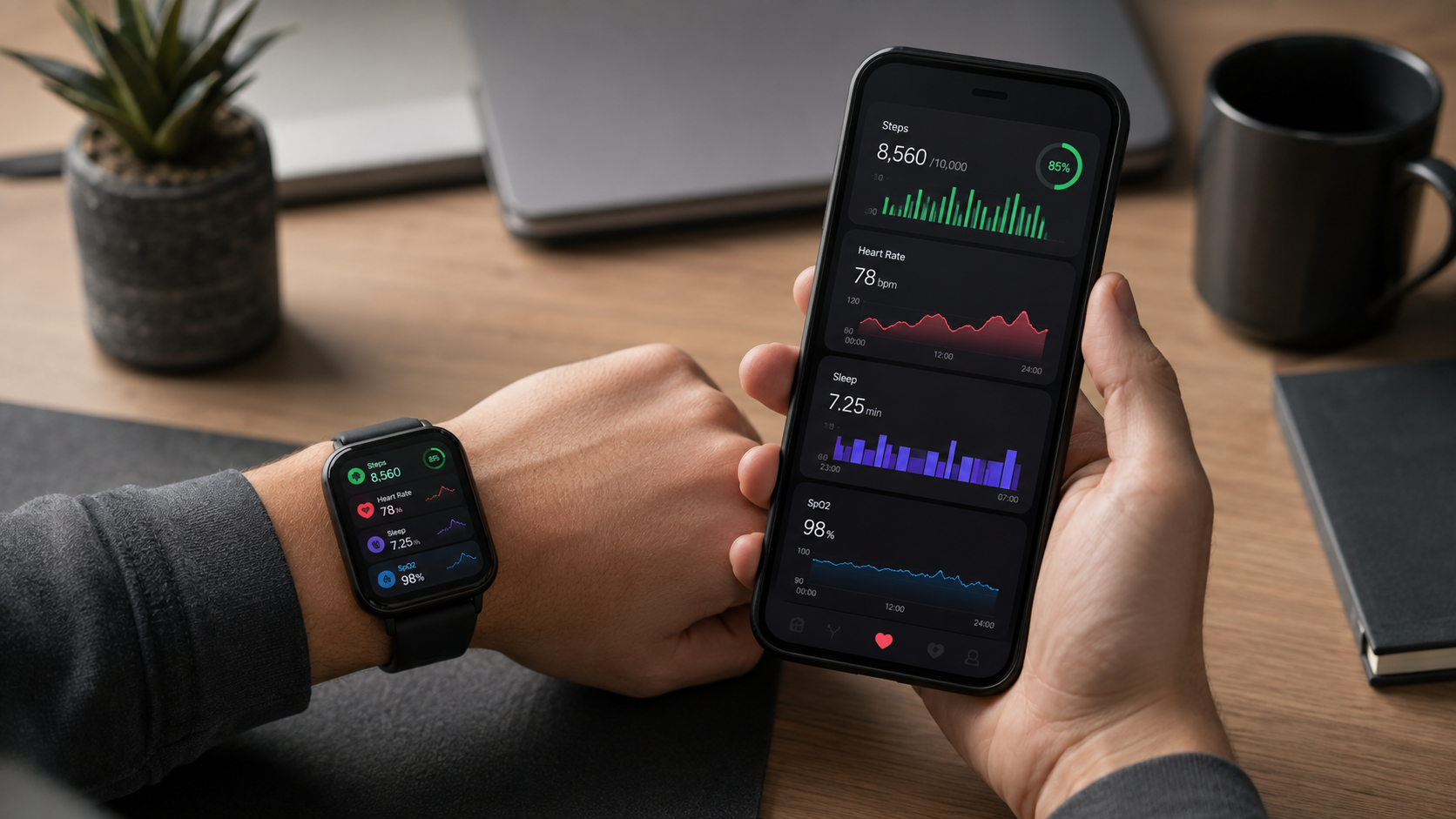
A scorecard keeps supplier selection from becoming a price comparison. Weight the criteria according to your product intent, then score each candidate on evidence rather than impressions.
- Platform fit (high weight). Does the supplier clearly separate MCU Bluetooth and Android/4G product lines, and can they explain the trade-offs in writing?
- Firmware and app support (high weight). What can be customized, what requires source-code access, and what is contractually available?
- Quality control system (high weight). Is there a defined IQC, IPQC, FQC and OQC process, and which reliability tests are included in the project inspection plan?
- Compliance support (medium-high weight). Can the supplier provide technical documentation and testing support for the applicable market scope, and do they understand that approval is not guaranteed?
- Packaging and branding capability (medium weight). Standard color box, custom color box, manual localization, accessory list and shipping arrangements.
- MOQ realism (medium weight). Does the quoted MOQ match the actual customization scope, or is it a placeholder that will rise after tooling is discussed?
- After-sales and change terms (medium weight). How are firmware updates, OTA authority, spare parts and field failures handled after shipment?
Score each criterion on a simple scale and require evidence for any high score. A supplier that scores well on price but cannot answer firmware and IP questions is a schedule risk, not a bargain.
Common 2026 Sourcing Pitfalls and How to Avoid Them
Single-source dependency. Relying on one supplier for both MCU and Android/4G programs concentrates risk. Maintain at least one qualified alternative for your core platform, even if you do not place volume with them immediately.
Unclear IP and tooling ownership. Tooling, firmware, source code, OTA authority and exclusivity should be defined in the signed project agreement. Do not assume that IP ownership transfers automatically because you paid for development.
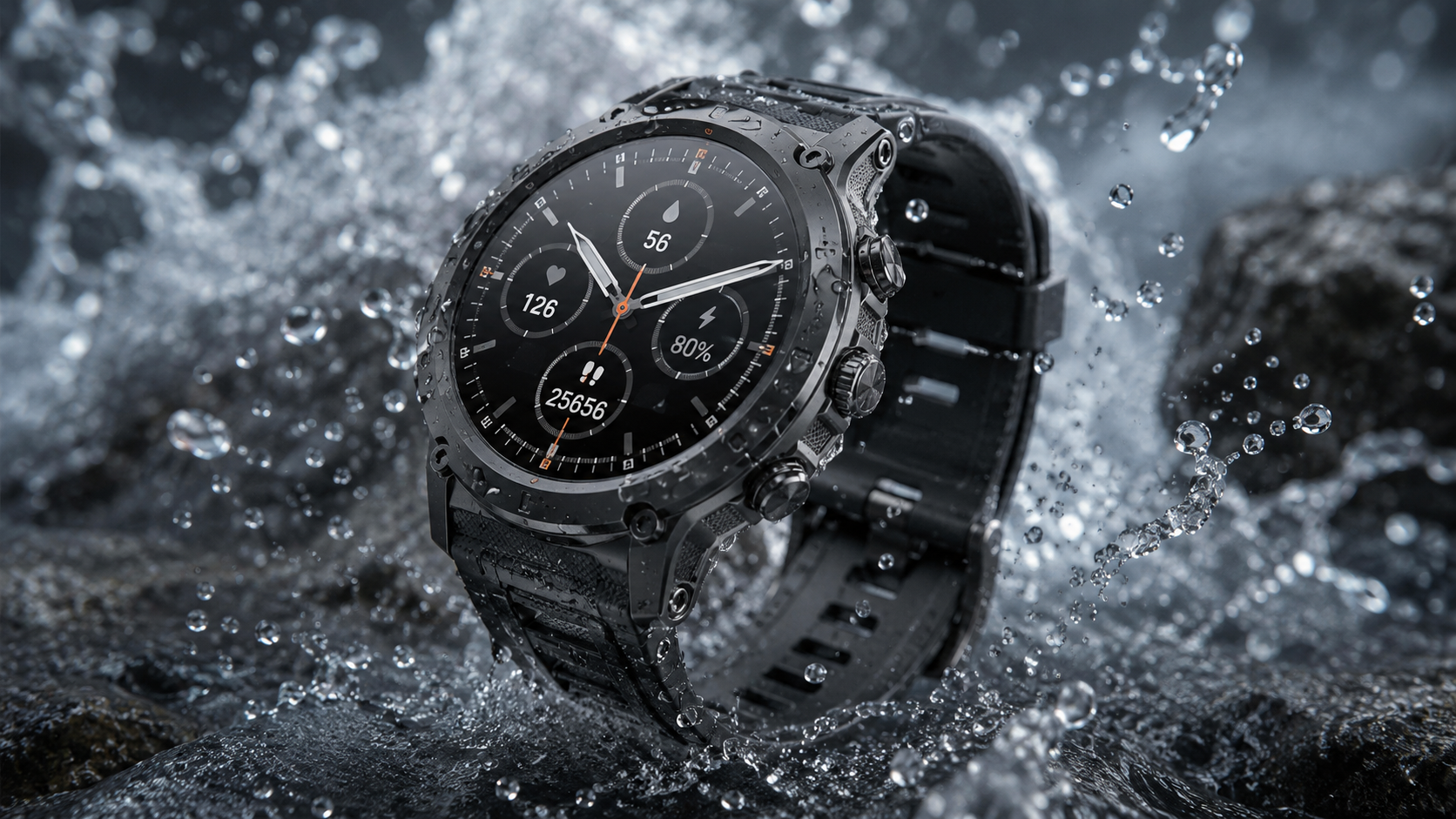
Unverified battery and waterproof claims. Battery life depends on capacity, display, screen-on time, GPS frequency, cellular connectivity, sensor sampling, processor architecture, firmware optimization and user behavior. Water resistance is affected by speakers, microphones, SIM structures and other enclosure openings. Treat IP67, IP68 and 5ATM as different ratings and confirm the exact rating for the selected model.
Certification assumptions. Factory-level support for CE, FCC and RoHS applications does not mean every model already holds those certifications. Verify the model, the certificate and the holder.
Software and data assumptions. SDK availability, raw sensor data access, cloud-data ownership and local data processing should be confirmed in the contract, not inferred from a feature list.
Compressed pilot stages. Skipping or shortening the pilot run to save a few weeks often shifts the cost into mass production rework, returns or a delayed launch.
Pineeon Manufacturer-Side Recommendation
From the factory side, the projects that run smoothly share a common pattern: the buyer makes architecture and compliance decisions before requesting a final quotation, and treats sample approval, pilot run and certification testing as separate gates rather than one compressed event.
Pineeon is a B2B private label Smart Wearable, Computer Peripheral and AI Hardware OEM/ODM manufacturer based in Shenzhen, China, operating since 2000 with more than 20 years of industry experience and serving brands and buyers in more than 40 countries. For smart watch projects, we recommend the following sequence: define the product positioning and target market; confirm whether an MCU Bluetooth or Android/4G architecture is required; confirm the customization scope across hardware, firmware, app and packaging; then request a quotation and sample plan that reflects that scope.
Certification documentation, testing and compliance-support capabilities vary by supplier and project. Confirm the exact scope, responsible parties and available records in writing before relying on them.
If you are planning a 2026 smart watch program, review the smart watch OEM/ODM and private label solutions page to see how platform selection, customization scope and compliance support are structured, then bring your target market and product intent to the first technical discussion.
FAQ
What is the main difference between an MCU Bluetooth smart watch and an Android/4G smart watch?
MCU Bluetooth watches use a low-power microcontroller architecture optimized for fitness, wellness and Bluetooth-connected functions. Android/4G watches use application processors and can support independent networking and richer applications, but normally have higher BOM cost, power consumption and development complexity.
How do I verify a supplier’s firmware customization capability?
Ask which parameters can be changed, which require source-code access, and which are exposed through configuration. Request written answers before the sample ships, then test the changes on the sample rather than accepting a feature list.
Does factory CE, FCC or RoHS support mean my model is certified?
No. Factory-level support for applicable certification or compliance applications is not the same as model-specific certification. Verify the model, the certificate and the certificate holder, and confirm the applicable scope with the laboratory, authority or a qualified advisor.
Why does an Android/4G watch require a higher MOQ than an MCU watch?
Android/4G projects typically involve more complex BOM, software architecture, tooling and cellular certification requirements, which must be amortized across the order. Final MOQ depends on the selected model, architecture, customization scope and official quotation.
When should certification testing happen in the project?
Testing should be performed on the frozen configuration that will actually ship, typically after the pilot run and before mass production. Testing an earlier configuration that later changes can invalidate the result and require re-testing.
Can I get an open SDK or raw sensor data access?
SDK availability, data fields, raw-data access and cloud-data ownership are project- and contract-specific. Confirm them for the selected platform before project approval rather than assuming they are included.
How should buyers and suppliers agree on MOQ and lead time in 2026?
Because MOQ and lead time depend on the selected model, architecture, customization scope and material availability, they should be agreed in writing for the specific project. Ask the supplier to document the MOQ basis, the sample and production milestones, and the conditions that would change either figure, then confirm those terms in the quotation or purchase agreement.