Smart watches look like an easy dropshipping category: small parcel, high perceived value, repeat accessory sales. In practice, they are one of the harder consumer electronics categories to run on a pure dropship model. The reason is not demand. It is the combination of battery shipping restrictions, app onboarding friction, firmware and SKU instability, and return rates that behave differently from apparel or home goods.
This guide is written for distributors, importers and e-commerce brands evaluating whether to add smart watches to a dropshipping or wholesale channel, and how to structure the supply side so the channel does not collapse after the first few hundred orders. It covers distributor-side unit economics, supplier vetting criteria specific to dropshipping, inventory model trade-offs, compliance considerations, common failure modes, and how to brief an OEM/ODM manufacturer if you later move to a private label smart watch line.
Why Smart Watch Dropshipping Is Not a Standard Parcel Category
Three product characteristics change the operating model compared with generic dropshipping.
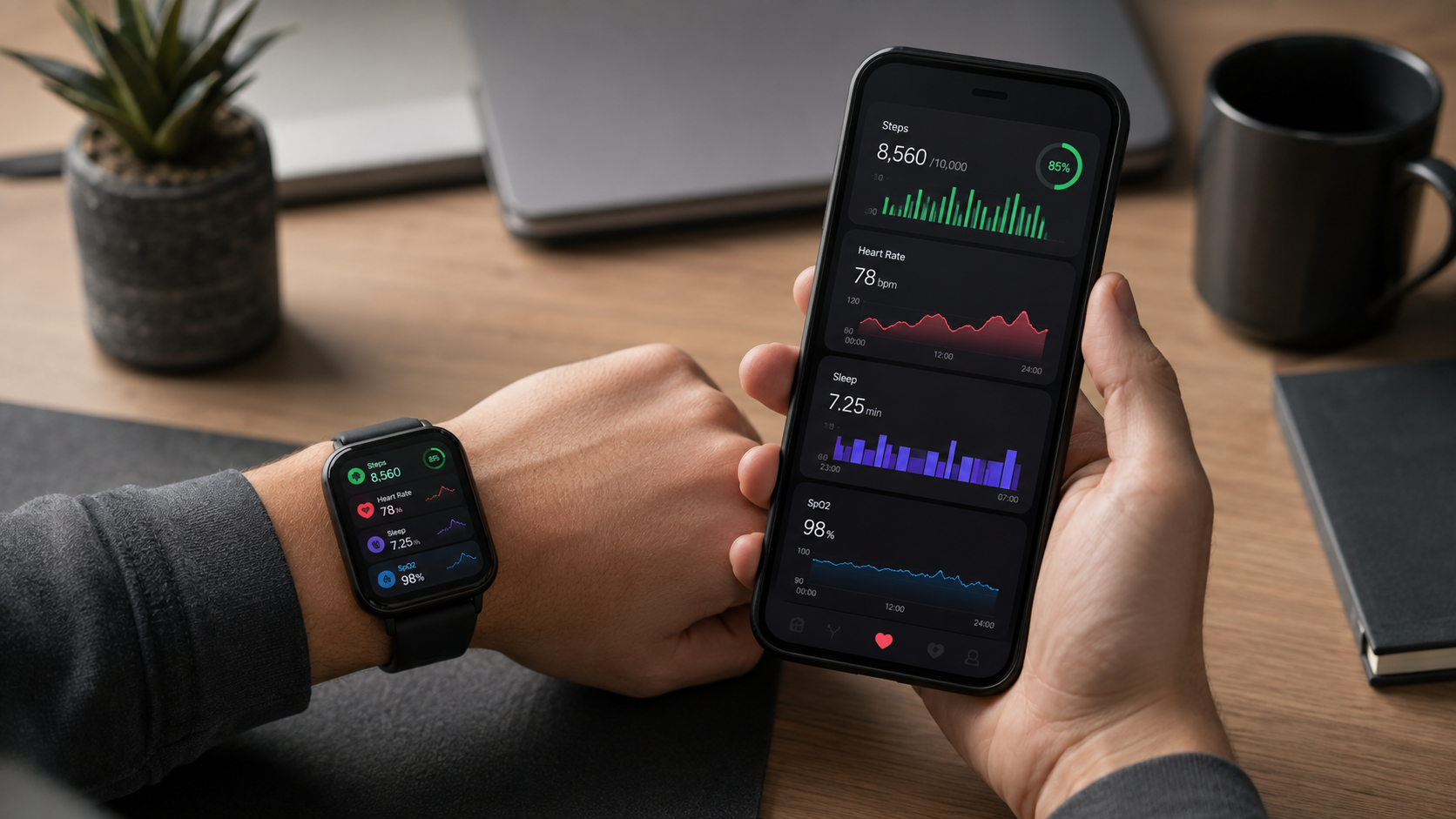
1. The product is a system, not a unit. A smart watch only works when the hardware, firmware, and companion app work together. If the app is region-locked, the language pack is wrong, or the firmware version does not match the app version, the buyer experiences a non-functional product. That becomes a return, not a support ticket.
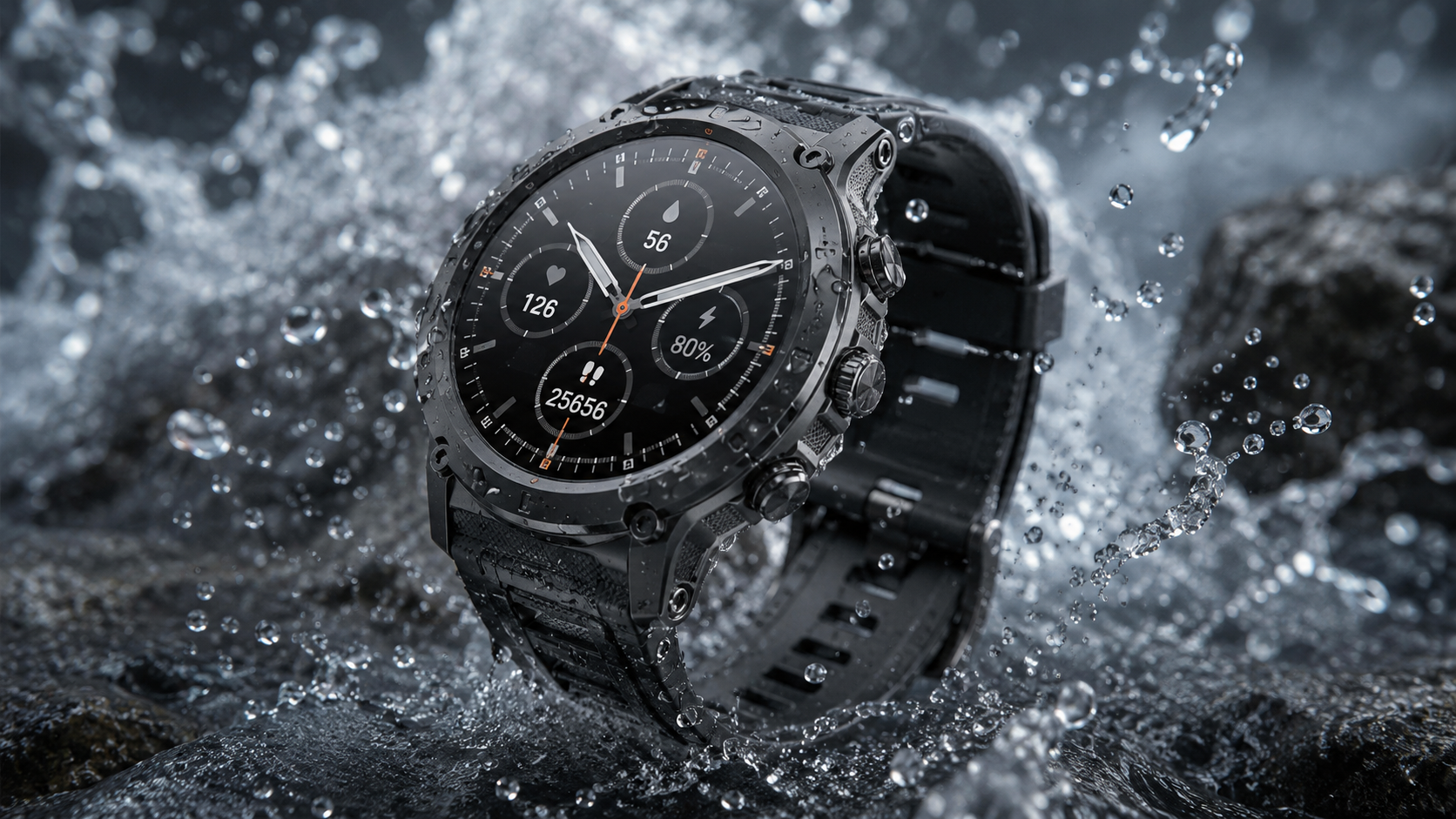
2. The product contains a lithium battery. Lithium batteries are regulated for transport. Air carriers, couriers, and destination markets apply different rules depending on battery configuration, watt-hour rating, packaging, and whether the battery is installed in the device or shipped separately. A dropship supplier that ships from a warehouse with the wrong battery documentation can create customs delays that look like lost parcels.
3. The SKU lifecycle is short. Smart watch platforms are frequently refreshed. A supplier listing that shows stable stock today may be selling a batch that will not be replenished with the same firmware, the same app pairing, or the same packaging. For dropshipping, SKU stability matters more than unit price.
These three factors are why many distributors eventually move from pure dropshipping to a hybrid model. The rest of this article explains how to decide.
Distributor-Side Unit Economics: The Four Variables That Decide Viability

Do not evaluate smart watch dropshipping on gross margin alone. Four variables determine whether the channel is actually profitable.
Landed cost. This is not the supplier’s quoted unit price. It includes the product cost, inbound freight or dropship fulfillment fee, packaging, any labeling required for the destination market, and the cost of the battery documentation and shipping classification. If the supplier quotes a unit price without clarifying who handles battery-compliant shipping, the landed cost is unknown.
Fulfillment cost per order. Dropshipping shifts inventory risk to the supplier but usually increases per-order fulfillment cost compared with bulk shipping to your own warehouse. For a small parcel with a battery, expect the fulfillment component to be a meaningful share of total cost. Compare it against the fully loaded cost of picking and packing from your own stock.
Return rate. Smart watch returns are driven by setup failure, app incompatibility, battery expectations, and fit or strap preference. A return is more expensive than a lost sale because it also consumes support time and may not be resellable if the packaging is opened. Model your return rate as a percentage of revenue, not as a fixed cost per order.
Margin sensitivity. Because the product is a system, small changes in any of the first three variables move net margin more than the headline unit price suggests. A supplier that is slightly more expensive but ships battery-compliant, app-tested, and packaging-ready units can be cheaper on a net basis.
A practical way to compare suppliers is to build a simple contribution margin table. Use your own numbers; the structure below is the decision framework, not a set of prices.
| Line item | What to include | Why it matters for dropshipping |
|---|---|---|
| Product cost | Unit price at your order quantity | Changes with MOQ and customization level |
| Battery-compliant shipping | Classification, documentation, carrier surcharge | Often the hidden cost that kills margin |
| Fulfillment fee | Pick, pack, label, dispatch | Higher per unit in dropship than bulk |
| Packaging readiness | Retail box, manual language, accessory set | Poor packaging drives returns and support load |
| Expected return cost | Return rate × (refund + handling + write-off) | Setup failure is the main return driver |
| Support cost | App pairing, firmware, warranty triage | Falls on you unless the supplier handles it |
| Net contribution | Revenue minus all of the above | The only number that decides viability |
Supplier Vetting Checklist for Smart Watch Dropshipping
Generic supplier checklists do not cover the failure modes that matter in this category. Use the following criteria when evaluating smart watch dropshipping suppliers or wholesale smart watch partners.
Stock consistency. Ask how the supplier confirms stock before accepting an order, and what happens when an item is out of stock after the order is placed. A supplier that cannot describe a real-time or near-real-time stock check will create oversells.
SKU stability. Ask how long a given model and firmware version will remain available, and what notice is given before a change. For dropshipping, a stable SKU with a documented change process is worth more than a lower price on an unstable one.
Packaging readiness. Confirm whether units ship in retail-ready packaging with the correct manual language and accessory set for the destination market. Loose or generic packaging increases returns and makes the product harder to sell on marketplaces with packaging requirements.
Firmware and app support. Ask which app the watch pairs with, which languages it supports, and who provides updates. If the app is not maintained, the product will degrade over time regardless of hardware quality.
After-sales handling. Define who handles warranty claims, who pays return shipping, and what the replacement process is. In dropshipping, the supplier is often the only party with access to replacement units.
Battery shipping capability. Ask directly how the supplier classifies and documents lithium battery shipments, and which carriers and lanes it uses. This is a pass/fail criterion, not a preference.
Certification and compliance documentation. Ask what documentation the supplier can provide for the destination market and whether it applies to the specific model being shipped. Certification requirements are market-dependent and product-dependent, and the buyer should verify the applicable requirements with the relevant authority, laboratory, or qualified advisor before listing.
Inventory Model Comparison: Pure Dropshipping vs Hybrid vs Bulk
There is no single correct model. The right choice depends on your order volume, your ability to forecast demand, and how much control you need over packaging and firmware.
| Model | Best for | Main risk | Control level |
|---|---|---|---|
| Pure dropshipping | Testing demand, long-tail SKUs, low capital | SKU instability, battery shipping, support load | Low |
| Hybrid (bulk top SKUs + dropship long tail) | Established sellers with predictable best-sellers | Forecast error on the bulk portion | Medium |
| Bulk / wholesale | Private label, marketplace sellers, retail | Working capital and inventory write-down | High |
The hybrid model is usually the most practical transition. You bulk-buy the two or three SKUs that generate most of your volume, which gives you control over packaging, firmware version, and battery documentation, and you dropship the long tail to keep the catalog broad without tying up capital. The decision point is simple: once a SKU consistently sells above a threshold you can forecast, move it from dropship to bulk.
For buyers planning to move toward a private label smart watch line, the bulk portion is also where branding begins. Logo, packaging, and manual language customization are typically available on existing platforms at lower order quantities than full custom development.
Compliance and Certification Considerations for Dropshipped Smart Watches
Compliance is the area where dropshipping sellers most often assume too much. The key principle is that requirements vary by product configuration, radio technology, battery design, destination market, and intended use. There is no single certificate that covers every smart watch in every market.
For Bluetooth-only watches, the common compliance areas are electromagnetic compatibility, radio equipment requirements, and restricted substances rules, depending on the market. For cellular or 4G watches, additional network and telecom-related requirements may apply, and these are market- and network-dependent.
When vetting a supplier, ask three questions:
- Which specific model and configuration does the documentation cover?
- Who is the certificate holder, and does it match the entity selling the product?
- Does the documentation match the destination market where you intend to sell?
If the supplier cannot answer these, treat the documentation as unverified. Buyers should confirm current requirements with the applicable authority, a qualified laboratory, or a regulatory advisor before listing a product. This is not a step that can be delegated to a supplier’s marketing page.
Common Failure Modes and How to Mitigate Them
Battery shipping rejections. Mitigation: confirm the supplier’s battery classification and carrier lanes before listing, and test a small number of orders to each destination before scaling.
App onboarding friction. Mitigation: require the supplier to provide the exact app name, supported languages, and a pairing guide, and test the pairing process yourself on a sample unit for each target market.
Return spikes after a firmware or app update. Mitigation: ask for advance notice of firmware changes and hold a small buffer of the previous version if the change is significant.
Overselling during peak season. Mitigation: move high-volume SKUs to bulk stock before peak periods rather than relying on dropship availability.
Warranty disputes with no replacement stock. Mitigation: agree in writing who holds replacement units and how claims are resolved.
How to Brief an OEM/ODM Manufacturer for a Private Label Dropshipping-Ready Line
If the dropshipping channel proves demand, the next step is usually a private label or OEM smart watch line that is designed for direct-to-customer fulfillment. A useful brief covers the following points before you request a quotation.
- Architecture. Decide whether you need an MCU Bluetooth watch for fitness and wellness functions, or an Android/4G watch for independent connectivity. These are different product families with different cost, power, software, and certification profiles.
- Target market. Market selection affects certification planning, manual language, and packaging requirements.
- Customization level. Logo and packaging only, UI and language changes, or deeper firmware and app work. Each level has a different order quantity and lead time profile.
- Packaging readiness. Specify retail box, manual language, accessory list, and any marketplace-specific labeling.
- App and data requirements. Clarify whether you need a white-label app, a customer-owned app, SDK or API access, or cloud integration. These are project- and contract-specific and should be defined before development starts.
- Quality and inspection. Agree on the inspection plan and any reliability tests required for your market.
Certification documentation, testing and compliance-support capabilities vary by supplier and project. Confirm the exact scope, responsible parties and available records in writing before relying on them.
Order quantities and lead times are project-dependent. As a general reference, existing MCU Bluetooth platforms with logo and packaging customization typically start at lower quantities than full custom Android/4G development, and sample and production timelines vary with customization depth. Final MOQ, pricing, lead time and customization scope are confirmed against the selected model and official quotation.
Pineeon Manufacturer-Side Recommendation
From a manufacturing perspective, the most common mistake distributors make is treating smart watches like a generic dropship SKU. The category rewards operators who control the system, not just the unit.
Our recommendation is a staged approach:
- Start with dropshipping to test demand, but vet the supplier on SKU stability and battery shipping first. Price is the least reliable signal of supplier quality in this category.
- Move proven SKUs to bulk stock before peak season. This gives you control over packaging, firmware version, and battery documentation, and reduces oversell risk.
- Once volume is predictable, brief an OEM/ODM partner for a private label line. Define architecture, market, customization level, packaging, and app requirements before requesting a quotation.
- Confirm compliance per model and per market. Do not assume that a supplier’s general certification capability applies to the specific model you are selling.
If you are evaluating smart watch sourcing for a wholesale or private label program, review the smart watch OEM/ODM options and share your target market, architecture preference, and customization scope so the project can be evaluated against a confirmed specification.
FAQ
Is smart watch dropshipping profitable?
It can be, but profitability depends on landed cost, battery-compliant shipping, fulfillment cost, return rate, and support load. Gross margin alone is not a reliable indicator. Build a contribution margin model before committing to the channel.
What is the biggest risk in smart watch dropshipping?
SKU instability combined with battery shipping restrictions. A supplier that changes firmware or packaging without notice, or that cannot document battery-compliant shipping, will create returns and customs delays that are difficult to recover from.
When should a distributor switch from dropshipping to bulk wholesale?
When a SKU consistently sells above a volume you can forecast. At that point, bulk purchasing gives you control over packaging, firmware version, and battery documentation, and usually lowers the fully loaded cost per order.
Can a dropshipped smart watch be private labeled?
Logo and packaging customization is typically available on existing platforms at lower order quantities than full custom development. Deeper firmware, app, or hardware customization generally requires higher order quantities and a project-specific evaluation.
What should I confirm before listing a smart watch for sale?
Confirm the exact model and configuration, the app and supported languages, the packaging and manual language, the battery shipping classification, and the compliance documentation applicable to your destination market. Verify requirements with the applicable authority or a qualified advisor.
Do all smart watches need the same certifications?
No. Requirements vary by product configuration, radio technology, battery design, destination market, and intended use. Bluetooth-only and cellular watches generally have different certification paths, and model-specific verification is required.