smart ring market trends is a practical sourcing and product-development consideration for B2B buyers evaluating smart hardware programs. This guide explains the technical, commercial and manufacturing factors buyers should assess before committing to samples, tooling or mass production.
smart ring market trends: The Smart Ring Market Landscape: Size, Growth, and Strategic Relevance
Market Size and Growth Projections
Smart ring adoption has moved beyond early adopters into mainstream wellness, payments, and access-control segments. For B2B buyers, the relevant question is not whether the category will grow, but which manufacturing partners can scale with tightening tolerances, sensor calibration, and battery miniaturization. OEM and ODM evaluations should prioritize suppliers with documented yields on sub-6mm PCB assembly and waterproofing to at least IP68, since these directly affect return rates and warranty exposure. Private-label brands should ask for third-party reliability data before committing to tooling.
Key Drivers and Consumer Demand
Demand is being pulled by health monitoring, contactless payments, and discreet notification use cases rather than by replacement of watches. Smart ring consumer preferences increasingly favor continuous heart-rate variability, sleep staging, and temperature trend tracking over step counting alone. This shifts sourcing requirements toward suppliers with validated PPG sensor integration and firmware support for longitudinal data. Buyers should also confirm whether a factory can support over-the-air updates, because post-sale firmware quality now shapes brand reputation as much as hardware durability.
Regional Adoption Patterns
Regional smart ring market growth is uneven. North America and Western Europe lead in health-focused rings, while Asia-Pacific shows stronger uptake in payment and transit applications. For importers, this affects certification planning: FDA or CE medical claims require different documentation than NFC payment certifications. Buyers sourcing for multiple regions should request modular SKU designs that allow regional firmware and packaging changes without retooling. Factories with experience in multi-region compliance can reduce time-to-market, but verify that experience with documented shipment history rather than marketing claims.
Technological Evolution: From Fitness Tracking to Health-Grade Wearables
Evaluating smart ring market growth requires separating marketing claims from measurable hardware capability. For B2B buyers, the shift from step counting to clinical-grade sensing changes sourcing requirements: sensor calibration, firmware stability, and regulatory documentation now matter as much as form factor. OEM and ODM partners must demonstrate batch-level consistency, not just prototype performance.
Sensor Advancements and Biometric Accuracy
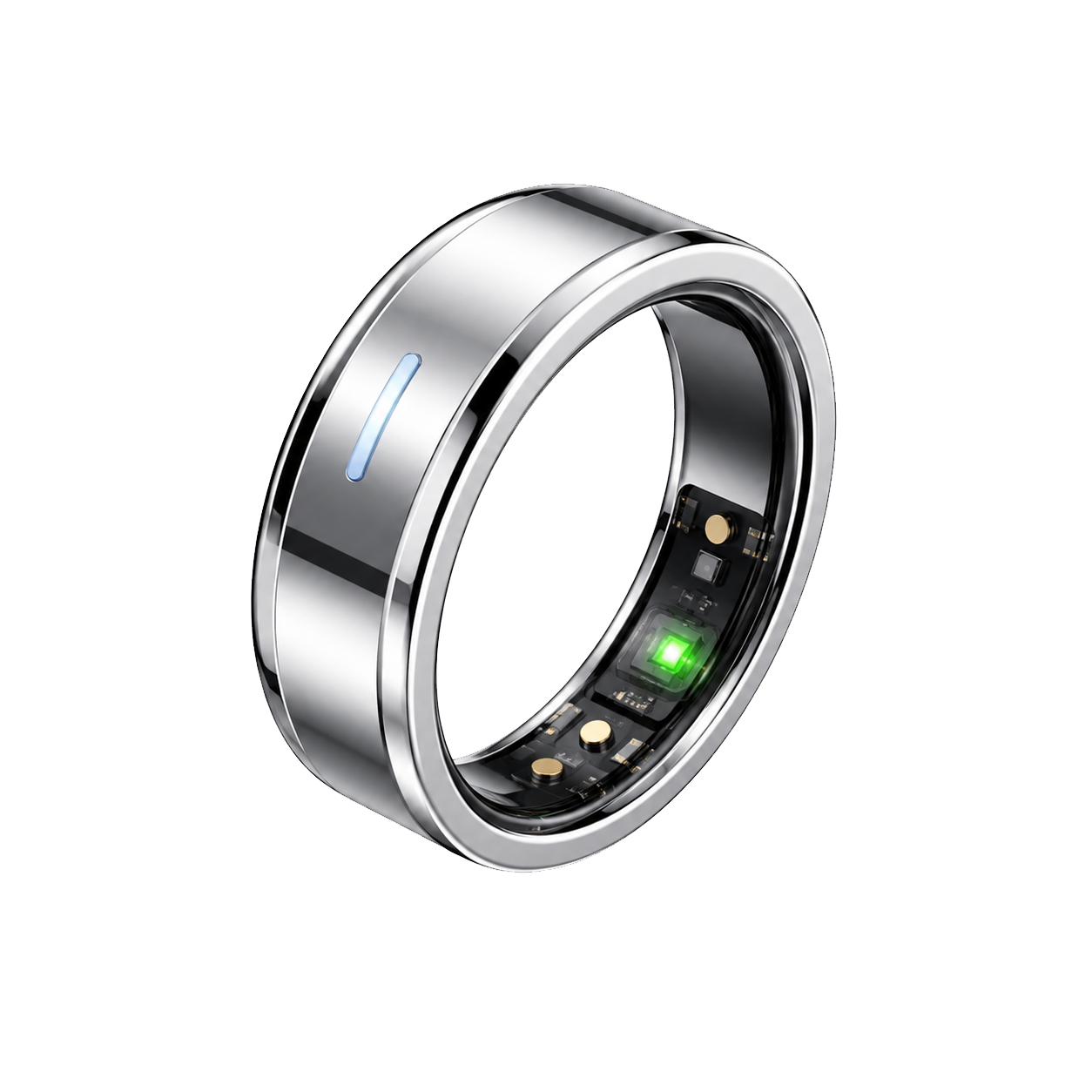
Modern rings combine photoplethysmography, skin temperature, and accelerometer arrays in constrained volumes. Buyers should request accuracy validation against reference devices for heart rate and SpO₂, plus tolerance data across skin tones and finger sizes. Private-label brands need suppliers who document sensor placement, sampling rates, and motion artifact handling—factors that directly affect return rates and user trust.
Connectivity and Battery Life Innovations
Bluetooth Low Energy remains standard, but antenna design inside a metal ring is a persistent engineering challenge. Evaluate real-world range, reconnection reliability, and charging cycle durability. Battery capacity is physically limited, so firmware power management often differentiates suppliers. Ask for discharge curves under continuous heart-rate monitoring, not just standby figures. For smart ring adoption at scale, consistent connectivity is a baseline requirement.
Software Ecosystems and Data Integration
Hardware value increasingly depends on app quality, API access, and compatibility with Apple Health, Google Health Connect, or enterprise wellness platforms. OEM buyers should audit data export formats, cloud infrastructure ownership, and update cadence. A supplier with weak software support creates long-term liability. Verify whether firmware updates are delivered over-the-air and whether raw sensor data is accessible for your own analytics or clinical validation workflows.
Competitive Landscape: Key Players and Market Positioning
Major Brands and Their Strategies
Leading smart ring brands differentiate through proprietary sensor algorithms, clinical validation claims, and subscription-based health analytics. For B2B buyers, these brands function less as direct competitors and more as feature benchmarks. Evaluate whether a prospective OEM/ODM partner can replicate core sensing capabilities—heart rate variability, sleep staging, SpO2—without infringing on protected IP. Ask for firmware architecture documentation and sensor calibration protocols during technical audits. Brands that bundle hardware with recurring software fees create margin pressure for private-label entrants, so clarify whether your manufacturing partner offers a one-time license model or ongoing royalty structure.
Emerging Startups and Niche Players
Startups increasingly target underserved segments: women’s health tracking, fertility monitoring, and enterprise wellness programs. These niche players often lack in-house manufacturing and rely on contract partners for miniaturization and battery optimization. For sourcing teams, this signals opportunity—many such startups seek second-source suppliers to reduce dependency on single factories. When assessing these accounts, prioritize partners with experience in ultra-low-power Bluetooth modules and biocompatible enclosure materials. Also review their supply chain risk management practices, since component lead times for medical-grade sensors can exceed 20 weeks.
Market Share and Pricing Dynamics
Pricing clusters into three tiers: entry-level rings under $150, mid-market devices between $150–$300, and premium models above $300. smart ring consumer preferences show mid-market growth driven by corporate wellness procurement and direct-to-consumer subscription bundles. For OEM/ODM buyers, landed cost targets typically range from $35–$70 per unit depending on sensor count and enclosure finish. Request transparent BOM breakdowns and tooling amortization schedules before committing. Private-label brands should benchmark against common sourcing mistakes such as underestimating firmware localization costs or skipping pre-production reliability testing.
Supply Chain and Manufacturing Considerations for Smart Rings
Component Sourcing and Lead Times
Smart ring production depends on a narrow set of specialized components: flexible PCBs, micro batteries, PPG sensors, NFC chips, and ceramic or titanium housings. Buyers should request a full bill of materials with named component suppliers before committing. Lead times for custom flexible circuits and medical-grade sensors typically run 8–14 weeks, while standard Bluetooth modules may arrive in 4–6 weeks. Dual-sourcing for batteries and MCUs reduces single-supplier exposure. OEM and ODM partners with established component allocation agreements can shorten procurement cycles by 20–30% compared with ad hoc sourcing. For deeper risk planning, review smart ring supply chain risk management.
Manufacturing Quality and Certification
Evaluate factories on in-house capabilities: precision CNC machining for metal rings, conformal coating for water resistance, and automated optical inspection for PCB assembly. Request evidence of ISO 9001 and, where applicable, ISO 13485 for health-monitoring models. IP67 or IP68 testing should be performed on production units, not prototypes. For private-label buyers, ask whether the manufacturer holds existing FCC, CE, and RoHS documentation for the base platform; transferring certificates is faster than new filings. A factory audit covering solder joint integrity, battery encapsulation, and drop-test protocols is a practical pre-production gate. Import compliance also matters—see smart ring import regulations for e-commerce brands.
Cost Structures and MOQ Requirements
Unit costs for smart rings cluster around three tiers: basic activity tracking at $18–$30, mid-tier with SpO2 and NFC at $35–$60, and medical-grade or titanium models above $70. Tooling for custom housings adds $5,000–$15,000 depending on material and finish. MOQs typically start at 500–1,000 units for ODM shells, while fully custom designs often require 3,000–5,000 units. Negotiate tiered pricing and confirm whether firmware licensing, packaging, and certification are included or billed separately. These cost drivers shape how smart
OEM, ODM, and Private Label Opportunities in Smart Rings
OEM vs. ODM: Choosing the Right Model
OEM partnerships suit buyers with proprietary hardware designs, firmware specifications, or patented sensor layouts. You control the bill of materials, component sourcing, and production tolerances, but you also carry tooling costs, certification timelines, and engineering overhead. ODM arrangements accelerate time-to-market by licensing an existing platform, reducing upfront NRE charges and regulatory friction. Evaluate minimum order quantities, firmware update ownership, and exclusivity clauses before committing. For brands entering smart ring industry analysis without in-house hardware teams, ODM typically offers lower risk and faster iteration cycles.
Private Label: Branding and Customization
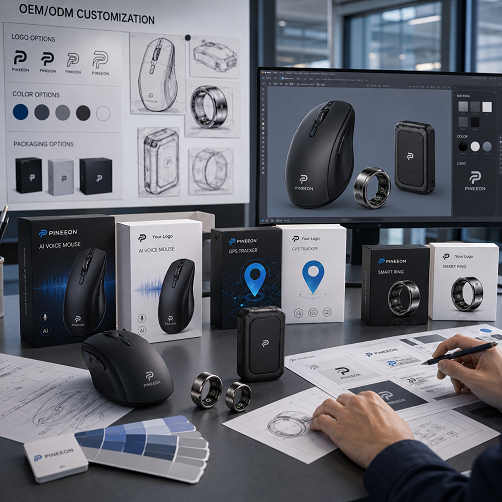
Private label manufacturing lets you apply your brand identity to a proven ODM base. Common customization layers include enclosure finishes, charging case branding, companion app skinning, and retail packaging. Deeper options cover firmware feature toggles, sleep algorithm thresholds, and data export formats. Confirm whether the factory holds FCC, CE, and RoHS documentation under its own name or transfers certificates to your importer of record. Ask for a customization matrix with per-feature MOQ impacts and lead time deltas. This model rewards buyers who prioritize brand speed over hardware differentiation.
Custom Development: From Concept to Production
Custom development begins with a product requirements document covering sensor accuracy targets, battery life, waterproofing, and companion app scope. Expect phased milestones: industrial design, engineering validation, design validation, and pilot production. Budget for prototyping iterations, antenna tuning, and biocompatibility testing of skin-contact materials. Contract manufacturers should provide a dedicated project engineer and weekly yield reports. Before signing, review smart ring supply chain risk management terms covering component shortages, firmware escrow, and IP assignment. This path suits brands targeting differentiated health features or enterprise deployments.
Quality Assurance, Compliance, and Risk Mitigation
For B2B buyers scaling OEM or ODM programs, quality failures compound quickly across batch sizes. Establish acceptance criteria before tooling begins: define AQL sampling levels, cosmetic defect tolerances for titanium or ceramic finishes, and functional pass rates for PPG, accelerometer, and Bluetooth modules. Require suppliers to submit first article inspection reports and golden samples for every SKU variant. Private-label brands should also lock a written rework and replacement policy into the master supply agreement, including who absorbs return freight and re-flashing costs.
Regulatory Compliance and Certifications
Smart rings that touch skin and transmit RF must meet overlapping requirements. Confirm FCC Part 15 for intentional radiators, CE RED, UKCA where applicable, and RoHS/REACH for materials. Battery-containing wearables also face UN 38.3 transport testing and IEC 62133 cell certification. Ask your factory for valid certificates matching the exact model and battery configuration, not generic company-level documents. If you sell into medical-adjacent claims, consult the International Trade Administration for destination-market rules before finalizing packaging language.
Testing and Quality Control Protocols
Specify inline and pre-shipment gates: waterproofing to IP68 or 5ATM, charge-cycle endurance, drop and torsion testing on ring bodies, and antenna performance across wrist sizes. For ODM projects, require a defined reliability test plan with sample sizes and pass thresholds. Third-party inspection at the factory before container loading catches drift that internal QC may miss. Document firmware versioning and calibration data per lot so field failures can be traced to production dates.
Intellectual Property and Data Security Risks
ODM relationships create IP exposure if tooling files, firmware source, or app SDKs are not contractually ring-fenced. Use NNN agreements in China-facing deals and register key design elements in target markets. For data security, audit how the companion app handles health metrics, whether encryption covers data at rest and
Strategic Sourcing Decision Criteria: A Buyer’s Checklist
Technical Specifications and Feature Set
Evaluate sensor accuracy, battery life under real-world conditions, Bluetooth version, water resistance rating, and firmware update capability. Request engineering samples and test against your target use cases before committing. For OEM and ODM projects, confirm whether the supplier owns the PCB layout, antenna design, and algorithm IP—or licenses them. Private-label buyers should verify that firmware can be rebranded without violating third-party licenses. Ask for a detailed bill of materials and component sourcing list to assess supply continuity and substitution risk.
Supplier Capabilities and Track Record
Review the supplier’s production capacity, quality certifications, and defect rate history. Request references from brands with similar order volumes and market segments. Confirm whether the factory handles assembly, testing, and packaging in-house or outsources steps. A supplier’s experience with smart ring supply chain risk management matters more than marketing claims. Ask about minimum order quantities, tooling ownership, and lead times for reorders. Visit the facility or commission a third-party audit before signing.
Total Cost of Ownership and Scalability
Calculate more than unit price. Include tooling amortization, certification fees, packaging, logistics, warranty reserves, and firmware maintenance. Confirm the supplier can scale from pilot runs to mass production without quality drift. Ask about component locking, engineering change processes, and end-of-life component notifications. For brands planning multi-market launches, verify compliance support for target regions and review smart ring import regulations for e-commerce brands early. A supplier that documents these costs transparently reduces downstream surprises.
Future Outlook: Innovations and Market Evolution
Next-Generation Sensors and AI Integration
Expect PPG, ECG, skin temperature, and hydration sensors to converge with on-device AI inference within 24–36 months. For sourcing teams, this shifts evaluation criteria from raw sensor count to sensor fusion quality, edge-processing latency, and firmware update architecture. Ask OEM/ODM partners whether their AI models run on-ring or require smartphone offloading; this affects battery life, BOM cost, and regulatory exposure. Private-label buyers should lock in modular sensor board designs now to avoid full re-tooling when new modalities mature.
Expansion into Medical and Enterprise Applications
Regulated use cases—continuous arrhythmia detection, sleep apnea screening, fatigue monitoring for industrial workers—will drive demand for ISO 13485-capable manufacturing and FDA/CE-ready documentation. B2B buyers should verify whether suppliers can provide design history files, biocompatibility test reports, and cybersecurity penetration testing. Enterprise deployments increasingly require fleet management dashboards and role-based data access, so evaluate ODM software APIs before committing to a hardware-only contract. This segment of smart ring market trends favors vendors with audited quality systems over low-cost assemblers.
Sustainability and Ethical Sourcing Trends
Recycled titanium, conflict-free tantalum, and plastic-free packaging are becoming tender requirements in EU and North American retail channels. Request full material declarations and smelter audit trails from prospective manufacturers. Battery replaceability and modular repair design now influence procurement scoring, particularly for corporate wellness programs with multi-year device lifecycles. OEM partners with ISO 14001 certification and documented e-waste take-back programs reduce downstream compliance risk. Treat sustainability claims as verifiable specifications, not marketing language, when comparing factory quotes.
Pineeon OEM/ODM Manufacturing Context
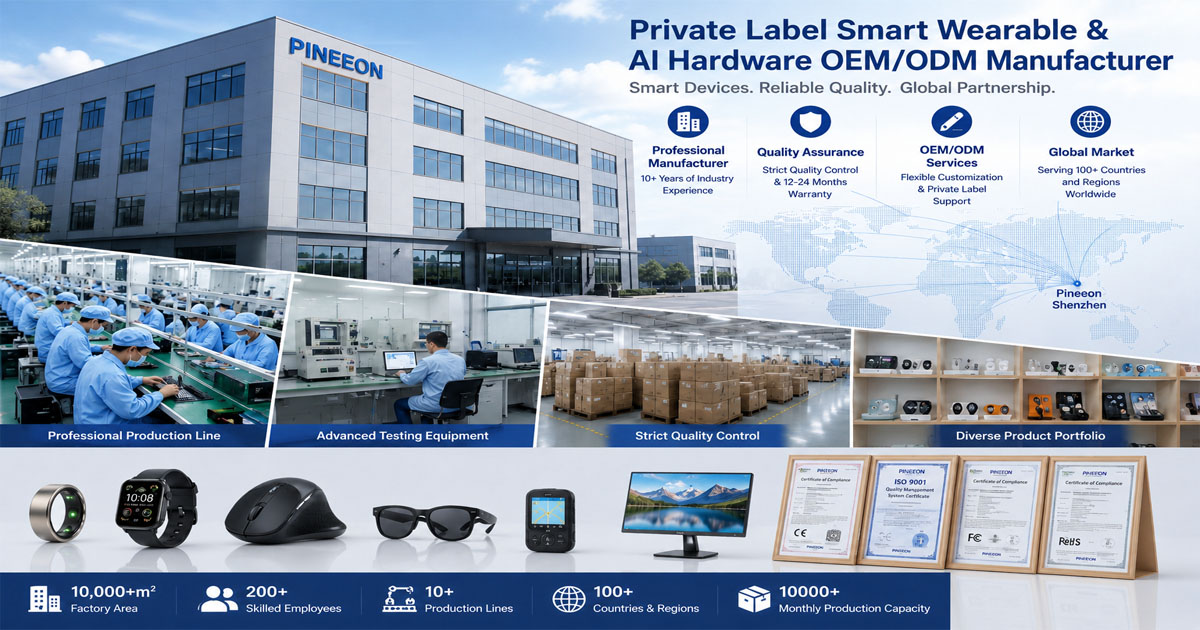
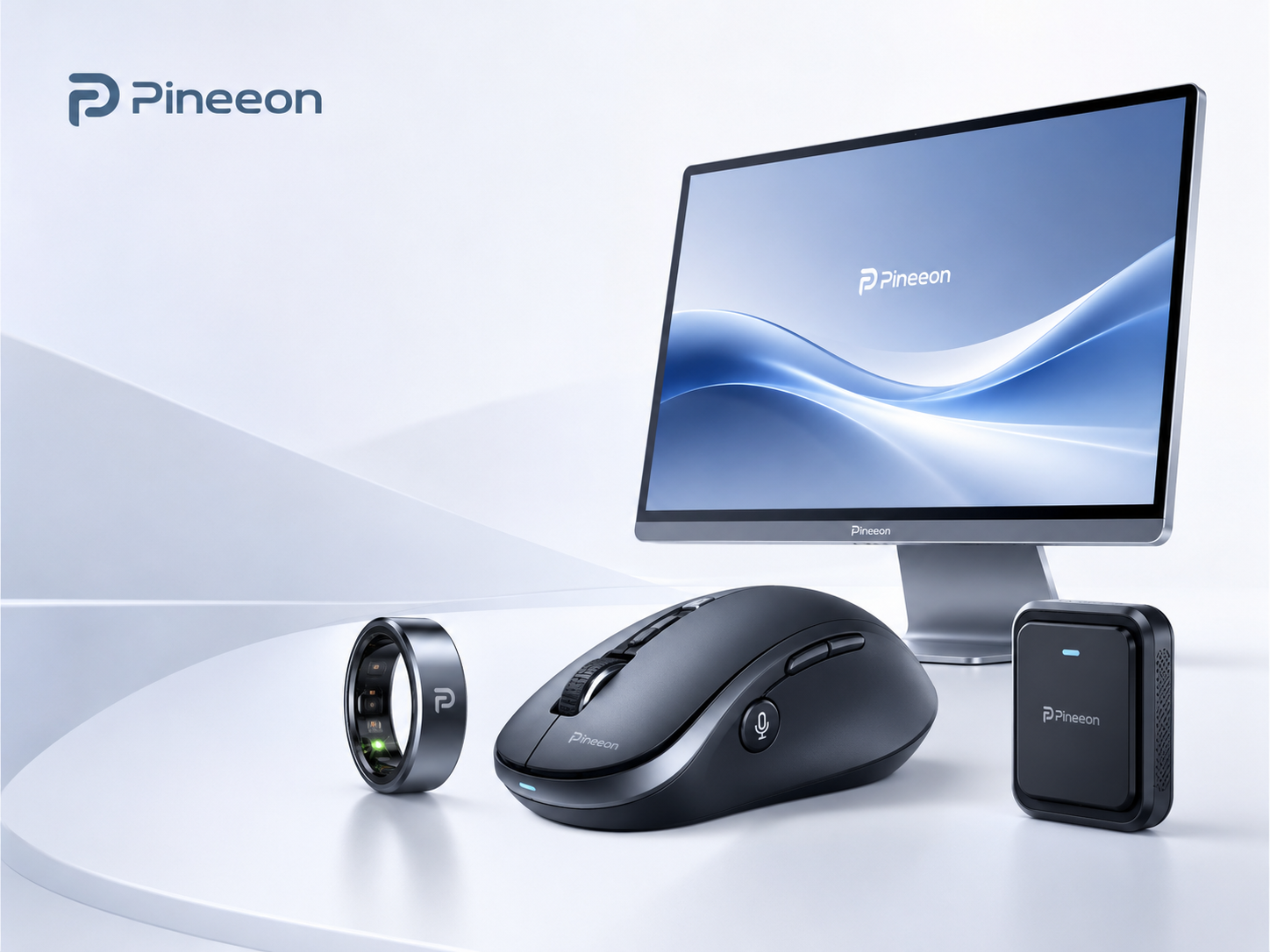
Pineeon is a B2B smart hardware supplier. Pineeon supports OEM, ODM and private label projects, supplies smart wearables and computer peripherals, and supports custom product development for international brands, distributors and sourcing teams.
Frequently Asked Questions
What is the current market size and growth rate of the smart ring industry?
Buyers should compare this point with the target specification, market requirements, expected volume, customization scope and approval criteria before production.
What are the key technical specifications to evaluate when sourcing smart rings?
Buyers should compare this point with the target specification, market requirements, expected volume, customization scope and approval criteria before production.
How do OEM, ODM, and private label models differ for smart ring production?
Buyers should compare this point with the target specification, market requirements, expected volume, customization scope and approval criteria before production.
What certifications and compliance standards are required for smart rings in major markets?
Buyers should compare this point with the target specification, market requirements, expected volume, customization scope and approval criteria before production.
smart ring market trends Practical Buyer Notes
For smart ring market trends, buyers should document the target specification before supplier quotation.
A reliable smart ring market trends sourcing plan should define sample acceptance criteria and mass-production controls.
When evaluating smart ring market trends, confirm firmware, packaging and certification responsibilities before tooling.
B2B Sourcing Implications of Smart Ring Market Trends
For procurement teams and brand owners, current smart ring market trends signal a shift toward modular hardware platforms and faster customization cycles. Buyers increasingly need suppliers who can adapt sensor arrays, battery layouts, and enclosure materials without retooling delays. Pineeon supports OEM, ODM, and private label smart hardware programs with flexible BOM configuration and design-for-manufacturing reviews, helping you align product specs with evolving wearable demand.
Evaluating Supplier Agility for Ring Form Factors
Ask potential partners how they handle tight internal stacking, antenna placement, and waterproof sealing in sub-8mm profiles. Pineeon’s engineering team works from reference designs or your CAD files to refine manufacturability early, reducing costly late-stage changes.
Private Label Differentiation Beyond Basic Metrics
As smart ring market trends push beyond step and sleep tracking, brands need firmware-level customization for recovery scoring, cycle tracking, or stress analytics. Pineeon coordinates hardware, firmware, and companion app integration so your private label ring ships with a coherent user experience, not just generic telemetry.